

Define ‘evil.’
The dictionary definition:
Evil (adjective): ‘Profoundly immoral and wicked.’
Something that is ‘morally bad.’
^ (That is the dictionary definition, but how can we determine what is ‘immoral?’ On what standards are we basing our judgment)?
Most people have morals that would stop them from, for example, taking another human being’s life, morals that, even if laws did not exist that made murder illegal, would stop them from committing the act anyway. So, why do some people seemingly have an absence of morals? Why do some people not think twice about committing the most heinous of acts?
Well, that depends on…
INTENTION.
I would argue that it’s not the act that makes something evil, but the intention behind it.
E.g., Killing for survival, as in ancient times when Neanderthals would kill each other for food, versus killing for ‘pleasure…’
But, with that, how do we determine what is pleasure, vs what is ‘survival’ when, even the best criminal psychologist in the world can never be truly sure of someone’s intentions?…
If a murderer has schizophrenia, for example, psychosis that saw them hearing voices that told them to kill, then is the intention still ‘evil?’
Or, for a more controversial example, a drug dealer stealing to fund their drug addiction. When addiction is a disease, a mental illness, is stealing to fund one’s addiction still ‘evil?’
Where the concept of good vs evil is subjective, who gets to decide?
Who gets to decide whether society is the cause or the prevention of evil?
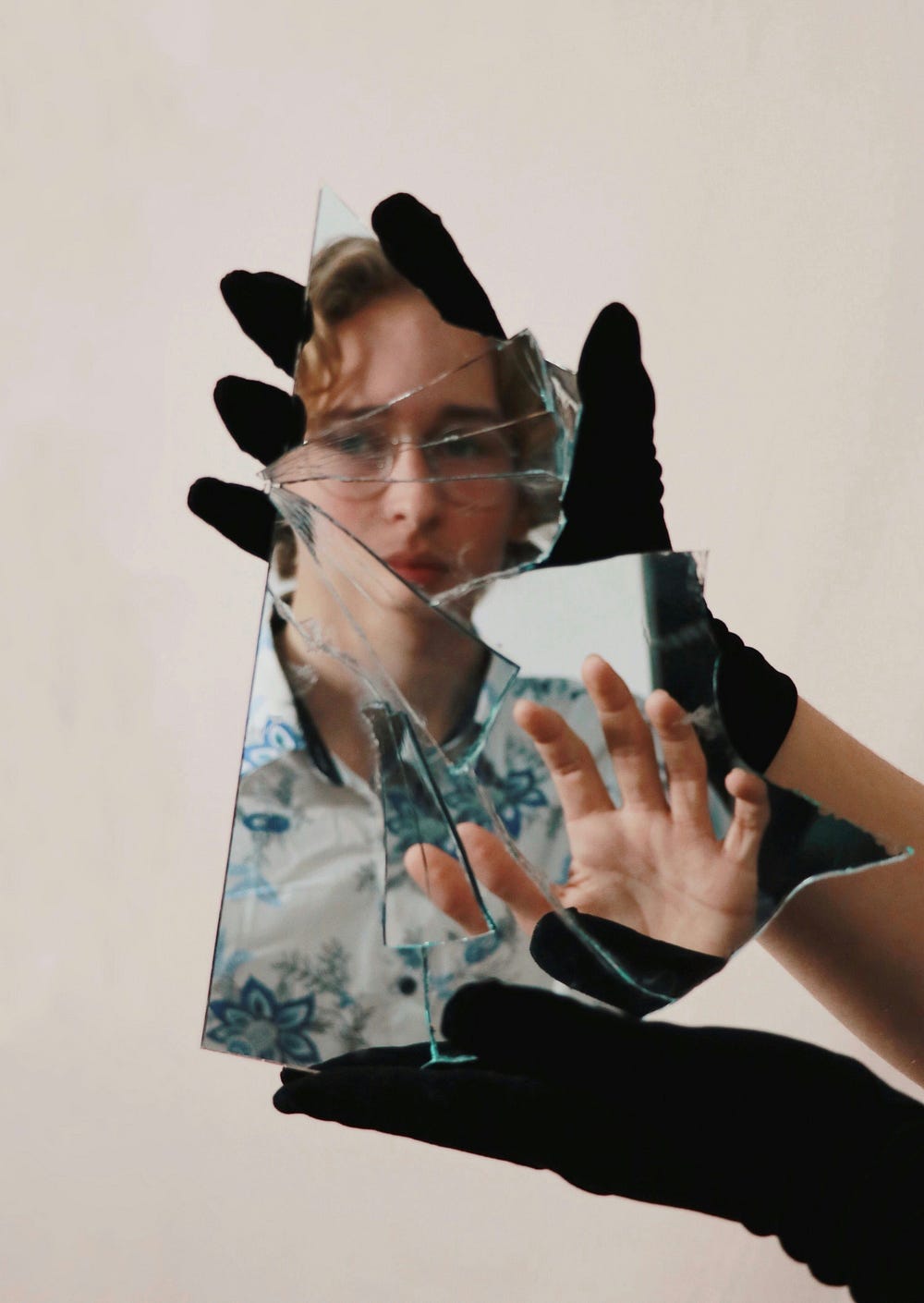
According to St Augustine’s theory, evil is ‘nothing other than the absence of good’, and for something to be absent, it must have once existed…
By all means, call me delusional if you want but, sitting firmly on the nurture side of the debate, I have always struggled to believe that anyone is born inherently ‘bad’ (a perspective that, to me, just seems incredibly devoid of hope)…
The belief that we are born ‘bad’ isn’t, however, an uncommon perspective, just consider William Golding’s 1953 novel ‘Lord of the Flies.’
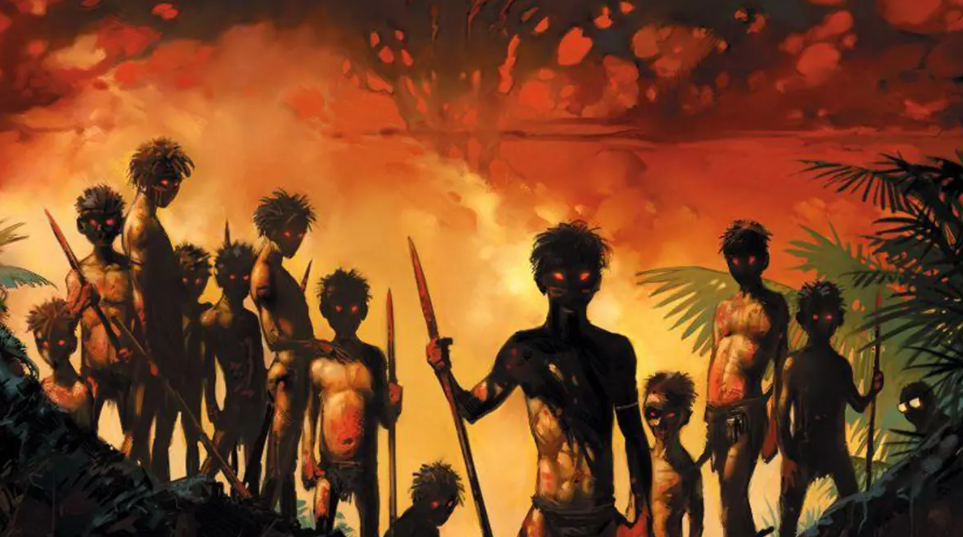
The whole book is based on the premise that ‘evilness’ is, in fact, our true nature, that society is what keeps us in check, and that, with the absence of rules to control our behaviour, we lose our morals. In the nature vs nurture debate, this perspective argues that ‘evilness’ comes from nature, and that ‘goodness’ comes from nurture (i.e., evilness is our default, goodness is what we become).
However, my perspective, as I wrote about here, is that; people don’t ‘corrupt’ society, but rather, society corrupts people. And thus, people who commit acts that society deems ‘evil’, are just as much victims themselves…
Victims of a sick society…
Although human beings have free will, (we all have a choice over what we do with our lives), what we overwhelmingly don’t have is a choice over what society does to us/free will when it comes to the systems that oppress us…
Man is born free and all around him are chains.
-Jean-Jacques Rousseau.
What we do have is false democracies headed by corrupt, power-hungry leaders who treat us, the masses, as mere puppets on a string (until the puppets get tired of being used and vow to break the strings, to overthrow the puppeteers, to overthrow the oppressors)…
None of our hearts are immune from the temptations of power.
We all have the capacity to be evil, however, that impulse lays dormant in us until we feel threatened, with it surfacing only as an extreme response to an extreme society…
Humans are not the only species to become victims of oppression within society, either…
An interesting example of how oppression impacts the animal kingdom in its entirety can be seen in the video linked here.
The video above shows a group of chimpanzees (our closest ancestor) beating another, already dead chimpanzee, for four hours…
The chimpanzee in question?
Foudouko, the former tyrannical* ruler…
*(A tyrannical ruler wields absolute power and authority, and often wields that power unjustly, cruelly, or oppressively).

What I find interesting is that, whilst we can’t see inside the minds of those chimpanzees, just as we can’t see inside the minds of human killers, such violence, which we are told is rare in the animal kingdom, was conducted against the former oppressor, suggesting that ‘evil’ is societal, based on power as opposed to evilness just being our ‘true nature.’
Like humans, chimps have a remarkable capacity for fairness, with scientists having found overwhelming evidence that they know the difference between right and wrong, just as humans do.
As this article states
Most animals, particularly mammals, including ones who are considered to be highly aggressive such as chimpanzees, only kill each other under very specific conditions. Generally, both human and non-human animals are much more likely to engage in alternatives to violence…
So, what went wrong?
Chimpanzee homicide, which previous research has estimated to occur at a similar rate to that seen in hunter-gatherer human societies, goes up and down as a simple consequence of competition for resources, usually that being a competition of land, mating, and/or food.
The overarching theme amongst these three things? Dominance. An unequal distribution where one person/tribe/chimpanzee (delete where applicable) has authority over another.

Similarly to humans, in a society governed by hierarchies, conflict occurs when animals become frustrated by their lack of power, something which sometimes sees them resorting to violence.
The child who is not embraced by the village will burn it down to feel its warmth.
– African Proverb.
If evil truly were built in though, then animals wouldn’t wait for a reason to kill each other, they’d just go ahead and proceed to kill each other whenever they wanted to… The fact that they don’t implies that they do have a moral compass/that goodness does reside over evil…
It is only when situations arise in society in which they feel threatened/when the oppression becomes too much, that we see violence being initiated- ‘a fight for power’ taking hold- a survival mechanism.
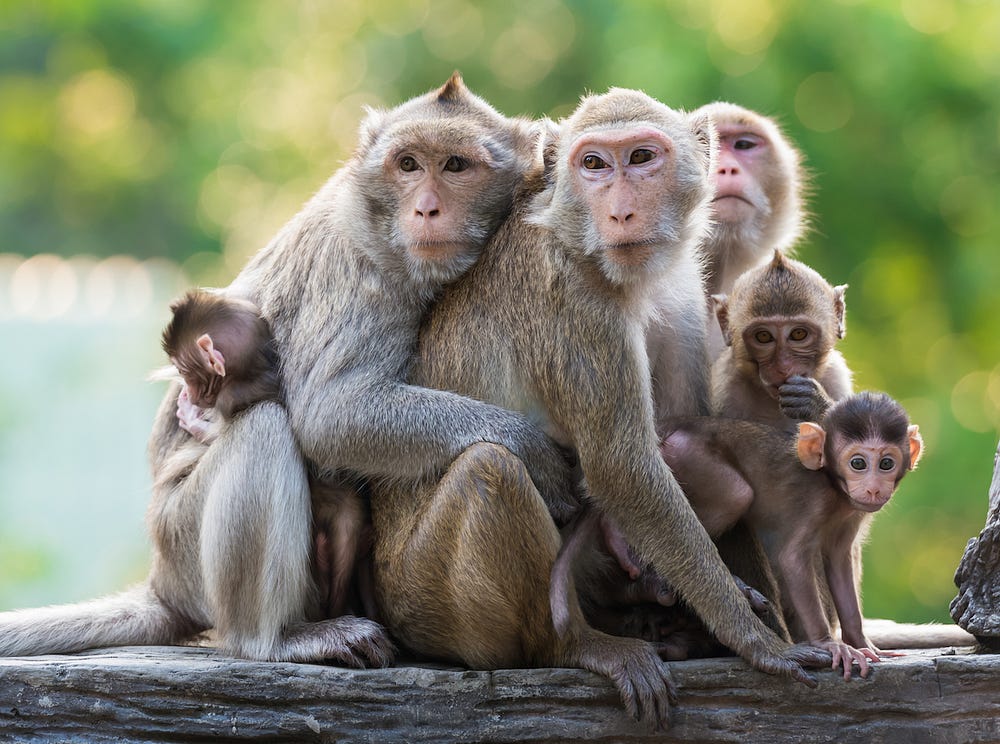
Power corrupts, not just the oppressor, but the oppressed too…
Like soldiers who are drafted for war, the oppressed become pawn pieces in the oppressor’s fight for greed, ordered to kill to ensure their own survival… But, do they want to kill? Most don’t. Most soldiers return home (if they return home) with complex PTSD. Why? Because to kill someone isn’t natural, even if they are the ‘enemy.’
We are not primed to kill each other…
‘I feel very sad sometimes,’ said a Vietnam war veteran in this Guardian article. ‘It’s not easy to take a life.’
Soldiers are told, ‘Now go home back to your life. But that doesn’t work, because you’re still carrying something that humans aren’t designed to do.’
‘The hardest part about coming home was trying to learn to be human again. Overriding our inherent goodness, to act from a place of evilness is not natural’…
Our society is not natural (as the fascinating case study below demonstrates)…
Marcos Rodríguez, abandoned at the age of 7 in a deserted mountain range in Southern Spain, lived on his own in the wild for 15 years, his only company a pack of wolves who, he says, ‘raised’ him. Eventually, police found him and he was taken to a village, made to reintegrate back into society…
Upon looking back years later, what Rodríguez remembers of his time living in the wild, devoid of any human contact is that it was ‘glorious’ and that, when he was found by the police an, ‘untroubled, simple adolescence among animals and birds was cruelly cut short’…
Explaining how he suffered at the hands of humans after he returned to society in this Guardian interview, he says;
‘Among people, I learned to hate.’
The above example suggests that society is the catalyst to us acting in ‘evil’ ways, for, taken out of that environment, life is ‘glorious.’

If society were to be managed horizontally (amongst people), as it is in wolf packs*, as opposed to vertically (from the oppressor to the oppressed, with one ruler on top dictating, and everyone else below being dictated to), as it is in humanity, then would violence still occur?
*(In wolf packs, a hierarchy is established in families/packs, ‘decentralised’ governance, as opposed to in society as a whole, thus power is more equal/’spread out’ across society, as opposed to gatekept by the people/wolves at the top)…
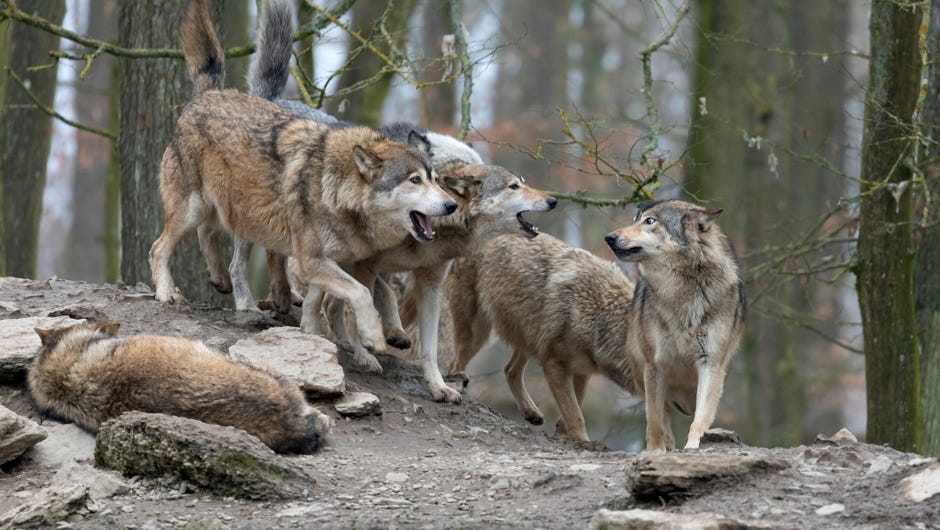
People don’t rape/kill/steal (insert the morally wrong act of your choice here), for no reason…
When wild animals act in supposedly ‘evil’ ways, bearing their teeth at humans, for example, they’re doing so from a place of fear. How do I know this? Because we only attack that which we fear. It’s the root of all oppression in society… Racism and sexism and homophobia- a perceived ‘threat to the status quo…’
We can’t get at the people in power so we aim at those we can get at.
The history of progress is written in the blood of men and women who have dared to espouse an unpopular cause, as, for instance, the black man’s right to his body, or woman’s right to her soul.
-Emma Goldman, What I Believe, 1908.
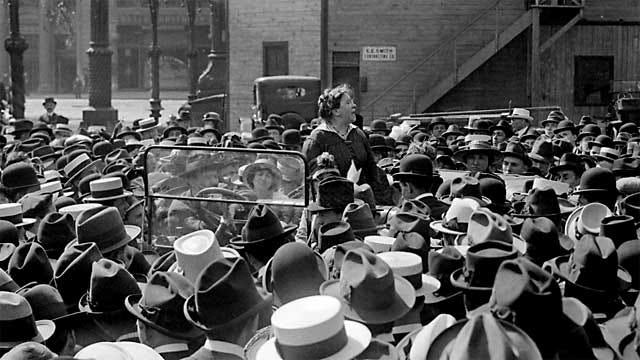
When power is the source of all conflict in the world, both on a collective/mass scale when it comes to war, and on a personal/individual scale* when it comes to crime
(the puppets can’t reach the puppeteers [the politicians] so they go after people who they can reach, trying to reclaim a sense of power back, through rape and domestic violence and murder and petty crimes),
the resolution to evil?
ANARCHISM.
(a.k.a democracy taken seriously).
GIVE POWER BACK TO THE PEOPLE.
It’s the only way that goodness can prevail, otherwise…
If you want a picture of the future, imagine a boot stamping on a human face — forever.
– George Orwell, 1984.

 Portfolio of Hope