

Rape. It’s arguably the most traumatising crime there is, and it’s something that, horrifyingly, one in four women over the age of 16 have experienced. Owing to the invasion of one’s body, and the corruption of one’s sanity, its effects are long-term and can often result in the development of mental health issues such as PTSD as a direct result.
Despite having such a profound impact on the lives of its victims, however, the conviction rate for rape in the UK is staggeringly low.
Statistics by the charity Rape Crisis highlight how 69,184 rapes were recorded by the police between 2023 and 2024, yet just 2.7% of these cases were charged.
In other words, fewer than three in one hundred rapes recorded by the police between 2023 and 2024 resulted in someone being charged that same year, let alone convicted…
This is horrifying when we consider that the CPS must have substantial evidence that a rape took place for it to even get to court in the first place.
Based on the extremely low charge/conviction rate then, it’s unsurprising that so many people drop out of rape investigations before their case goes to trial.
Latest statistics show that, in 2023, nearly 70% of rape victims dropped out of investigations in England and Wales, compared to 66.9% in 2021, and 55.5% in 2016. And when evidence from both the Office for National Statistics and several rape survivor charities suggests that five in six women who are raped don’t report it, that’s an awful lot of men who are walking free.
Data suggests that 798,000 women are raped or sexually assaulted every year in the UK…
The increase year-on-year of people who report that they have been raped only to decide not to take it any further, as highlighted in the figures above, or who just don’t report it at all, is undoubtedly concerning and yet, worryingly, unsurprising…
When just the referral of a rape case to the CPS, (the body that conducts criminal prosecutions in England and Wales), requires substantial evidence that often involves the invaded privacy of the accuser more than it does the accused (make it make sense), it’s easy to see why so many people drop out…
Turning the victim into the defendant…
The intrusiveness of rape investigations is truly shocking. Mobile phones are taken to recover deleted messages. Social media accounts, medical history, and even therapy notes are sought through. Characters are assassinated through cross-examinations that make victims feel like criminals. It’s traumatising, adding salt to the wound of what, for most people, will still be so raw and painful.
The whole process has been more traumatic than the actual rape. I have zero belief in the justice system.
Victim Response to Victims’ Commissioner Survey, 2021.
And what are they looking for, exactly? What are the police hoping to find when they go through the phone of a woman who has reported being raped? A nude photo? A tab on her computer of Pornhub? Seemingly any signs of a woman being a sexual being is ‘proof’ that she wanted it.
It is for this reason, due to a lack of evidence and a lack of people who are willing to live out the moment their body was turned into a crime scene again that, despite there being a record number of rape cases being reported in the UK, there has been such a stark collapse in the number of rape prosecutions. Why? Because many people just don’t see it as being worth the smear campaign that will inevitably follow for the next two years (on average, rape cases take a staggering 817 days to reach court).
A criminal barrister recently wrote:
‘I am increasingly numb to the cruelty of telling broken human beings that the worst thing that ever happened to them will not be resolved for years.’
Why are conviction rates so low?
There are several arguments that people use to try to explain why so few rape cases result in a conviction, yet their reasoning holds no weight.
A common argument is that it’s because rape happens ‘behind closed doors’/away from the public eye, and therefore there are unlikely to be witnesses who can back up a victim’s testimony. It’s more likely to be a ‘he said she said’ situation, people argue. While this is true, rape is more likely to happen behind closed doors, it’s not a good enough reason to account for the shockingly low conviction rates.
When domestic abuse (non-sexual) also happens behind closed doors, based on the logic above (‘conviction rates are low because there’s no one to back it up’), why is domestic abuse more than twice as likely to lead to both prosecution and conviction than rape (76.4% of domestic abuse-related prosecutions were successful in securing a conviction in the year ending March 2022, compared to 30% of rape cases)? The answer, I believe, is rooted in our attitudes as a society surrounding sex.
‘I’d never hit a woman, I’m not a wife beater’, says the man who had sex with his wife while she was asleep last night.
With so many people who are self-confessedly ‘prudish’ in our society/people who shy away from any discussions of sex, there is so much shame and stigma surrounding rape. The danger of this, however, is that such stigma can result in victims not coming forward out of fear of how they will be perceived. It can also result in victims who do come forward being on the receiving end of other people’s prejudices.
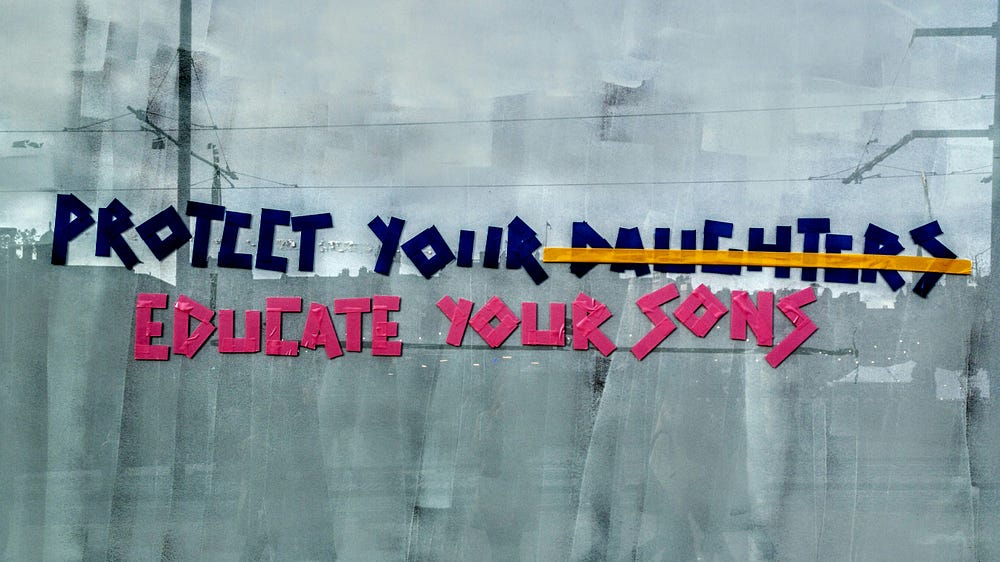
The influence of rape culture
The terrifying reality is that the sole reason for someone not being convicted of rape could be due to something as simple as three people believing that she who goes out at night on her own is ‘asking for it…’ And, unfortunately, despite being in the twenty-first century where you’d hope that such basic human decency and empathy towards each other would be commonplace, rape culture and, with that, all the myths that it conjures up, are still highly prevalent.
It’s why nine in ten school-age girls have reportedly experienced sexist name-calling and have been on the receiving end of unsolicited ‘dick pics.’ Such objectification of children is evidence of just how early the sexualisation of women starts.
Viewed as objects that exist to entertain, serve, and/or pleasure men instead of as equal human beings, this serves to uphold the patriarchy whose very premise is centred on the ideology that girls and women are less deserving of respect and power than men and boys.
And, while today women have more rights in society, it hasn’t always been this way…
Before 1992, for example, marital rape wasn’t illegal in the UK, the assumption being that a wife’s consent to marriage also meant consent to sexual intercourse with her husband. This belief was based on the idea that many people still hold today; that women are the property of men.
Furthermore, in twenty countries around the world, the idea that women are the property of men is upheld to a heightened level with the presence of ‘marry your rapist’ laws, sometimes also referred to as ‘rehabilitating marriage.’ This law, which gives rapists the option to marry their victims in order to escape criminal prosecution, exists to reinforce the concept of women belonging to men.
Heavily influenced by religion, it exists to absolve the shame that sex outside of marriage supposedly imposes on society. With absolutely nothing at all to do with preserving justice, it’s all about preserving the status quo (in other words, it’s all about upholding the subjugation of women).
This is a prime example of how culture plays a significant role in attitudes towards rape, particularly when standing in court. A juror living in the UK who is originally from Russia, for example, where ‘marry your rapist’ laws are implemented and, consequently, rape isn’t viewed as a crime so much as an inconvenience, is less likely to find a man standing on trial for rape guilty compared to someone who was born in the UK. This is because the messages (see also: lies) that have been fed into their brains regarding a woman’s ‘place’ in society starkly differ. And when all it takes for a conviction to be dropped is three out of the twelve jurors being unsure of guilt, the fractured and prejudice-filled views held by people towards women, and in turn, their attitudes towards rape, is deeply troubling. It is for this reason that we must continue to talk about women’s rights, remembering that ‘nobody’s free until everybody’s free.’
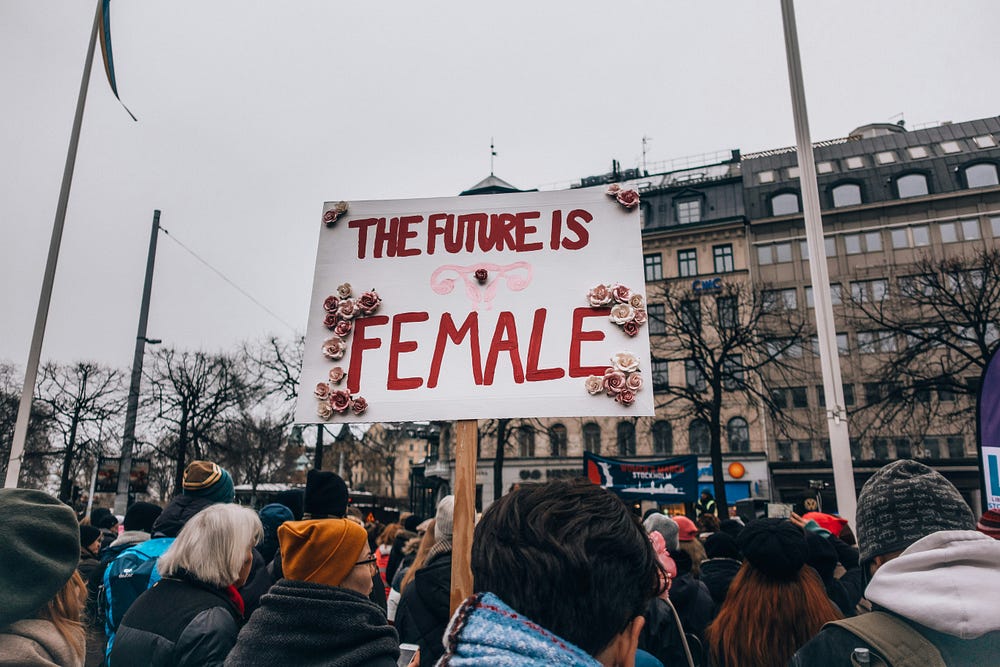
Rapists must be prosecuted for their crimes, not protected, and victims of rape must be supported, not stigmatised.
 Portfolio of Hope