
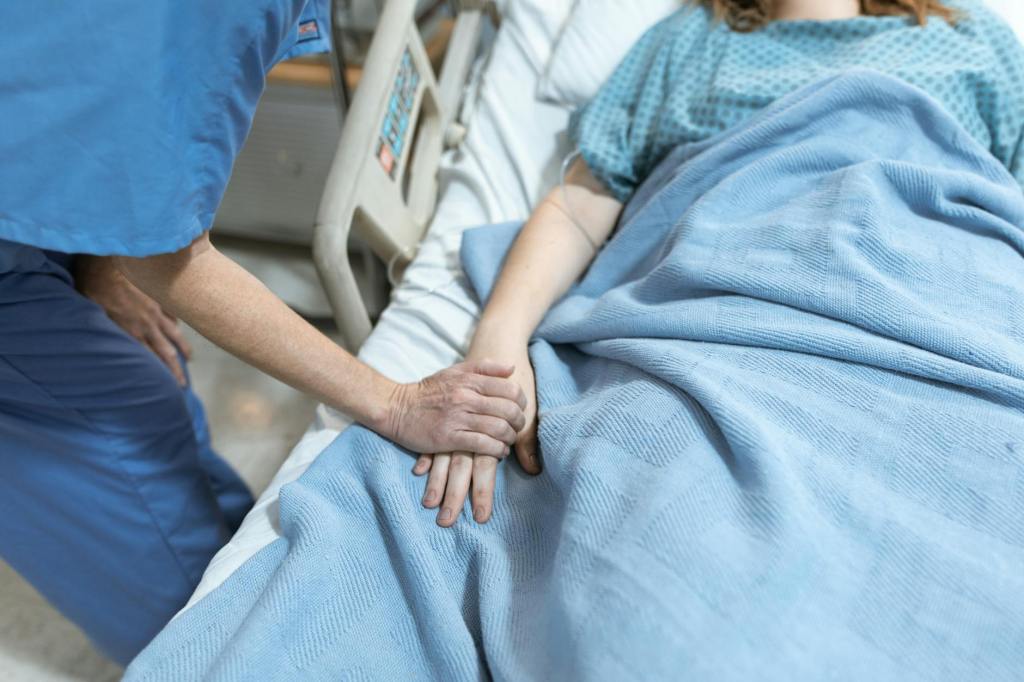
Last week, after decades of fierce debate surrounding the complex topic of assisted dying, MPs voted on a bill, the Kim Leadbeater’s Terminally Ill Adults (End of Life) Bill. Its broad aim is to allow adults aged 18 and over, who have mental capacity, are terminally ill, and are in the final six months of their life, to request assistance from a doctor to end their life.
Three-quarters of the public are in favour of the bill, according to recent polling.
The bill was passed, albeit at a relatively tight margin (330 votes for versus 275 against), with people believing that a change in the law might ‘offer dignity and relief for terminally ill people at the end of their life.’ 40% of people, however, had their concerns, worrying that ‘vulnerable people might feel pressured to choose assisted dying.’
Although the bill passed, as the first step of many in a long parliamentary process, MPs who voted in favour of the bill reserve the right to change their minds later if safeguards aren’t strong enough. It is therefore paramount that concerns are addressed early on to prevent misconceptions from arising surrounding what the bill entails.
It is essential that loopholes are closed, and gaps are filled.
The topic of assisted dying has always been heavily debated because the worry is… Where does it end?

If we’re arguing that everyone should be granted the right to die, does this include people with mental health issues, people in prison, and people who are just going through a rough patch in their lives? Would they all be granted the right to resolve their temporary pain with a permanent solution?
The answer lies in the difference between assisted dying and assisted suicide…
Unlike the former, assisted dying, which is only approved in cases where a terminal illness is present, assisted suicide can be done in any context, whether an illness is present or not. This inevitably poses many issues, particularly for people who struggle with their mental health.
Suicide is a permanent solution to a temporary problem. It cannot be reversed.
Will people start opting for painless but permanent death over painful but temporary recovery?
It is concerns such as these that point to the importance of why it’s so important that assisted dying, should it be legalised, is only done in strict, controlled environments; in a hospital setting where it is administered by a senior medical professional, witnessed by other medics, and agreed upon by the patient if they have the capacity, their family, and/or other medics, to eliminate the risk of euthanasia being misused.
Where there are strict rules in place and it’s a case of ‘when, not if’, (i.e. Death = imminent), the passing of the assisted dying bill will grant people dignity in their final moments.
The assisted dying bill is not about ending life, it’s about shortening death.

It is the job of a doctor to relieve the suffering of their patients. Therefore, in circumstances where there is no further treatment available, euthanasia is the only viable way to relieve that suffering.
We know this to be the case with animals, but why are we so opposed to it with humans?
At present, cats have greater rights when it comes to dying than humans…
We don’t leave animals to suffer. At the first sign of illness, we’re on the phone to our local veterinary surgery to request an appointment.
Filled with anxiety, we hope and pray that everything will be okay and that the vet will be able to prescribe them medication to help. Residing in the back of our mind, existing as a great big shadow that overpowers the hope we have of things working out, however, is the question of… ‘But what if there’s something more going on?…’
An incurable illness.
We’re sorry but there’s no treatment we can offer. There’s nothing more we can do.
In this situation, we weigh up our options (why aren’t humans granted options?) and realise that to go home with them would be to prolong their suffering where their quality of life would be non-existent. And whilst we love them and don’t want to say goodbye, to not do so would be for selfish reasons, we realise.

With the option to end their suffering only a ‘yes or a no’, ‘tick here’, ‘sign here’ away, ‘it’s the kindest thing you can do for them.’
And so, we make that decision, because they can’t make it for themselves. A soul-wrenching decision to make but one that we know, should we ever find ourselves in such a position, we would want to be made for us, for no living being deserves to have their suffering prolonged for longer than it needs to be. Unfortunately, however, far too many people are being made to suffer unnecessarily because of current laws, including my Grandad who passed away in January 2023.
Should assisted dying be legalised?
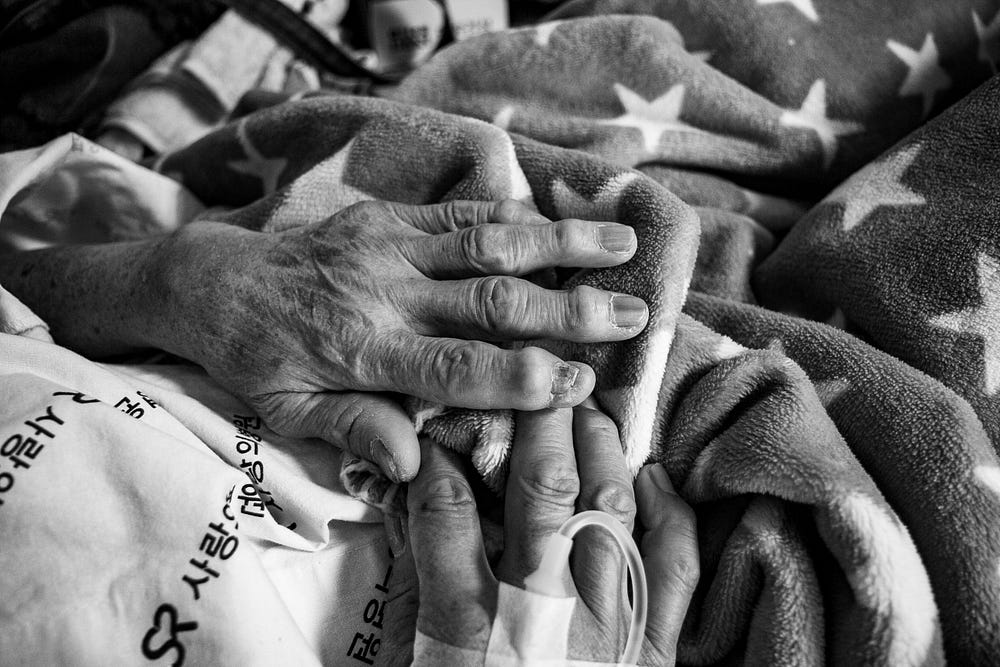
Although assisted dying is illegal in the UK, ‘passive euthanasia’, (intentionally letting a patient die by withholding life support), is happening all the time (albeit it’s not being named as such) … This is what happened to my Grandad who was admitted to the hospital following a stroke. After food and fluids were taken away, he was put on a syringe driver through which large doses of morphine were administered to speed up his death.
Unfortunately, though, despite the decision being made to withdraw all treatment to ‘speed up’ his death, it still took nearly a week for him to pass away. During this time, my memories of him were tainted after witnessing the strongest man I know (it’s been two years, and I still struggle to write about him in the past tense), in a hospital bed, his face white and his hands cold, being starved and dehydrated.
Deteriorating in front of our eyes, all we could do to alleviate his discomfort was dip a sponge in a glass of water and drip it into his parched, open mouth.
It was a week of hell for us and him, and the fact that it could’ve been prevented if we had better laws in place is infuriating. It’s infuriating that the law meant (and still means for other families) that doctors were forbidden to give my Grandad a painless injection, but they were allowed to subject him to a week of what was essentially torture (what else can you call keeping someone alive who can’t eat, drink, or speak if not torture)?…
To strip someone of their dignity in the final stages of their life is dehumanising, yet for some reason, we’re happy to do it to humans. We’re happy to prolong their suffering even when the outcome is inevitable…
‘As the right to life, the right to death.’
When the ultimate act of bodily autonomy is being able to have input into how and when we want to die, how can it possibly be right that vets are granted more power than doctors, and cats and dogs are granted more freedom than us?
 Portfolio of Hope