
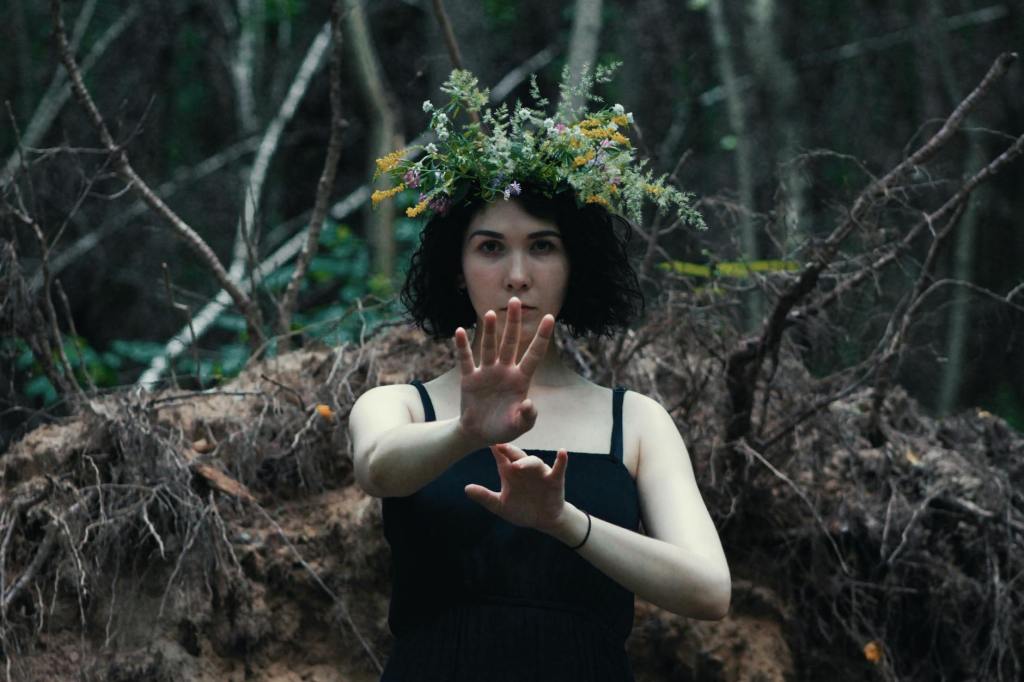
Nature is magic
and within it,
there is no fairy story,
whereas religion is a fairy story
and within it,
there is no magic.
Don’t let money blindside you to the sacrality of life.
Every holiday we celebrate in the twenty-first century is rooted in religious traditions. What many people don’t realise, however, is what came before religion. Paganism. A ‘spiritual path concerned with humanity’s reconnection with the natural world.’
In the first and second centuries of the Roman Empire, most people aligned with Paganist beliefs since it was pushed upon them by various Roman emperors.
- Decius (249–251 CE).
- Valerian (253–260 CE).
- Diocletian (284–305 CE).
Under their rule, paganism was glorified, and Christianity demonised, to such an extent that the ‘Great Persecution’ was imposed.
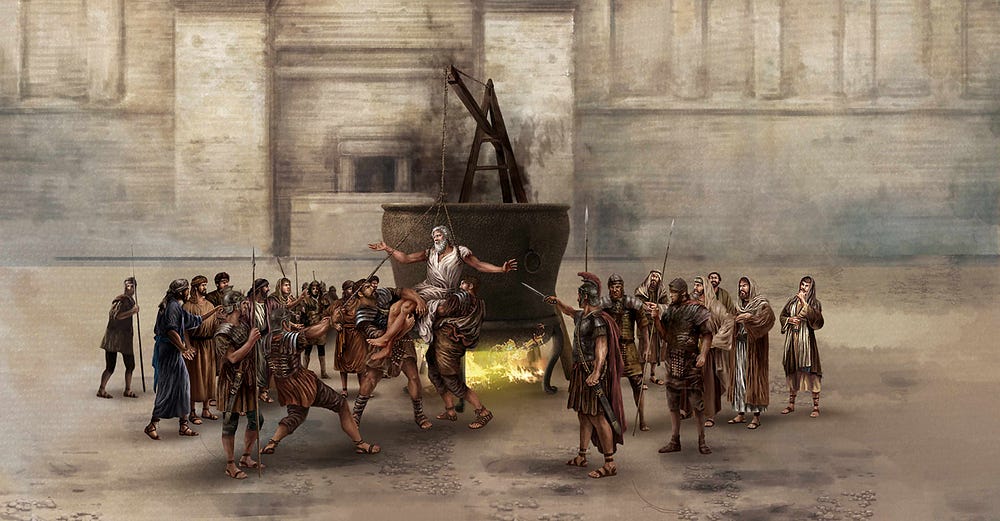
The Great Persecution was the Roman Empire’s most severe persecution of Christians. It saw churches being destroyed, holy books being burned, and Christians being tortured.
However, it was also its last…
In 312 CE, Constantine became emperor, converted to Christianity, and, a year later, called for an end to the persecution of Christians.
A full 360 moment occurred over the next several centuries. As Christianity became the dominant religion in the city of Rome as well as the European regions over which the Roman Empire had ruled, Paganism was explicitly restricted, and eventually outlawed in the year 392 CE.
As part of Paganaism’s outlaw, its rituals were portrayed as evil to instil fear in people. This is where the concept of satanism came from. Despite ‘Satan’ being Cernunnos, the Celtic God of the forest, Christians told the masses that Cernunno’s antlers were horns in order to make people believe that paganism was shrouded in evil.

Eventually, Paganism was diminished by the Roman Empire, however, in the 1500s/around the time of the Renaissance era, it had a resurgence. This led to Christianity being threatened once again. In response, witch hunts took off since witches were linked to Paganism.
People were sold the illusion that witch-hunts were about the cleansing of a society of evil when what they were actually about was the cleansing of a society of non-Christian beliefs, including the devaluing of women…
In Roman societies, women who were healers and midwives were classed as ‘witches’ and they were persecuted for having knowledge about health. As such, men began to dominate the healthcare field as doctors. This wasn’t because these women were witches, but because their power posed a political, religious, and sexual threat to both the Church and the state. It’s why women were demonised for their sexuality, too.
While Paganism celebrated the sexual union of men and women because they revered fertility and a woman’s ability to produce life, Christianity devalued this ability as simply part of a woman’s role, viewing sex as a sinful but necessary act for reproduction alone.
Such beliefs mostly spread with Christianity and Islam across the world, reaching different lands and nations at different times by proselytisation and/or military force. Why? As a way to enforce conformity and obedience.
Whereas Paganism respects Mother Earth, its traditions being about celebrating nature as opposed to celebrating man’s dominion over nature, Christianity (and any traditional religion, for that matter) is all about power and control, with the only respect it has being for man’s ego…
And unfortunately, man’s ego always wins…
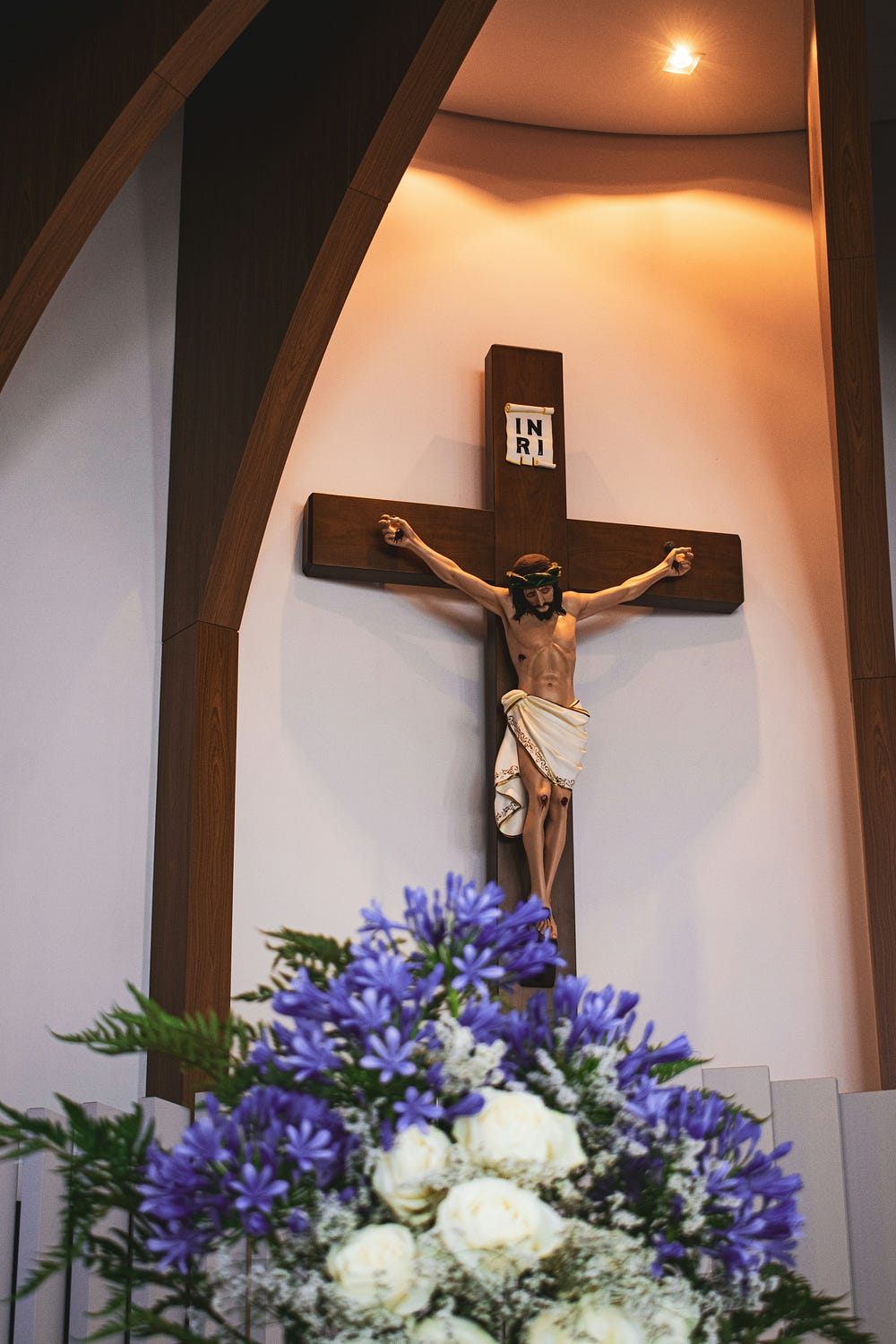
The Roman Empire attempted to take over Paganism by destroying Pagan worship sites and building churches over the top of them, as well as destroying and burning any books, pictures, and statues associated with Paganism. Pagan holidays were also replaced, with pagan rituals being swapped out for Christian rituals.
Our understanding of why we are here and why we celebrate has consequently become so confused and intertwined with capitalism and our constant need to consume that we have forgotten the real reason behind it all…
Take Valentine’s Day, for example. We have forgotten what Valentine’s Day is really about… Not overpriced flowers and chocolate, but nature.
200 years after its inception, when Rome had become Christian, Pope Gelasius decided to create a festival, ‘Saint Valentine’s Day’, and put it on the same day as Lupercalia, a Roman festival to mark the start of spring. This was done in an attempt to remove the remaining Pagans from Rome.
What was once a celebration characterised by love and mutual respect, therefore became one characterised by control…

On Saint Valentine’s Day, men would sacrifice goats and dogs, and then whip women with the hides of the animals they had just slain, believing that this would make them fertile.
Later in the day, all the young women in the city would line up* to place their names in a big urn ready for the bachelors to choose from. The bachelors would then be paired for the year with their chosen woman. These matches often ended in marriage.
*Alas, with Valentine’s Day having been transformed into just another opportunity to rip people off, with prices increasing by an extra 50% to account for it ‘not just being any chocolate, look, it’s heart-shaped chocolate!’, now all we are lining is the pockets of businessmen…
And Easter, too.
Similarly to Valentine’s Day (and all the holidays, in fact, as we will find out), Easter originated from ancient pagan celebrations of the spring equinox. Deemed to be a time to celebrate new life, the day was eventually adopted by Christians to commemorate Jesus’ resurrection.
Now, however, Easter has been adopted by businessmen to commemorate capitalism, where commercialisation has turned eggs into chocolate, and capitalism has turned the magic of nature into the greed of man…

It is this, greed, that underpins another holiday that used to be rooted in Paganism, too.
Originating from Samhain, an ancient Celtic festival to mark the end of the harvest season, Halloween was originally celebrated on or near the 1st of November on what was seen as the start of winter/when the barrier between the living and the dead was thought to be at its thinnest. To ward off evil spirits, people would light bonfires, wear costumes, and tell stories.
In the 7th century, however, Pope Boniface IV created ‘All Saints Day’, a Christian holiday to remember the saints and martyrs who died for their faith. All Saints Day was to be celebrated on the 1st of November, the day of Samhain. Consequently, Halloween was moved to the 31st of October.
Why did All Saints Day have to take place on the day of Samhain? In order to integrate existing native Pagan practices into Christianity and therefore make the conversion process smooth, as was the case with Christmas Day.

Christmas was originally a holiday in the Roman Empire that celebrated the winter solstice and followed Saturnalia, a festival of feasting and gift-giving.
While the feasting and gift-giving element of Christmas is still very much alive today, over time, Christmas has become less of a celebration of the winter solstice and more of a celebration of the birth of Christ. This is due to a connection being made amongst Christian writers relating the rebirth of the sun to the birth of the ‘Son.’
Because of this supposed ‘connection’, in 336 CE, the church in Rome began celebrating Christmas on December 25th to weaken pagan traditions once again.
On Christmas Day, instead of thanking Mother Earth for all that she has given us, we thank the made-up man in the sky for all that he has taken from us…
And on New Year’s Day, too…
Having always been determined by the sun, (the first day of the Lunar New Year, for example, occurred with the second new moon after the winter solstice), as the Roman calendar began to fall out of sync with the sun, the solar-based ‘Julian’ calendar was introduced as a replacement. This led to New Year’s Day being officially established on a set date, January 1st, as a tribute to the month’s namesake, Janus, the ‘Roman God of beginnings.’
The new date of January 1st was gradually adopted in Europe and beyond, along with some of the most well-known traditions that we tend to associate with New Year’s Day today (e.g. setting resolutions for the year ahead).
Resolution no.1?
Go back to thanking Mother Earth again.

Becoming a Pagan, especially for people who come from patriarchal religions, is coming back to your mother. She never stopped loving you while you were away and just welcomes you back into her arms and is glad you are home.
One reason it is a homecoming is that Nature worship is at the root of all religions. All faiths include some aspect of connecting to Nature as a means of connecting to the Divine. When you become Pagan, you are simply reconnecting to Nature, to Mother Earth, to the trees and plants that have always been there, to animals who are your kin. The Air you’ve been breathing, the Earth you’ve been standing upon, the Fire you’ve warmed yourself with, the Water that you bathe in — they’ve all been there, but now you realise your relationship to them.
Becoming a Pagan is a new awareness of what is around you and within you. It is a magical experience. It is coming home.
 Portfolio of Hope