

To all those who knew me in my earliest years, I was an ‘awkward’ child. Having always had this deep-rooted stubbornness, (yet also sensitivity), I’ve always known my own mind. I’ve always wanted to ask…
Why?
Why do we place so much emphasis on change (copper), when what we really should be focusing on is change (systematic)?
Alas, with the post-Cold War decade having only just been left behind, (the Berlin Wall fell in 1981, triggering the collapse of the Soviet Union in 1991), at the advent of my birth on August the 11th 2001, the world was still getting used to the reduced power that politics held over it.
No longer fronted by division and control as it had been for the previous 42 years, now there was a newfound sense of freedom in the world (seemingly), a world within which democracy would come to replace communism, and the world would finally be granted permission to move forward.
And move forward it certainly did…
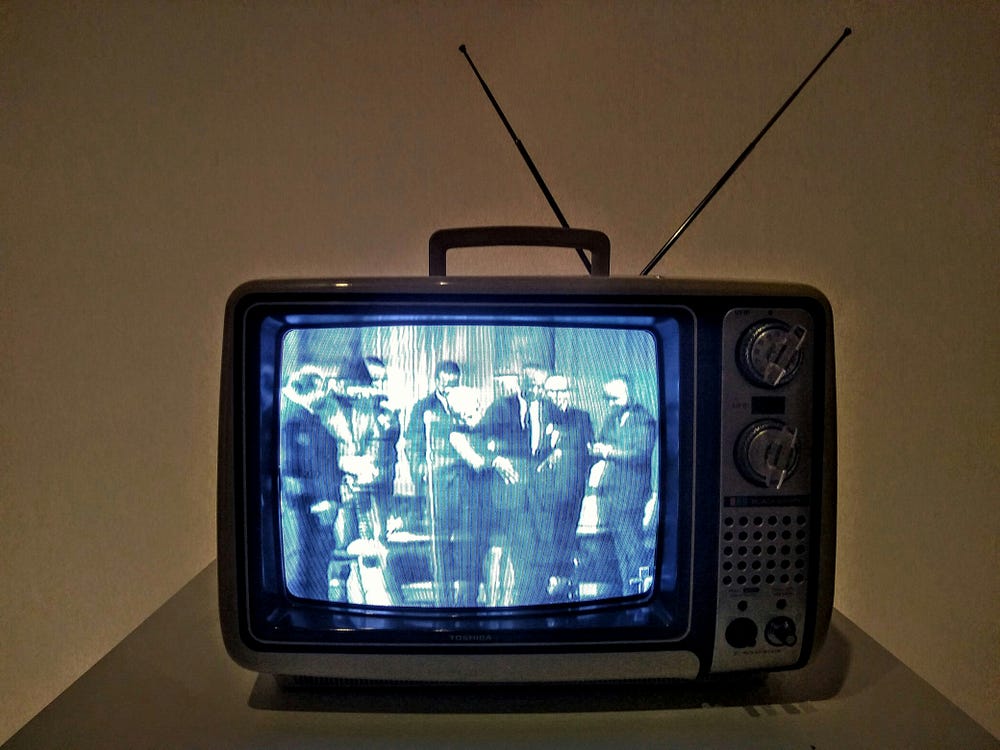
In the late 90s to early noughties, the economy was prospering, norms were being challenged through music, movies, TV shows, and transgressive art, and technology was being developed at breakneck speed.
In 2007, for example, the first iPhone was introduced, a touchscreen mobile phone with music-playing capabilities and internet access. This revolutionised communication by granting people access to each other from anywhere, via, not only smartphones but also social media (another product of the noughties) …
In 2003, Myspace and Skype were founded. Facebook followed suit a year later, and then came Instagram in 2010, and TikTok, (formerly Musical.ly), in 2014.
The noughties truly was a time of technological advancement, within which AI started to become less like something to be read about in sci-fi movies, and more like something to witness in day-to-day life.
But… What is AI actually all about? Is it really just about making our lives ‘easier’, or is there a deeper motive?…
Most people think that AI is something new, yet it has, in fact, been around for decades, and like most of the technological advances that we see today, originated from war…
Rooted in warfare, the first example of AI was facial recognition used in 1987 as part of a project hosted by the US government to create a database of facial images that could be used to identify soldiers.
The internet has similar origins, too, as well as mobile phones…
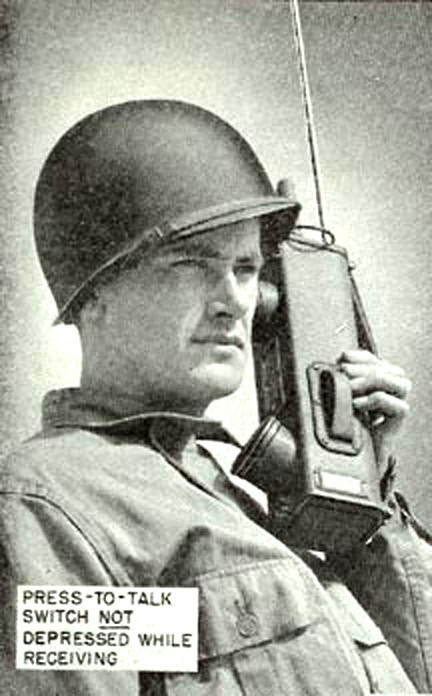
The modern internet evolved from ARPANET, a computer network (and the first of its kind) that was used in the late 60s and early 70s by the US Department of Defence. As for mobile phones, their development was funded by the military owing to the need for mobile communication during the Second World War. Ever wondered why mobiles looked so bulky back then? It’s due to them having originated from the U.S. Armies’ ‘Handie-Talkie’ (pictured above), a two-way radio that was small enough to hold in one hand.
Designed for far greater reasons than the ability to turn phones on more easily, despite the post-Cold War promise of peace, such military history is also the case with driverless cars, too…
In the mid-noughties, a US defence research agency, as part of their mission to accelerate the development of autonomous vehicles, offered a $1m cash prize to the first person to create a working driverless car. The brief was to ‘create a vehicle that can be used in hazardous military operations.’ The challenge quickly turned into a race between various tech companies, therefore proving that war = profit, and leaving us with the lingering doubt of… ‘Did we ever actually leave the division and control of the Cold War times behind?’…
Society is founded on the dynamic duo of war and profit, within which one feeds the other.
Stemming from the desire that countries have to achieve one-upmanship over each other, this is why technology, as the number one source of profit in the world, has always had a major influence on society, and in turn, war.
During the Cold War, for example, money was thrown into technology for the sake of countries, namely the United States and Russia, wanting to be the ‘top dog’. While seemingly nothing more than petty child’s play, such competitiveness proved to be an effective source of innovation.
Consider man’s greatest achievement (as some would say), walking on the moon…
Believe it or not, it was the US’ desire to have an advantage over Russia that led to the Apollo 11 mission.
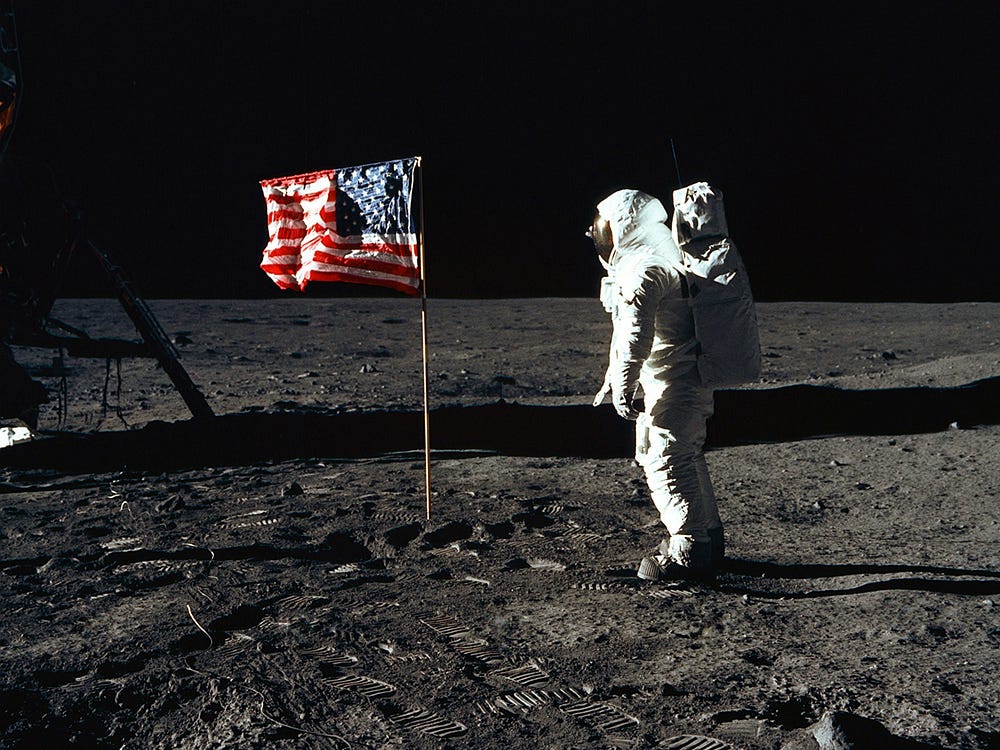
In 1957, the USSR launched the Sputnik 1 satellite into orbit. America’s response to this was to rally around its own space program, NASA, and get one-upmanship over Russia. The US achieved this when, in 1969, the Apollo 11 mission successfully landed the first man on the moon, thus proving that the United States’s space program had excelled past the USSR’s program.
Technology has always been a global contest over power, security, wealth, influence, and status. It’s always been ‘We’re doing this for military purposes’ disguised as ‘We’re doing this to make your lives easier…’
While the technology that we are seeing today is undoubtedly innovative, as something that is rooted in warfare, how good can we say that it really is when warfare is rooted in power and control?…
And, likewise, how good can we say that we are when we still haven’t learned from our past mistakes?…
The fact is that we can have all the technological advancements in the world, but no feature on a mobile phone can give us what I, for one, am still yet to witness in my 23 years on earth…
Peace.
Where is the peace?

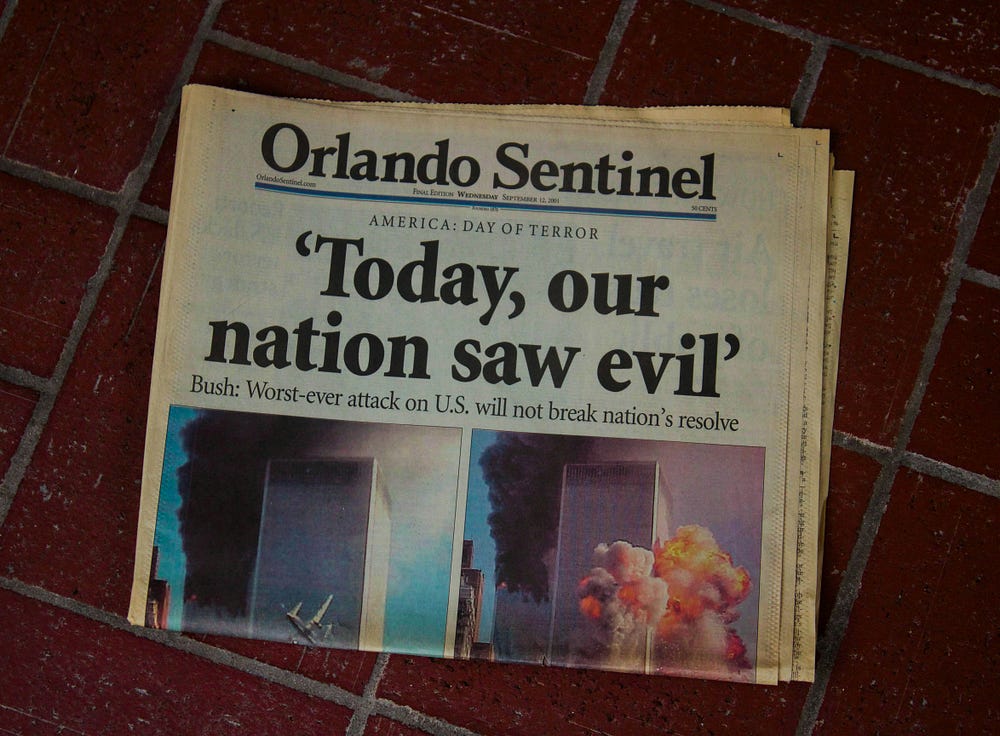
I was just 31 days old when the Islamist extremist group al-Qaeda carried out an act of terrorism that would go on to be etched in the history books forevermore.
9/11.
Led by Osama Bin Laden, al-Qaeda blamed the US for conflicts in the Muslim world and said that America’s support for governments in the Middle East, namely Israel and its repressive regimes against Muslim people, (since it was founded in 1948, the US has provided Israel with over $130 billion) was the reason for the attack.
The worst thing is the sense of being a stranger in your own land and feeling that not a single part of it is yours. — Raja Shehadeh, Palestinian lawyer and writer.
Now, of course, violence is never the answer, but one cannot help but question why the US enabled Israel… Why did they support Israel’s acts of genocide by, albeit indirectly, giving them the arms to attack Palestinians and forcibly misplace them (at best), and obliterate them (at worst) from their homeland…
Those who are complicit in acts of violence are no better than those who are carrying out the acts.
I was 31 days old then, I am 8614 days old now. And while the acts of violence that we are seeing today might not be as obvious as they were two decades ago, this isn’t because they’re not happening. They are happening, every day, but if the news channels were to give airtime to every example of warfare that we see, it would be a never-ending barrage of negativity. So, what do we do? We worry only about that which directly affects us, and countries base their morals only on their lack of morals.
Whom do we need to support to get the most money?…
It is for this reason that the UK offers such steadfast support to Israel, despite it imposing literal genocide on tens of thousands of innocent Palestinians. The UK does it, not because they don’t know the difference between right and wrong, but because they do know the difference between having the support of the US (which uncoincidentally happens to be Israel’s number one ally) and not having it. The UK therefore wants to demonstrate its subservience and usefulness to the US, even if that means supporting genocide.
Alas, in a society within which we are at the beck and call of our corrupt leaders like puppets on a string, it’s easy to think that we have no power to make a change, but we do. Not directly, granted, we cannot physically prise the weapons out of the hands of Israeli soldiers, but we can order the people who do have the power to do that to act…
Consider boycotts, for example. Russia, owing to Putin’s invasion of Ukraine, was banned from competing in the Paris 2024 Olympic games. Its athletes were not allowed to compete under the Russian flag or anthem and instead had to compete as ‘neutral’ athletes. This essentially disregarded Russia as even being a country.

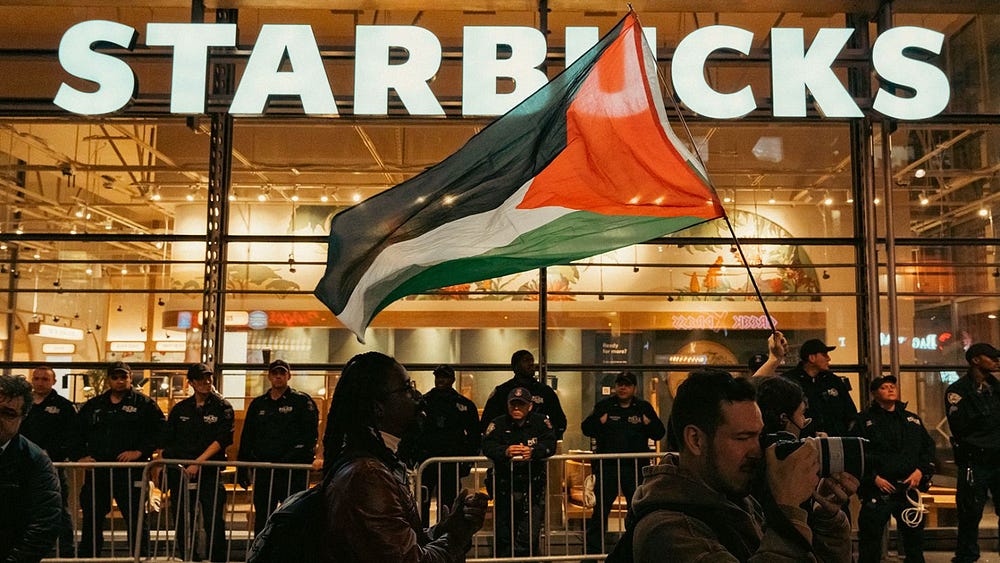
Boycotts can also take place towards chains, too, as was the case with Starbucks.
Because of its alleged associations with Israel, Starbucks customers were encouraged to take their money elsewhere following Israel’s invasion of Gaza, something which cost them $11 billion… This proves what can happen when people come together to campaign for what they know to be right.
The fact is that we simply cannot bury our heads in the history books and believe that the horrors of the First and Second World Wars and the Cold War are all in the past, ‘remnants of a different time’ that we will never return to.
One only has to pause for long enough (and look around far enough) to see that we never left that place… As one only has to realise that only when our world leaders start prioritising people over power and profit will world peace, finally, be achieved…
 Portfolio of Hope