

Around 450,000 years ago, Britain was a part of mainland Europe; however, a cataclysmic flood, the aftermath of one of the biggest tsunamis ever recorded on Earth, changed all that, turning Britain into an island nation.
Determined to find new lands to call their own, the British Empire was subsequently created just a few decades after the tsunami. It grew to become the largest the world had ever seen, whereby, at its height, it controlled over 450 million people…
The British Empire existed for nearly 400 years in total, and in this time, it controlled a quarter of the world’s land surface, including colonies and protectorates across North America, Australia, New Zealand, Asia, Africa, and parts of Central and South America. The empire also held influence in the Middle East and the Pacific region.
Headed by Queen Elizabeth I, the people colonised by the British had British laws and customs imposed upon them. Their traditional languages, religions, and ways of living, for example, were replaced with the English language, Christianity, and British systems of government and education.
Colonised countries also lost their ability to govern themselves and were, in many cases, violently oppressed.
Why did Britain want to do this?
To gain more money and power, and to spread Christianity and British ways of life…
Influencing international affairs, economics, and culture for a considerable period of time, Britain’s dominance allowed it to exert considerable sway over other nations.
Colonisation is the reason why so many countries are essentially ‘split up’ and speak different languages.
The USA, as a former British colony, has English as its native language. Not every country in America is classed as the USA, though, and therefore not every country in America speaks English.
Consider Brazil, for example. Despite being located in South America, Brazilians do not speak English, but Portuguese. This is because Brazil was a Portuguese colony for over 300 years.
Similarly, Argentina is also a country in South America, yet having been colonised by Spain, alongside much of the rest of South America, its dominant language is Spanish.
It’s all about power and control from the so-called ‘United’ nations…

Whilst some countries managed to gain their independence back (America, for example, went to war against Britain in 1775, and declared itself independent in 1776), others were not so lucky, one such ‘other’ being India…
After being under British rule since 1858, on the 13th of April 1919, over 10,000 people gathered in a park to (peacefully) protest British rule in India. Without warning, however, the British general had his troops block the only exit and fire openly on the unarmed crowd, killing over 350 people and injuring over a thousand more.
Likewise, the ‘scramble for Africa’ was also stained with blood…
The ‘Scramble for Africa’ saw several African kingdoms being destroyed by Britain. In their effort to colonise the continent (as it would transpire, Britain came to control 30% of the African population), they exiled the kingdom’s leaders, looted their treasures, burned several of their cities to the ground, and killed many people.
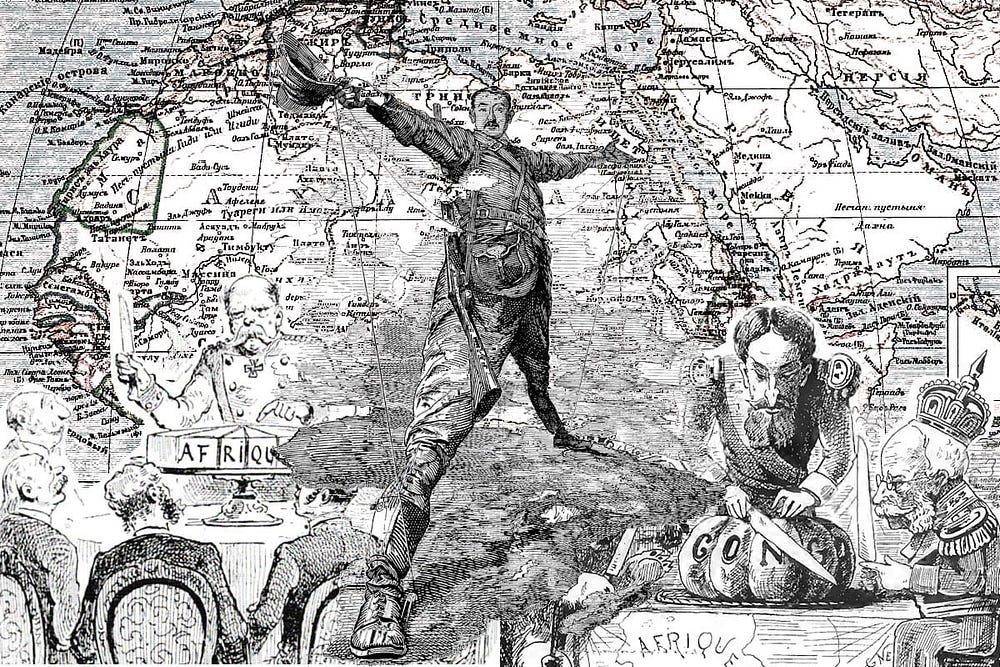
Alas, having substantial power over Africa, Britain became a major player in the slave trade.
As George Orwell once said, ‘Britain is like a wealthy family that maintains a guilty silence about the sources of its wealth.’
Prior to its abolition, it is estimated that British ships transported more than 3 million Africans across the Atlantic as slaves, mainly to its Caribbean and North American colonies.
At first, few people raised moral or religious doubts about slavery, since it benefited many parts of British life and its economy. It was only when external pressures started to pour in from Britain’s allies that the slave trade, and, eventually, colonisation, were finally abolished…
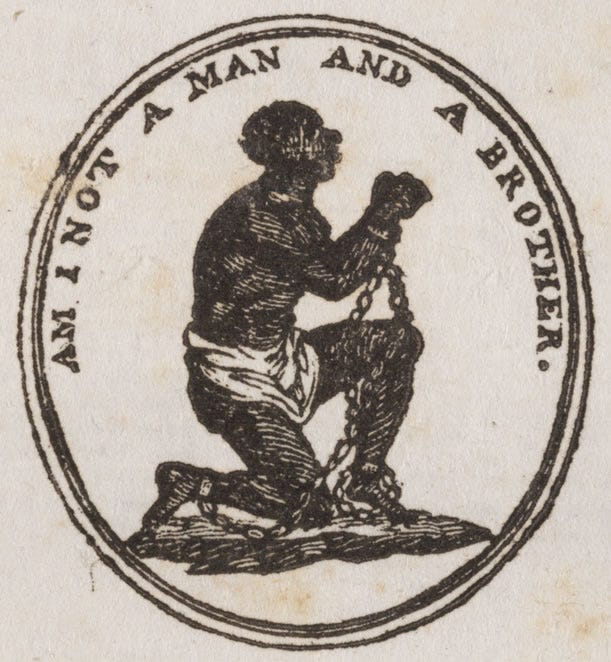
The Slavery Abolition Act of 1833 freed 800,000 Africans who were then the legal property of Britain’s slave owners. What many people don’t know, however, is that the act contained a provision for the financial compensation of the owners of those slaves, by the British taxpayer, for the loss of their “property”.
While the slave owners received the modern equivalent of between £16bn and £17bn (the amount of money borrowed was so large that it wasn’t paid off until 2015), the slaves received nothing. Instead of compensation, they were forced to provide 45 hours of unpaid labour each week for their former masters, for a further four years after their supposed* ‘liberation’.
*‘Supposed’ because even today, almost two centuries after slavery was criminalised, we can still see the remnants of the British Empire within our culture…

The influence of the British Empire on modern-day Britain
Using pounds instead of euros, driving on the left-hand side instead of the right, not measuring in kilometres but in miles, why do we want to distance ourselves from the rest of Europe? Is it because we have some unwarranted superiority complex? (English is the most commonly spoken language around the world, after all) …
We still sing the same national anthem that we sang in the 17th century. ‘Scatter our enemies and make them fall! Confound their politics, God save us all!’ (Hypocritical when just a few lines later it’s, ‘Lord make the nations see that men should brothers be) …’
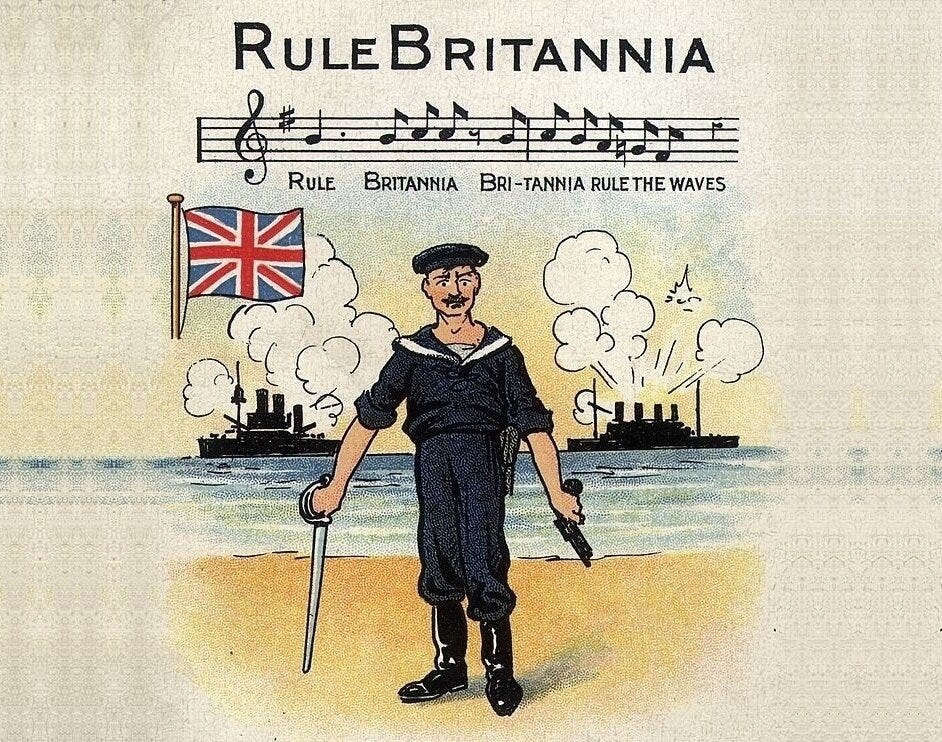
We also still sing ‘Rule Britannia’, a blatantly racist song that, for some reason, is still used as the anthem at the BBC’s ‘The Last Night of the Proms.’
Marking a continuing attachment to a historical era of global domination, to sing the words of such songs now is to glory in Britain’s subjugation of other races and nations, and to declare that, not only does Britain not care about those past inhumanities, but that it revels in them.
Despite being a part of Europe, English people are some of the least likely in the whole continent to see themselves as truly European.
In places like Spain, nearly 75% of its citizens see themselves as belonging to a broader European community, whereas in England, some polls come back as low as 15%.
It is such division that, I believe, is the cause of much of our distaste toward immigrants.
Across Britain, misrule by disinformation has created in many people a particular dislike of almost all foreigners, immigrants, refugees, and asylum seekers. Instead of focusing on the real cause of Britain’s grotesque inequalities, they have been blamed on the most vulnerable.
The 1905 Aliens Act in Britain was the first to introduce immigration controls and registration, primarily focused on restricting “undesirable” immigrants from areas outside the British Empire, particularly East European Jewish immigrants. While the Act provided a legal definition of refugees, it also restricted entry based on perceived economic or cultural burdens on the state.
Policy makers push forth the rhetoric that ‘stopping the boats’ is all about preserving the safety of our country, yet really it’s, yet again, all about money, as it has been for decades.
Why does Britain think that it’s so much better than the rest of the world?
We might be an island, but the fact is that we are separated from the rest of Europe only by a narrow stretch of water that we call the English Channel. We are not ‘superior’ for being separate… If it wasn’t for the tsunami that occurred 450,000 years ago, then it is entirely possible that Britain would never have become an island or developed the seafaring culture that eventually turned so much of the global map pink.
Maybe we’d be speaking French and eating snails…

If there hadn’t been a flood that led to the separation of Britain from mainland Europe, then ‘maybe we’d be one of them’, the Reform UK supporters say with a grimace.
‘Ugh.’
Perhaps it’s best not to tell them that we already are [one of them] …

Borders don’t exist.
We are all interconnected, and not just geographically (although, as we now know, there is only a very narrow stretch of water separating the UK from the rest of Europe), but also, and primarily, in terms of our humanity.
While our cultures might differ (’tis the way of the world when we’re socialised to think that being separated geographically means being separated morally), our humanity remains the same. It is only when the greed for power and money takes over that this fact gets clouded.
There’s a reason why news channels don’t just cover national news stories, but international stories too, and that reason is precisely for the above. Because we’re all interconnected.
It’s why what is happening in Gaza has struck a chord with so many of us, sparking calls for a ceasefire all over the world. And it’s also why, after the murder of George Floyd at the hands of a police officer, protests broke out everywhere.
When humanity is not dependent on geographical boundaries, we can feel their pain. You don’t have to know someone or speak their language to have empathy. Unless you’re a sociopath, being human is enough.
The struggles we fight are not confined to our own countries.
Look at a map or a globe, and notice how close all the countries are to each other. Nothing is isolated. While we might live in different countries, or even on different continents, we all live on the same shared planet.
Borders between nations are simply abstractions, imaginary boundaries established by agreement or conflict.
The fact is that we all bleed the same. We will all experience love and loss and pain and pleasure. We all occupy the same amount of space on the same ball of rock that is currently hurtling through the universe with an estimated 100 sextillion other balls of rock. Our differences are, therefore, far rarer than our similarities…
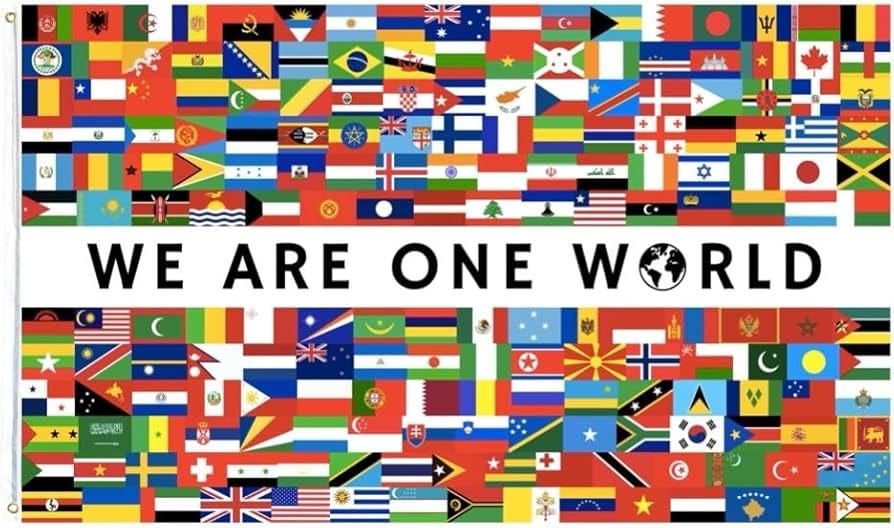
Upon realising the interconnectedness of our world, you realise the importance of taking an intersectional approach toward politics.
It’s no use just keeping up with party politics when that represents just one tiny piece of one very large jigsaw puzzle (the micro to the macro). As the late Dr. Martin Luther King Jr. said…
No one is free until we are all free.
When you stop viewing the world from the perspective of what is a largely socially constructed bubble that is individual countries, you realise this.
United in our shared mission of achieving world peace (we don’t want nations to tolerate each other; we want them to love each other), we must keep on fighting the good fight, together.
One world,
One love,
One community.
We belong to the Earth rather than to a nation, and to a species rather than a nationality.
We are one.
 Portfolio of Hope