

Religious behaviour, that being the belief in and worship of a superhuman power/powers, has been occurring since the Middle Palaeolithic era/the Middle Stone Age (45,000 – 200,000 years ago), the earliest period of human history. In AD terms, this translates to a period spanning from approximately 298,000 BC to 38,000 BC.
The type(s) of religion that people in these ages followed were not the monotheistic, organised religions that are so common today. Instead of being so concerned with people, their focus was on nature, and the belief that God and the universe are one.
It’s not a coincidence that followers of pagan, pantheistic religion have been demonised so much over the years.

During the Christianisation of Europe, pre-existing pagan beliefs and practices were demonised. Christianity often depicted pagan gods and goddesses, particularly those associated with nature, sexuality, and wildness, as evil entities, sometimes directly associating them with the Christian devil.
It was such demonisation as this that led to the witch trials in early modern Europe and colonial America. They were a part of a broader struggle for religious control.
In many cases, witchcraft was considered a form of heresy, a challenge to the established religious order. Witch trials were subsequently used to silence individuals who challenged authority and posed a threat to Christian society. They were a means to assert dominance and control.
The fact is, however, that those who feel the need to assert dominance and control do so because, deep down, they don’t even believe in themselves…
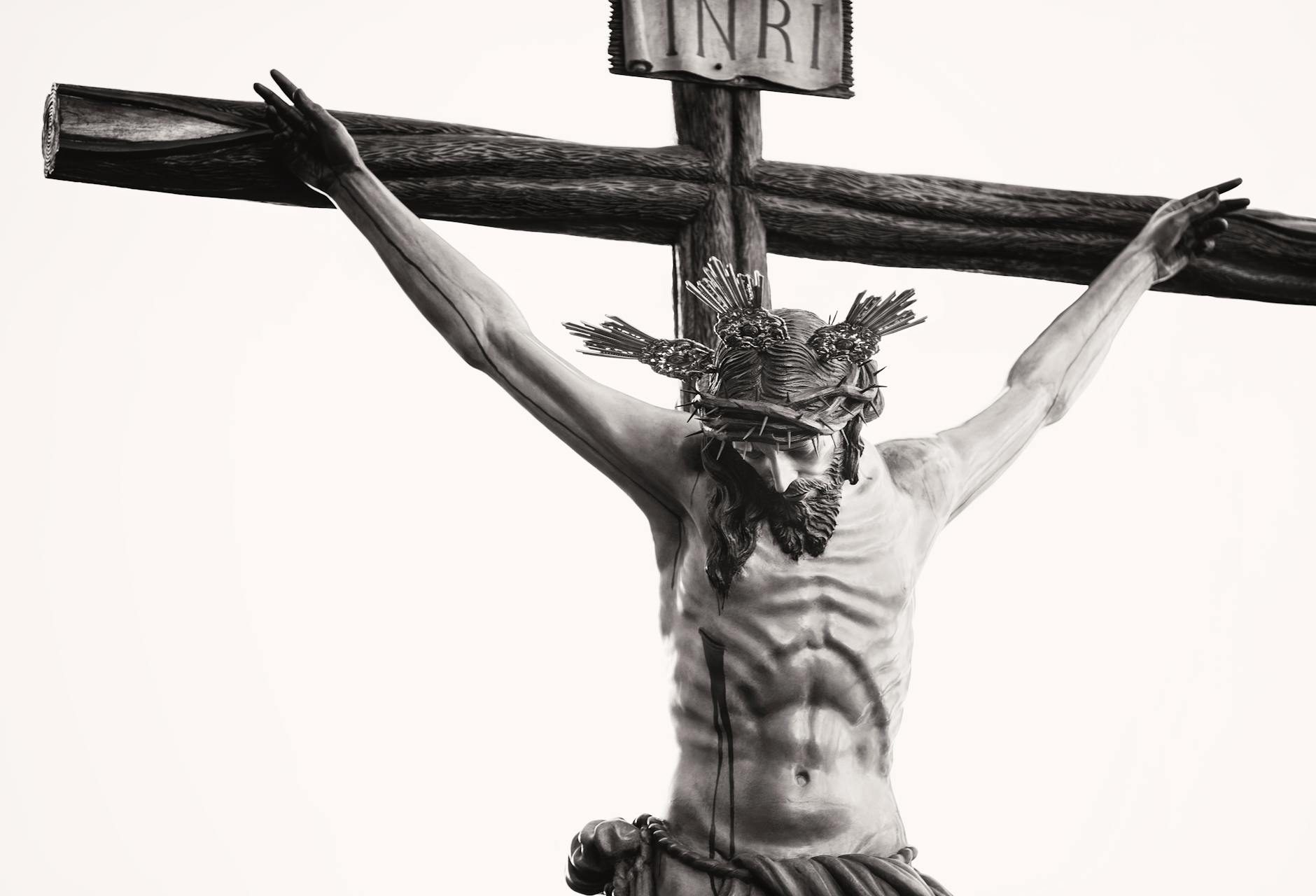
It’s no surprise that Christianity has felt so threatened by Paganism through the years… One only has to flick through the history books to realise that paganism is the true religion of the world.
Unlike Christianity, which didn’t arise until the 1st century AD, paganism has always existed.
If the greatest proportion of time has been spent ‘BC’ (before Christ), then how can the origins of the world be explained by a God that wasn’t even born?
The Bronze Age (6300 – 2800 BC) ended approximately 1200 years before the start of Christianity. During this period, religion still existed, although in a very different form.
During the Bronze Age, there were no wars fuelled by religion, as we see far too much of today, because everyone understood that God wasn’t something to be debated over, ‘my God is better than your God’, but something to be at one with.
We are at one with the rhythms of nature and the seasons that rule us.
Living close to the earth, our lives are tied to the soil beneath our feet and the animals around us.
Life is simple, yet full of meaning.
At night, our elders tell sacred tales of the spirit world under star-filled skies that stretch to eternity. They lead us in rites at oak groves, stone circles, and sacred wells, where we honour deities of the earth.
During harvest time, we honour our ancestors and nature spirits with festivals and offerings.
Just think about how much conflict we could end before it starts if we had the same approach to life today…

Monotheism might have largely replaced panentheism, but its impact can still be seen far and wide.
We can see the influence that paganism and pantheism have had on society by things that most of us will never think twice about, like days of the week.
Even the days of the week are based on Germanic gods.
- Sunday: Named after the sun.
- Monday: Named after the moon.
- Tuesday: Named after Tiw, the Anglo-Saxon god of war and sky, also known as Tyr.
- Wednesday: Named after Woden (Odin), the chief god in Norse mythology.
- Thursday: Named after Thor, the Norse god of thunder.
- Friday: Named after Frigg (or Freya), the Norse goddess of love and beauty.
- Saturday: Named after Saturn, the Roman god of agriculture and wealth.
The Christian calendar of festivals is also majorly influenced by paganism.
As I wrote about HERE, both Christmas and Easter, festivals that we associate with Christianity, the birth and resurrection of Christ, have their roots in Pagan tradition.
The reason? Because during the spread of Christianity, many pagan traditions were adopted to make the religion more appealing to those who were converting (i.e., to make it seem less like the fairytale that it is) …
The date of December 25th, for example, was chosen as ‘Christmas’, not because this is the date that Jesus was born, but because it coincides with the existing pagan festival of Saturnalia, and takes place during celebrations of the winter solstice.
Similarly to Christmas, Easter is also rooted in pagan tradition.
Easter began as a pagan festival celebrating spring in the Northern Hemisphere, long before the advent of Christianity. Its traditions, and even its name*, were taken from something that already existed.
*(The name ‘Easter’ is derived from the Germanic goddess Eostre, who was associated with spring and dawn).
Symbols like eggs and bunnies, which are associated with fertility, have pagan origins, too.
Why did Christianity have to misappropriate paganism?
Christianity has reshaped minds on a mass scale. Many people now gather in churches in search of ‘God’, despite God having always been around, though not as ‘man’, but as nature.
An empire of power and control.
The descent of paganism came about during the Roman period under the rule of Constantine (306 – 337 AD).
Prior to Constantine’s rule, Christians were persecuted owing to their ‘refusal to worship Roman gods’, their ‘antisocial tendencies,’ and the perception that they were a ‘dangerous, foreign cult.’
Sound familiar? The Salem Witch Trials, anyone?…
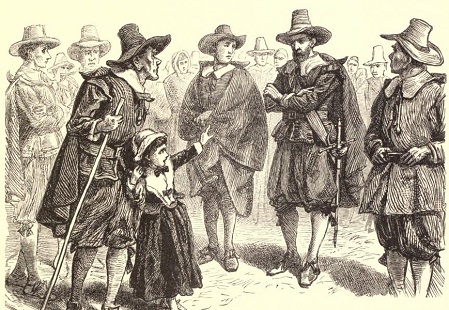
Religion might change, but the desire for power (at whatever cost) stays the same.
Had Constantine not become emperor, Christendom* might never have emerged, and paganism might still be the ruling religion.
*(Christendom = the historical period where Christianity was the dominant religion in a society, particularly in Europe during the Middle Ages and Renaissance).
While it’s impossible to say definitively what the world would be like without the Roman Empire’s influence on Christianity, it’s highly probable that paganism would have remained a dominant force in Europe and potentially beyond.
The Roman Empire’s adoption and spread of Christianity significantly impacted the trajectory of religious history, and without that influence, other belief systems, including various forms of paganism, could have persisted and potentially evolved or even spread further.

Whether Jesus existed or not is largely irrelevant; either he did or he didn’t. If he did, though, then he was not the ‘son of God’ any more than Constantine was the son of God.
That is to say, like Constantine, Jesus, should he have existed, was nothing but a(nother) power-hungry man.
Swapping fact for fairytale, why do people go searching for something unseen when the reason for our existence is visible all around us, in nature?
Paganism might have declined over the years, but all you need to do to get it back is step outside of your front door.
The magic is waiting for you.

 Portfolio of Hope