
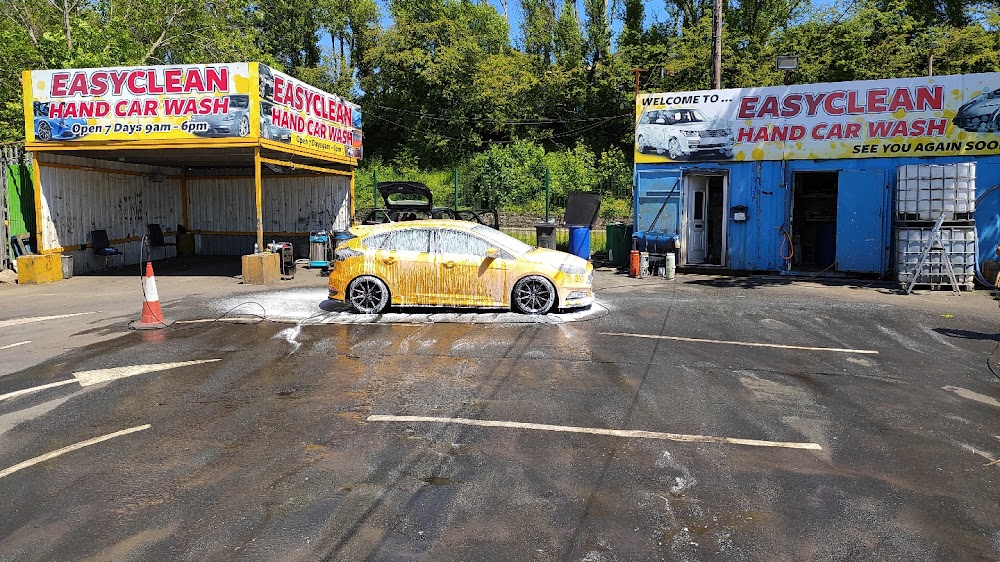
In every community in the UK, people are being exploited for cheap labour as part of modern-day slavery. The hand car wash sector is especially affected by this, as research by the Modern Slavery Helpline highlights.
27% of cases recorded to the helpline about labour exploitation concerned car wash workers.
Despite this, in 2019, the government rejected a call for a trial licensing scheme to try to tackle the issue. If approved, this would’ve ensured that all carwashes were complying with employment, tax, health, safety, and environmental laws. Because it wasn’t approved, however, the exploitation continues.
How is it allowed to continue?!
The chair of The Car Wash Association (CWA), Brian Madderson, expressed his disappointment with the outcome of the calls for a trial licensing scheme in an interview with BBC News.
We are being given words of reassurance, but what we need is firm action against the modern slave owners who evade taxes and exploit vulnerable workers.
And that they do…
What are they trying to hide?
In 2022, Nottingham Trent University partnered up with the government-backed Responsible Car Wash Scheme (RCWS) and the Home Office’s modern slavery prevention fund.
After conducting surprise inspections of carwashes in Leicester, Suffolk and Norfolk, they found that only 7% had undertaken right-to-work checks, 6% had written contracts with workers, and 11% handed out payslips so that they could prove they were paying the legal minimum wage.
What’s more, less than half of carwashes (41%) were registered companies, indicating that most are not registered with the tax authorities at all.
And so, this begs the question (again)…
What are they trying to hide?
There are an estimated 5000 hand car washes in the UK, employing at least 15,000 people, yet more than 90% of them are employing workers illegally…
Unfortunately, exploitation in the car wash industry is widespread (see above). Inspections may have only been conducted in three places as part of this research, but as Teresa Sayers, the managing director of the RCWS, says:
The study was representative of the picture across the UK.
Evidently, it’s an endemic, and one which is highlighted by The Salvation Army.
Just consider the story of Karel, for example…

Karel, who is in his early twenties, used to live with his family in Poland. However, a lack of job opportunities in his hometown made him keen to pursue a different life. He was therefore interested when he heard of work opportunities in the UK. He signed up in Poland, and arrangements were made to bring him into the UK by coach.
When he arrived, however, the opportunities that he had been promised turned out to be working in car washes, where the conditions were awful, and so was the pay. But Karel was stuck… Whenever he spoke to his traffickers about how badly he was being treated, they responded by threatening to kick him out onto the streets with no money, no ID documents and nowhere to stay. They even made threats of violence against him and his family back in Poland, claiming they knew his home address and would hurt his relatives if he didn’t comply. They also showed him a collection of weapons that they said they would use on anyone who went against them.
After eight months, Karel eventually found the courage to run away and went to the police. He was referred to The Salvation Army for support. There, specialist staff assessed his situation and planned for him to be transported to a safe place, away from the area his traffickers were operating in. He was looked after in a safehouse for several months until he decided to return to Poland to be with his mother.
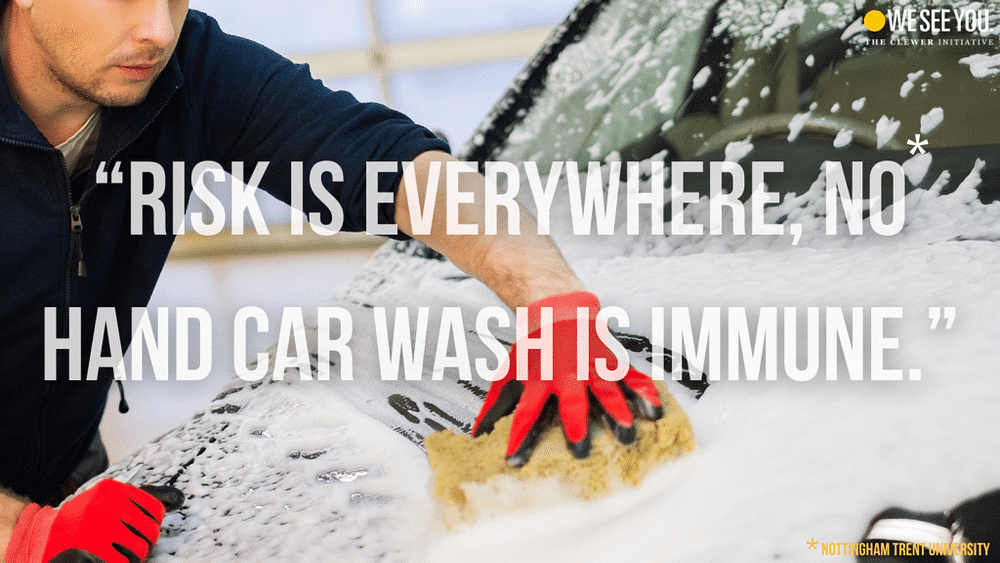
Like Karel, vulnerable people all around the world are being promised a better life in the UK, only to get here to find that they have been duped.
Life isn’t better for them here, as I realised today while I was waiting for my car to be valeted at a local carwash…
My experience
The workers had a system going from entry to exit. Working their way down the long line of cars, each was a component in the machine. Most wore only t-shirts. How they could do it, I have no idea. I was sitting inside my car with the heating on, and even I felt cold, so they must have been freezing.
I felt a sense of unease the whole time I was there. Not because the men did anything to make me feel uncomfortable (they all seemed lovely), but because I felt like, by taking my car to them, I was being an active participant in their exploitation.
How is it fair that I get to sit in my Audi while they have to scrub my car for a pittance just to be able to feed their families this Christmas? It’s not fair. And the same idiots who take to Facebook to voice their grievances about immigration are with me in the queue.
If people are so concerned about immigrants ‘taking our jobs,’ then why aren’t they washing their own cars?…
I don’t know if the carwash I visited was exploiting their workers or not — I paid using my card, so from a monetary perspective, things did seem above board, but still, I felt so sorry for the workers.
Is this really the Britain they imagined?
I left the guy cleaning my car with a £20 tip at the end, and I myself with a lingering sense of injustice, yet again, at the state of this country.
Where is the better life they were promised?
Where is the justice?
 Portfolio of Hope