
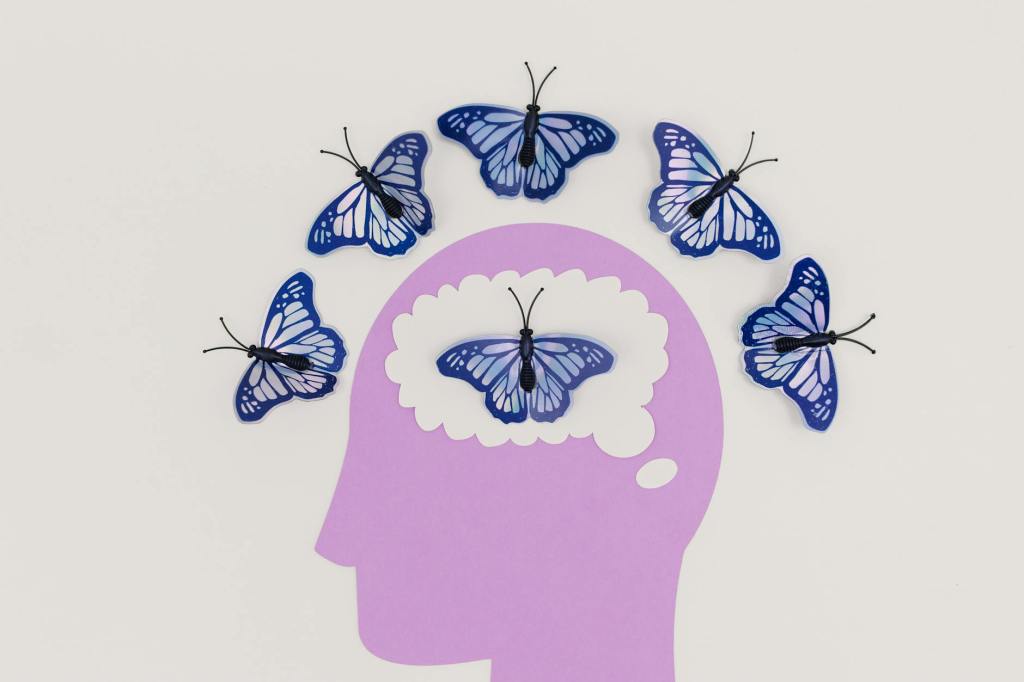
The whole effort of an anorexic is directed towards control of the uncontrollable: the body, other people, and ultimately, life and death.
So terrified are they of losing control that they are frozen on the borderline of life and death, power and madness.
Such a yearning for control, in most cases, originates in childhood, where children were either told that they should keep their feelings ‘firmly under wraps and not expressed at all’, or they were in the firing line of violent outbursts where people got hurt emotionally and/or physically. In either case, there was no room, for example, for anger or grief to come and go. This is why, in adolescence, the children of such families might develop anorexia.
The mind/body split
When eating becomes the primary focus of one’s life, demanding continual planning and self-discipline, the obsessive preoccupation serves as a defence against experiencing painful emotions. It therefore also acts as a preventative factor against the outbursts reminiscent of their childhood.
By separating the body from the mind, external perfection can be sought to compensate for profound feelings of inferiority. This is how anorexics can get to such low weights and keep going. It’s all driven by the distorted logic that their body, a ‘foreign container’, is filled with all the bad feelings, and that only once it is destroyed can their mind, the ‘real me’, be free of intolerable feelings, painful memories, and physical harm.
Anorexics have this perspective, given that the unhappy family situations that so many grew up in could not in any way provide a safe enough setting for them to experience a normal, full range of feelings and learn to survive them without disastrous consequences. So often, there were disastrous consequences to ordinary healthy feelings, whereby it was impossible to feel angry, for example, without also feeling guilty. And so, they learned to squash their emotions so as not to cause further distress.
No matter how emaciated I am, all is well. I don’t know what all the fuss is about.
For people with eating disorders, their self-worth only seems to exist if it is validated by an external source. This is why, when they eat ‘good’ food, they can allow themselves to feel ‘good’ as a person, until the time when they eat ‘bad’ food, and then the pattern reverses.

As well as relationships within the family being troubled for many people with eating disorders, another familial similarity can be seen in the particular roles that many anorexics played within their families when they were children.
Taking on the role of the ‘responsible child’ is a common experience in eating disorder patients. This often includes taking on what are generally considered parental tasks, for example, having considerable responsibility for the running of the home. Generally, these tasks hold a lot of responsibility, but ultimately, the child has little control. At this stage, the child learns how to look after others’ needs and, during this process, begins to suppress their own. The more the child fulfils this role, the more skilled she* becomes at suppressing her own needs.
*(‘She’ because, in the patriarchal society within which we live, men hold more power than women, and are therefore taught to have more of a voice and act out their feelings. In contrast, women tend to internalise their feelings and act in. This is why there are so many more women in mental institutions as opposed to prisons).
How to move forward
Most women have real difficulty in consciously acknowledging the anger they hold surrounding their roles as children, as this would mean recognising their own resentment toward their parents, particularly their mother, whom they had always tried to protect against any emotion perceived as negative.
For the guilty child who finds themselves, a decade later, stating that ‘it wasn’t that bad’, it’s important to remember that emotional hunger isn’t always about receiving nothing. It can also be about receiving the wrong thing (for example, being given gifts and money when what you really need is a hug).
Alas, there doesn’t need to be any hatred aimed towards anyone, only awareness, and this is what recovery strives for.

Recovery relies on evoking an awareness of impulses, feelings, and needs that originate within oneself. The purpose of this is to encourage greater autonomy and self-directed identity, where what one has to say is listened to and made the object of exploration. This is to combat the issues with self-image that many people with Anorexia experience (very poor with extremely high ego-ideal* standards).
*(The ego ideal is a core component of the superego in Freudian psychoanalytic theory, representing the internal image of the ‘perfect’ self that an individual strives to become).
I needed to express myself, not only so that others might hear me, but so that I could hear myself.
And this leads me onto my next point…
The importance of art in recovery.
Art acts as a vital link between the anorexic and the outside world. While both are about expressing oneself without words, unlike anorexia, which acts like a numbing agent where being constantly fearful of a lack of control can translate to a total cutting out of emotions, art helps and guides one back to communicate with others, bringing pain into the open. It does this owing to the separation that it offers.
Art can help one to distance their emotions from themselves. Therefore, instead of feeling guilty for feeling a certain way, as they might previously have done, getting their emotions down on paper can help them to analyse their feelings as though they were observing someone else.
No longer did I feel guilty about wasting so much time in hospital, because I was now using the experience to fuel my work.
Mindfully honouring creativity helps one transcend the feeling of deficient emptiness that drives self-destructive behaviour. ‘What is in must out.’
Ultimately, though, recovery can only be achieved when one can see the emptiness of their behaviour. Anorexia is not good, not evil, just an outside ‘thing’ that has been unintelligently used to ease suffering. I write ‘unintelligently’ here, not to be rude, but because no addiction in the history of the world has ever alleviated more suffering than it has ended up causing.
Art, however…
Art saves lives.
 Portfolio of Hope