-
The Fragility Of Democracy: Is British Democracy In Crisis?
When people get together in group settings, they are often subject to experiencing conformity pressures that can bias their ability to reason clearly and rationally. So obsessed are they in making the ‘right’ decision that people can subsequently lose sight of what they actually think for themselves…
They forget that they have the right to a personal opinion, blindly subscribing to whatever the ‘in’ opinion of the group is, whether they believe it or not, instead…
By no means a new phenomenon either, this concept, ‘groupthink’, has been a pressing issue for hundreds of years.
The eighteenth century saw the first wide-scale movement in trying to break away from such blind conformity, via the Enlightenment, also known as the ‘Age of Reason.’
Advocating for democracy, individual liberty, freedom of expression, and the eradication of religious authority, enlightenment is ‘man’s emergence from his self-imposed nonage.’*
*(‘Nonage’ being the inability to use one’s own understanding without another’s guidance)…
Many consider the Enlightenment a major turning point in Western civilisation, an ‘age of light replacing an age of darkness.’
Yet when two of the main schools of thought attached to the Enlightenment period, despite being proposed over three hundred years ago, are seemingly no closer to coming into fruition today;
1. That all legitimate political power must be “representative” and based on the consent of the people
&
2. That people should be free to do whatever is not explicitly forbidden,evidently, we’re still sitting in the dark…
Political power is not representative when we are essentially living in a two-party state in which there is nothing that we can do…
Whether in the UK, in the case of Sunak VS Starmer, or in the US, in the case of Biden VS Trump (convicted felon vs probable dementia sufferer), we are forced to either not vote at all, or to simply vote for ‘the lesser of two evils’, neither of which should be happening in a so-called ‘democratic’ society…
We should not have to base our vote on who we want governing two of the most powerful countries in the world on who is marginally better/’slightly less of a bigot…’
As the former leader of the Labour Party, Jeremy Corbyn told the Standard last week:
Keir Starmer will win on an anti-Tory vote, not a pro-Labour one.
As I said, the ‘lesser of two evils’, where the person who’s been chosen as the candidate was nominated by nobody, selected by nobody, and imposed by the party head office…

When the election of a party leader is all done internally, yet as we have seen in recent years, who leads a party can completely change the direction of that party, we should have a say.
We can vote for the party, albeit only once every five years, but we can never vote for the leader of that party, unless we are either a serving MP or an official party member.
But again, when a new politician is elected as leader, and they then have the scope to change the party entirely to fit their image, how can we only have the right to vote for the party and not the person, when the person can completely change the party?
Make it make sense…
Consider Labour under Jeremy Corbyn, for example.
From 2015 to 2020, Corbyn, a staunch socialist, was in power, thus transmitting his values to the Labour Party and transforming the party further to the left.
After Labour lost the 2019 general election, however, Corbyn resigned, Starmer took over, and the party was moved further to the right.
As Rachel Reeves, shadow chancellor, told the Financial Times:
The party [labour] is completely unrecognisable compared to how it was a few years ago.
And as this CNN article writes:
‘To the left, he [Starmer] is someone who doesn’t have the conviction to make radical changes and, once in office, will not be materially that different to a Conservative leader.’
The fact is that politicians say what they have to say to get in power, but once they’re in power, they’re just as quick to abandon their policies as they were to make fingers-behind-the-back-crossed promises…
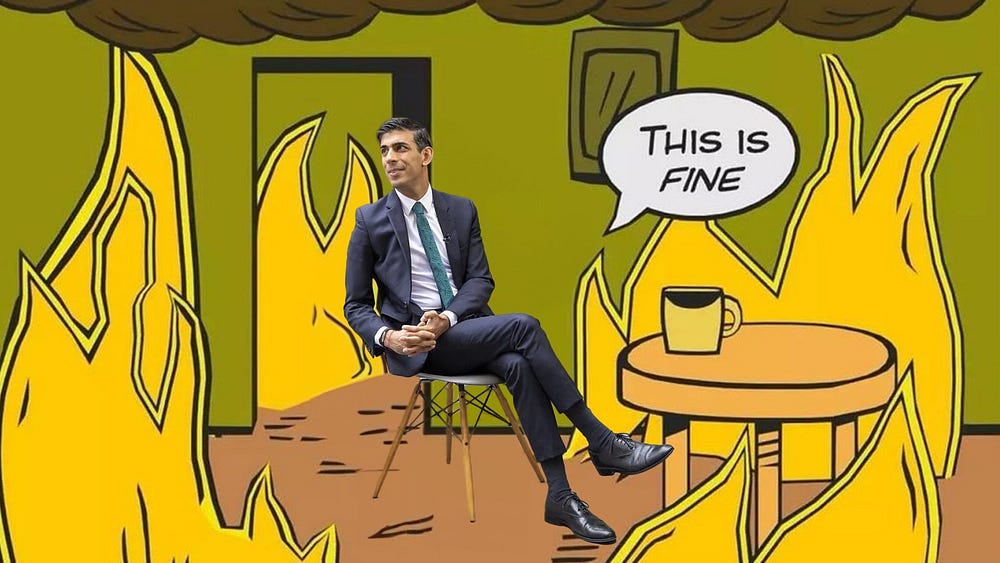
https://www.theneweuropean.co.uk/what-labour-should-say-about-sunaks-cynical-green-u-turn/ In 2020’s contest for a new labour leader for example, Keir Starmer thanked his predecessor Jeremy Corbyn, and pledged to keep many of the same far-left policies in place. Yet last year, Starmer blocked Corbyn from standing as a candidate for the Labour Party in the upcoming election (he is standing as an independent instead), abandoned most of his pledges, and transformed the party into one that, in many ways, is hard to distinguish from the conservatives.
In the next election, both parties will have the same manifesto and the same rich donors pulling the strings.
This consequently leaves a huge gap in political representation…
‘Tory in blue versus Tory in red.’
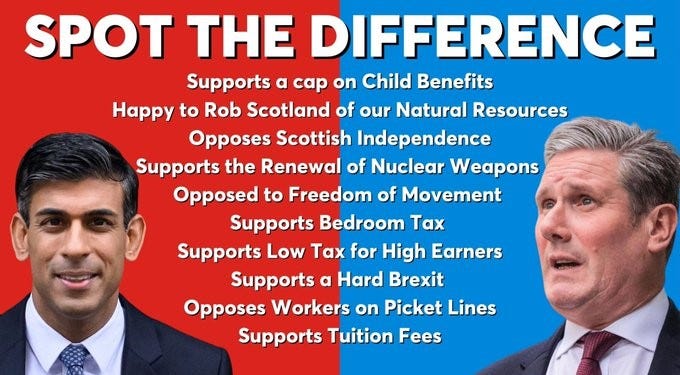
https://www.theneweuropean.co.uk/what-labour-should-say-about-sunaks-cynical-green-u-turn/ Referring back to the first of the ‘two main schools of thought’ in Enlightenment, that all legitimate political power must be “representative” and based on the consent of the people, the only way for this to be achieved is by changing the electoral system from ‘first past the post’, as it is now, as is facilitating this two-party state, to proportional representation.
At present, if, for example, the Conservative Party were to get 40% of votes, and because a lot of people have become disillusioned with the Labour Party as it is now, the remaining votes are split 20/20/20 between an older generation who have always voted Labour, the Liberal Democrats, and the Green Party who are overwhelmingly being adopted by a younger generation who are losing faith in the Labour Party, even though the Conservative Party don’t have the majority of votes, they will still win the seat.
How is that representative?
How is that fair?
How is that democratic?…It’s not.
We can no longer vote for the party that aligns with our own values, we have to vote ‘tactically’ so as not to split the votes and thus reduce the chance for the opposition to win.
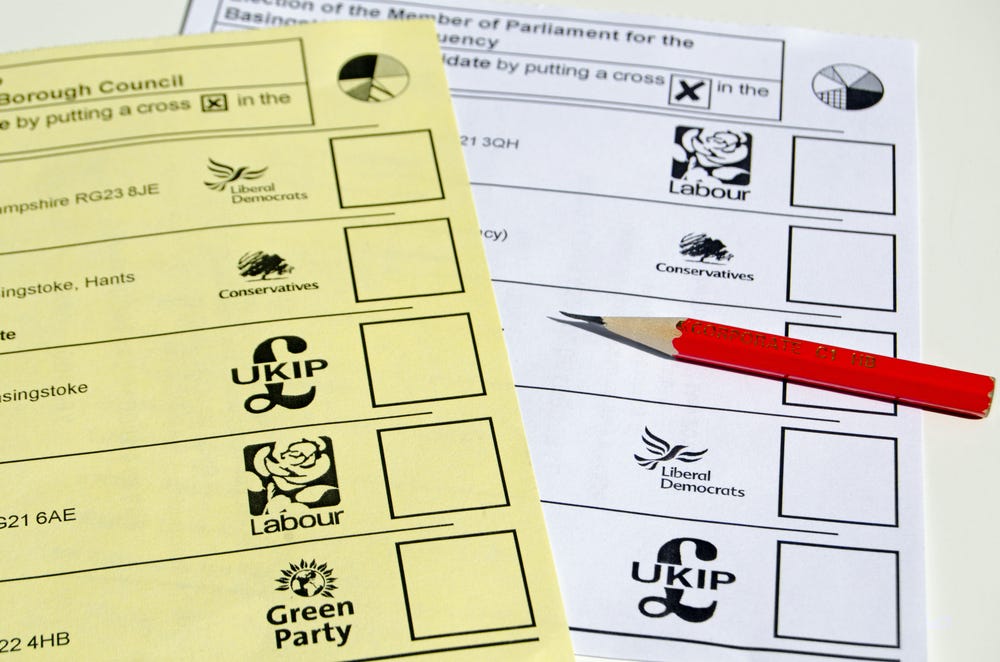
https://www.unlockthelaw.co.uk/News/uk-general-election-2015/1411618223.html In this election, I am voting for a party that no longer wholly aligns with my values because we have two choices, The Conservative Party, or the Labour Party, (and I’ll be damned if the Tories get in, again, after 14 years of austerity that has turned the UK into, to use the politically correct terminology, an absolute shitshow).
If the electoral system was democratic, under a system of proportional representation as opposed to ‘winner takes it all’, first past the post, then I would be voting for the Green Party. The fact that I am writing this, the fact that I am saying that I am voting for a party that I do not want to vote for simply because ‘it’s the slightly better option’, surely that should be a blindingly obvious indicator that something is not right here, that our system of democracy is broken…
I say ‘fuck the Tories’ but I also want to say ‘fuck labour’, or rather, ‘fuck Keir Starmer’, the spineless, champagne socialist… But I can’t. I have to go to the polling booth on Thursday, putting a cross next to Labour just to get the Tories out.
And while I don’t have a gun held to my head, I do have the threat of the Tories getting in again going around and around in my head constantly, and the ever-present question of, ‘but what alternative choice do I have?’ there indefinitely.
Open your eyes, can’t you see? This is not democracy.
Yet will anything be done about it?
No.
Since the Second World War, all the Governments in the UK have been formed by either the Labour Party or the Conservative Party, as though they are the only parties we have… But they’re not. We don’t only have two choices when we vote.
Alas, I will be voting ‘tactically’ at this election to get the Tories out, but in five years time, at the next general election, I hope that we will have a more democratic system, that we won’t have to vote on who we don’t want in, but that we can vote on who we actually want in knowing that our vote will count for something.
Without representation, we have disillusionment, and it is when we become disillusioned with society that we all suffer.
Mentally, spiritually, and physically, we all suffer the consequences that come off the back of feeling powerless, our power to demand change deprived to us by the power-hungry who keep us in chains.
Five years…
We might not be there now but in five years?
Please, let there be change.
-
We Don’t Need God: Religion Is The Source Of Oppression
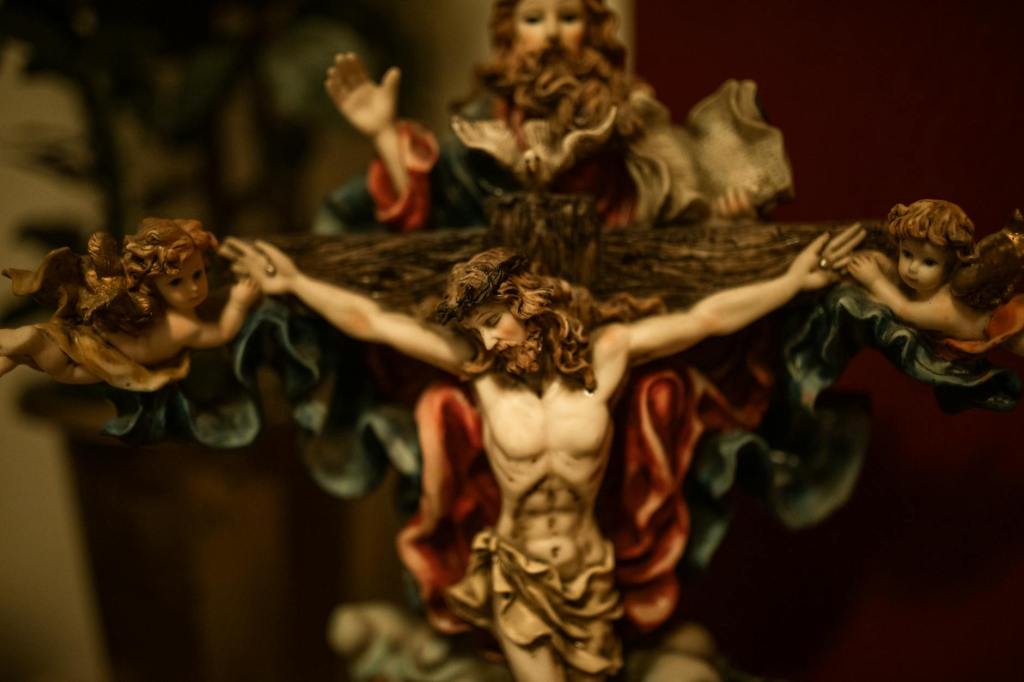
A little boy without a father tries to find him in the streets,
a man without religion becomes ‘just another clique’,
trying to find something that was never there,
a sense of peace in a world in which no one seems to care.Why?
Why does no one care?
In desperation, he tries to muster up ‘God’ out of thin air,
trying then failing,
travesty prevailing,
when it’s all just futile.When we’re born,
we exist for a short while,
then we die,
it still (and forever will) blow my mind
that there aren’t more of us out here asking…‘Why?’
Looking up at the sky
preaching,
“genius, darlings,
credit where credits due,
for having convinced the world that ‘repentance is awaiting you’.”‘Pray hard enough and we will save you.’
Getting down on our hands and knees we pray for salvation
from the source of oppression,
asking God to save us
when it is ‘God’ who we need saving from…The ultimate source of oppression:
religion,
whereby, in its promise of showing us the ‘light’,
it keeps us trapped in the darkness of the night
questioning what is real?’What is real?
Alas, there’s a certain charm in the absurd,
‘put up or shut up’,
I like the little we know which is oh…
so…
much.(If only we stop long enough to work it all out for ourselves)…
To work out that we don’t need ‘God’,
to work out that the answers lie within,
to work out that they can condemn us to the darkness,
but they can never stop the light from getting in…And, once it’s in?
The realisation hits…
The only thing that darkness cannot co-exist with is the light.
The realisation that they were right in that…
We don’t need ‘God’,
the answers lie within,
they can condemn us to the darkness,
but they can never stop the light from getting in.Photo by Casey Horner on Unsplash And amen
to that. -
The Cost Of Living Crisis: Party First, Country Second
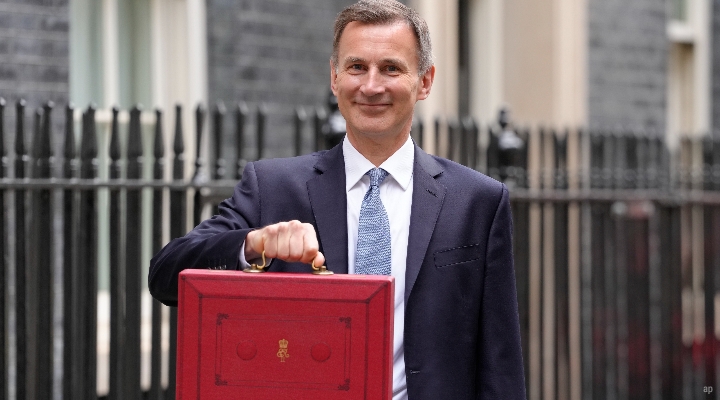
For a decent standard of living, we all need security and stability in our lives — secure housing, a reliable income, and support when things get difficult. For too many of us, there is no such security. Millions of people in the UK are struggling to get by, leading insecure and precarious lives, held back from improving their living standards. It’s time to take action on poverty and put this right.
One-fifth of the UK population, equivalent to 14 million people, are living in poverty, yet in the latest budget, as dictated by Chancellor of the Exchequer, Jeremy Hunt (one of the richest politicians in the UK, worth around £14million), the struggle that working people are facing to even be able to afford the basics, has been ignored…
A 2p reduction in tax (which helps the richest), VS. a £20 billion reduction in public spending (which harms the poorest).
2p tax cuts do little to relieve the burden that working people are facing. Public spending cuts, however, do everything to make the burden 100 times worse.
When public services exist to ensure that we can all have our most basic needs met, regardless of our income bracket, millions of people are being let down under Tory leadership when those public services are severely lacking…
One of the most worrying impacts of the public spending cuts relates to the NHS.
Under constant pressure, and a constant threat of privatisation, last year saw NHS waiting lists reaching record levels.
92% of appointments required waits of up to 46.2 weeks…
Now, for people who are ‘well off’, the richest people in society, this has no impact on their life (or death), because they can afford to pay for private healthcare, therefore cutting the extortionate, and quite frankly, dangerous, waiting times.
For people who don’t have the luxury of being able to go private though, their life, in some cases, is literally being put at risk where, in Jeremy Hunt’s budget, the rich get richer while the poor get poorer…
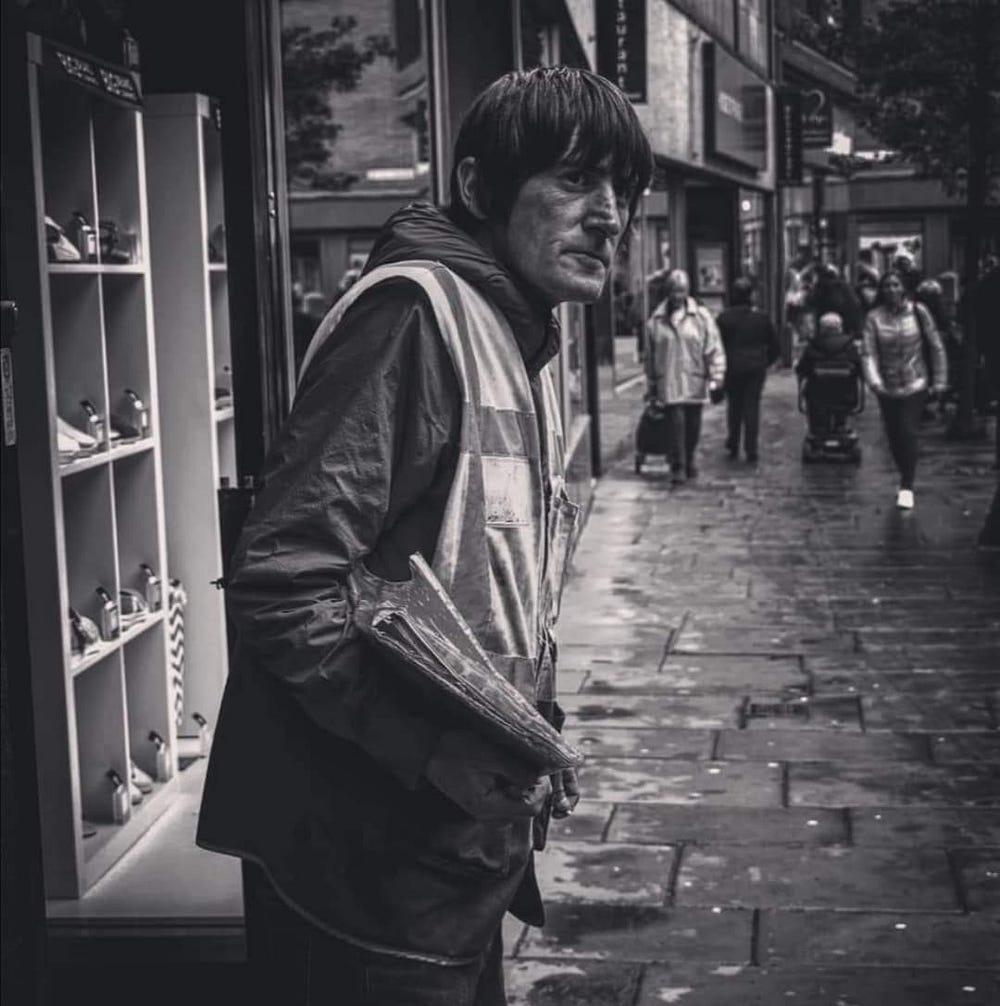
Author’s own photo From 2018 to 2020, life expectancy in the most deprived areas of the UK was 52.3 years for men, and 51.9 years for women, compared with 70.5 years for men, and 70.7 years for women, in the least deprived areas.
Owing to this discrepancy is the fact that people with more money are not reliant on severely underfunded public services as poor people are.
Rich people are not reliant on food banks to feed themselves, or charity shops to clothe themselves, or the extremely overwhelmed NHS to keep them alive…
The working class, however…
In October 2023, around 4.2 million households (72%) were going without essentials, with 3.4 million households (58%) reportedly not having enough money to even buy food…
Chaos feeding off decline, decline feeding off chaos, working people are left to pay the price.
Working people have to choose between heating their homes and feeding their families, something which is made even harder for marginalised groups whereby:
- 44% of children in lone-parent families are living in poverty
- 47% of children from Black and minority ethnic groups are in poverty, compared to 24% of white children (to break the figures down further: 67% of Bangladeshi and 58% of Pakistani children live below the poverty line, as do 51% of Black children)…
- 31% of disabled people are in poverty.
Photo by Claudia Raya on Unsplash An unprecedented hit to the living standards of working people.
The national credit card is maxed out where local councils are going bankrupt (a fifth of local authorities believe they are likely to go bust over the next year), rent is up by 10%, the NHS is crippling under mounting pressure, food prices are 25% higher than they were two years ago, and young families are having to rely on food banks to account for the 4.3 million children who are growing up in poverty today.
Just remind me what century we’re in again…
We should not be experiencing such austerity in 2024.
Yet we are [experiencing such austerity], and it’s unconscionable, a blatant miscarriage of justice if ever there was one, that the Government persists in prioritising tax cuts over public investment (which, by the way, are also to benefit the richest people in society)…
Photo by Tom Parsons on Unsplash Tory scum (scam): The Tories are fraudsters when they present themselves as cutting taxes for ‘ordinary’ working people…
Giving with one hand, taking even more with the other, it’s daylight robbery, the personification of ‘pinching from Peter to pay Paul’, while working people pay the price.
The defence budget is protected though, (in fact, it has been increased by £11 billion)! And so, we can all breathe a sigh of relief in knowing that the UK is doing its bit to support Israel in the genocide against Palestinians.
Photo by Roberto Catarinicchia on Unsplash The magic money tree always exists for British imperialism, but never for public services.
When Britain already spends £50 billion a year on its military, (since 2008, the UK has licensed arms worth over £574m to Israel), as always, our ruling class can find money for war.
As always, our ruling class can find enough money to uphold systems of oppression, but they can never find enough money to release the burden from the oppressed…
Proof that it’s ‘Party first, country second’, time and time (until the end of time, I fear) again…
Proof that those who break our economy cannot be trusted to repair it.
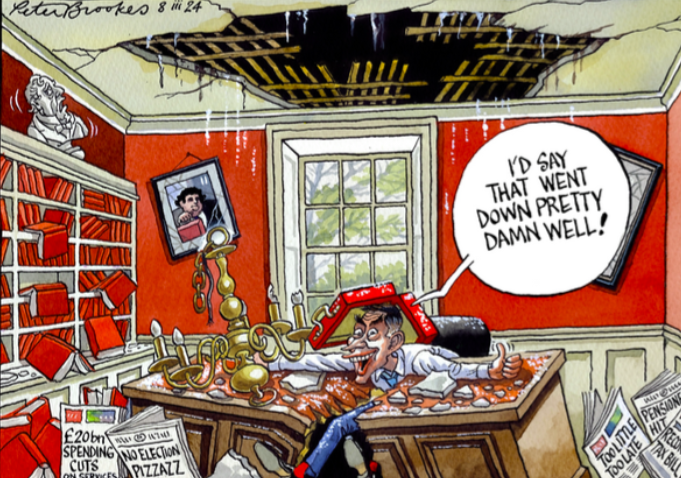
Peter Brookes Times Cartoon. The Times 08/03/2024. The Budget Jeremy Hunt -
How Rebelling Against Authority Has Become An ‘Attack on Democracy.’

The people we rely on to run our country, the world, our world leaders, run on corruption.
Power-hungry desperation, they resemble spoilt schoolchildren throwing tantrums when they don’t get their own way, as we saw last week when a fistfight broke out in Georgia’s parliament.
Fully grown men throwing punches…
Superiority vs inferiority, there’s one rule for them and another for us, whereby they can attack each other, but if we speak out against them, it’s an ‘attack on democracy.’
We’ve seen it happening for decades, people getting shut down under the guise of a ‘breach of peace’, peaceful protests being tarnished as ‘hooligan fuelled mobs’, young people calling for a better tomorrow, ‘terrorists.’
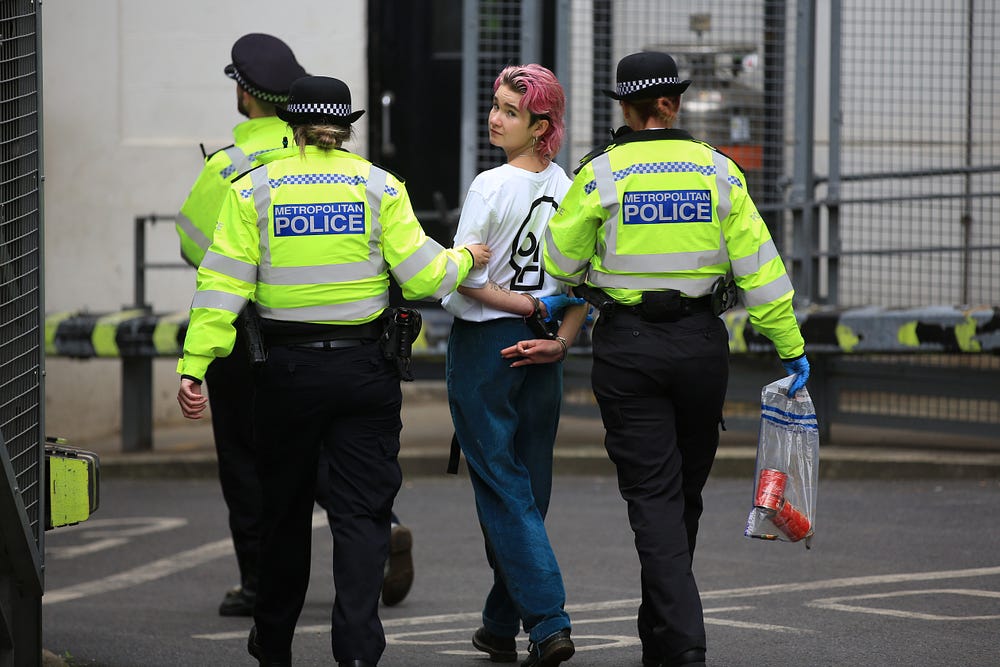
https://www.thepinknews.com/2023/11/17/just-stop-oil-phoebe-plummer-prison/ In 1970s Britain, for example, at the dawn of the punk movement when The Sex Pistols, the revolutionary brainchild of Malcolm McLaren and Vivienne Westwood came on the scene, no sooner were their records released than they were banned from British media.
God save the queen
She’s not a human being
and There’s no future
And England’s dreaming.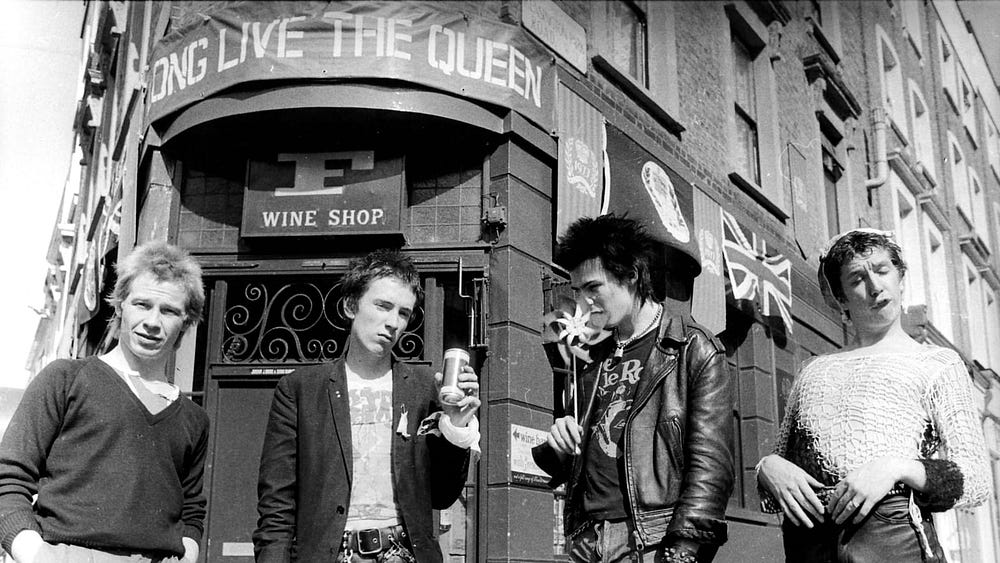
https://www.thedailybeast.com/the-sex-pistols-steve-jones-looks-back-on-the-punk-mayhem-of-pistol Upon the release of the anti-monarchy song, ‘God Save the Queen’, (lyrics above), several tabloid papers along with a Royal commentator accused the song of being borderline treasonous in its lyrics.
It was consequently banned by the BBC and many shops refused to sell the record. One of the few shops that did sell it, Virgin Records in Nottingham, saw their manager, Chris Seale, being prosecuted as a result- arrested and charged under the Indecent Advertisements Act…
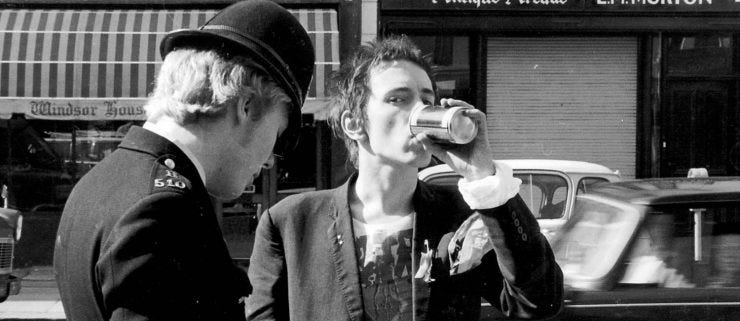
https://rockhaq.com/retrospective/sex-pistols-indecency-trial-nottingham-24-november-1977/ Deemed to be in ‘gross bad taste’, according to band members it was even suggested in Parliament that the band be prosecuted [for treason] off the back of God Save the Queen.
While The Sex Pistols were never prosecuted, they were persecuted, portrayed as ‘thugs’ by the British press, ‘out to cause division in society.’
But, as singer John Lydon later observed:
You don’t write God Save The Queen because you hate the English race. You write a song like that because you love them, and you’re fed up with them being mistreated.
Regardless of their intentions behind the record, The Sex Pistols were still made the scapegoat- ‘all that’s wrong with the youth of today’, a narrative that has been pushed on us since the dawn of time.
‘If you speak out against the system, you’re responsible for everything that is wrong with that system.’
As I said, the ‘scapegoat’, where the oppressors transfer the blame to the oppressed…
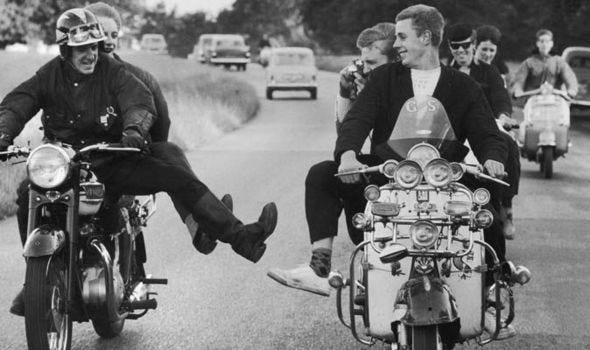
https://www.languageunlimited.org/modsandrockers/ Just consider the counterculture movement of the 60s and 70s, for example, where groups were pitted against each other, with mods and rockers being labelled as ‘violent yobs’, when the reality was far more peaceful.
While the media were suggesting that different subcultures were polar opposites, their division being the source of conflict in society, the fact is that every subculture is far more similar to each other than they are to the mainstream.
Behind them all is the underlying belief that things could be, and should be, done differently. A call to arms for the people in charge to be held accountable.
And it is this prospect of a ‘call to arms’ that scares the people in charge…
Where ‘counterculture’ is all about diverting away from mainstream ideals, the people in charge of dictating those ideals fear what will happen if groups of people come together to call for change…
They fear our power because they know that, together, we would win.
Under anarchism, we would win.
Yet they push forth the stereotype that anarchism is about ‘violence and conflict and the disintegration of society’, when it is, in fact, precisely the opposite of this…
Anarchism isn’t about destroying society, it’s about removing it from the hands of the people who are destroying it, into the hands of the collective.
‘Out with the old, in with the new.’
A call to arms, to reiterate the point again:
They fear our power because they know that, together, we would win.Under anarchism, we would win.
So, what are we waiting for?
Become so very free that your whole existence is an act of rebellion.
– Albert Camus.
https://libcom.org/article/camus-albert-and-anarchists -
How The Word Slut Is Being Reclaimed By Women
Words relating to female sexuality have long been used as insults, as a way to invoke shame upon women who dare to express their sexuality as openly as their male counterparts.
The word ‘slut’, for example, is used almost exclusively as a descriptor of women, but hardly ever of men…
A man who enjoys sex is celebrated. ‘What a lad’, ‘he’s such a ladies man’, whereas a woman who enjoys sex is a ‘slut’, a ‘whore’, ‘she can’t keep her legs shut.’
In terms of where the word originates from, its origins are actually not rooted in sex at all.
The first recorded evidence of the word ‘slut’ being used can be seen in an Oxford dictionary dating back to 1402. The definition then was a ‘woman of dirty, slovenly, or untidy habits or appearance’
^ (See? Devoid of any sexual connotations)…
It wasn’t until 1966 that we began to see the modern definition of the word slut arise.
A woman who enjoys sex in a degree considered shamefully excessive.
Since 1966, the word has been used in this manner to degrade women but…
Why?
The question is why, when men who are openly sexual are just ‘ladies men’, ‘lads’, are women ‘promiscuous’, ‘sluts?’…
It all boils down to power.
What stops a woman from parading down the street with her breasts exposed? Not the criminal justice system, when not wearing a bra in public isn’t illegal, but her fear of what other people will think.
An evolutionary defense when in ancient times we would’ve been cast outside of the group, ostracised from the pack, therefore leaving us susceptible to danger, what really keeps people ‘in line’ is not the police, but us, whereby, through socialisation (shame), we’re told what is right and wrong, moral and immoral, good and bad.
In a society where men are seen as ‘superior’ under the patriarchy, a society where women are expected to ‘just take’ what is given to them, to be ‘passive and submissive’, women who express freedom around their sexuality are perceived to be a ‘threat to the system.’
Labelled as ‘sluts’ to invoke shame, an ‘us vs them’ dynamic is created, not just between women and men, but more unsettlingly, between and amongst women themselves too, with women being ‘ostracised from the pack.’
‘I’m not like other girls’ is a sentiment that is echoed amongst women who want to separate themselves from what society (men) are calling ‘sluts.’ The insinuation being that women can be either beautiful, (see also: ‘hot’/’sexy’), or intelligent: ‘Brains vs beauty’…
^ This is what the patriarchy wants you to believe, anyway…
They want you to think that to be liberated is to sacrifice your morals, to choose sex over respect: ‘Object’ vs person. And unfortunately, far too many women do think this…
Despite religion arguably having the least influence it has ever had on Western society, where ‘no sex before marriage’ is largely disregarded and secularisation- atheism and agnosticism, ever increasing in popularity, the shame that women feel around their sexuality is still strong.
‘It’s so shameful’, to the extent that women have been falling victim to a scam that has been doing the rounds for years.
People know that the shame women feel would see some forking out thousands of pounds to ‘protect their image’, and the scam preys on these women…
Photo by Glenn Carstens-Peters on Unsplash The scam sees someone emailing you claiming to have hacked into your phone’s webcam. They tell you that they have footage of you watching (& enjoying) pornography. and that if you don’t send them a specified amount of money, then they will share the footage with everyone in your contacts- your family, your friends, your employers- thus putting the fear of God into you that your reputation will be ‘ruined’ as a result.
Now this is a scam, and if anyone gets this email, then you’ve heard it here: It’s a scam, don’t fall for it, but the point is that people know how much shame women still feel around their sexuality. Even though men send ‘dick pics’ as an opener to women (something which is now illegal thankfully, ‘cyber flashing’, but which has been occurring for years by men who seemingly have a God complex, where they think that women are just dying to see what is between their legs), God forbid a woman has photos on her phone that she has taken from the privacy of her bedroom, for herself.
God forbid that a woman enjoys sex too…
What the scammers and the victims of the scam fail to understand is that there does not have to be a sacrifice made where a woman can be only ‘sexual or respectable’, ‘beautiful or brainy’, as some people would have us believe.
We can be, we ARE, both.
Wearing a revealing outfit, for example, doesn’t take away from the fact that I have a degree. It doesn’t eradicate the fact that I discuss politics for a living, or that I write poetry, or that I am a ‘respectable’ (whatever that even means) woman.
What I choose to wear, how I choose to express my sexuality, does not change my worth as a human being (in fact, if anything, I would say that it adds to it, my self-worth at least, because I am in control)…
For which we can all be in control.
Photo by Zulmaury Saavedra on Unsplash As in the way that people are reclaiming words that were previously used as derogatory terms around diverse sexual orientations, ‘queer’, ‘butch’, ‘dyke’, etc, so too are people reclaiming derogatory terms around sexuality in terms of… liking sex (because again, ‘God forbid a woman like sex too’)!!
Whereas a decade ago, the word ‘slut’ was THE worst thing that a woman could be called, bringing shame on, not only them but their whole family, today, women are reclaiming the word as a self-descriptor, a form of empowerment, ‘girl power’, so as to remove its power from the hands of men who use it in an attempt to disregard our power… Men who try to shame us back into submission, ‘you’ll take what you’re given.’
Now, of course, usage of the word slut all comes down to context and intent.
A woman calling herself a slut vs a woman being called a slut; Where the former is about a woman owning her sexuality, the latter is rooted in the patriarchal assumption that a woman’s sexuality is to be owned [by a man].
Empowerment vs misogyny…
But thankfully, more and more women are owning their sexuality, with the reclamation of the word slut being at least in part creditable to the increasing popularity of sites such as Only Fans (dubbed the ‘paywall of porn’), a platform that empowers women to be in control of their own sexuality…

https://www.prnewswire.com/news-releases/onlyfans-announces-the-launch-of-oftv-a-new-streaming-platform-and-app-301356960.html Unlike traditional porn which is often headed by a director (usually a man), with the woman getting only a tiny percentage of the profits made, Only Fans puts the woman in control, cutting out the ‘middleman’, giving her total autonomy and access to all the profits which are rightfully hers.
By shining a light on the fact that sex work is a viable option for women, and not something that is reserved for ‘prostitutes’ and ‘drug addicts’, as is an all too common stereotype, it quashes, or at least, tries to quash, the idea that sex work is a ‘last resort’ for people who are ‘desperate for the money’, because ‘why else would someone do something that is so shameful?’
Also helping to decrease the shame around female sexuality are public figures who are using their platforms as a force for good/as a way to reduce the stigma when it comes to women and sex.
Grace Campbell, for example, (pictured below), a 30-year-old British comedian, writes standup comedy which focuses almost entirely on her sex life.

Grace Campbell ‘Sex-positive’, as she writes of her work, ‘my comedy has no bounds.’
Yet Campbell also poignantly recounts the time she was raped in LA in 2021 in this Guardian article, and how she worried about whether she would be ‘taken seriously’ based on her sex-positive work…
I made a name for myself with sex-positive comedy. Then I was raped on a night out. Would my openness be used against me?
An extract from the Guardian article:
‘Every time someone asked me, “Why didn’t you go to the police?” I felt as if the joke was on me. Me? Go to the police? The girl who once got up on stage and told a room of 400 people that she doesn’t even need lube when she does anal is now claiming that she was anally raped? The girl who has bragged about how many public places she’s had sex in is saying she didn’t want to have sex in a hotel corridor? The same girl who rode a dick-shaped cloud on the cover of her book? The girl who describes herself as a slut, who has openly discussed which STDs she’s had? The one who has said that men tell her she “smells like sex”?
To me and my friends, this openness is completely normal, but when I checked in with the reality that, in a police station, it would be used against me, I spiralled. I was imagining the ways I would be ripped apart. I thought about passages from my book, my Instagram, or my standup being taken out of context in order to paint me as this whore who was deserving of her comeuppance.’
^ And this is a conundrum that many women face…
Were we ‘deserving’ of it?
Were we ‘asking’ for it?
A common sentiment that rape victims hear:
‘Well, what were you expecting going out dressed like that?’
(To receive the same autonomy over our bodies as men, perhaps)?..
‘I can be a cocky, self-proclaimed slut, who wears revealing tops, and writes shows about being obsessed with men, and I can also be raped. Those two things can exist at the same time. I know this because it’s what happened to me.’
– Grace Campbell.
https://www.chortle.co.uk/comics/g/34588/grace_campbell/news A form of sexual liberation, it is entirely a woman’s choice to create an Only Fans, for example, or to ‘brag about how many public places she’s had sex in’- she is entirely in control of that. But when that liberation is used against her, it becomes exploitation. Where any sense of control is taken away, she is no longer IN control, she is BEING controlled… Where she stops being somebody and just becomes ‘A’ body…
The issue does not lie in the word ‘slut’, but in the assumption that to be a slut is to be ‘asking for it.’
Telling a woman that it is her fault for being raped because, ‘What were you thinking going out dressed like that?’, is equivocal to telling the family of a dead person, ‘Well, it’s his fault for being murdered because what was he thinking walking down the street like that?’
The issue does not lie in a woman’s wardrobe, but in a man’s (lack of) self-constraint.
-
Is Conversion Therapy Banned In The UK?
Some people claim that being gay is a mental illness, a sad excuse of homophobia.
‘You need help’, they tell us, as though their bigotry is them ‘looking out for us.’
Offering us the solution via conversion therapy, through administering electric shocks every time we see a photo of someone of the same sex until negative associations are formed.
‘Same-sex attraction=pain=no longer gay.’
Through hypnosis, ‘exorcism’, even, ‘corrective rape’, ‘we can cure you’, they say, as though love is something that needs to be cured, as though love is something that can be cured…
(Dislaimer: It can’t [be cured]. For we are not ‘broken.’ We do not need ‘fixing’)…
Photo by Norbu GYACHUNG on Unsplash You can’t cure something when there is nothing there to cure/when being gay is as natural as being straight. But, unfortunately, people have been trying to ‘cure’ us for decades…
And people still are [trying to ‘cure’ us], in fact, when the reality is that conversion therapy is only banned in 14 countries around the world, for which, something that might surprise you, the UK is not one of those countries…
Despite publically stating their intentions for a ban in 2018, six years have passed and we are seemingly no closer to having that ban actually implemented.
The government cites complexities including ‘a desire to avoid criminalising exploratory conversations, therapies, and religious counselling’ as reason for their reluctancy to implement the ban…
Photo by Kiwihug on Unsplash In support of this counterargument is The ‘Evangelical Alliance’, the UK’s largest evangelical body which represents 3500 churches in the UK. The Evangelical Alliance claims that to ban conversion therapy would be to restrict their religious freedom.
It could place church leaders at risk of prosecution. This will threaten the everyday practices of churches, church leaders, and Christians across the UK.
What about the threat that NOT banning conversion therapy poses to the LGBTQ+ community?
As this BBC article states, about 5% of the 108,000 people who responded to the government’s LGBT Survey in 2018, said that they had been offered some form of conversion therapy.
Rooted in religion, more than half of those who had received the therapy said that it had been conducted by a faith group.
‘A man shall not lie with a man the way he lies with a woman.’
Some religious groups are trying to get around the proposed ban by, not offering conversion therapy to stop people experiencing same-sex attraction (because, after all, that is impossible), but to stop people from acting on same-sex attraction.
One example of a religious group who are trying to do this is a Catholic Church group called Courage International.
The organisation offers “pastoral support” to people who are attracted to the same sex but want to “strive for chastity” (avoid all sex).
But, what sort of life is that?…
Spending the entirety of your life denying who you are, suppressing your desires, what sort of life is that?
(It’s not a life at all)…
Photo by Dyu – Ha on Unsplash Preying on those who are vulnerable, as Blair Anderson from the End Conversion Therapy Campaign said:
No one is born hating themselves. If someone is volunteering [to have conversion therapy], it’s often not of their own accord. It’s because they’re surrounded by people who are pressuring them or manipulating them.
This is a sentiment that is echoed by Justin Beck (pictured below) who grew up in an Evangelical Christian household. Upon realising that he was attracted to other boys at the age of 13, he turned to the bible. Desperate to be cured of what the bible told him was ‘wrong’, a ‘sin’, Beck underwent conversion therapy from the age of 17 to 23.
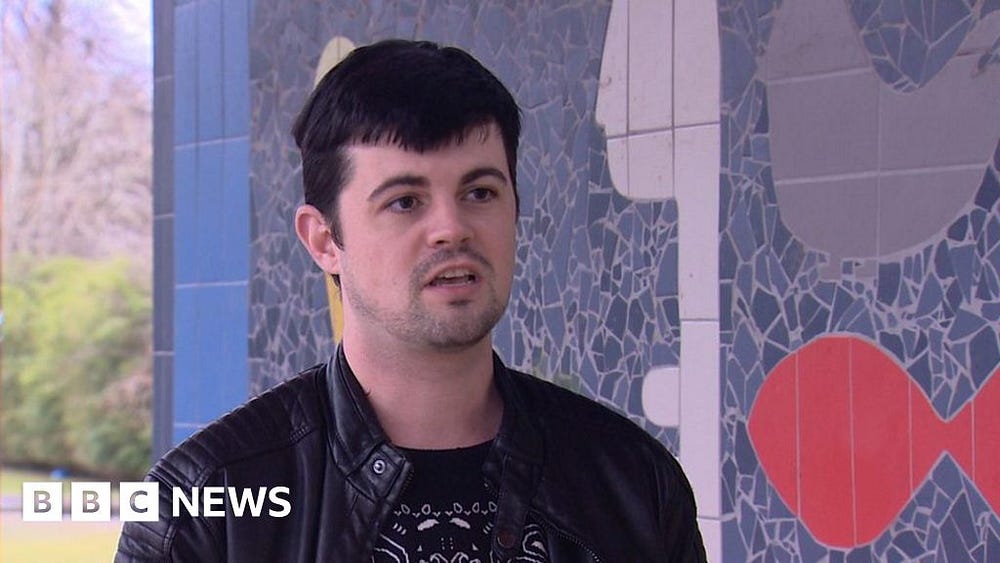
Justin Beck As Justin tells the BBC here regarding his experience with conversion therapy, ‘It was my choice, but I was in a very vulnerable position. No one in my life had ever told me “You’re gay and that’s ok”.
Beck says the experience left him ‘emotionally traumatised.’
When I look back at that period of my life, the overwhelming emotion that I can remember is loneliness.
I had absolutely zero self-esteem. I hated everything about myself, genuinely believing that I was evil or had something fundamentally wrong with me. I would walk with my head down, avoiding mirrors and windows as I despised what I saw. I was suicidal, stock-piling medication all over my bedroom and in my car, and fully intending on taking my own life.
Conversion therapy: It can’t ‘cure’ you, but it can kill you…
LGBTQ+ youth who have undergone conversion therapy are more than twice as likely to have attempted suicide multiple times following the experience, as this study reports…
Why? Because, as the case of Justin Beck highlights above, a common theme amongst LGBTQ+ people when it comes to accepting their sexuality is loneliness…
Photo by Adrian Swancar on Unsplash In a survey conducted by Stonewall, only half of lesbian, gay, and bisexual people (46%) and trans people (47%) reported feeling able to be open about their sexual orientation or gender identity to everyone in their family.
This is due, not only to discrimination from the world at large, (official statistics published last year highlight how hate crimes on the basis of sexual orientation are at record highs- up by 112% in the last five years*), but also from ourselves, via internalised homophobia.
*(And these statistics provide only a snapshot of the reality, with the vast majority of victims not reporting their experiences to the police. In fact, the Government’s own statistics suggest that fewer than one in ten LGBTQ+ people report hate crimes to the authorities)…
Photo by cottonbro studio on Pexels.com Evidently, then, homophobia is still rife in society.
While it can be easy to think that ‘everything is better now’ when social media shows us greater representation and diversity, the reality is that social media is a ‘bubble.’ The algorithm works by showing us that which aligns with our own values and beliefs. If we interact with LGBTQ+ creators, then we will be shown more LGBTQ+ content.
My ‘for you page’ on TikTok, for example, is 90% queer content because, as a queer woman myself, that is what I interact with the most.
But where social media, the algorithm, is a ‘bubble’, it’s not an accurate representation of real life, something which is heartbreakingly realised by people who are still at the receiving end of verbal and physical abuse for being gay…
Photo by M. on Unsplash In 2019, two women were attacked on a bus in London after refusing to kiss.
A group of young men began harassing the women upon discovering that they were a couple, asking them to kiss while making sexual gestures. When they refused, they were attacked before the teenagers, aged between 15 and 18, fled, leaving the two women covered in blood and, unsurprisingly, traumatised from the experience…
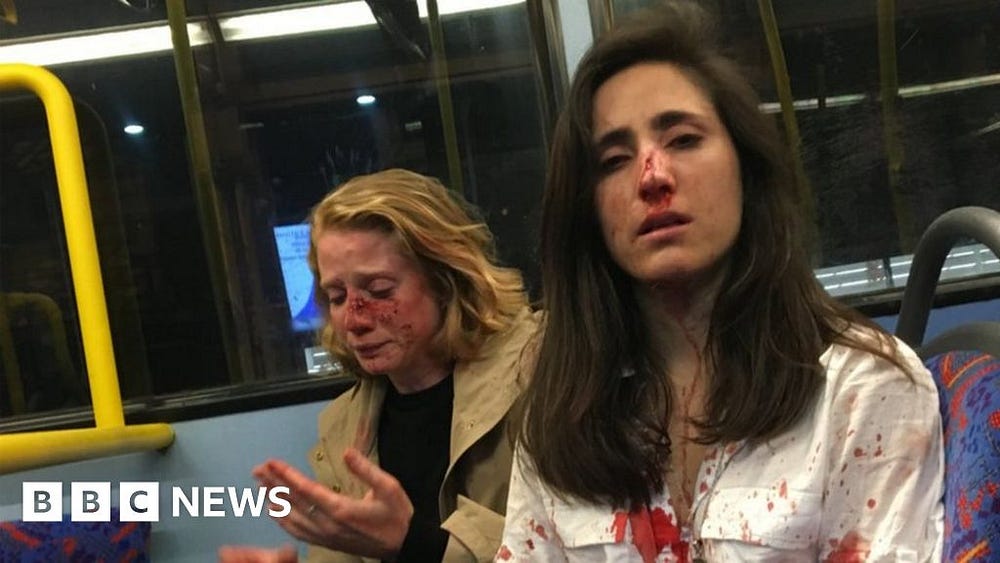
https://www.bbc.co.uk/news/uk-england-london-48555889 Following the attack, government research found that more than two-thirds of LGBTQ+ people said that they had avoided holding hands with a same-sex partner in public for fear of a negative reaction from others.
Again, evidence that homophobia is still rife in society…
If only people who are homophobic could feel what we felt though, when as kids all our friends would talk about the people they fancied and we just couldn’t relate, ‘What is wrong with me?’, then they would know that being gay is not a choice, that there isn’t anything ‘wrong’ with us, that this is just who we are, that this is just who we love…
Photo by Brian Kyed on Unsplash Just a kid consumed by the enormity of her desires.
(From the age of 10).
I didn’t know that there was a name for it then, but the first time that I experienced same-sex attraction was at the age of 10.
Now, at 10 years old, being gay was not a ‘choice’ that I made…
I didn’t wake up at the age of 10 thinking; ‘You know what? I want to make the rest of my life ten times harder for myself. I want to put myself in a position where I’m going to be sexualised by men for loving women (something which doesn’t even make any rational sense). I want to be on the receiving end of death stares at best, death threats, death at worst, by people who just can’t comprehend what I am, who I am. I want to run the risk of being attacked every time I leave the house for holding my partner’s hand. I want to spend my entire adolescence trying to suppress who I am, feeling guilty because of these feelings that, try as I might, just will not…go… away. I try to shove them down but they’re always just… there.’
I didn’t wake up one day and make that choice ( ^ ) for this to be my life, because sexuality is as much of a choice as our natural hair colour is a choice.
(That is to say, it’s not a choice at all)…
Like our hair colour, our sexuality is on the same level of unchangeable…
While I can dye my hair blonde, or pink, or blue, or whatever colour I want to dye it, my natural colour will always be brown. And likewise, while gay people can undergo conversion therapy, or practice celibacy, or force themselves to be in heterosexual relationships, the fact is that when sexuality is as natural as our hair colour, it will never actually change.
We can cover it, we can suppress it, but who we are stays the same.
So please, stop telling us that who we are is a source of shame/something that we need so-called ‘therapy’ to change…
Equality is impossible to achieve in a society where conversion therapy is still permissible.
The end of this week (Saturday 1st June) marks the start of pride month, a celebration born from our struggle for our right to freedom to love who we love, and a common argument against pride that I hear from people is,
‘Why is there no straight pride?’
‘Why do we still have pride every year when equality exists now?’And the answer, to anyone who thinks that way, lies in everything that I have discussed in this piece today…
When even in one of the most progressive countries in the world, the UK, hate crimes are still taking place against gay people…
When we are being told that who we are is ‘wrong’ and offered up a ‘cure’ via conversion therapy, still, in 2024, we cannot say that there is equality.
And so, we must keep fighting, refusing to hide ourselves away, and celebrating being gay (because, despite all the struggle, there is so much joy to celebrate)…
Like the ability to construct our own identities away from the predetermined gender roles that exist to uphold the patriarchy and satisfy the male gaze.
Like the fact that we are automatically a part of a community that is centered on love, and freedom, and social justice simply by virtue of being gay.
When society has made our right to exist political, by virtue of us being here (and queer), we are surrounded by progression and liberalism.
A warm hug, a hand on the shoulder, we march together because we all know how it feels.
The bittersweetness of it:
Hating the oppressor, but loving the connection that we form with strangers who just…
‘get it.’Photo by Delia Giandeini on Unsplash Happy Pride 🌈 x
May we all keep fighting the good fight.
~ Love wins, always~
❤️
-
Who Was Vivienne Westwood? Founder Of The Punk Movement

Vivienne’s success was brought forth from humble beginnings.
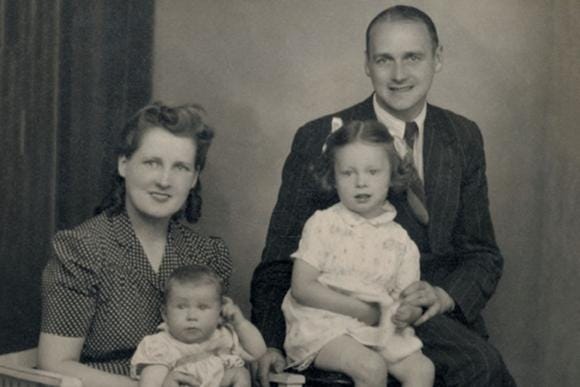
Working-class, female, and northern, Vivienne Westwood (Vivienne Isabel Swire) was born in 1941, the oldest of three children, to a factory worker, Gordon Swire, and a cotton weaver, Dora Swire in Glossop, Derbyshire.
https://www.thetimes.co.uk/article/time-and-place-dame-vivienne-westwood-50ntwkg6g3w At the age of 17, Westwood and her family moved to Harrow in London, where Westwood would take a jewelry and silversmith course at the University of Westminster (briefly).
Leaving after just one term she is quoted as saying:
I didn’t know how a working-class girl like me could possibly make a living in the art world.
(as we now know, how wrong she was)…
After subsequently taking a job in a factory and studying at a teacher-training college, Westwood became a primary school teacher. During this period, she enrolled in jewelry-making classes with her wages, something which subsequently saw her going on to create her own jewelry, which she sold at a stall on Portobello Road.
As I said, ‘from humble beginnings…’
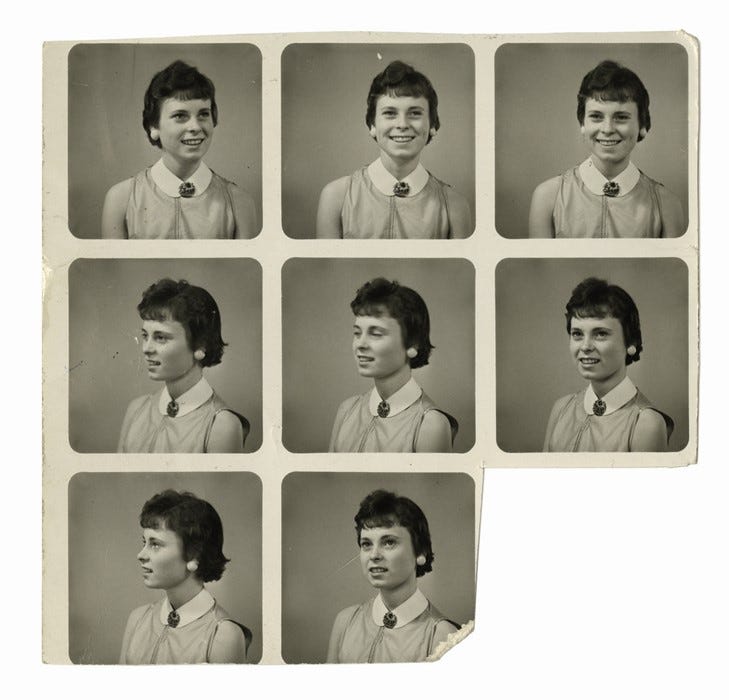
Vivienne Westwood aged 15. Photography courtesy of the Vivienne Westwood archive From humble beginnings to punk icon
Westwood met her partner, Malcolm McLaren, in 1965 after splitting with her first husband, Derek Westwood to whom she had one son, Benjamin (Ben Westwood is now 61 and a photographer of erotica, following in his mother’s creative footsteps, as is her second son to McLaren, Joseph Corré 56, who is the founder of the lingerie brand, ‘Agent Provocateur).’
Vivienne Westwood would create the clothes which McLaren, a fashion designer, had designed.
I did not see myself as a fashion designer, but as someone who wished to confront the rotten status quo through the way I dressed and dressed others.
– Vivienne Westwood.
Westwood & McLaren Deeply political, her art had a purpose.
Intentionally provocative- ‘anti-establishment’, with designs reflecting the economic, social, and political contexts of 1970s Britain, and later, fetish and sado-masochism, Westwood was never one to shy away from making a statement with fashion.
It’s very important to look great if you want to make a point because then people will listen to you more.
In holding a middle finger up to the upper classes, she sought to inspire the disillusioned youth of Britain into political action by challenging the status quo.
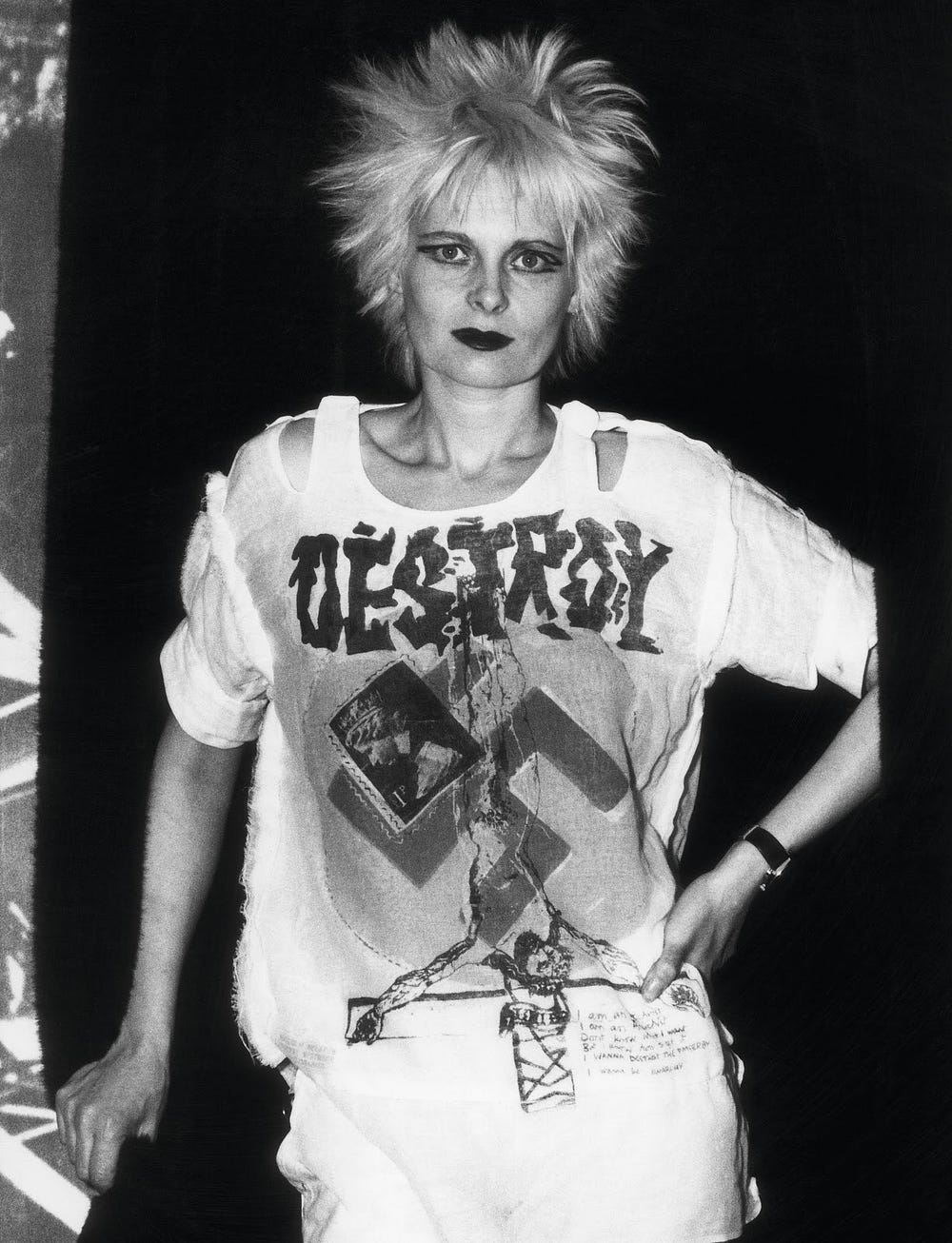
https://www.dazeddigital.com/fashion/article/24335/1/vivienne-westwood-s-top-ten-political-moments I’ve constantly tried to provoke people into thinking afresh and for themselves, to escape their inhibitions and programming.
Vivienne and Malcolm used clothes to shock, irritate, and provoke a reaction.
But also, to inspire change.
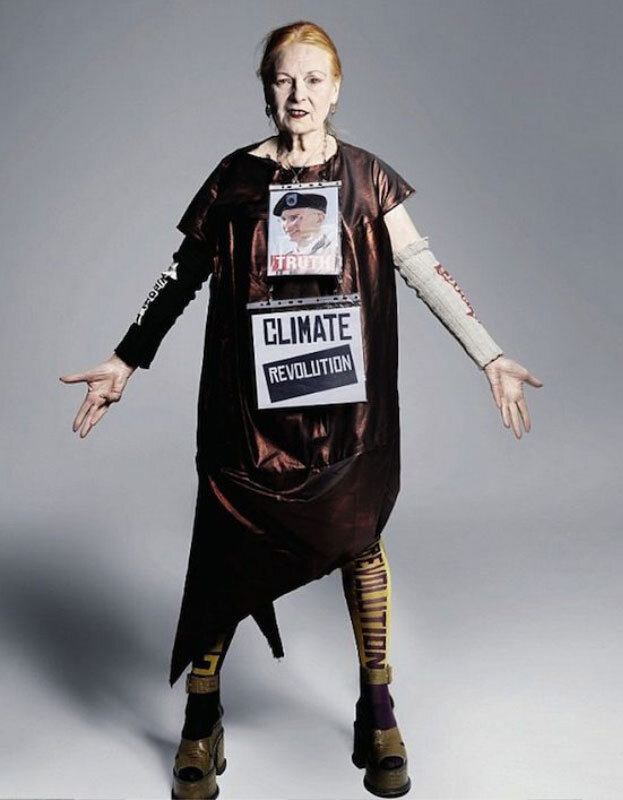
https://www.nokillmag.com/articles/vivienne-westwood-from-mother-of-punk-to-climate-rebel/ How it all began
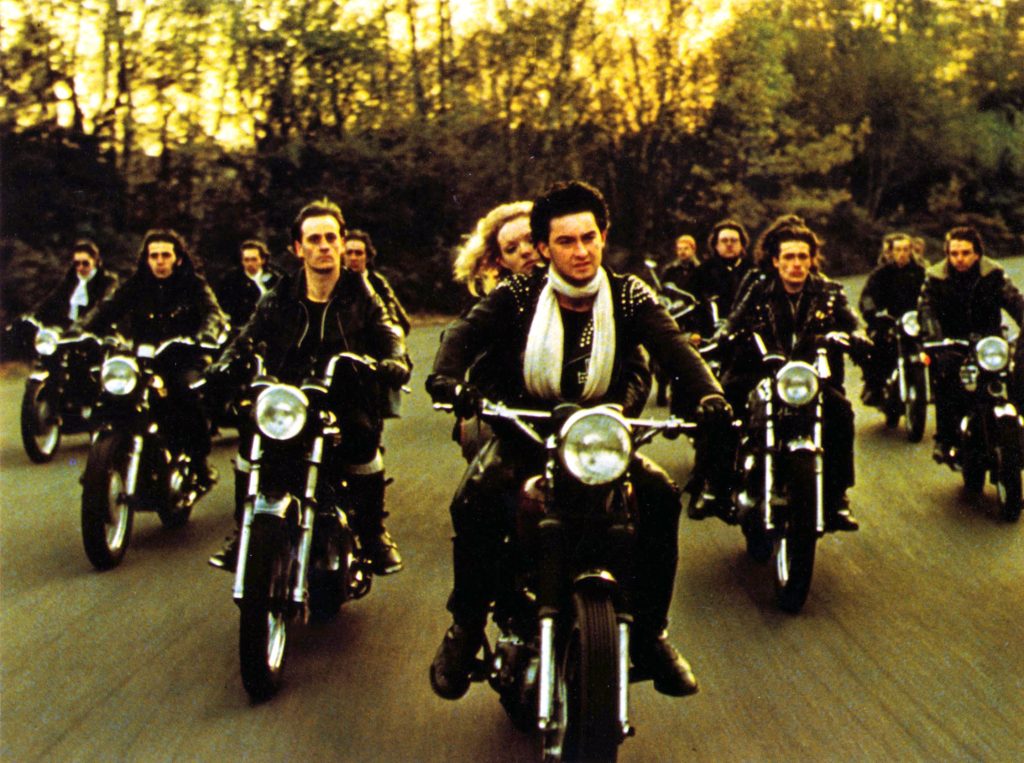
Vivienne began by designing and making Teddy Boy clothes for Malcolm in 1971, when they opened a small boutique called ‘Let it Rock’ at number 430 Kings Road, Chelsea in London. Let it Rock catered to the Teddy Boy Subculture — draped jackets, a lot of leather, and clunky shoes.
A year later, however, Vivienne re-branded as ‘Too Fast to Live, Too Young to Die’, with her interests having turned to biker clothing, zips, and leather (a more ‘rocker’ aesthetic).
It was around that time when clothes were gaining popularity among the subculture youth, who would meet up to hang out in the shop like it was a networking place.
This is how the Sex Pistols were born, via a(nother) rebranding, this time to ‘SEX’ (Slogan: rubberwear for the office’), where sexual fetishism and bondage were transformed into fashion, ‘punk rock’, as it was labelled by the media…
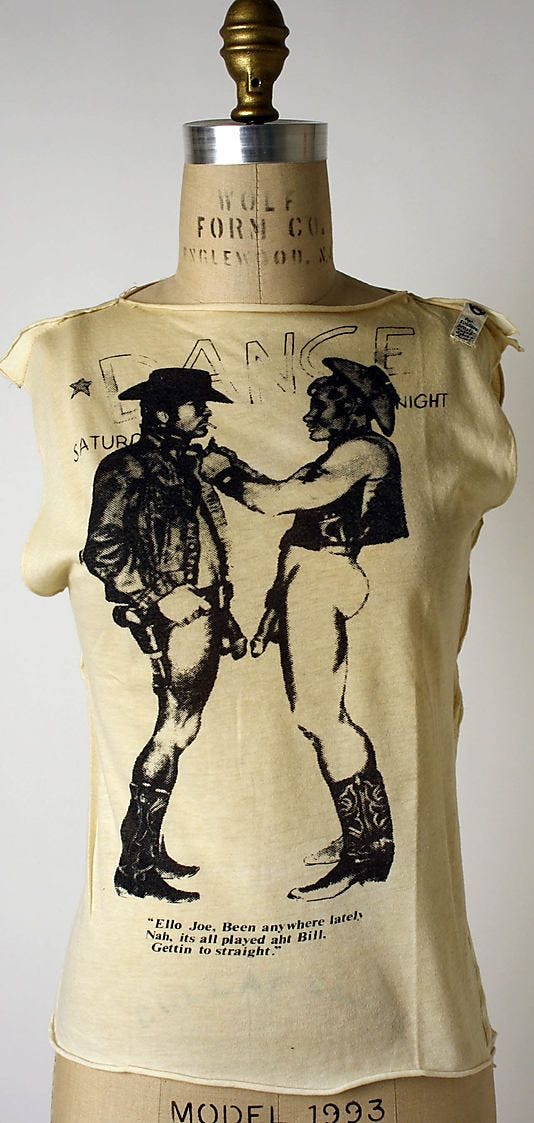
With its walls scrawled with graffiti from the SCUM Manifesto — the radical feminist writings of Valerie Solanas, the more controversial style of fashion sold at SEX saw Westwood and McLaren being prosecuted in 1975 under the 1959 Obscene Publications Act, which made it an offense to publish “obscene” material and gave the police powers to seize items they deemed explicit.
The source of their prosecution? A ‘gay cowboy’ shirt (pictured below).
https://www.pinterest.co.uk/pin/171981279493046501/ Of the youth who frequented SEX, were who would go on to become employees, most notably, Jordan (below).
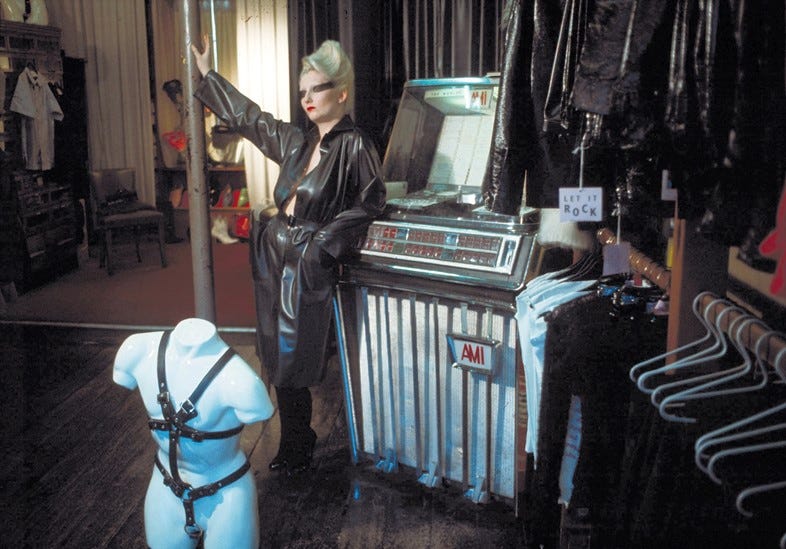
https://www.dazeddigital.com/fashion/article/32470/1/a-rare-interview-with-jordan-punk-s-enigmatic-frontwoman In her rubber clothes and theatrical make-up, British rail would put Jordan in first class during her daily commute to work, ‘for her own protection/so as not to “upset” other passengers’, they said.
People would say to me:
‘What the fuck do you think you look like?’ They didn’t realise that how I looked was what I was trying to tell them.
Jordan on the door of SEX Who else frequented SEX?
The Sex Pistols were formed in 1975 off the back of the members, Jonny Rotten, Steve Jones, Paul Cook, Glen Matlock, and later, Sid Vicious, being some of the ‘punk youth’ who would regularly meet at the West London store.
McLaren managed the band, with both his and Westwood’s views influencing The Sex Pistols songwriting, in which their songs about politics and social conditions resonated with alienated working-class British youth.
And the band were, of course, kitted out in Westwood’s clothes to mirror their anarchist ethos, with The Sex Pistols first single being aptly named ‘Anarchy in the U.K.’

https://www.virgin.com/branson-family/richard-branson-blog/the-spirit-of-the-sex-pistols What started off as a way to promote the store in Mclaren’s formulation of the Sex Pistols, became something so much bigger…
So much so that SEX was rebranded again in 1976, for the final time under Westwood and Mclaren as Seditionaries (seditionaires became ‘Worlds End’ in 1980 after their relationship came to an end), with the inventory reflecting the surging popularity of the Sex Pistols.
‘Seditionaries’ read the brass plaque on the wall outside, ‘is for soldiers, prostitutes, dykes, and punks.’
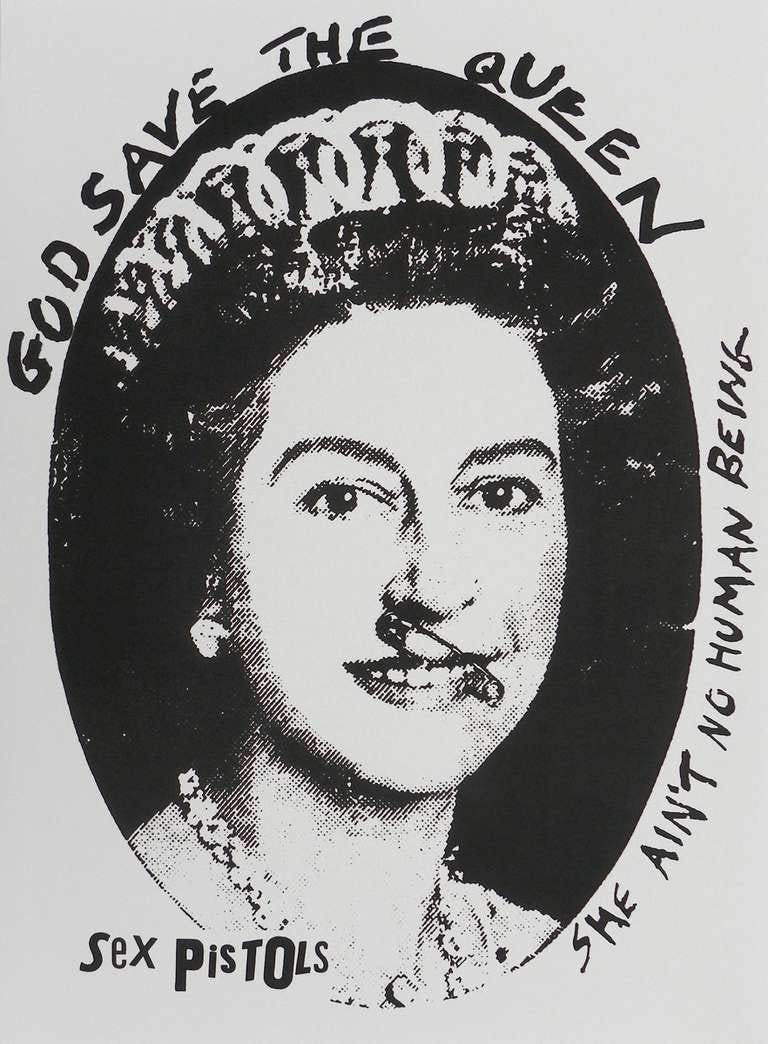
https://fashionhistory.fitnyc.edu/1977-westwood-mclaren-god-save/ Most famous of Westwood and McLaren’s controversial pieces was the “God Save the Queen” t-shirt (design pictured above) which was created by the duo in 1977, the same year that Queen Elizabeth was to celebrate her Silver Jubilee, and when The Sex Pistols second single was released under the same name (‘God Save the Queen’).
The t-shirt represented what Punk culture stood for:
Non-conformity, direct action, and rebellion.
“God save the queen / The fascist regime / … She ain’t no human being…”
Little did Westwood know back in the 70s that, despite her anti-establishment attitude and rebellious nature, as above, she would later form a relationship with the Royal Family.
In fact, something that few people know is that the Vivienne Westwood logo itself was inspired by the Royal Family- inspired by an encounter with our now King (then prince), Charles…

https://logolook.net/vivienne-westwood-logo/ The famous ‘orb’ logo (pictured above) was created in 1986, off the back of a wool jumper designed for Charles to wear when off-duty. The orb represents that which is found on the crown jewels, with the rings of Saturn being added to bring a future aesthetic to the design/to represent a bringing of the past into the future.
Taking a symbol of the establishment and appropriating it for her own defiant ends, her fashion was never intended to conform.
Despite being ‘anti-establishment’, in 1991, Westwood was invited to attend Buckingham Palace after being named British Designer of the Year, and in 1992, she was appointed an OBE for services to fashion design.
Upon receiving her medal from the late Queen at Buckingham Palace, leaving, she twirled for the cameras, her skirt purposefully lifting to reveal a pair of sheer tights and nothing underneath.
Forever one to push the boundaries…

https://edition.cnn.com/style/gallery/vivienne-westwood/index.html Evidently, Westwood was a rebel, but never without a cause. She worked tirelessly to raise awareness of the climate emergency many years before it was fashionable. She supported Aids Research, PETA, and Oxfam. She gave hundreds of thousands to the Green Party. She also fronted several campaigns, one of the most famous being in 1989 when she appeared on the cover of Tatler dressed as Prime Minister Margaret Thatcher. The cover bore the caption “This woman was once a punk”, and was included in The Guardian’s list of the best-ever UK magazine covers.
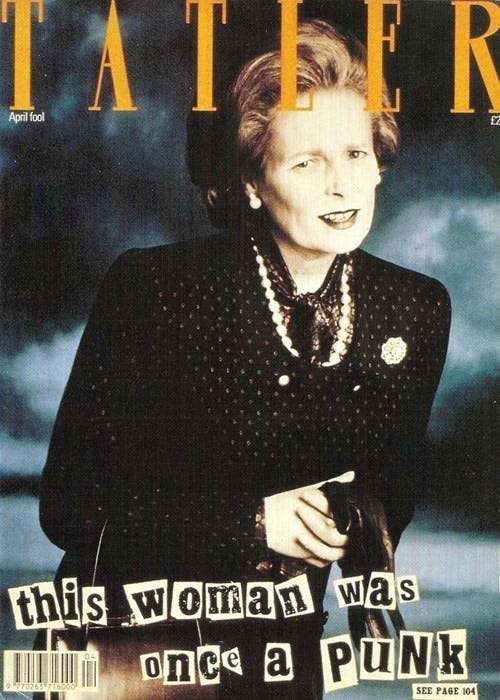
https://www.dazeddigital.com/fashion/article/33363/1/vivienne-westwood-on-that-time-she-dressed-up-as-thatcher Westwood even drove a tank to David Cameron’s house in 2015, as a protest against fracking. This came after an announcement by Cameron’s government that it would offer licenses for fracking in 27 locations in the U.K.
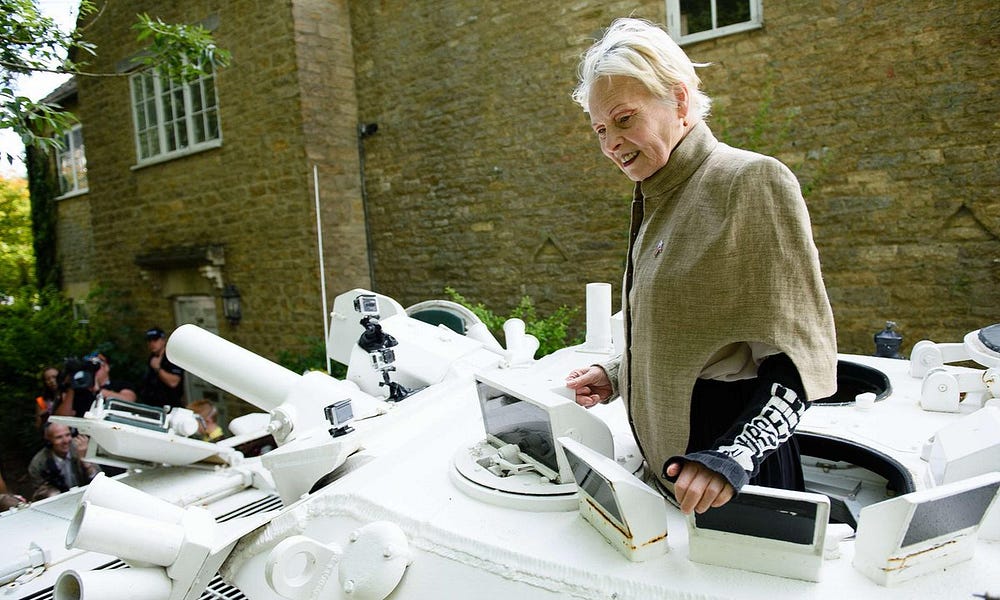
https://x.com/guardian/status/642355468640382976?mx=2 And her protests carried on right until the end.
In 2020, Westwood, dressed in a bright yellow suit and black combat boots, climbed inside a giant bird cage and suspended herself 10 feet in the air to protest against Julian Assange’s* extradition to the U.S.
*Julian Assange is the founder of ‘WikiLeaks.’ He was arrested in 2019 for having published disclosed documents that included possible war crimes committed by the US military. Having been in Belmarsh prison, the UK’s highest security prison since, his imprisonment, as the Human Rights organisation Amnesty International writes, is ‘Nothing short of a full-scale assault on the right to freedom of expression.’
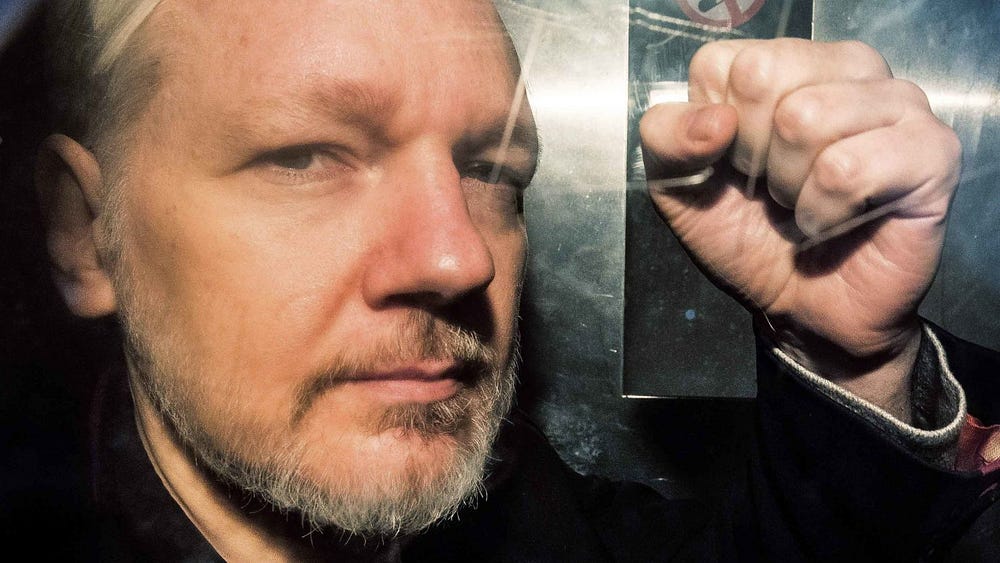
Julian Assange To protest for his release in July 2020, Westwood, aged 79 shouted through a microphone:
‘I am the canary in the coal mine. If I die down the coal mine from poisonous gas, that’s the signal for all the miners to leave.’
The canary is well and truly in the coal mine, and surely we must listen to the signs...
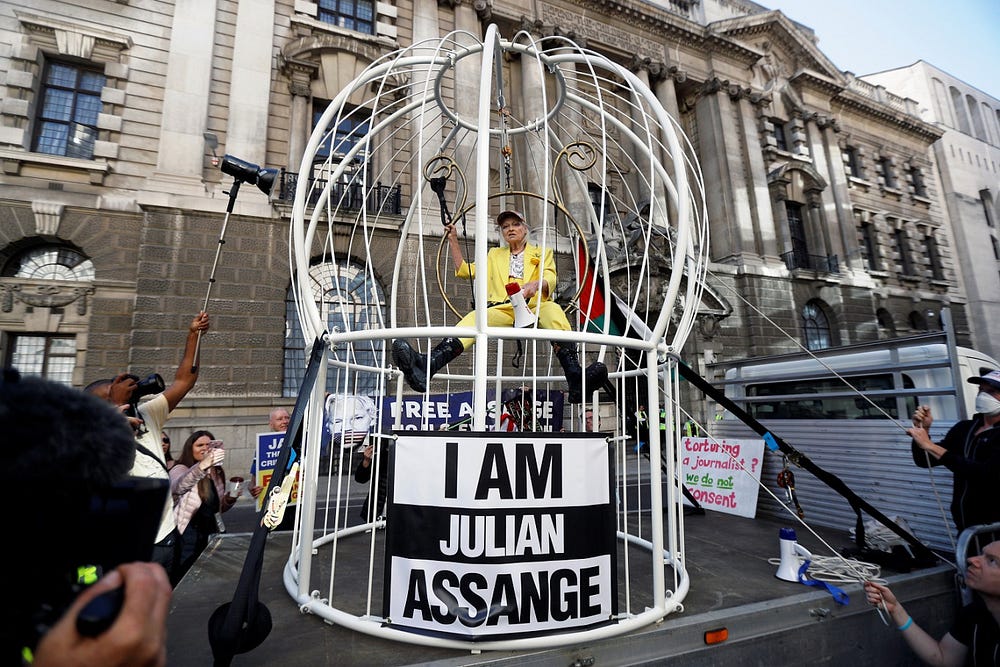
https://www.thejakartapost.com/life/2020/07/21/caged-like-a-canary-vivienne-westwood-protests-for-assange-in-london.html Vivienne Westwood died on the 29th of December 2022, aged 81 in her home in Clapham, London. Her funeral was attended by many famous faces whom she had influenced over the years, and with a ‘wear what you want’ policy in true Westwood style, even in her death, she was inspiring ‘radical’ fashion.
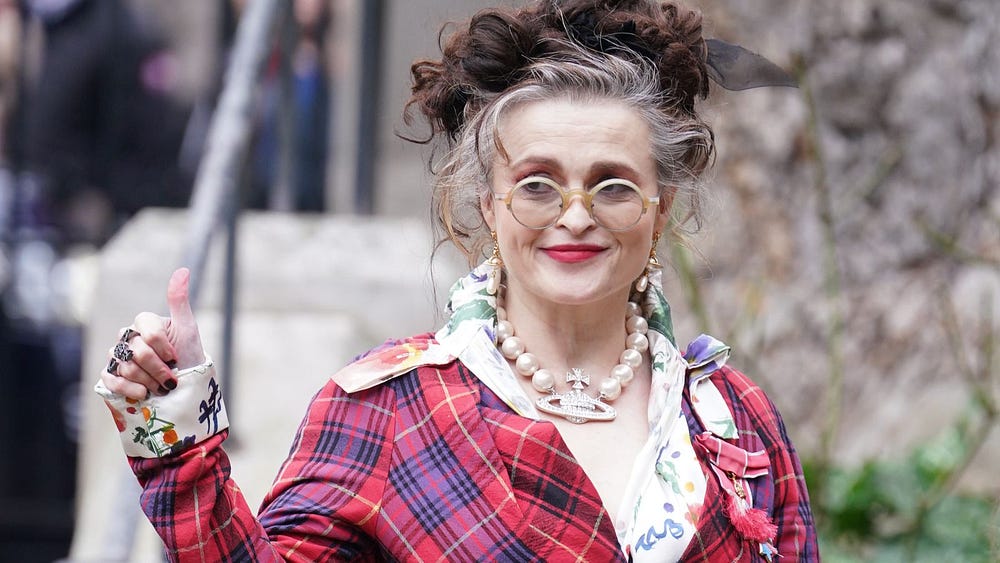
Actress Helena Bohem Carter 
Singer Paloma Faith dressed in Westwood clothes at the designer’s funeral The influence Vivienne had on the punk scene will never be forgotten.
As a statement released at the announcement of Vivienne’s death said:
Vivienne continued to do the things she loved, up until the last moment, designing, working on her art, writing her book, and changing the world for the better. She led an amazing life.
Her innovation and impact over the last 60 years has been immense and will continue into the future. The world needs people like Vivienne to make a change for the better.
In the wake of her death, The Vivienne Foundation, founded by Westwood’s sons and granddaughter, was launched to ‘honour, protect and continue the legacy of Vivienne’s life, design and activism.’
Through the foundation, her family said that they will ‘aim to raise awareness and create change by working with non-governmental organisations on climate change, stopping war, defending human rights, and protesting capitalism.’
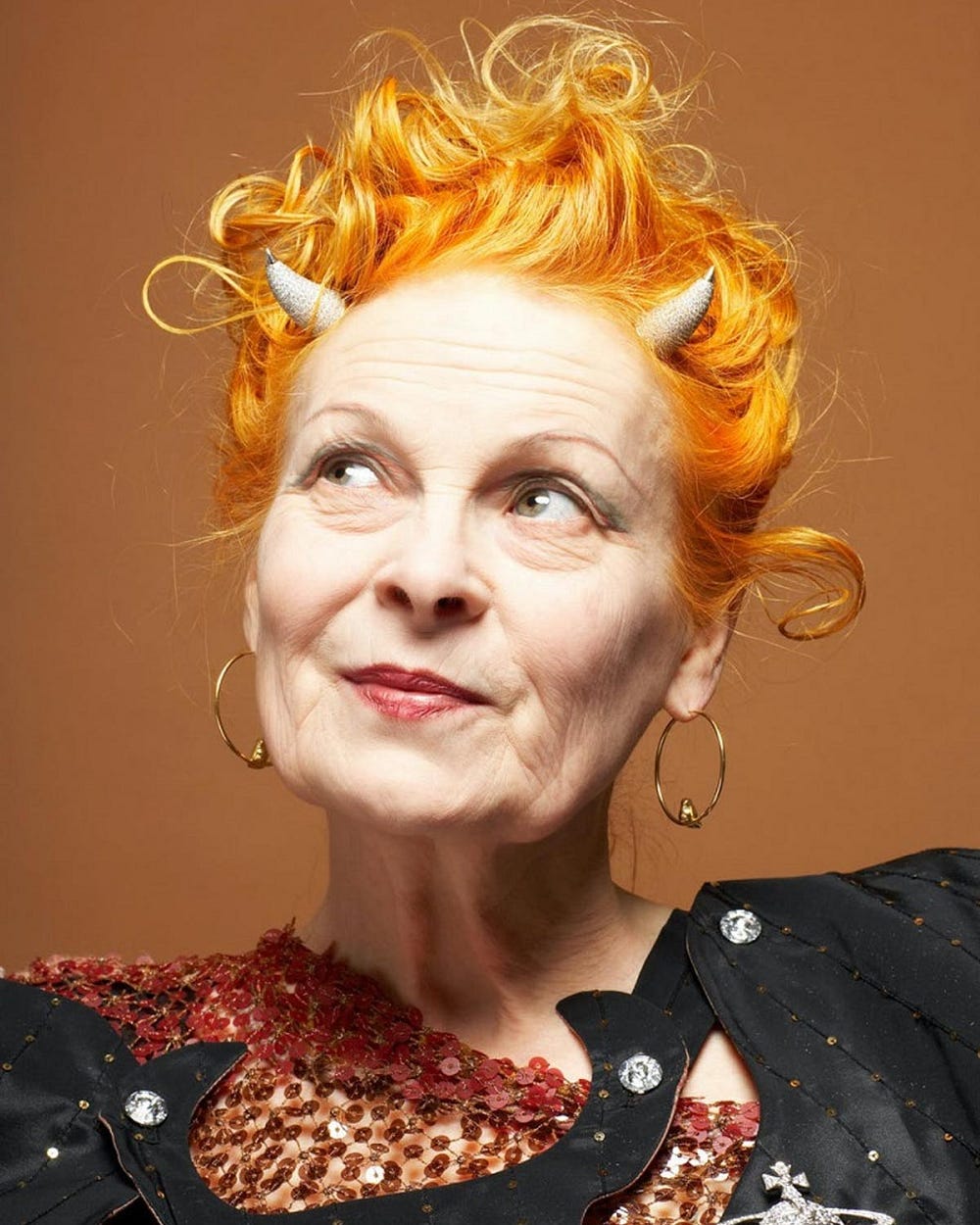
https://www.currantmag.com/piece/how-vivienne-westwood-impacted-fashion-world The ‘Godmother of Punk’
Never Mind the Bollocks, Dame Vivienne Westwood, everyone.
(1941–2022).^ For which there was so much between the dash.
-
Mods & Rockers: The Counterculture Movement Of The 1960s
Fashion and music have always been a way for people to find a sense of identity within society/to work out who they are away from who they have been told to be, whether that be by their parents, employers, or society at large.
No time has this been truer than in post-Second World War Britain.
With greater freedom and the affluence that came from the conclusion of the war, the baby boomer generation [of people born between 1946 and 1964], sought to find a sense of belonging in being different.
With a desire to differentiate themselves from their parents, and now with the financial means to do so, various subcultures were born during this time, all of which have left a far-reaching mark on the landscape of British music, fashion, and art.
Teddy boys,
Mods vs. Rockers,
Skinheads vs. Hippies,
Punks,
New Romantics,clothes became something much more than just ‘individual adornment’ to young people of the late twentieth century- they were a matter of deep, tribal identification.
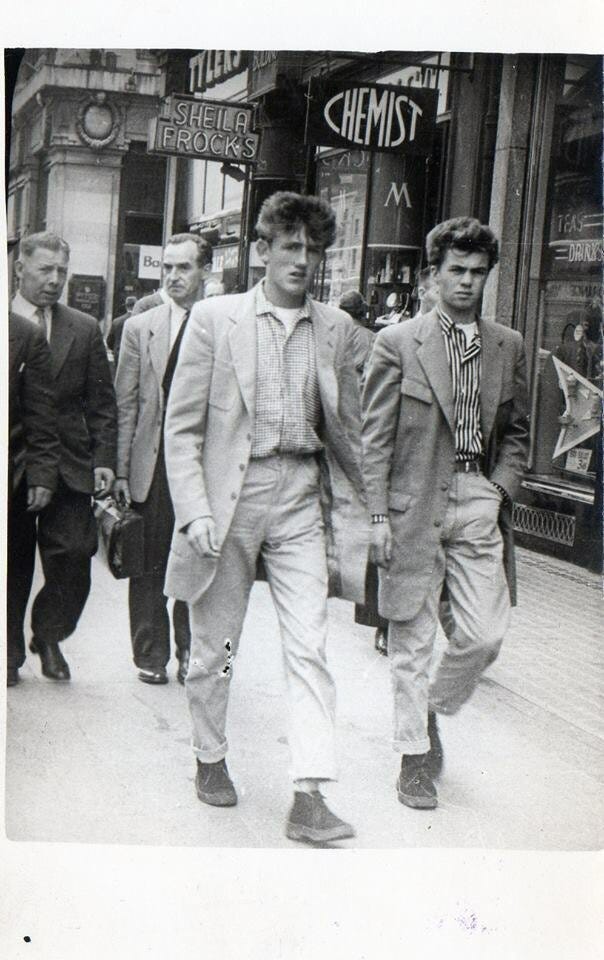
https://www.edwardianteddyboy.com/page2.html ‘Teddy Boys’, as pictured above, were the first real high-profile rebel teenagers, who flaunted their clothes, (Edwardian-style drape jackets, high-waisted, twin-pleated trousers, and silk bow ties) and attitude like a badge against the mainstream.
After teddy boys went relatively ‘out of fashion’, mods and rockers came onto the scene…
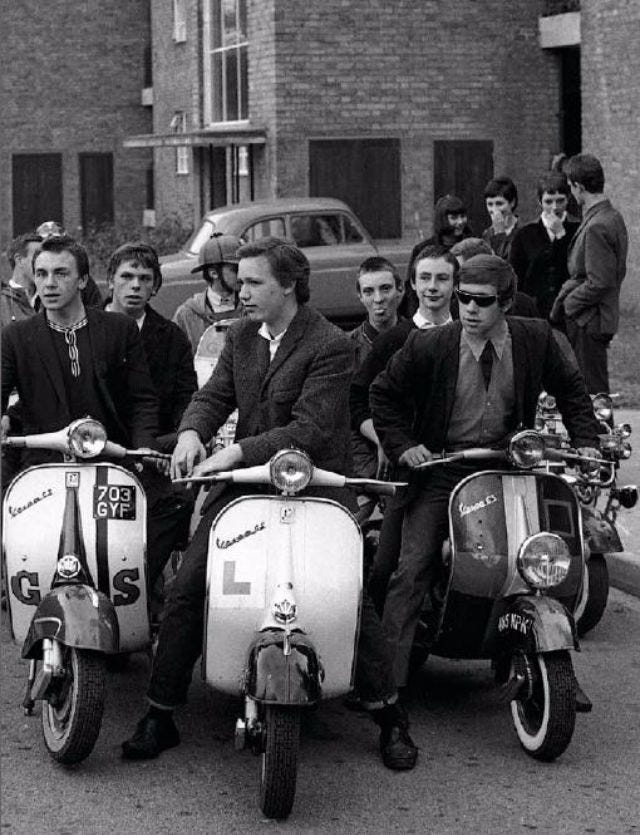
https://www.pinterest.co.uk/pin/539587599105644462/ Mods & Rockers
Not wanting anything to do with anything that had been before/wanting to entirely forge their own identity away from the dreariness of Britain, instead of looking to previous British styles of dress, as teddy boys did, mods looked to Italy and France for clothes, to black America for records, and to the Caribbean for attitude, in order to create something completely new that would be ‘universally cool.’
Characterised by their love of scooters and their taste for Italian-inspired tailored fashion- mods wore suits and ‘clean-cut’ outfits (think button-down white shirts, Levi jeans, trendy puppy shoes, and parka coats).
We like to assert ourselves and be in the limelight, so we wear clothes that make us stand out. We don’t mind if people think we look weird, as long as we are noticed.
In opposition with mods were ‘rockers’, many of whom were the younger siblings of the 1950s Edwardian/’Teddy Boys.’
Whereas mods were into modern jazz and black American music, like Ska, Northern Soul, and Motown, rockers preferred rockabilly and rock ‘n roll music.
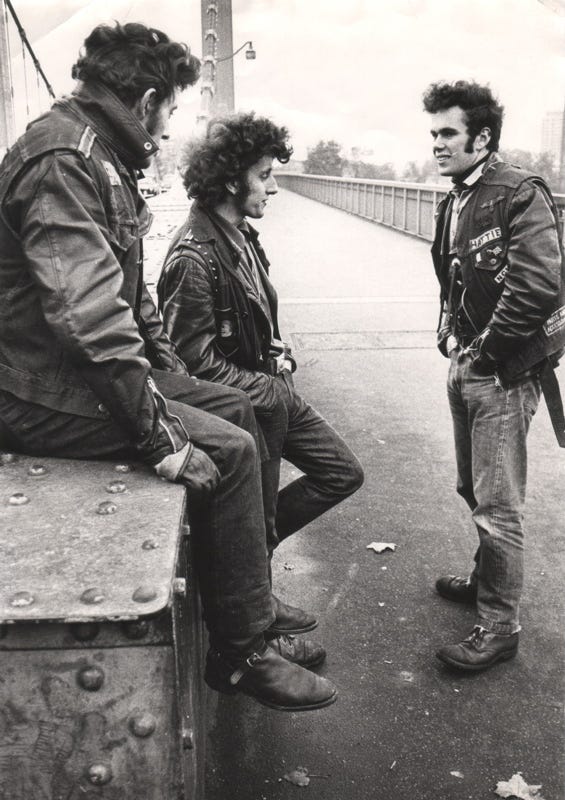
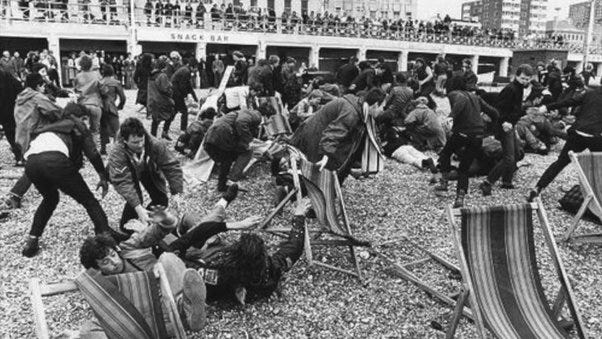
https://en.wikipedia.org/wiki/Rocker_%28subculture%29 While the British press frequently reported on the conflict that occurred between the different subcultures, (mods & rockers, for example), by pouncing on any sign of conflict, it has since been confirmed that much of the media coverage was, in fact, fabricated- exaggerated as a way to sell more papers.
They’re wrong un’s, hooligans. They will be the fall of British society.
https://www.quora.com/What-were-Mods-and-Rockers-and-why-did-they-fight-each-other Fear-mongering, trying to quash all individuality, the media were quick to report on the minority of people who misappropriated skinhead culture, far-right ‘neo-nazis’ essentially, yet failed to report on any of the good aspects which far outweighed the bad…
The media, time and time again, prove to make people who dare to go against the mainstream the scapegoat for all of society’s woes, because ‘difference’ threatens the system, where only blind conformity can let oppression continue…
It’s why homophobia, misogyny, and racism exist, because people who are ‘different’ pose a threat to the existing ways that things are done, and thus ‘difference’ isn’t something to celebrate in the eyes of people in power, but something to condemn, to punish.
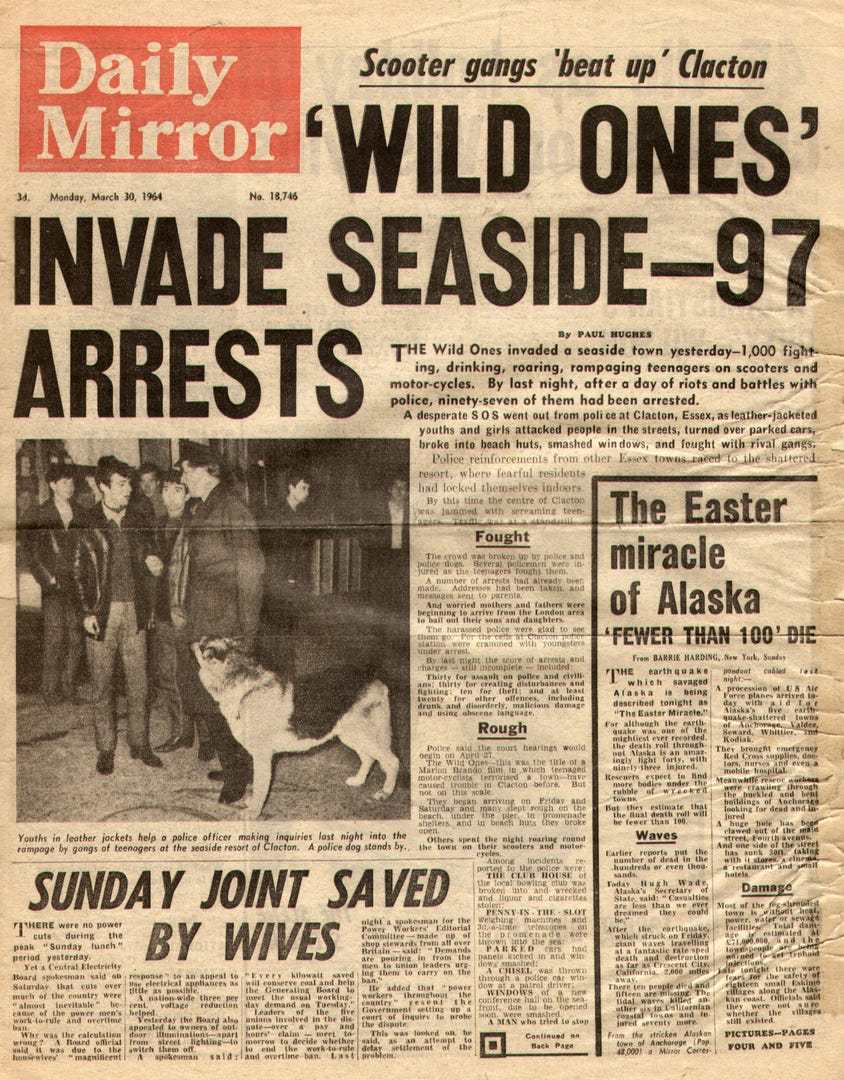
https://www.clactonhistory.co.uk/mods-rockers-1964/ Yes, it’s true that violence did break out in the form of riots between mods and rockers in the 60s, and yes, it’s true that some (a tiny minority) of people did use ‘subculture’ to excuse racism, but it’s also true (yet never reported on), that there was far more peace and a sense of mutual understanding amongst the movements than there was conflict…
As much of Britain kept itself distant from the immigrants the skinheads embraced Jamaican style and music. We would attend all night Blues parties together and many young Blacks were skinheads themselves. Remember the [Jamaican] migrants were relatively poor and so the working-class kids had more in common with them than with the middle and upper classes of Britain. We lived on the same streets, went to the same schools, and we partied together. While much of Britain saw the migrants as ‘those black people,’ we skinheads saw them as ‘our black mates.’ Of course, there were skinheads with racist attitudes, but most skinheads had black mates and most skinhead gangs had black kids amongst their ranks. […]
Skinhead would not exist without Jamaica.Like suggesting that all Muslims are terrorists, or that all men are rapists, you can’t brandish a whole demographic for the actions of a tiny minority.
Whether a mod or a rocker, a hippie or a skinhead, despite their differences, every subculture was simply a part of a generation searching for a sense of identity and belonging, with a shared love of music, fashion, and style.
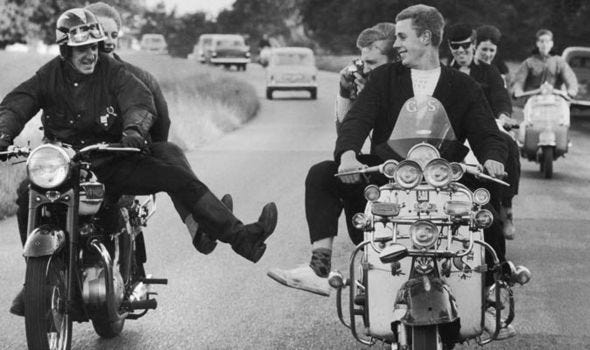
https://www.languageunlimited.org/modsandrockers/ A rocker, upon being asked what he thought of mods once said:
They’re all right. I have nothing against them. As long as they mind their own business, I’ll mind mine. I think their clothes are a bit soppy, almost girlish, but if they like that sort of gear, good luck to them.
Now, I don’t know about you, but the quote above isn’t screaming ‘violent mob’ to me…
By the late 1960s, mods and rockers had almost entirely faded from public view and media attention turned to two new emerging youth subcultures as the mods began to split into two camps.
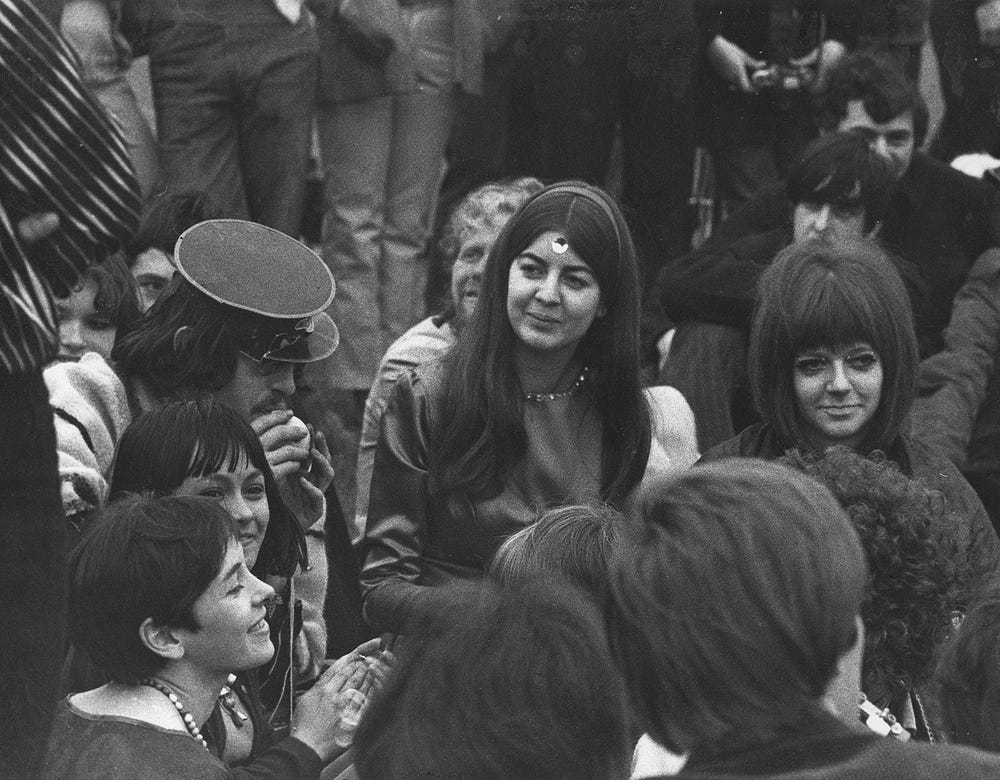
https://www.museumofyouthculture.com/hippies/ Skinheads & Hippies
The more middle-class mods became hippies (pictured above), and involved themselves very much in the psychedelic culture, gravitating towards pop art and psychedelia, and embracing the sexual revolution of the ‘swinging sixties’, while the working-class end who took a more ‘rough and ready’ approach to being a mod, joined up with Jamaican Rude Boys and became skinheads.
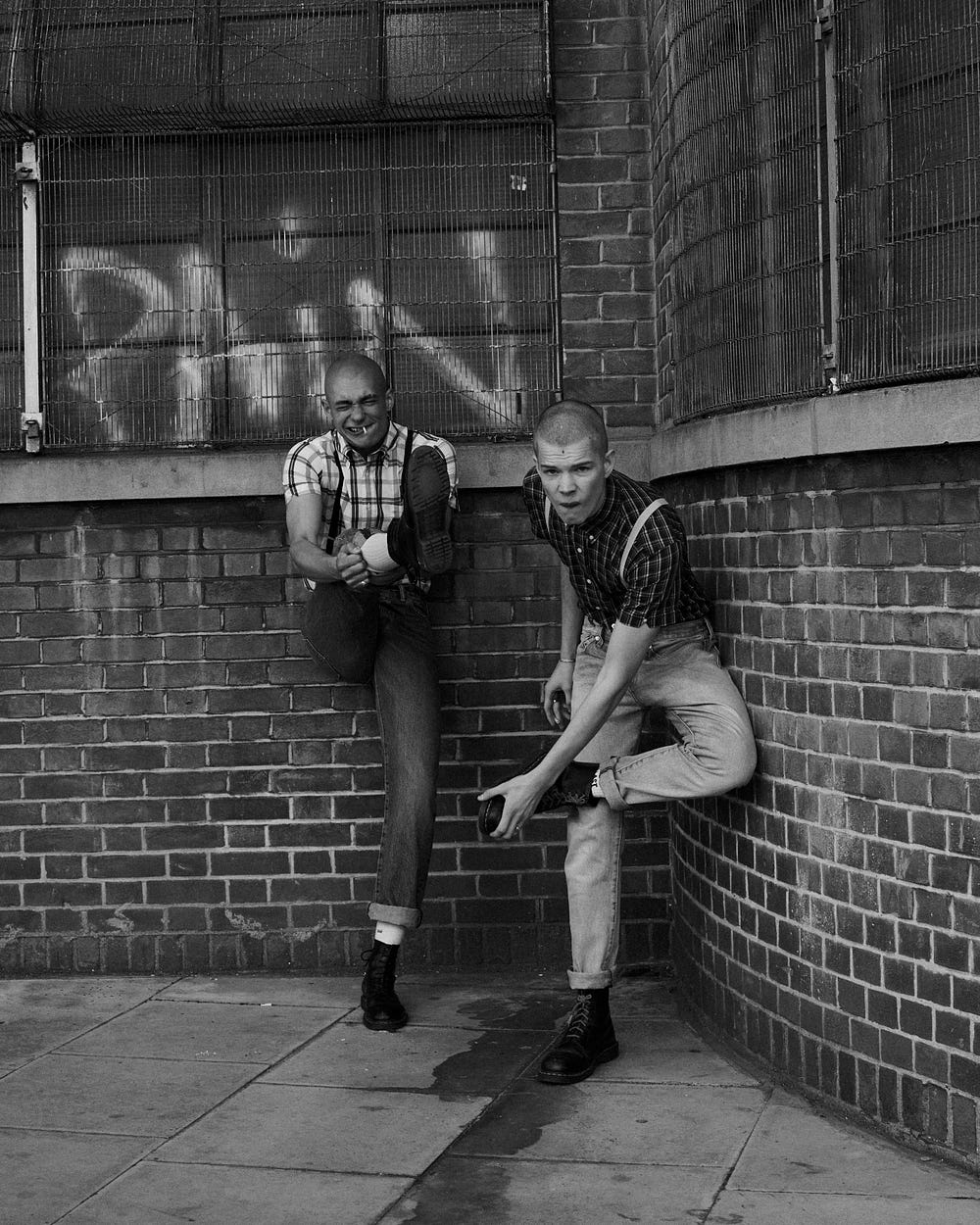
Skinhead fashion, in total opposition to the bohemian ‘flower power’ style of the hippies, was working class and no fuss, and their short hair (as in the name, ‘skinhead’), served as an act of rebellion against the middle-class hippie culture.
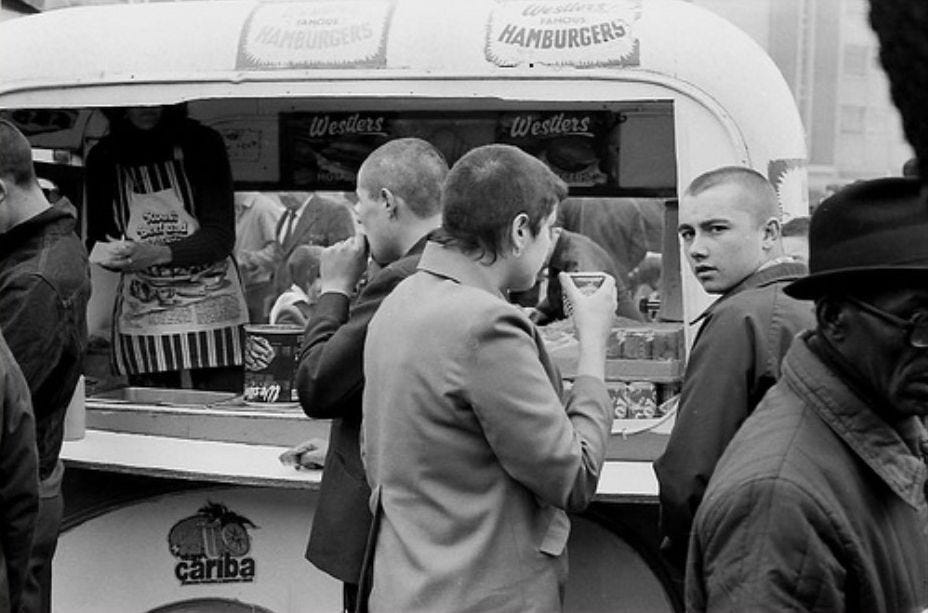
https://en.wikipedia.org/wiki/Trojan_skinhead (Think Fred Perry shirts, Harrington jackets, braces, and Dr. Martens. The ‘uniform of the non-uniform’).
https://www.wonderlandmagazine.com/2018/10/18/made-in-england-fashion-editorial/ Punk
With the rise to power of divisive conservative politician Margaret Thatcher in the late 70s, and with that, the rise in unemployment and mass striking across the country, punk burst onto the scene as a ‘fuck you’ to the system…
This era was a crucible of creativity and rebellion, birthing a subculture that challenged societal norms and redefined fashion as an expression of defiance and individuality.
A highly political subculture, punk was all about worshipping outrage and rebellion, for which punk-inspired bands often made political statements through their music (just consider the sex pistols, ‘Anarchy in the U.K’, for an example of this).
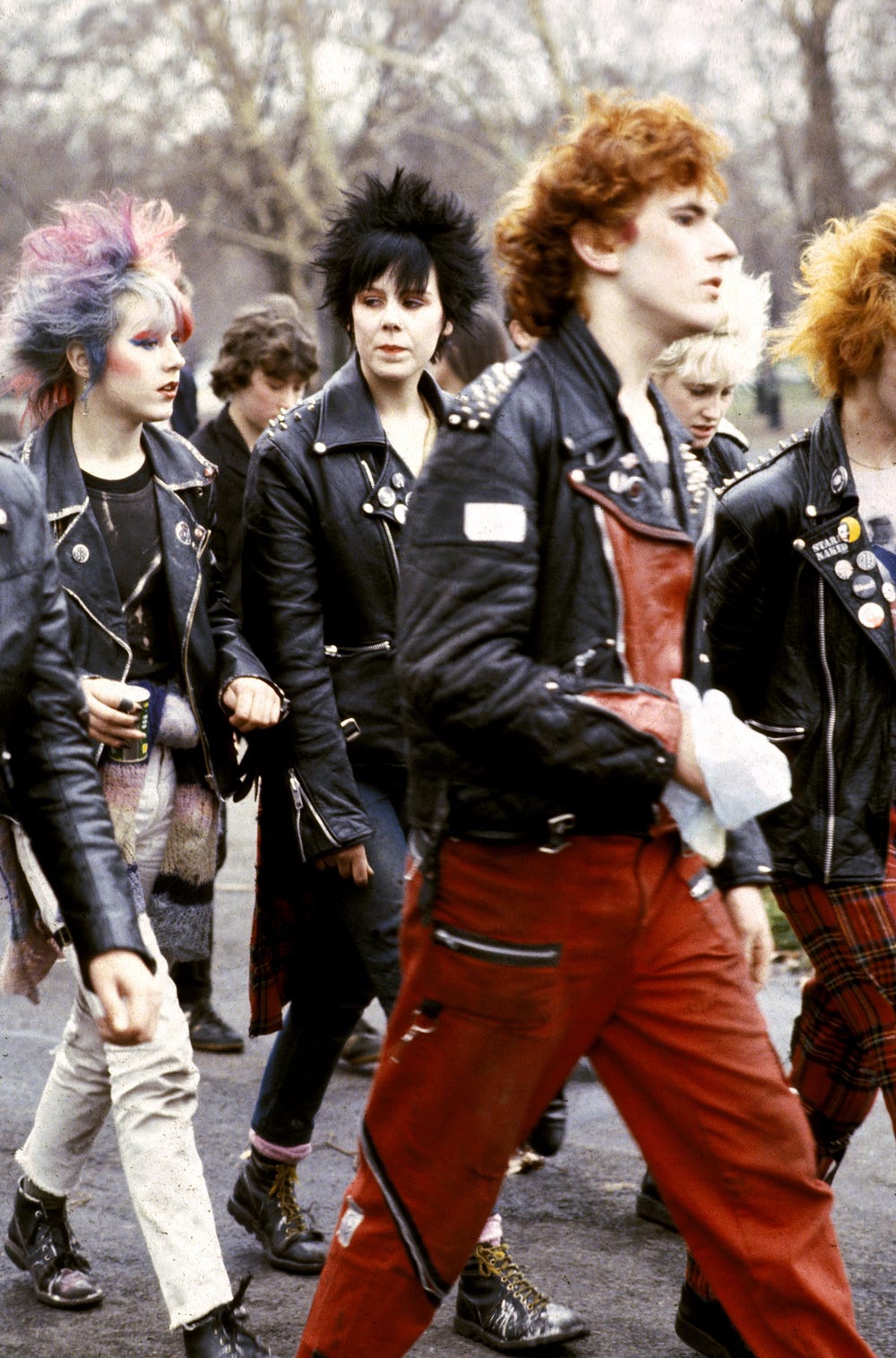
Loud, brash, and anti-establishment, punks delighted in the visual violence of their clothing.
If I were to label myself as belonging to a subculture, then I would say that ‘punk’ sums me up. I’m gender non-conforming in terms of fashion, with this having political undertones in line with the ‘fuck you’ nature of the punk movement.
I am a woman, for which you tell me that I should look a certain way, for which I tell you:
Fuck off.
https://ar.europeanwriterstour.com/images-2023/moda-punk-rock-a%C3%B1os-70 New Romanticism
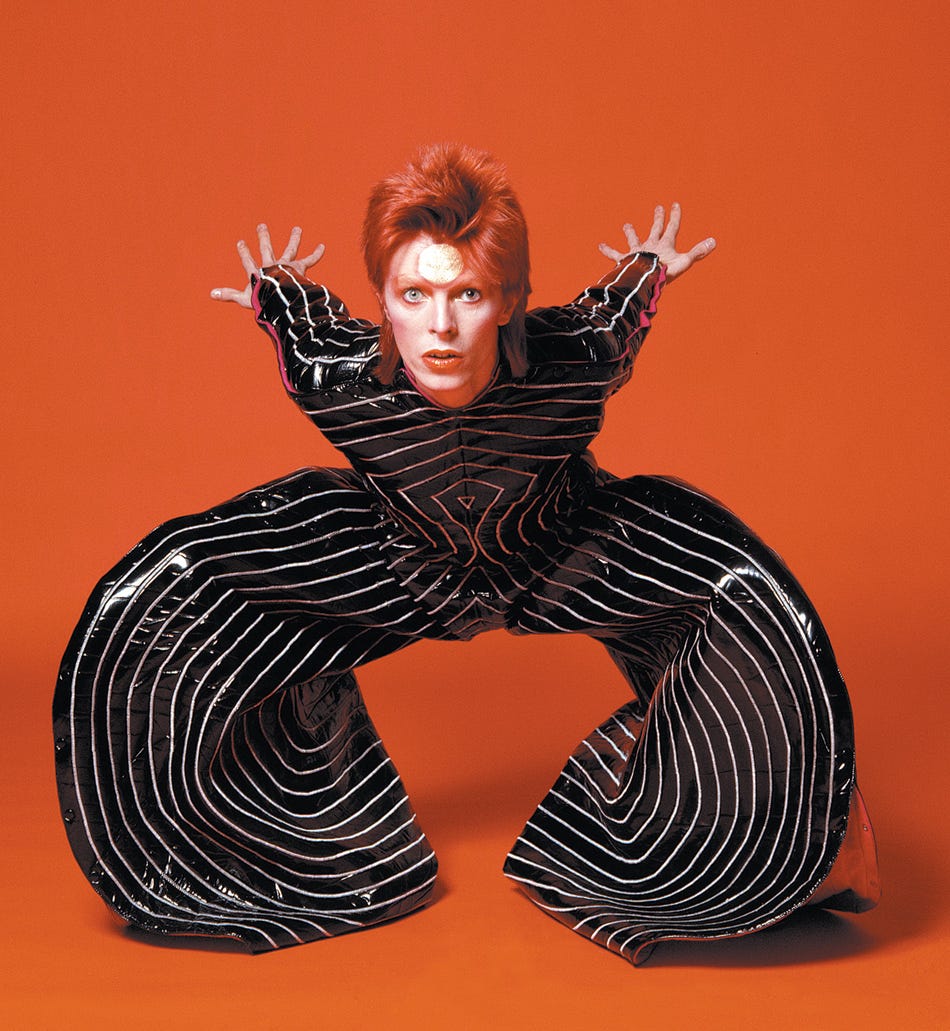
An ‘offshoot’ of punk arose in the early 80s to be known as ‘New Romanticism.’ New romanticism took the ‘bold’ and ‘intimidating’ looking aspects of punk fashion and combined them with a coming-of-age queer revolution.
New Romanticism: All the preceding subcultures of post-war Britain with an added level of exaggeration, spectacle, and frivolity, where masculine and feminine, camp, and punk, are combined.
Closely linked to the British club scene, ‘New Romantics’ drew inspiration from the flamboyance and androgyny of 1970s Bowie and glam rock (the lyrics to ‘Rebel Rebel’ may as well be an instructional manual for the New Romantic, ‘Not sure if you’re a boy or a girl’), and were unashamedly glamorous in their appearance.
Dressing up to outrageous levels, their theatrical hair and makeup soundtracked by synth-driven pop music, new romantics largely defied gender conventions whereby, in playing dress up as a form of resistance, gender fluidity was the norm.
https://bafashiondaniellaeastmond.wordpress.com/2017/01/22/new-romantic-essay/ Why don’t we have subcultures today?
Where fast fashion is everywhere, where pop music all largely sounds the same, (autotuned), where people are all trying to look the same to get the most ‘likes’ on social media, especially girls and women who have the added pressure of trying to appease the male gaze, there is little room these days for individuality.
For the alternative people who do still exist, (if you can pass the swarm of youth adorned with counterfeit Gucci tracksuits on your local high street you might catch a glimpse), social media has largely pushed out any need for subcultures.
Unlike in the late 20th century when subcultures were the only identifiers of a person’s personality, a leather jacket the sign of a rocker, a smartly tailored blazer the sign of a mod, quiffs, eyeliner and frilly shirts New Romantic; Mohawks and safety pins Punk, today we don’t have to see physical evidence to find our ‘tribe’, we can just read Instagram bio’s and look at Spotify playlists, letting the algorithm dictate our tribe (/our lives)…
With social media also comes online stores and the hellscape that is fast fashion.
Punk and alternative subcultures have been packaged and commodified for mass consumption by fast fashion retailers, therefore defeating the purpose of ‘alternative’ subcultures entirely…
It’s become more about aesthetics and less about values.
If you’re buying hippie clothes from Shein, for example, then all the values of the hippie subculture are being disregarded in buying from a company that is damaging the environment.
Furthermore, with diversity now being celebrated, and how we define our gender and sexuality being more fluid, many people are rejecting labels, not necessarily wanting to put themselves in a box anymore/not wanting to strictly align with one subculture as they did in the past…
Because subcultures have essentially become ‘fashion trends’ as opposed to lifestyles as they were once considered, young people today tend to draw inspiration from a variety of influences instead of just one.
It’s as easy as swapping Doc Martens for loafers to ‘make the switch’ these days.
It is important to note, however, that just because no new subcultures have arisen in recent years, it doesn’t mean that they don’t exist.
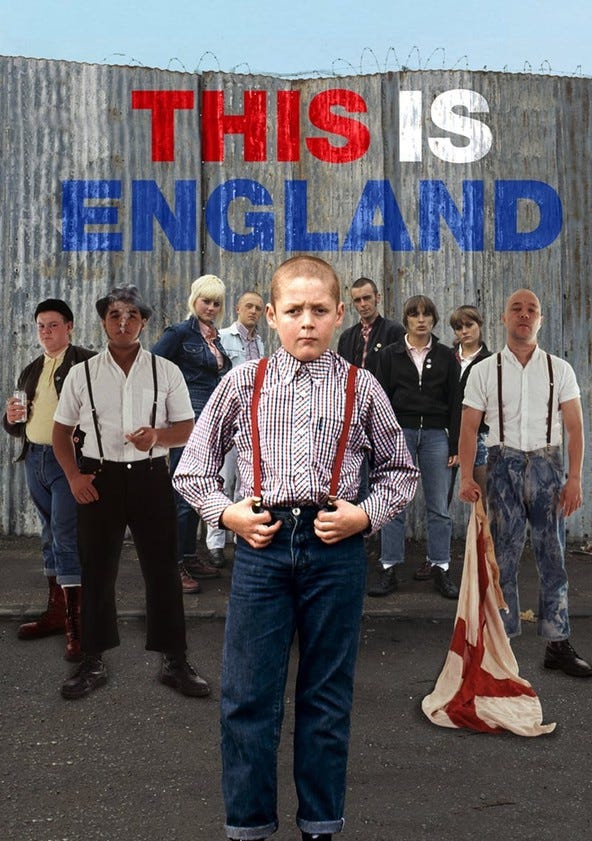
As this article has hopefully shed some light on, Britain is steeped in rich history when it comes to counter-culturalism and its associations with class. One only has to consider the likes of ‘This is England’ to see it for yourself…
https://www.justwatch.com/uk/movie/this-is-england With the understanding of different subcultures, we can see their influence on people today.
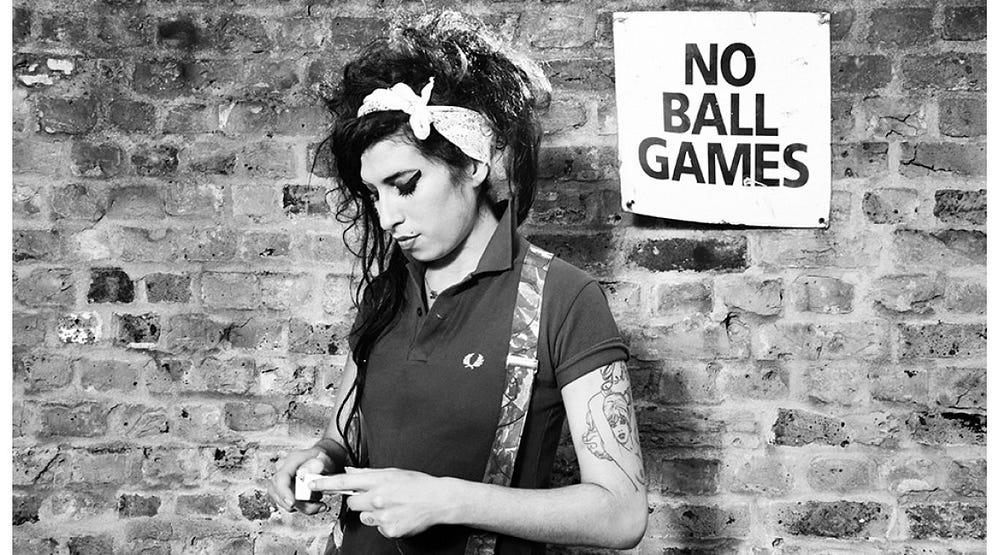
Amy Winehouse for example, made Fred Perry polo’s her staple, and of course, her famous beehive haircut which was, as we can now see, a nod to the mod culture of the 60s.
https://www.bzronline.com/en/amy-winehouse-a-fashion-and-fred-perrys-icon_655.html?idb=99 Noel Gallagher of Oasis (pictured below), Alex Turner of The Arctic Monkeys, if we look around, we can see the influence of the subcultures of the late 20th century on so many artists of the 21st century.
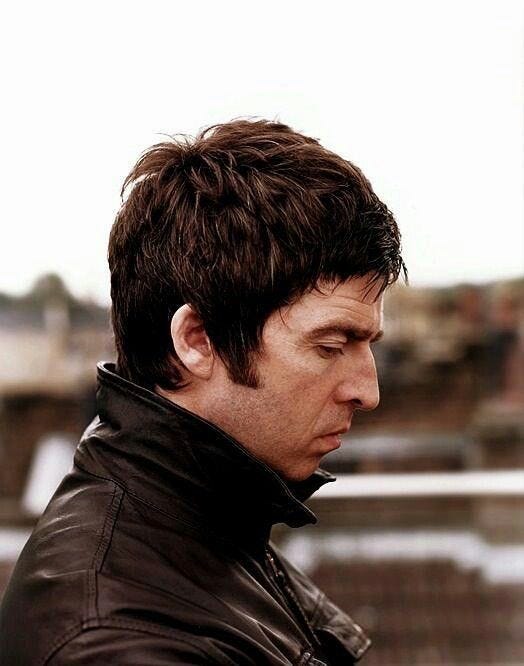
https://www.pinterest.co.uk/pin/314618723964086316/ It doesn’t matter that Fred Perry polos, Doc Martens, and trench coats were in fashion over six decades ago because, as people routinely describe Northern Soul as not just being about the music but a ‘way of life’, the same is true of all the subcultures that I have written about today.
Teddy boys,
Mods,
Rockers,
Skinheads,
Hippies,
Punks,
New Romanticsit’s not just about clothes or music, it’s about values and the sense of belonging that you get in being able to create an identity that is not dictated for you, but that is decided by you/constructed for yourself.
Something that cannot go ‘out of fashion’, where trends come and go, values tend to last a lifetime, hence why the influence of subcultures is just as prevalent today (albeit more covert), as it was 70 years ago, when ‘teddy boys’ arose from the disused air raid shelters of WW2 (not really, they arose from their rock n roll poster-adorned bedrooms, but it’s a cool sentiment to end with, isn’t it).
*(More ‘covert’ today because the need for distinct subcultures is lessened when we are all leaning into the same universal value system:
To treat each other and the world with love and kindness).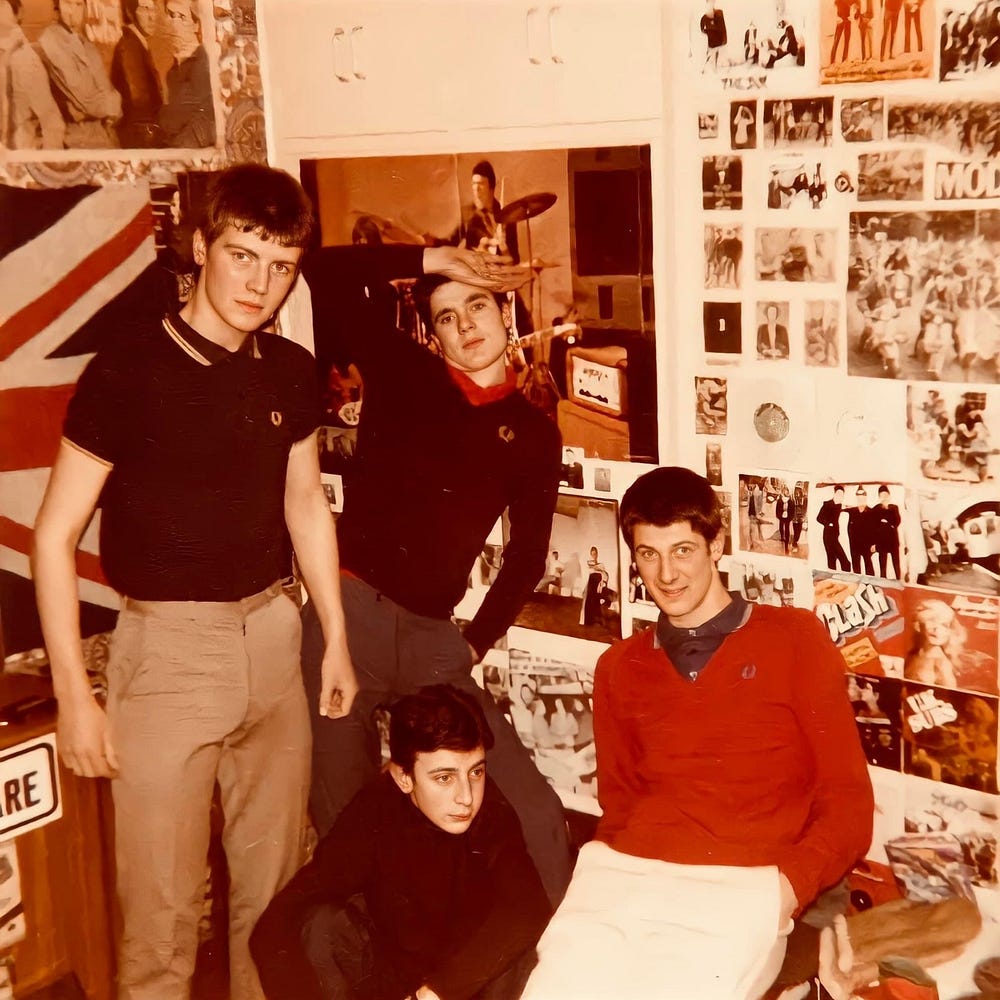
https://www.fredperry.com/subculture/articles/origin-stories-polo-shirt From the dreariness of a depressed Britain on the verge of collapse, in the first wave from Hitler in the world war, and then in the second, from Margaret Thatcher, there came a generation (passed on to generation, passed on to generation, passed on to us) of young people who were determined to forge their own futures…
Promoting ‘counter-culturalism’ as a political statement:
Showing the workings of your life and mind in how you dress.Looking for the light in the darkness,
for the diamond in the rubble,
the hope in the hopeless,
this is what it means to be ‘counter-cultural’,
to never stop searching for hope.And if you can’t find it?
Then you just create it yourself.
Relying on no one,
finding yourself,
this is what it means to be ‘counter-cultural’,
to never…
stop searching…
for hope… -
Why Does The Eurovision Song Contest Have Such A Big Queer Following?
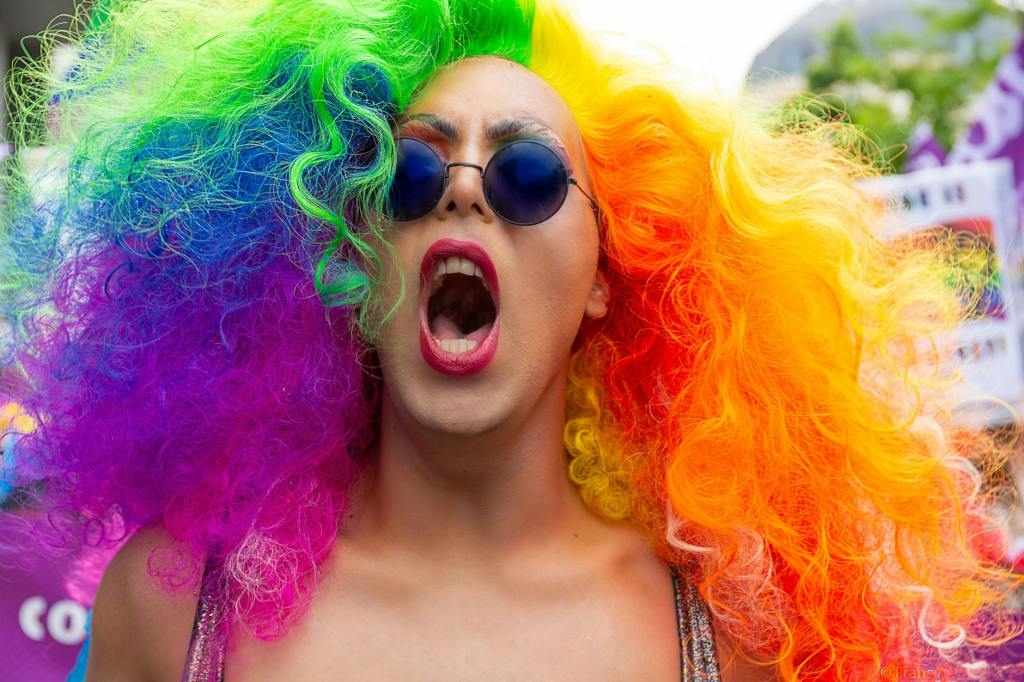
Encouraging freedom of expression, the Eurovision Song Contest has frequently been dubbed the ‘Gay Olympics’ (see also: ‘Gay Christmas’, and ‘the Gay World Cup.)’
A big hit amongst the queer community, the feel-good-esque, ever the inclusive event is nothing short of iconic.
‘It’s camp, colourful, and about being vibrantly yourself.’
Having been held every year, (with the exception of 2020 due to the COVID-19 pandemic) since 1956, this year marked the 67th contest. Over those years, 52 countries have performed on the Eurovision stage, with the show proving as popular today as it ever has…
Last year’s show for example, held in Liverpool, saw a staggering 160 million people worldwide tuning in to watch, with people even hosting Eurovision parties to celebrate the final in all of its ‘camp’ glory…
If there’s any excuse needed to be ‘over the top’, it’s the Eurovision Song Contest, for which its camp nature and reliance on excess makes it a big hit amongst the LGBTQ+ community.

https://confidentials.com/liverpool/eurovision-camp-furnace-named-as-official-euroclub As in Susan Sontag’s piece ‘Notes on Camp’, she describes camp as more than just the effeminacy of gay men — it is a sensibility that represents a love of the ‘unnatural’: of artifice, exaggeration, and the ‘off’/of things not being what they are…
According to Sontag, Camp sees everything in quotation marks. It is not a lamp but a ‘lamp.’ It is not a woman but a ‘woman.’
To be camp is to understand being as playing a role-
‘Life as a theater.’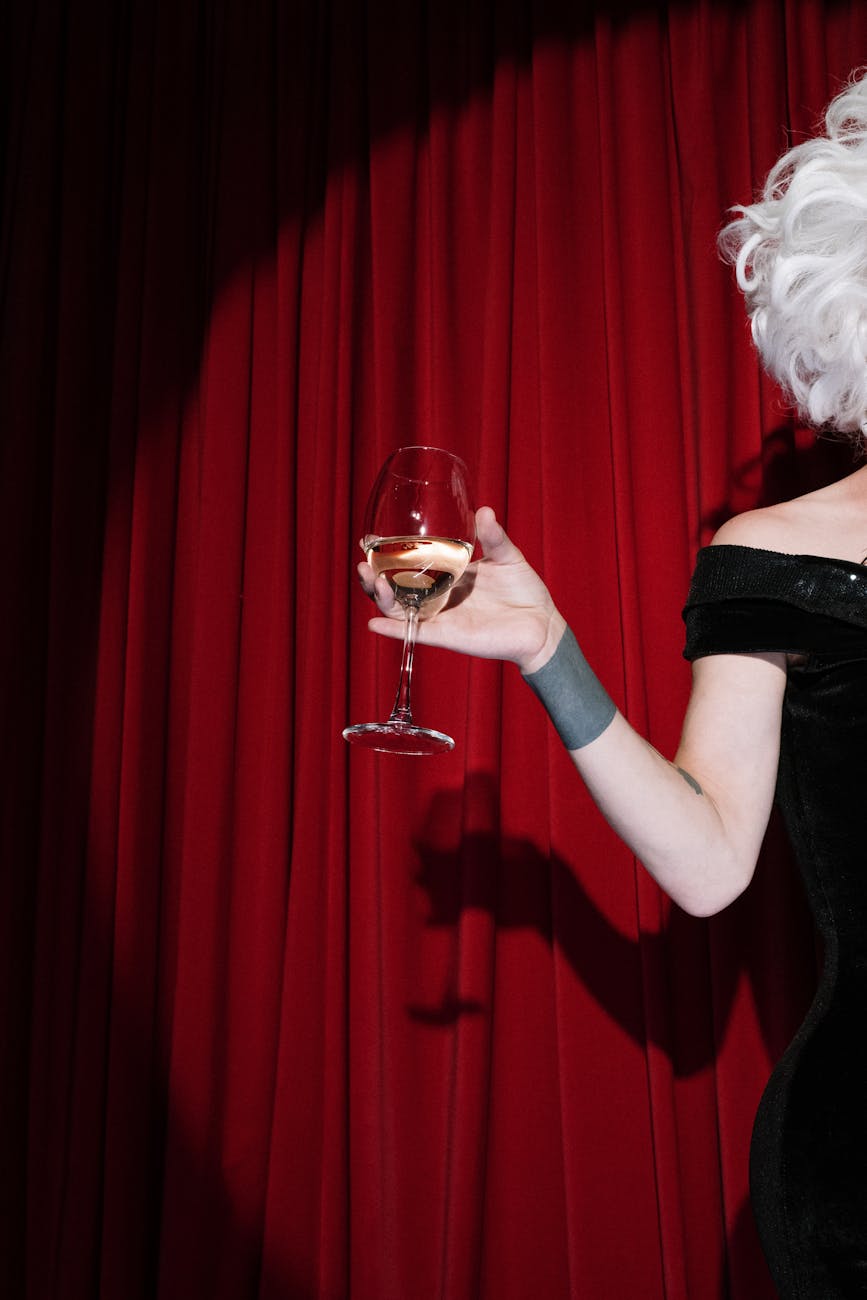
Photo by cottonbro studio on Pexels.com Where performativity, extravagance, and general ‘OTT’ vibes constitute the Eurovision Song Contest, as the lyrics of a skit song sung in the interval of this year’s Eurovision points to, ‘Heterosexual men in a homosexual world’, it isn’t hard to see the ‘camp’ appeal of the show.
Fabulous, darling!

https://eurovisionworld.com/esc/musical-diplomacy-beyond-the-flashing-lights-and-kitsch-delights-of-the-eurovision-song-contest Queer audience / Queer performers
A celebration of all things diverse, Eurovision is a space where people feel safe to be their authentic selves, whether that be in a seat in the audience or in a glittery, diamond-encrusted feather boa outfit on stage…
In 1961, Jean-Claude Pascal won the contest for Luxembourg with a song that told the story of a same-sex couple who were unable to openly display their love for each other (see video below). This was at a time when homosexuality was still criminalised throughout most of Europe, including in the UK whereby, under the conservative leadership of Margaret Thatcher, a series of laws, ‘section 28’, banned the ‘promotion of homosexuality.’
Where the definition of conservative is to be ‘averse to change or innovation and holding traditional values’, the Eurovision Song Contest is the polar opposite of conservative, encouraging creativity through freedom of expression.
Instead of telling us to be quiet, ‘blend in, don’t stand out, tone it down!’, the very premise of Eurovision is centred on being as outlandish as possible…
One should either be a work of art or wear a work of art.
Oscar Wilde.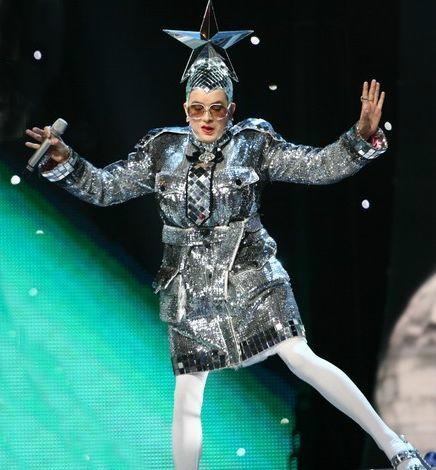
https://blog.oup.com/2013/05/eurovision-song-contest-2013/ The Eurovision Song Contest then, despite its ‘no politics’ stance, has evidently been making waves when it comes to wavering (pardon the pun) queer oppression since the beginning…
In 1998, Dana International of Israel (pictured below) made history as the first transgender winner of Eurovision, at a time when being trans was still heavily stigmatised (it wasn’t until as late as 2019 that the World Health Organisation declassified being transgender as a mental disorder)…
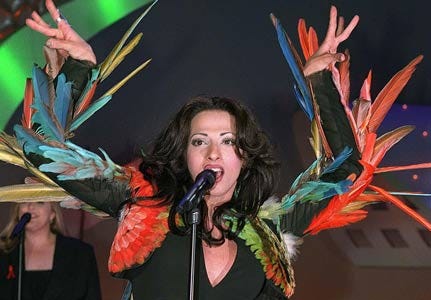
https://www.attitude.co.uk/culture/film-tv/interview-dana-international-reflects-on-winning-eurovision-song-contest-back-in-1998-295719/ Since Dana International, five winners — Serbia’s Marija Šerifović, Austria’s Conchita Wurst, Netherlands’ Duncan Laurence, two members of Italy’s Måneskin, and Switzerland’s ‘Nemo’ (this year’s winner), have been openly queer.
This year’s winner, ‘Nemo’ of Switzerland, who flew the flag for the non-binary community, spoke to Pink News about the importance of representation in Eurovision here…
‘Just being able to represent this community at Eurovision is amazing. I’m so glad that I am not the only one this year. That’s even better because it shows that it’s needed.‘

https://www.npr.org/2024/05/11/1250788997/switzerland-nemo-eurovision-2024-protests-israel The Eurovision Song Contest: A place for people to be accepted in all their queer glory.
“Make us equal, legal, and heard
Would you rather see us suffer
Then open up your mind and stop being so ignorant”
(Tone Sekelius, “My Way”, Swedish representative of last year’s contest).Why does the queer community love Eurovision so much then?
For the same reason that so many queer people stereotypically love pop music, and musical theatre, and drag- anything and everything that encourages unapologetic self-expression, the expanding (dismantling) of binaries, through the arts…
Because it’s a celebration of all things ‘extra.’
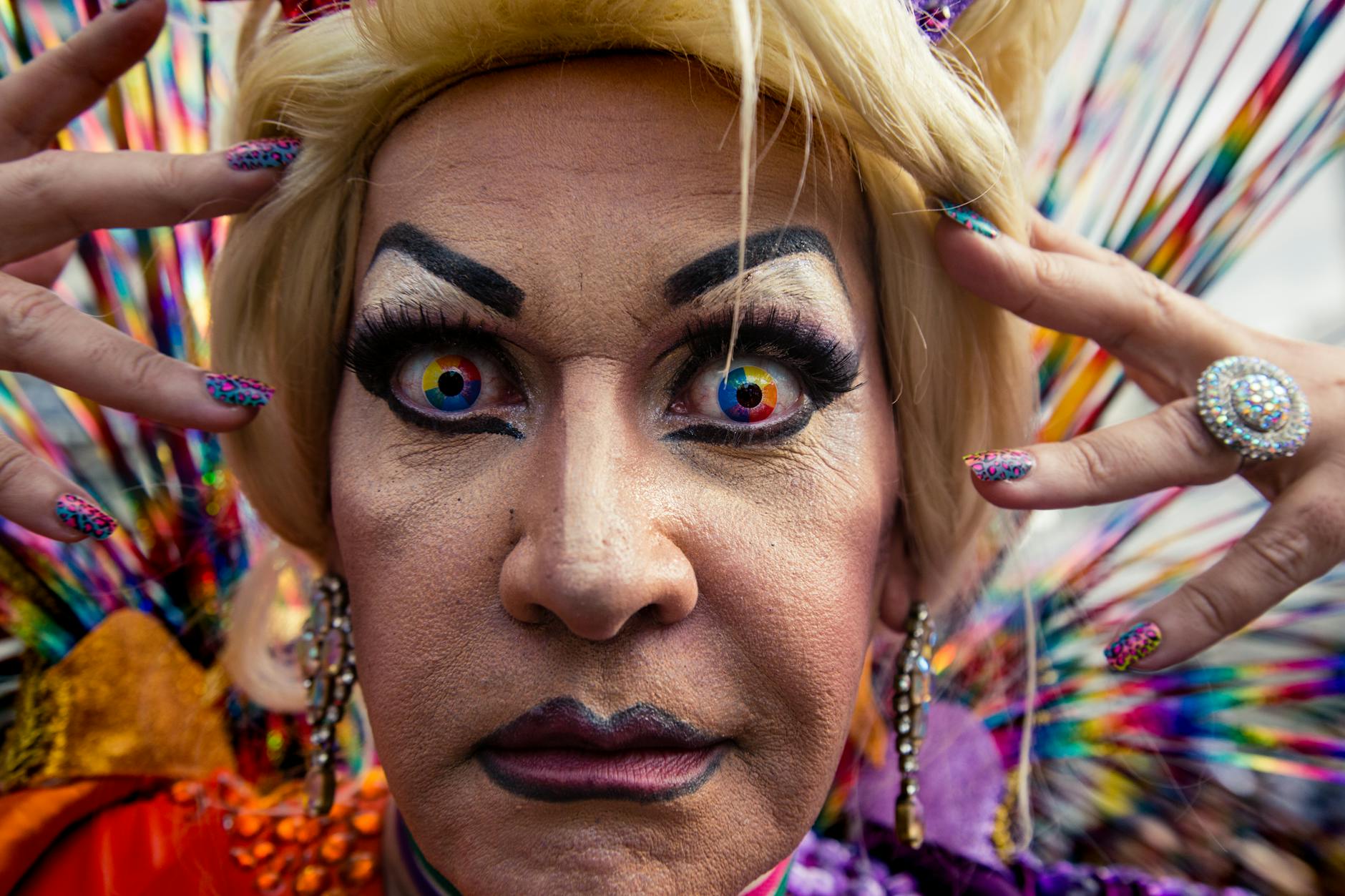
Photo by Tarek Mahammed on Pexels.com ‘Art pop’: Artistic revolution through the potential of pop.
Just consider ‘gay icons’ like Madonna and Lady Gaga, for example, powerful women who are empowered by their sexuality, who get away with behaving in ways that would be deemed completely ‘socially unacceptable’ in any other context…
Nothing says ‘queer’ like the bold, borderline theatrical nature of pop, as has become synonymous with queer nightlife and, of course, the Eurovision Song Contest.
Pop provides glittery escapism from a world darkened by the shadows of homophobia.
When nothing screams ‘queer’ like the Eurovision Song Contest; the singers, the dancers, the costumes, the joy, a visual statement where ‘anything goes’,
Eurovision is proof of the unifying power of music.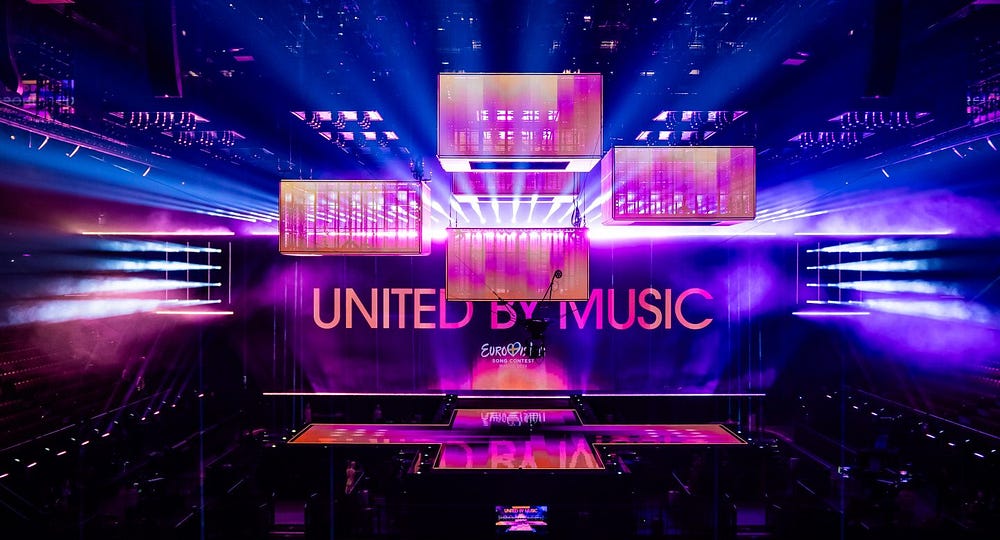
https://escbubble.com/2024/05/shock-or-mock-escbubble-reviews-the-most-shocking-and-camp-opening-ceremony-ever/ -
Risk-Based Exclusion: How To Stop Corruption By People In Power
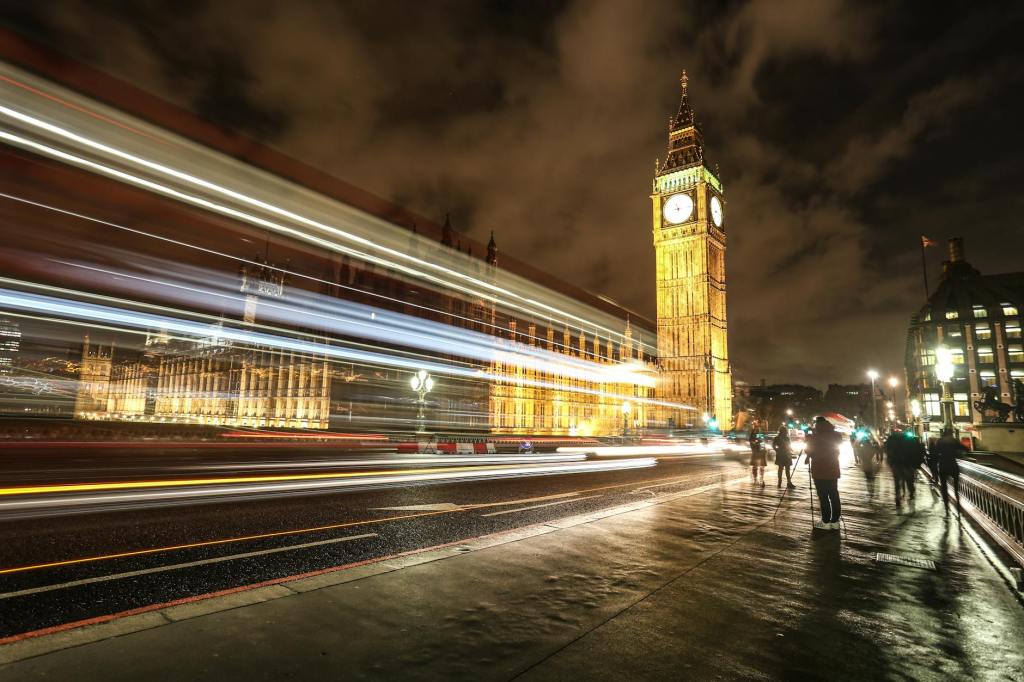
In June 2023, the House of Commons Commission published proposals that would see MPs who were under investigation for sexual and/or violent offences being banned from parliament/excluded at the point of arrest, as a safeguarding measure:
In March 2024 however, an updated proposal was published calling for the existing safeguarding measures to be ‘watered down.’
Instead of exclusion taking place at the point of arrest, the new proposal recommended that it should only take place when (if) an MP were charged with an offence.
The government said that the policy had been revised following feedback from MPs, to take into consideration the ‘detrimental impact that having no voice in Parliament can have on communities’, (referring to people who are banned from parliament pending investigation for offences)…
What about the voice of the victims who, under the new proposal where perpetrators are excluded only at the point of charge, are forced to sit with their assaulter every day?
What about the detrimental impact that the ‘watering down’ of safeguarding measures will have on them?
As Jess Phillips, Labour MP who was voting against the proposal to water down the measures said in a speech on Monday (13/05/24):
Exclusion at the point of charge sends a clear message to victims that not only will we not investigate unless a victim goes to the police, but we won’t act unless they’re charged, which happens in less than 1% of cases. ‘So what’s the point?’ was essentially what this victim said to me…
When only 1% of sexual assaults result in a charge, the proposal to only exclude* people from parliament if they are charged (which, as the statistics above highlight, overwhelmingly does not happen), is clearly not enough to safeguard anyone.
*(Just to note, by ‘exclusion’, I mean ‘risk assessment’. Even if charged with an offence, a risk assessment still has to take place, as conducted by an independent panel, to determine the eligibility for exclusion. Under the original proposal, only if someone is considered to pose a threat to other people working in parliament would they be excluded. The point being that an arrest, or even a charge, was never considered reason enough to ‘ban’ someone from Parliament, even in the so-called ‘extreme’ proposal of 2023)…
We cannot let people who have the most power over our lives stay in power when they are corrupt.
When MPs are essentially in control of our lives, responsible for the governance of the environment, the NHS, the police, the economy, all of us, how can anyone think that it’s acceptable for MPs who have been arrested for serious sexual and/or violent offences to be allowed to continue to stand?
By failing to do even the bare minimum/by not conducting a risk assessment at the point of arrest, as in the original proposal, MPs could be sitting in parliament, under investigation by the police for serious violent and/or sexual offences, without anyone knowing…
And, as history has proven to us when we let people get away with committing heinous acts, we’re giving the people who are committing these crimes a superiority, ‘invincibility’ (‘you can’t touch me) complex, for which they are likely to become repeat offenders…
I got away with it last time, so I’ll do it again…
Just consider Wayne Couzens (pictured below), for example. Not an MP, but a former Metropolitan Police officer who, in 2021, was responsible for the kidnap, rape, and murder of 33-year-old Marketing Executive, Sarah Everard.
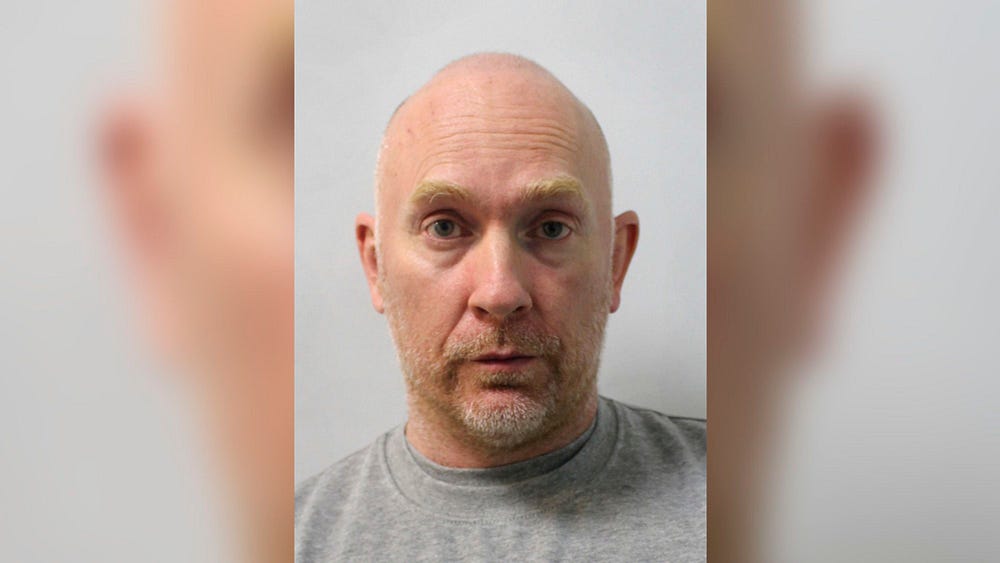
https://edition.cnn.com/2023/03/06/uk/wayne-couzens-indecent-exposure-sentencing-gbr-intl/index.html Couzens used his power as a police officer to stop Sarah when she was walking home from her friend’s house under the guise of her having ‘broken lockdown rules.’
Showing her his warrant card, Couzens handcuffed Sarah, before putting her in the back of a car he had hired for the sole purpose of kidnapping a lone woman, and then drove her to her death…
In the aftermath of his arrest, it transpired that Couzens had been reported eight times to the police, yet he continued to serve as a police officer. In fact, just four days before he went on to kill Sarah Couzens was reported to the police for indecent exposure at a McDonald’s drive-thru.
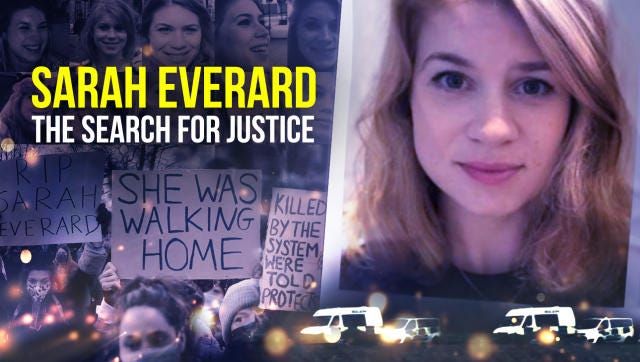
https://ca.news.yahoo.com/sarah-everard-documentary-reaction-225615596.html An investigation was subsequently launched into why a member of the metropolitan police who was equipped with a gun no less, as part of the Parliamentary and Diplomatic Protection Command, was allowed to continue serving as a police officer.
The outcome?
Unsurprisingly, he shouldn’t have been.
Of course he shouldn’t have been…
As this Guardian article writes:
Routine checks that could have flagged Couzens’ unsuitability to be an officer were not done.
And Couzens isn’t alone in his corruption, either.
Derek Michael Chauvin (pictured below), the former US police officer who murdered George Floyd, was also overlooked when it came to the threat that he posed.

https://en.wikipedia.org/wiki/Derek_Chauvin According to this report in the New York Times, at least twenty-two complaints of misconduct were filed against Chauvin before he would go on to murder George Floyd in 2020.
One of the more vocal complaints came in June 2017 when Chauvin responded to a domestic dispute at the home of Zoya Code, a black woman. Like George Floyd, Ms. Code found herself handcuffed, facedown on the ground, with Chauvin’s knee pressing into her neck.
Ms. Code, in an interview, said she began pleading: “Don’t kill me.” At that point, according to the prosecutors’ account, Mr Chauvin told his partner to restrain Ms. Code’s ankles as well, even though she “was not being physically aggressive.” As he tied her, she said, she told the other officer, “You’re learning from an animal. That man — that’s evilness right there.”
As in the Wayne Couzens case, why was Chauvin allowed to continue serving as a police officer, despite his, what can only be described as sadistic, tendencies?…
Also as in the Wayne Couzens case, it should never have been allowed to get to that point.
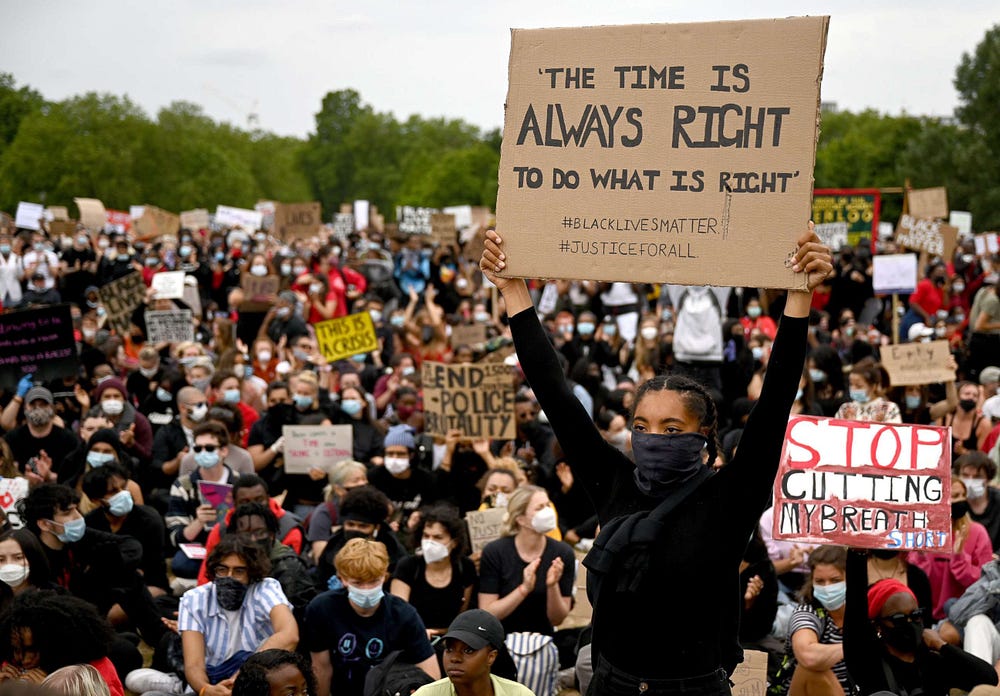
https://abcnews.go.com/US/thousands-gather-london-george-floyd-inspired-protests-sweep/story?id=71043376 When it comes to people in power, ‘innocent until proven guilty’, in my opinion, should be, ‘guilty until proven innocent.’
Why? Because we’ve seen what happens when warning signs are dismissed…
By failing to act and implement adequate safeguarding measures (the ONLY adequate safeguarding measure: to strip Chauvin and Couzens of their uniform), over time they were empowered and enabled to escalate their violent tactics until they went on to commit the most heinous act of all: murder.
To use the example of Wayne Couzens again, despite being under investigation for indecent exposure, he was still employed as a firearms officer by the metropolitan police. Had risk-based exclusion been in place for him, as it should be in place for everyone in positions of power, then what happened to Sarah Everard would never have happened.
By failing to act, people are at risk where power, as history proves, corrupts.
We must learn from the haunting systematic failures that we have seen so that it never happens again.
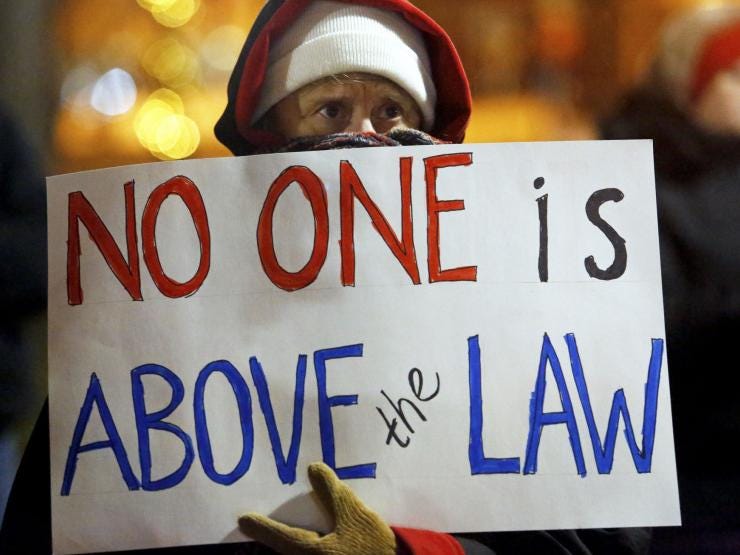
https://premierchristian.news/en/news/article/trump-asks-for-prayer-for-future-presidents-as-impeachment-process-moves-to-senate The idea that anyone in a public-facing role could continue to essentially ‘serve their country’ under such corruption, whether that be as a police officer, a teacher, or an MP, is nonsensical, and dangerous, to say the least…
Referring back to the vote on ‘risk-based exclusion’ which took place in Parliament this week, fortunately, it was concluded that the plan to water down measures would be reversed.
An ‘overdue victory for common sense.’
Parliament is a workplace for thousands and these new formal procedures give staff the safe working environment they deserve and would expect in any other workplace.
However shockingly, (and quite frankly, disturbingly), it was an extremely close call: 170 to 169…
What were those 169 people thinking?
The fact is that it’s not just the sexual predators themselves who pose a risk, but people who are complicit in their behaviour too, like conservative former minister Sir Jacob Rees-Mogg, for example, who said that he ‘did not have strong opinions about whether exclusions should be made at the point of arrest or charge.’
How can you NOT have strong opinions? You’re a fucking politician. It’s your job to have opinions…
The hypocrisy, when he can have strong opinions about asylum seekers and Brexit, working to ‘oppress the oppressed’, but when it comes to helping the oppressed?
I have no strong opinions.
(Perhaps unsurprisingly, though, when the government is full of corruption)…
- When in 2022 we went through three prime ministers and became a laughing stock on the world stage,
- When in the latest statistics published regarding sexual misconduct claims, 56 MPs were under investigation,
the fact that there is even a debate about the need for allegations of sexual assault and violence to be taken seriously is telling…
Telling that power corrupts.
Demand systematic change now.
Photo by Miguel Bruna on Unsplash


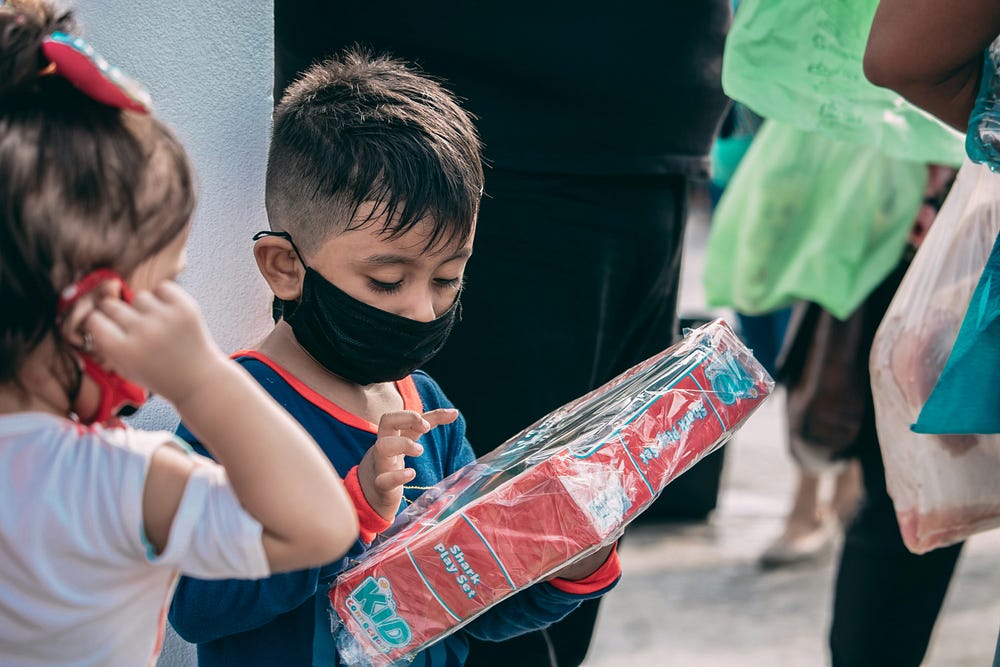
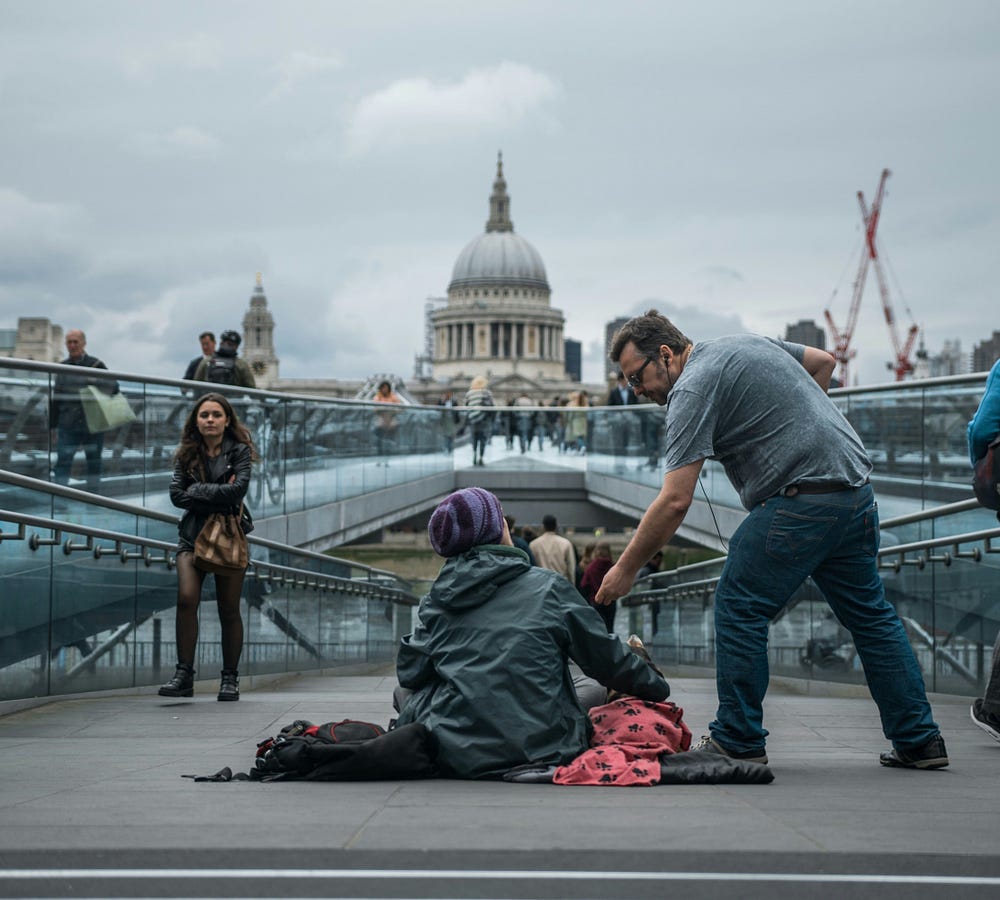

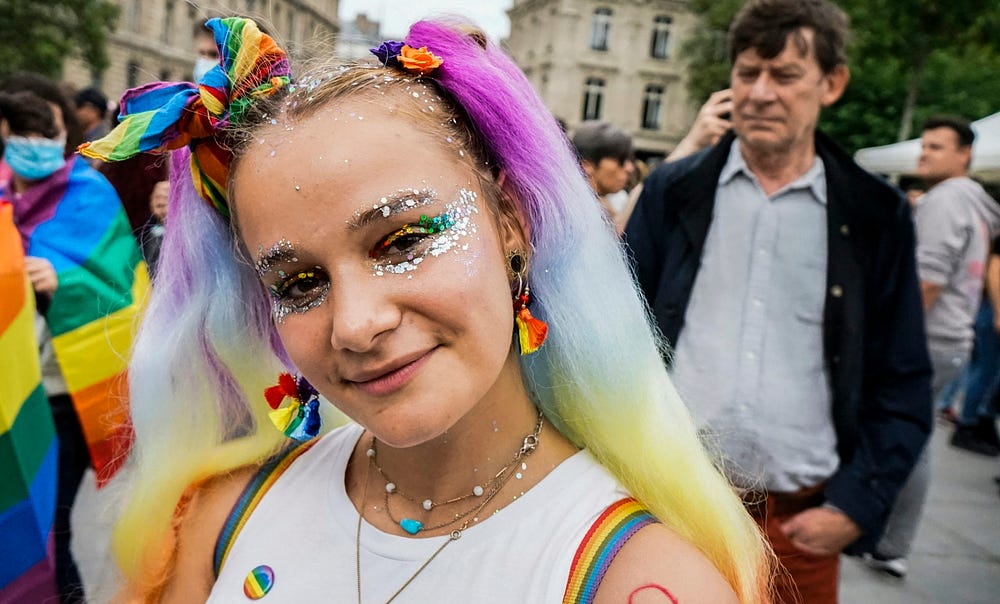

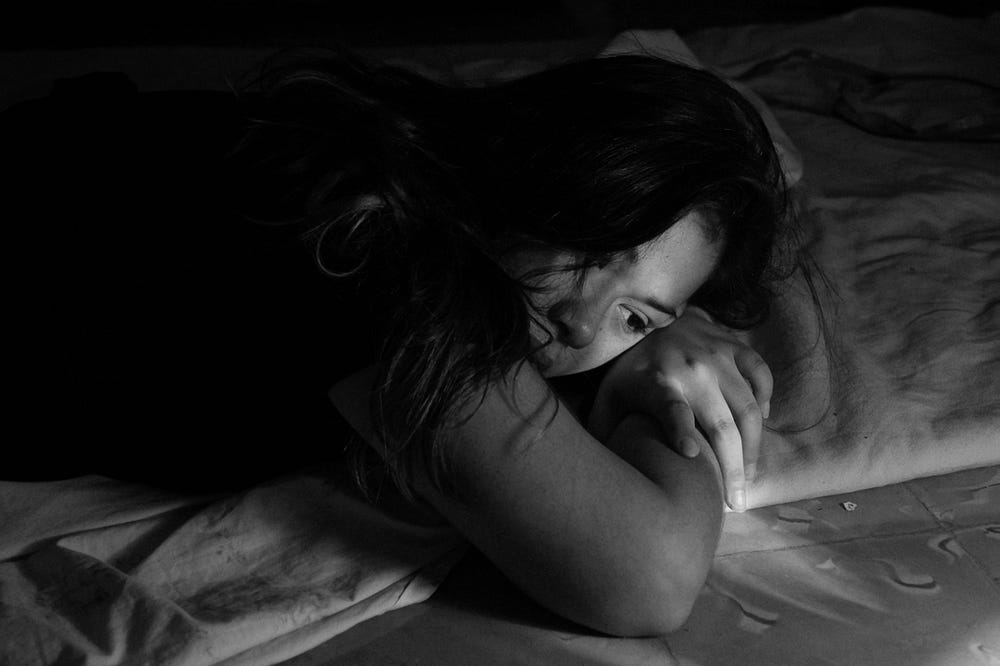
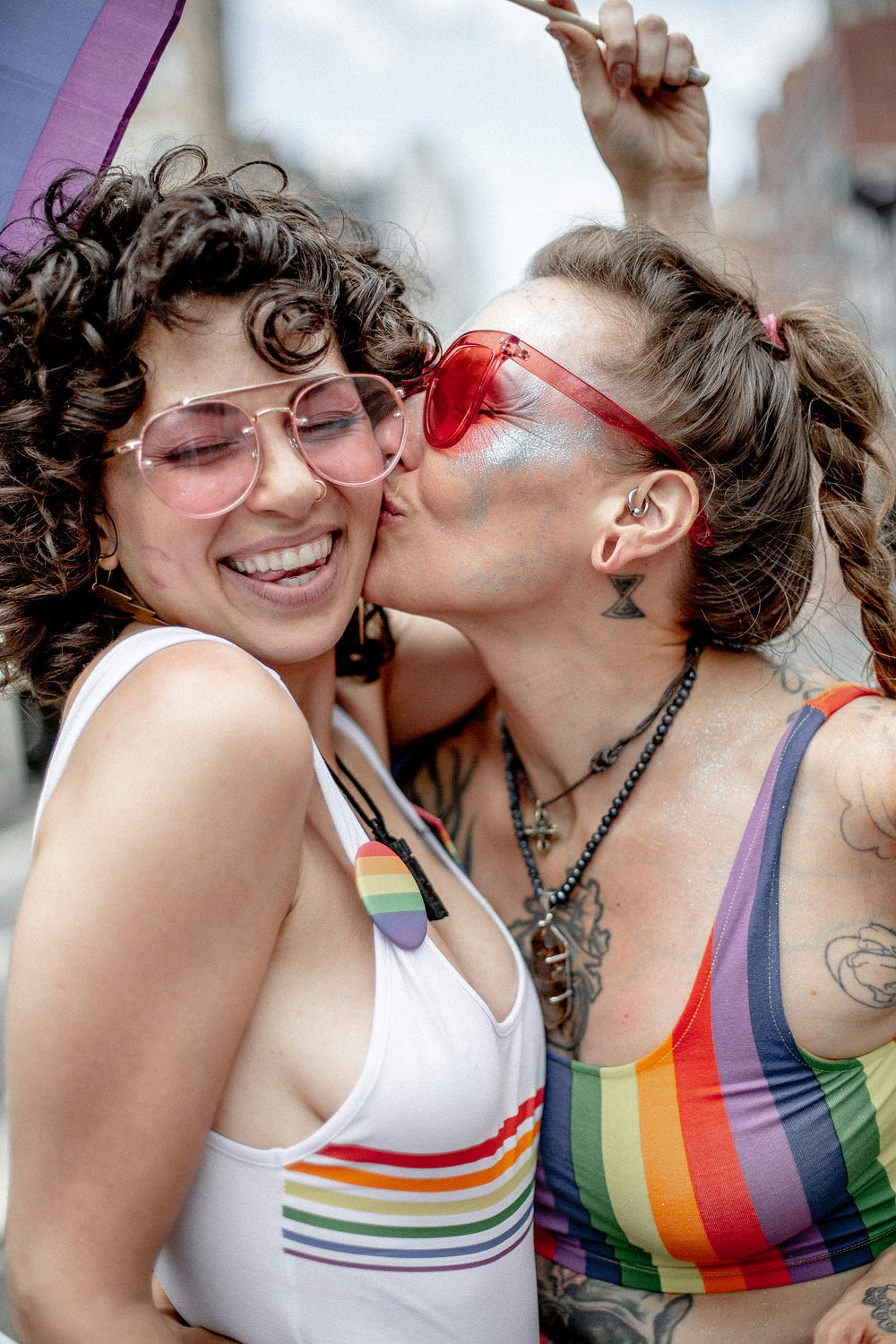
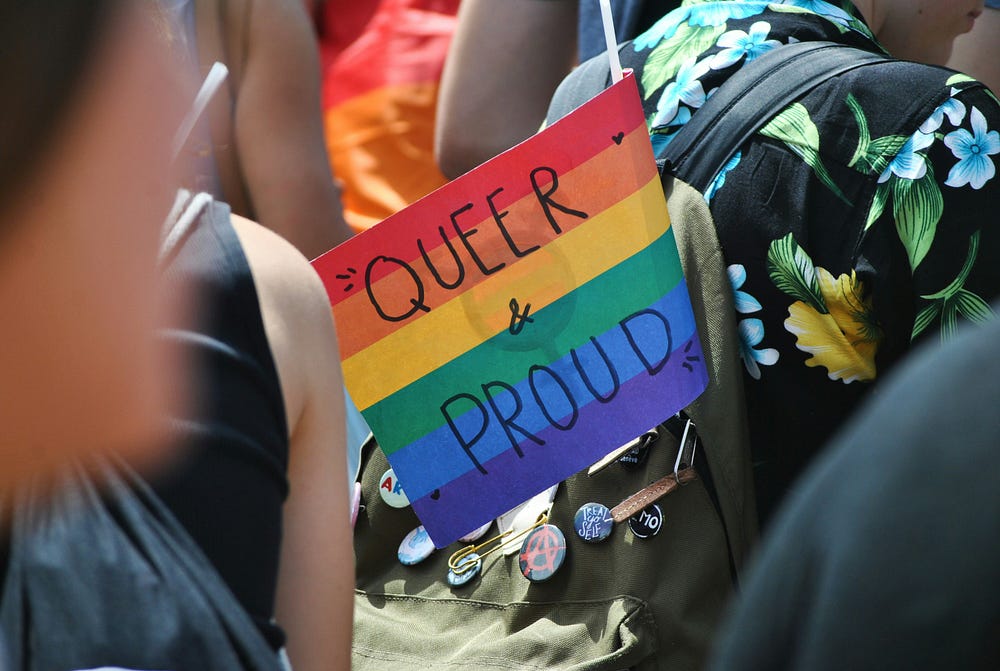

 Portfolio of Hope