-
Who Is Emma Goldman & What Was She Famous For?

Born into a Jewish ghetto in the Russian Empire of Lithuania in 1869, Emma Goldman grew up to become one of history’s best-known anarchists and fiercest feminist voices, with her work earning her admiration from many working people, and hostility from those in power…
An ‘energetic political organiser, a fiery radical, and a passionate free spirit’, Goldman was attracted to anarchism as a philosophy, not only because it sought economic and political justice, but also because anarchists advocated free speech, sexual freedom, and atheism (despite being Jewish, Goldman saw religion as a form of oppression).
She wrote copiously on capitalism, labor, marriage, birth control, sexual freedom (for people of all sexual orientations)*, prisons, war, art, and freedom of speech.
*Never one to shy away from disapproval of the mainstream, Goldman was one of the first outspoken allies of gay and lesbian people anywhere in the world. Firmly believing that ‘the most vital right is the right to love and be loved.’
Because of her supposedly ‘radical’ views, and steadfast determination to make those views heard, her speeches and writings on workers’ rights, revolution, women’s oppression, and religion, struck fear into the powers of the state and capital… So much so that FBI director J. Edgar Hoover dubbed her as “the most dangerous woman in America.”
1889, aged 20, saw Goldman emigrate to join her sister in New York City where she became involved with a series of ‘Jewish radicals.’ It was in New York where she met Alexander Berkman, a fellow Lithuanian anarchist who would become her lifelong comrade and longtime romantic partner.
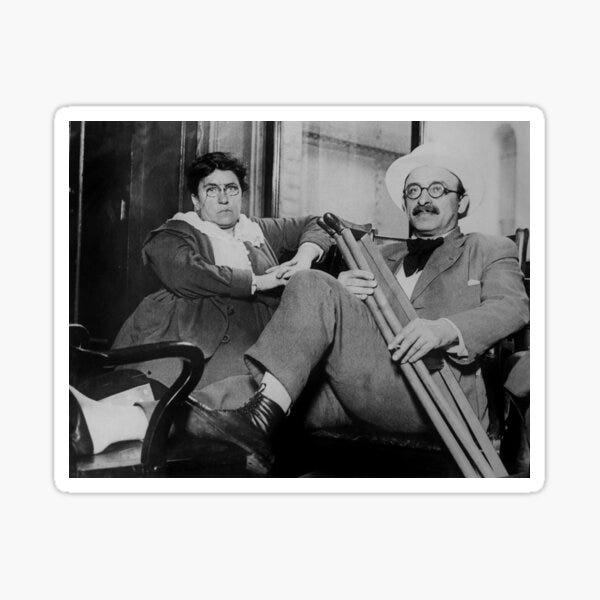
https://www.redbubble.com/i/sticker/Emma-Goldman-and-Alexander-Berkman-Circa-1918-by-warishellstore/71317344.EJUG5 However, in 1892, Berkman landed in prison following an assassination attempt on industrialist Henry Clay Frick during the Homestead steel strike (which Goldman helped him to plan, in an effort to bring about a revolutionary workers’ uprising). After a 14-year prison sentence, he was released.
Goldman too was arrested several times throughout her life, one such time being in 1893 after being (falsely) implicated in the assassination of President William McKinley by fellow anarchist, Leon Czolgosz, who claimed her as an inspiration following a speech.
If they do not give you work, demand bread. If they deny you both, take bread.

https://www.shgape.org/reading-red-emma-a-critique-of-liberal-democracy-in-america/ Following her release from prison in 1906, Goldman founded and edited ‘Mother Earth’, an influential anarchist journal.
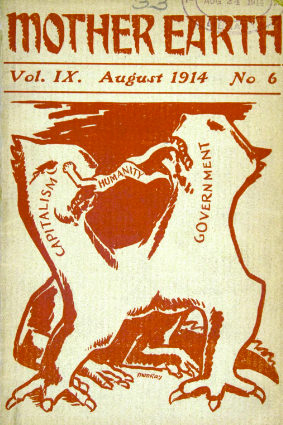
https://www.britannica.com/biography/Emma-Goldman A big proponent of free love, she also lectured on the concept of an ‘uncoerced attachment between two persons for whom conventions of law and church were irrelevant.’
Following her advocacy on these themes, she was jailed briefly (again) in 1916 [specifically for speaking out on birth control, which she deemed a ‘form of female slavery’].
And again, in 1917…
She was jailed again but, this time, a two-year sentence for speaking out against military conscription, and her opposition to the United States’ involvement in World War I…

https://medium.com/@julianp672/emma-goldman-anarchism-and-mother-earth-7f01700c31c0 By the time of her release in September 1919, Goldman — “Red Emma,” as she was called — was declared a ‘subversive alien’ and in December, along with Berkman and 247 others, was deported to Russia. Goldman recounted her experiences, particularly on the political exile she faced, in her 1923 published book, ‘My Disillusionment in Russia.’
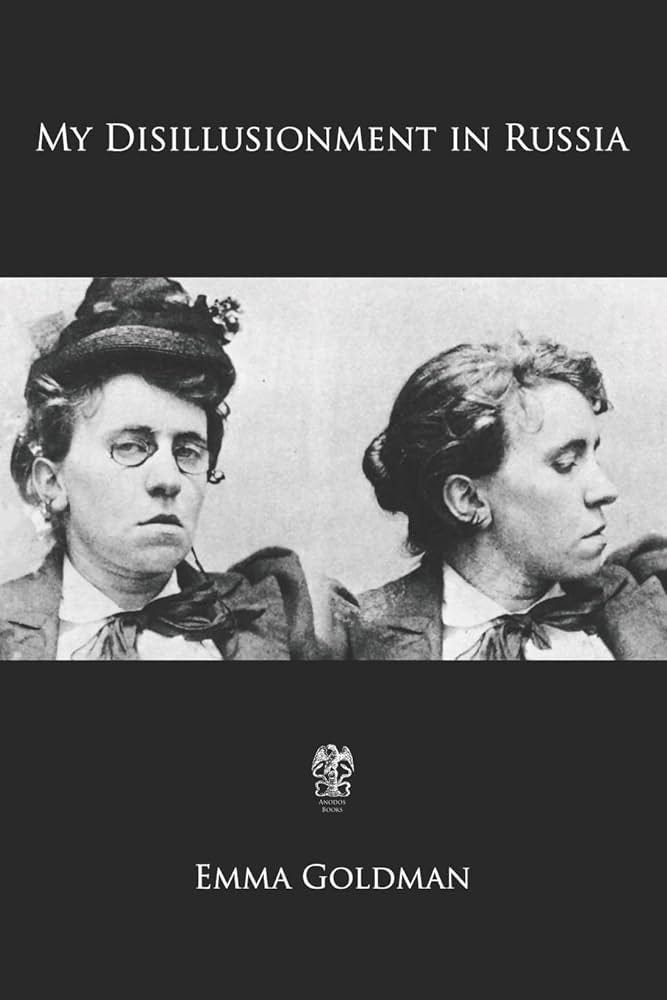
https://www.amazon.co.uk/My-Disillusionment-Russia-Emma-Goldman/dp/1725105195 Goldman subsequently left Russia and traveled all around the world to continue her work in fighting for social justice, while continuing to lecture and write her autobiography, Living My Life (1931).
At the time of her death in 1940, aged 70, Goldman was living in Toronto, Canada, and working for the antifascist cause in the Spanish Civil War.
Even in the face of continuous retribution from authority, Goldman kept advocating for what she believed in right until the end, wavering the right to her own freedom to fight for the freedom of the masses:
(^ The true meaning of altruism).
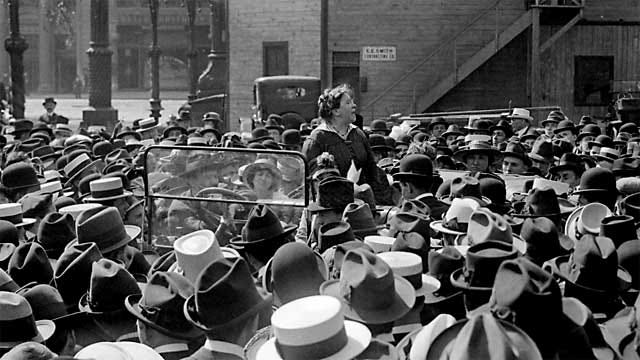
https://www.theatlantic.com/sexes/archive/2013/07/a-so-called-independence-emma-goldman-on-having-it-all-in-1911/277752/ Goldman is remembered as an earthy, bohemian woman who loved art, music, and sex, and saw no reason for a revolutionary to deprive themselves of beautiful things.
I want freedom, the right to self-expression, and everybody’s right to beautiful, radiant things. Anarchism meant that to me, and I would live it in spite of the whole world — prisons, persecution, everything. Yes, even despite the condemnation of my own comrades I would live my beautiful ideal.
[Living My Life (New York: Knopf, 1934), p. 56]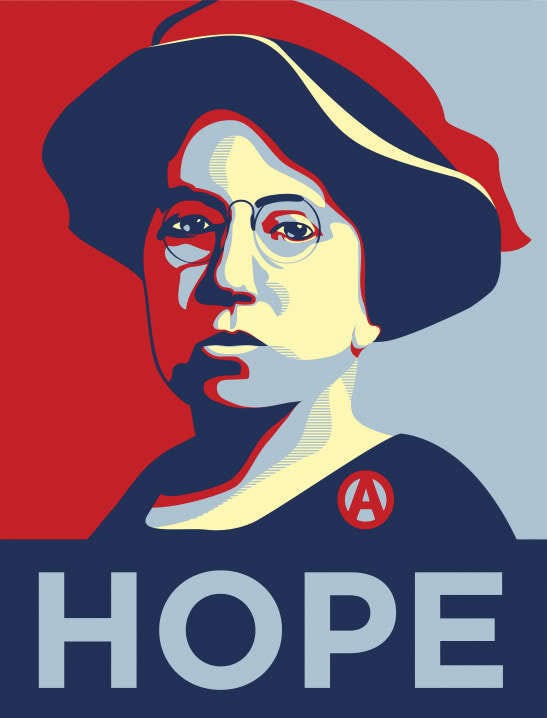
https://robertgraham.wordpress.com/2015/05/02/emma-goldman-on-may-day/ Goldman’s life work:
To spread the message of liberation, far and wide.
As she wrote in a 1910 essay;
Anarchism is the great liberator of man from the phantoms that have held him captive.
What an icon.
Emma Goldman (1869–1940).
Thank you.
❤
-
Evilness In Society: Are People Born Evil?

Define ‘evil.’
The dictionary definition:
Evil (adjective): ‘Profoundly immoral and wicked.’Something that is ‘morally bad.’
^ (That is the dictionary definition, but how can we determine what is ‘immoral?’ On what standards are we basing our judgment)?
Most people have morals that would stop them from, for example, taking another human being’s life, morals that, even if laws did not exist that made murder illegal, would stop them from committing the act anyway. So, why do some people seemingly have an absence of morals? Why do some people not think twice about committing the most heinous of acts?
Well, that depends on…
INTENTION.
I would argue that it’s not the act that makes something evil, but the intention behind it.
E.g., Killing for survival, as in ancient times when Neanderthals would kill each other for food, versus killing for ‘pleasure…’
But, with that, how do we determine what is pleasure, vs what is ‘survival’ when, even the best criminal psychologist in the world can never be truly sure of someone’s intentions?…
If a murderer has schizophrenia, for example, psychosis that saw them hearing voices that told them to kill, then is the intention still ‘evil?’
Or, for a more controversial example, a drug dealer stealing to fund their drug addiction. When addiction is a disease, a mental illness, is stealing to fund one’s addiction still ‘evil?’
Where the concept of good vs evil is subjective, who gets to decide?
Who gets to decide whether society is the cause or the prevention of evil?
Photo by Joeyy Lee on Unsplash According to St Augustine’s theory, evil is ‘nothing other than the absence of good’, and for something to be absent, it must have once existed…
By all means, call me delusional if you want but, sitting firmly on the nurture side of the debate, I have always struggled to believe that anyone is born inherently ‘bad’ (a perspective that, to me, just seems incredibly devoid of hope)…
The belief that we are born ‘bad’ isn’t, however, an uncommon perspective, just consider William Golding’s 1953 novel ‘Lord of the Flies.’
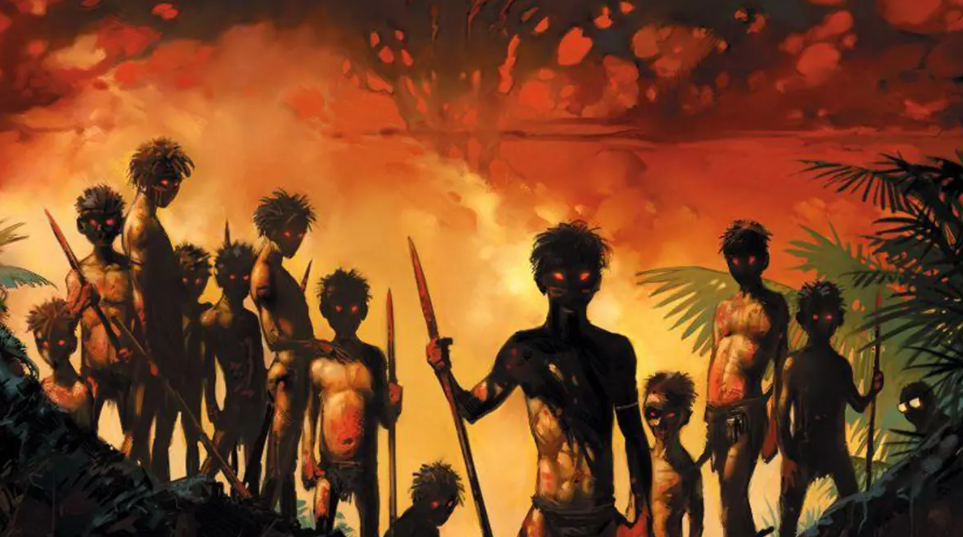
https://www.linkedin.com/pulse/lord-flies-dystopian-novel-rageshwary-singh/ The whole book is based on the premise that ‘evilness’ is, in fact, our true nature, that society is what keeps us in check, and that, with the absence of rules to control our behaviour, we lose our morals. In the nature vs nurture debate, this perspective argues that ‘evilness’ comes from nature, and that ‘goodness’ comes from nurture (i.e., evilness is our default, goodness is what we become).
However, my perspective, as I wrote about here, is that; people don’t ‘corrupt’ society, but rather, society corrupts people. And thus, people who commit acts that society deems ‘evil’, are just as much victims themselves…
Victims of a sick society…
Photo by Luis Santoyo on Unsplash Although human beings have free will, (we all have a choice over what we do with our lives), what we overwhelmingly don’t have is a choice over what society does to us/free will when it comes to the systems that oppress us…
Man is born free and all around him are chains.
-Jean-Jacques Rousseau.What we do have is false democracies headed by corrupt, power-hungry leaders who treat us, the masses, as mere puppets on a string (until the puppets get tired of being used and vow to break the strings, to overthrow the puppeteers, to overthrow the oppressors)…
None of our hearts are immune from the temptations of power.
We all have the capacity to be evil, however, that impulse lays dormant in us until we feel threatened, with it surfacing only as an extreme response to an extreme society…
Photo by Simone Pellegrini on Unsplash Humans are not the only species to become victims of oppression within society, either…
An interesting example of how oppression impacts the animal kingdom in its entirety can be seen in the video linked here.
The video above shows a group of chimpanzees (our closest ancestor) beating another, already dead chimpanzee, for four hours…
The chimpanzee in question?
Foudouko, the former tyrannical* ruler…*(A tyrannical ruler wields absolute power and authority, and often wields that power unjustly, cruelly, or oppressively).

https://news.st-andrews.ac.uk/archive/chimpanzee-drum-beats-send-social-media-messages-across-the-jungle/ What I find interesting is that, whilst we can’t see inside the minds of those chimpanzees, just as we can’t see inside the minds of human killers, such violence, which we are told is rare in the animal kingdom, was conducted against the former oppressor, suggesting that ‘evil’ is societal, based on power as opposed to evilness just being our ‘true nature.’
Like humans, chimps have a remarkable capacity for fairness, with scientists having found overwhelming evidence that they know the difference between right and wrong, just as humans do.
As this article states
Most animals, particularly mammals, including ones who are considered to be highly aggressive such as chimpanzees, only kill each other under very specific conditions. Generally, both human and non-human animals are much more likely to engage in alternatives to violence…
So, what went wrong?
Chimpanzee homicide, which previous research has estimated to occur at a similar rate to that seen in hunter-gatherer human societies, goes up and down as a simple consequence of competition for resources, usually that being a competition of land, mating, and/or food.
The overarching theme amongst these three things? Dominance. An unequal distribution where one person/tribe/chimpanzee (delete where applicable) has authority over another.

https://www.wsj.com/articles/a-short-step-to-dictatorship-1460736966 Similarly to humans, in a society governed by hierarchies, conflict occurs when animals become frustrated by their lack of power, something which sometimes sees them resorting to violence.
The child who is not embraced by the village will burn it down to feel its warmth.
– African Proverb.If evil truly were built in though, then animals wouldn’t wait for a reason to kill each other, they’d just go ahead and proceed to kill each other whenever they wanted to… The fact that they don’t implies that they do have a moral compass/that goodness does reside over evil…
It is only when situations arise in society in which they feel threatened/when the oppression becomes too much, that we see violence being initiated- ‘a fight for power’ taking hold- a survival mechanism.
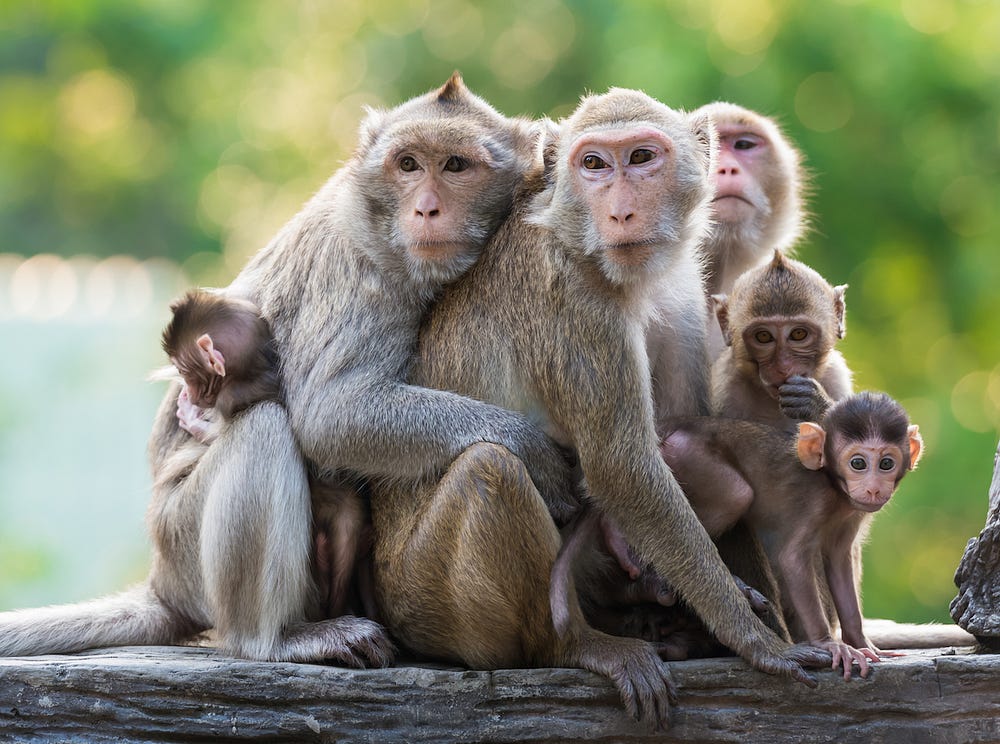
https://www.earth.com/news/monkeys-brains-synchronize/ Power corrupts, not just the oppressor, but the oppressed too…
Like soldiers who are drafted for war, the oppressed become pawn pieces in the oppressor’s fight for greed, ordered to kill to ensure their own survival… But, do they want to kill? Most don’t. Most soldiers return home (if they return home) with complex PTSD. Why? Because to kill someone isn’t natural, even if they are the ‘enemy.’
We are not primed to kill each other…
‘I feel very sad sometimes,’ said a Vietnam war veteran in this Guardian article. ‘It’s not easy to take a life.’
Soldiers are told, ‘Now go home back to your life. But that doesn’t work, because you’re still carrying something that humans aren’t designed to do.’
‘The hardest part about coming home was trying to learn to be human again. Overriding our inherent goodness, to act from a place of evilness is not natural’…
Our society is not natural (as the fascinating case study below demonstrates)…
Marcos Rodríguez, abandoned at the age of 7 in a deserted mountain range in Southern Spain, lived on his own in the wild for 15 years, his only company a pack of wolves who, he says, ‘raised’ him. Eventually, police found him and he was taken to a village, made to reintegrate back into society…
Upon looking back years later, what Rodríguez remembers of his time living in the wild, devoid of any human contact is that it was ‘glorious’ and that, when he was found by the police an, ‘untroubled, simple adolescence among animals and birds was cruelly cut short’…
Explaining how he suffered at the hands of humans after he returned to society in this Guardian interview, he says;
‘Among people, I learned to hate.’
The above example suggests that society is the catalyst to us acting in ‘evil’ ways, for, taken out of that environment, life is ‘glorious.’

https://www.clarin.com/mundo/increible-historia-marcos-rodriguez-pantoja-nino-salvaje-crecio-lobos-sufre-humanos_0_S1D17kQvm.html If society were to be managed horizontally (amongst people), as it is in wolf packs*, as opposed to vertically (from the oppressor to the oppressed, with one ruler on top dictating, and everyone else below being dictated to), as it is in humanity, then would violence still occur?
*(In wolf packs, a hierarchy is established in families/packs, ‘decentralised’ governance, as opposed to in society as a whole, thus power is more equal/’spread out’ across society, as opposed to gatekept by the people/wolves at the top)…
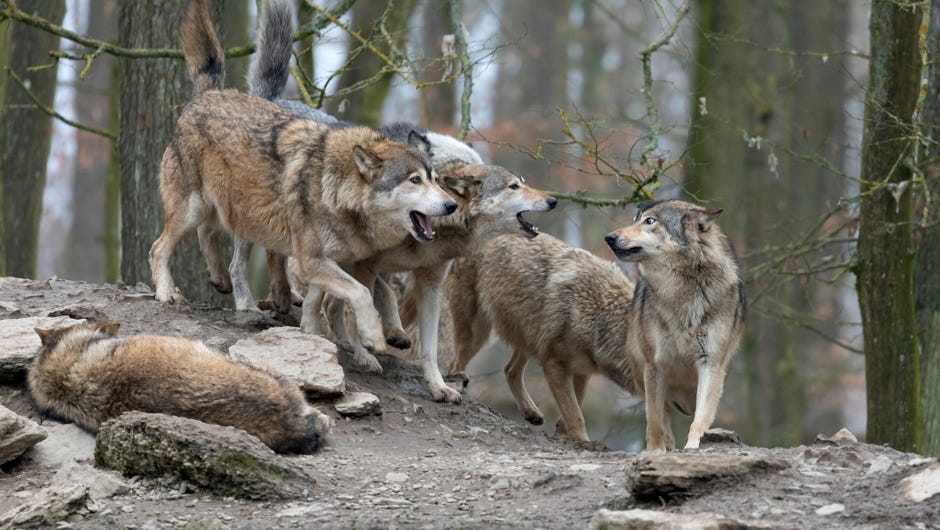
https://www.sciencefocus.com/nature/the-wolf-pack-sharp-teeth-and-strong-family-units People don’t rape/kill/steal (insert the morally wrong act of your choice here), for no reason…
When wild animals act in supposedly ‘evil’ ways, bearing their teeth at humans, for example, they’re doing so from a place of fear. How do I know this? Because we only attack that which we fear. It’s the root of all oppression in society… Racism and sexism and homophobia- a perceived ‘threat to the status quo…’
We can’t get at the people in power so we aim at those we can get at.
The history of progress is written in the blood of men and women who have dared to espouse an unpopular cause, as, for instance, the black man’s right to his body, or woman’s right to her soul.
-Emma Goldman, What I Believe, 1908.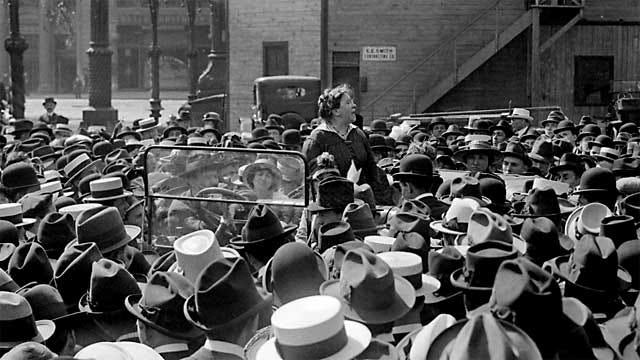
https://www.theatlantic.com/sexes/archive/2013/07/a-so-called-independence-emma-goldman-on-having-it-all-in-1911/277752/ When power is the source of all conflict in the world, both on a collective/mass scale when it comes to war, and on a personal/individual scale* when it comes to crime
(the puppets can’t reach the puppeteers [the politicians] so they go after people who they can reach, trying to reclaim a sense of power back, through rape and domestic violence and murder and petty crimes),
the resolution to evil?ANARCHISM.
(a.k.a democracy taken seriously).Photo by Oladimeji Odunsi on Unsplash GIVE POWER BACK TO THE PEOPLE.
It’s the only way that goodness can prevail, otherwise…
If you want a picture of the future, imagine a boot stamping on a human face — forever.
– George Orwell, 1984.
https://musketeerenglish.blogspot.com/2008/11/english-ii-honors-1984-book-i-questions.html -
Why Is There No Straight Pride?
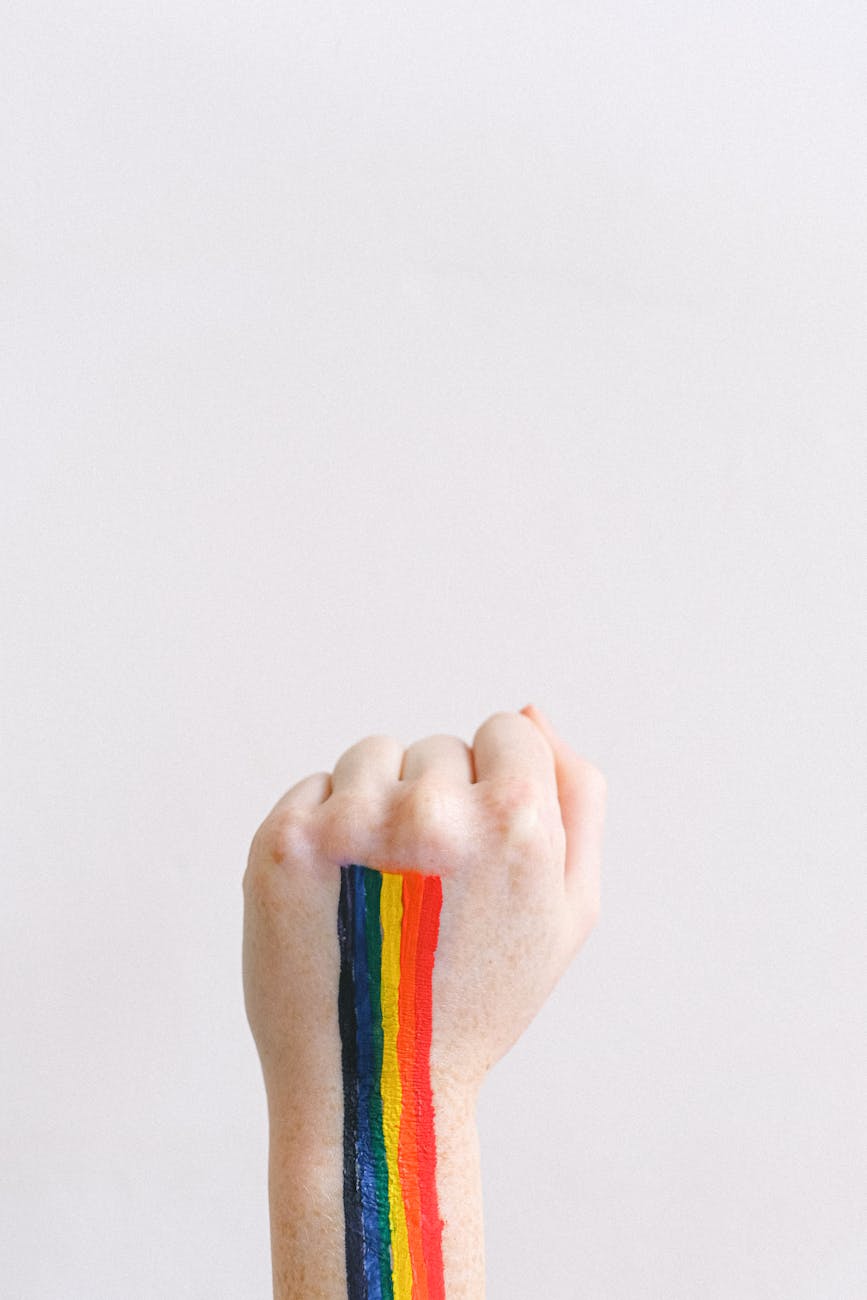
Because some of us are born with the cross hairs of a rifle scope printed on our backs. Some of us aren’t.
- There is no Black Lives Matter movement for white people because white people haven’t spent their lives having to fight for their right to exist as equals.
- There is no #MeToomovement for men because men haven’t spent their lives having to fight for their right to exist as equals.
- There is no Pride for straight people because straight people haven’t spent their lives having to fight for their right to exist as equals.
See a running theme here?
- The black lives matter movement isn’t about telling white people that their lives don’t matter.
- The #MeToomovement isn’t about telling men that their lives don’t matter.
- Pride isn’t about telling straight people that their lives don’t matter.
It’s about telling people that we all matter, that our identity is not something to be voted on, and that we are not pawn pieces to be used in petty games of party politics…
And this is where advocacy gets misconstrued in the minds of people who fear diversity. They fear, for example, that by having pride events, we are ‘on a mission to turn people gay’, when the reality is that our only ‘mission’ is for a society that has historically been hellbent on erasing us, via heteronormativity, white supremacy, and the patriarchy, to finally acknowledge us as human beings.
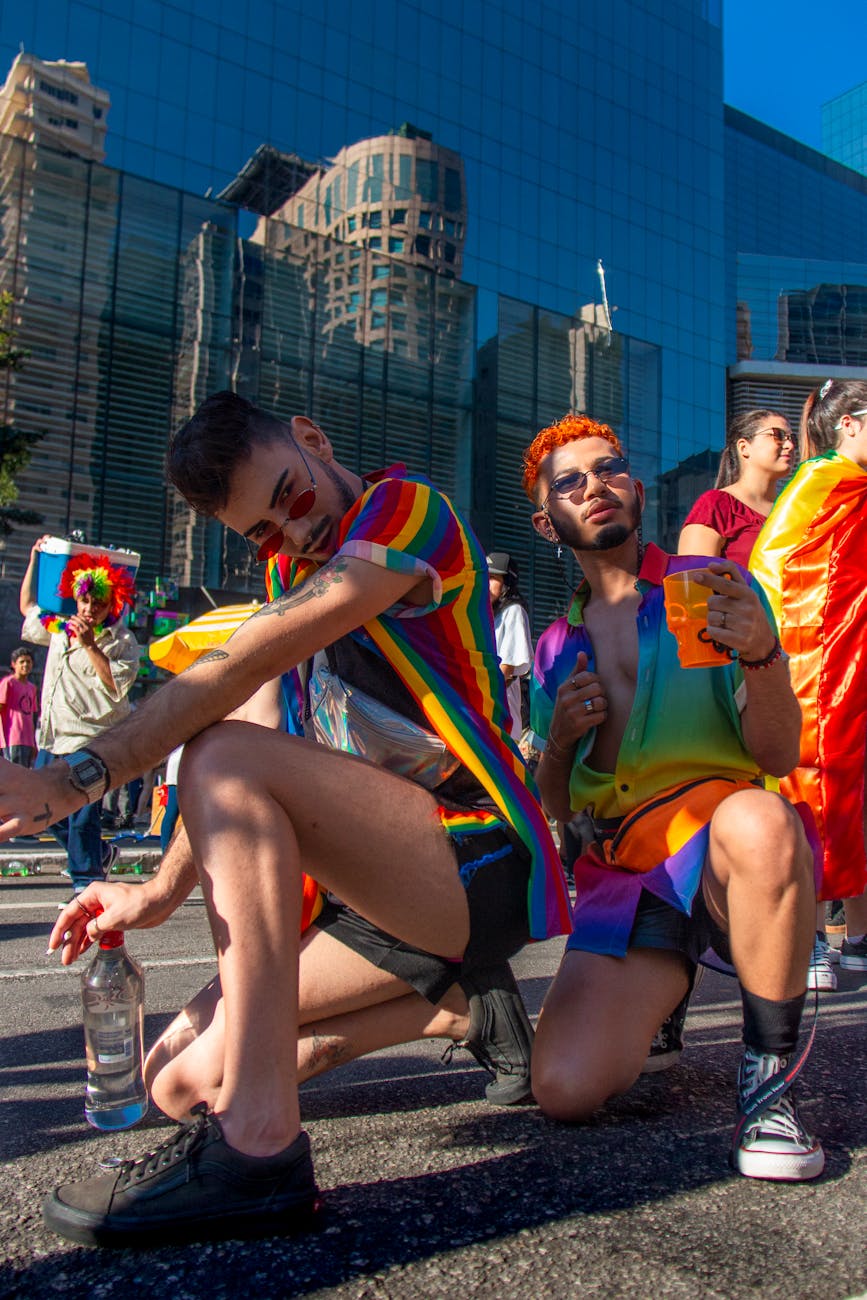
Photo by Ronê Ferreira on Pexels.com - For us to be able to hold hands in public without being on the receiving end of ‘death stares.’
- For us to not be viewed as being ‘mentally ill’, or ‘destined for hell’, for daring to fall in love with someone of the same gender.
- For us to not have to resort to morsel scraps of queer representation in the media.
- For us to not have to Google whether we’re likely to be prosecuted if we go on holiday to a country where being gay is still a crime.
Or, if that’s all too much, for us to just be granted the right to exist, even. For us to not be killed for being gay…
Pride is not about ‘flaunting’ our sexuality, as is often lauded by ‘straight pride’ supporters, it’s about advocating for freedom and our right to exist.
Photo by Jennifer Bonauer on Unsplash When 90% of the population is straight, having a straight pride would be like celebrating your birthday every other day of the year as well as on your actual birthday…
To imply that there needs to be a straight pride, a ‘white lives matter’ movement, a #MeToomovement for men, to suggest that it’s ‘not fair that there isn’t’, is like implying that there is a need for wheelchairs for able-bodied people, that it’s not fair that only disabled people have access to wheelchairs.
It’s nonsensical.
Able-bodied people don’t need wheelchairs or crutches to move about their day-to-day lives, when everything in life caters to able-bodied people, and they face no discrimination on the grounds of disability.
The same is true for straight people, white people, and men, where being white and straight and male is the default.
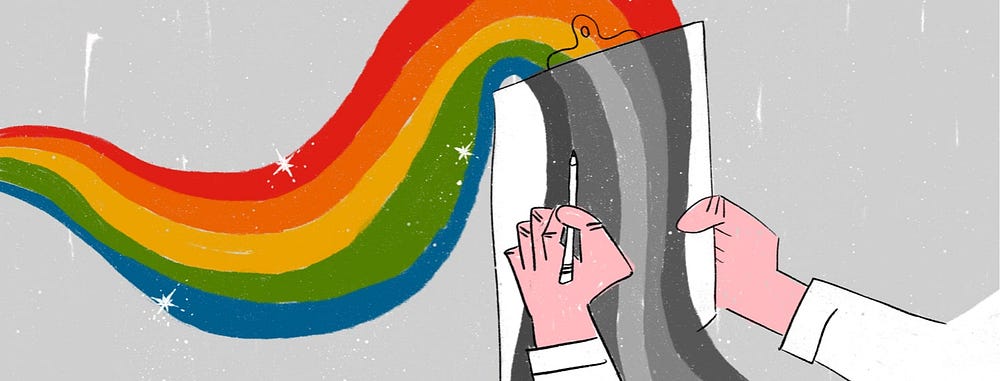
https://axialspondyloarthritis.net/living/effects-heteronormativity-lgbtq-patients The fact that there is no straight pride, white Lives Matter movement, or #MeToomovement for men is a privilege.
To not need a month or a ‘movement’ to say; ‘Please acknowledge my right to exist’, ‘Please see me as a human being’, is a massive privilege because it means that you have never been made to feel unsafe for something which is out of your control (whether that be your sexuality, race, or gender).
Photo by Mercedes Mehling on Unsplash The Black Lives Matter Movement, Pride, and the #MeToomovement are not about ‘one-upmanship.’ We are not advocating for the oppression of the marginalised to be passed on to the oppression of the masses… We are advocating for equality, and that means equality for everyone. That means that, whatever our sexuality, race, sex/gender, we must all be treated in the same way- with humanity. For, whilst ever people are viewed from a hierarchy, a state of inferiority vs superiority at play, there will be, there can be, no world peace…
Only when we are all viewed as equals will we achieve world peace, for:
Conflict cannot arise where there is harmony.
Harmony can only arise where there is equality.
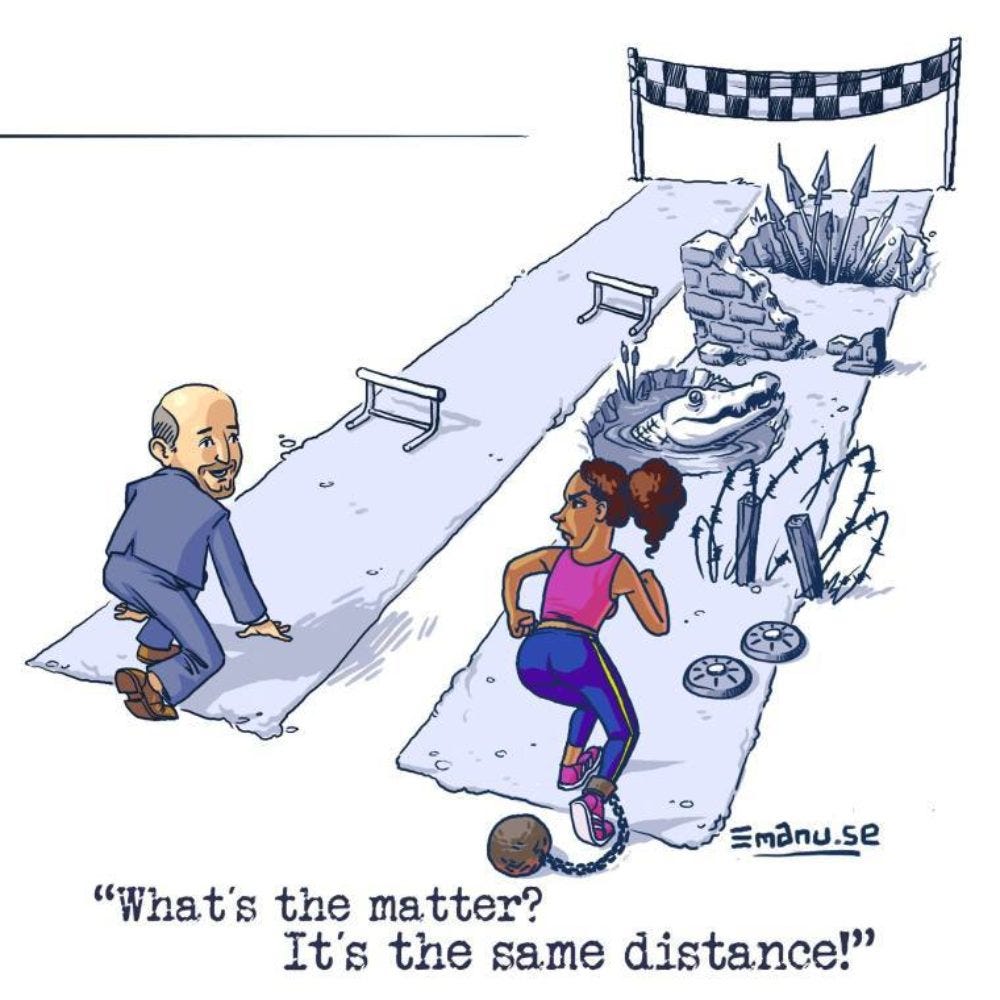
This is why I advocate for universal human rights…
Because it’s about time…
that we had…
WORLD PEACE.
-
Why Are Some People Homophobic? Is Society To Blame?
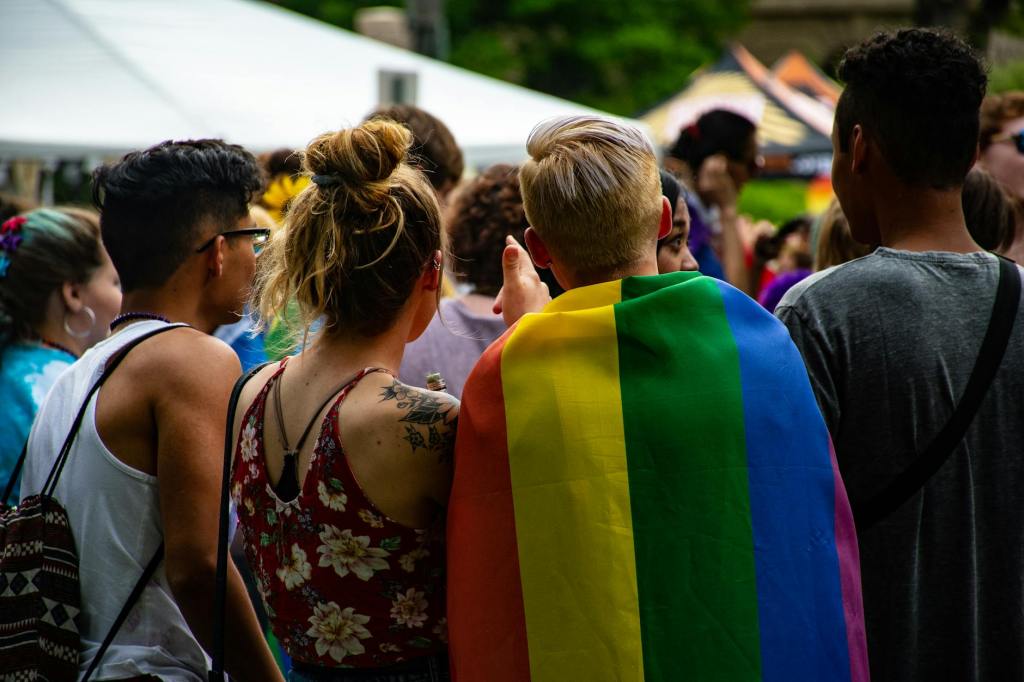
Throughout history, queer people, (that is anyone who identifies as anything other than ‘straight’), have had their whole lives politicised, simply by virtue of loving the ‘wrong’ gender.
What should be the purest thing there is- love– has been made into something taboo, something that must be hidden, as we have been told time and time again by…
- The media, that tries to erase us.
When TV ads are all ‘cereal packet’ families- nuclear, heteronormative, oppressive. - The courts, that legislate against us.
When acting on one’s desire can lead to a beating, prison, or even, death. - ‘God’ (religion) which, like the government, subjects us to enforced silencing, working to exclude the ‘unwanted’ through fearmongering. ‘Live your life in this way or you’ll go to hell.’
- The politicians, who consider our lives expendable.
When, in the aids crisis, they failed to act, thus soliciting the legalised murder of tens of millions.
‘If I die, it is because a handful of people in power, in organised religions and political institutions, believe that I am expendable.’
David Wojnarowicz, Close To The Knives.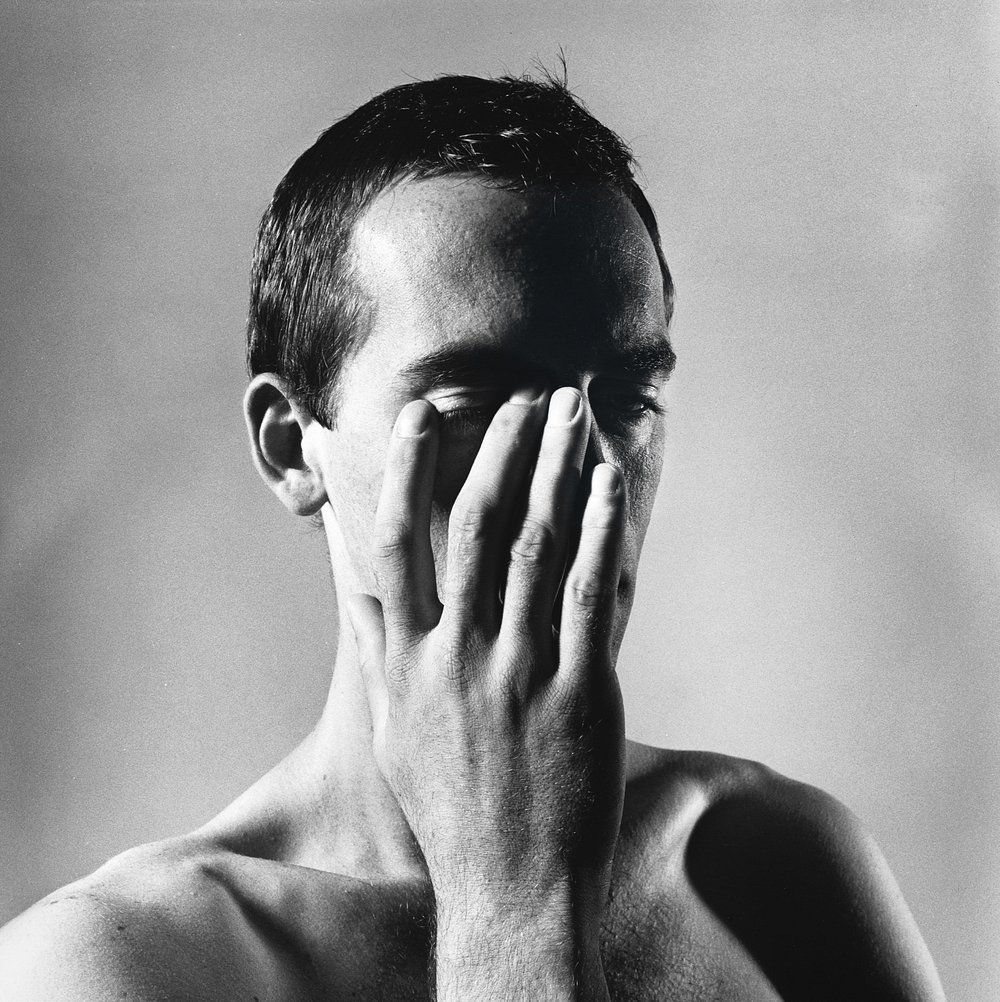
David Wojnarowicz A far more dangerous disease than aids though, a far more dangerous disease than anything that has swept the nation in human history, is that of delusionality, a disease which is proving hard to treat, even after all these years…
A fear of diversity.
Characterised by symptoms such as; angry outbursts, hysteria, and, most dangerously, the failure to recognise when one is riddled with disease, this fear (i.e. bigotry) gets passed on from generation to generation…
Every time the media tells a story about an already marginalised group, depicting them as the instigator of society’s ills, little ears are listening. And those little-eared kids become big-mouthed adults, their minds infected with fascist ideology, filled with hate toward people who are ‘different.’
And all that hate has to go somewhere…
Onto the latest scapegoat.
‘Our society desperately needs monsters to reclaim its own moral virginity.’
Sylvere Lotringer.In the pyramids of power and confinement, one demon gets replaced by another at a moment’s notice.
If it’s not gay people, then it’s trans people.
If it’s not trans people, then it’s immigrants…
Always ‘them’, never ‘us’, the government creates legislation that makes marginalised groups the scapegoat for all of society’s woes.
‘Don’t look at the fascists over here who are actively supporting the continuation of genocide, what about the two men who are kissing over there?’
It’s easier for them to pass on the blame than to admit that the source of those woes is a little bit (a lot) closer to home…
But where does it come from, this need to ‘other’ people who are different?
Why is the desire shown by two consenting adults who might just happen to be of the same gender, anyone else’s concern?
‘Only a person with a twisted and repressed sexuality would think it is their right to tell consenting adults that they cannot explore their own bodies.’
^ And ‘repressed’ sexuality certainly is in a society that is shrouded in so much shame around desire (or rather, I should say, nonheterosexual desire)… With people being forced to remain ‘in the closet’, not just in terms of sexual orientation but in terms of sexual preferences, too.
This is why sex work exists, because the demand is there. Because people are willing to pay for the privilege to be open with their desires, away from the watchful eye of a society that tells them that what they desire is ‘wrong’ if it doesn’t live up to the three ‘M’s’- marriage, monogamy, missionary (*vanilla).
Men who are submissive in a society that tells them that they must be the dominant partner:
‘What are you, gay?’
‘Where is your toxic masculinity?’An image of two consenting men being intimare more offensive to some than an image of a woman being raped.
But why?
Why is anything outside of ‘vanilla’ seen as extreme?
Extreme to whom?
Who gets to decide these rules?
As with everything in life, the people in power, the systems of oppression get the final say…
Most notably in love, that system being; religion.
Photo by Kelly Sikkema on Unsplash When love is founded on religion, and religion is founded on oppression through fearmongering, the pressure we feel to live a certain way is based on just that- fear.
What we have grown up considering to be the ‘epitome’ of love- marriage, is a religious ceremony. A woman being ‘given away’ by her father because, ‘God Forbid a woman be able to function without a man!!’
What we have grown up considering to be the ‘only way to date’, monogamy, is a forced ideal. Albeit, now we have choices and relationships are opening up, however, it hasn’t always been this way. Adultery used to, not only be illegal, but punishable by death even, in some cases (and still is, in some countries)…
What we have grown up considering to be the only ‘right’ sexual orientation, heterosexuality, is based on religious teachings in the bible;
‘It’s Adam and Eve, not Adam and Steve.’
^ A wholly ridiculous quote given by Christians who seemingly have a personal vendetta against anyone who is not heterosexual/anyone who diverts away from their bigoted ‘moral code.’
I just don’t understand how the same religion that preaches ‘unconditional love’ can exclude queer love from this. Surely ‘unconditional’ means all-encompassing, not pick and choose based on who we supposedly ‘choose’ (it’s not a choice) to fall in love with.
There is no magical switch that one can press that will put a stop to their same sex attraction, because sexuality is in-built, like our hair colour- natural.
We can dye our hair, and tell people that we’re naturally blonde when we were born with hair as black as coal, but the reality is that dying it will not change what is underneath the dye, and unless we redye it every single week, let our need to dye our hair blonde take over our life, our natural hair colour will always come through because it’s just that, natural.
And the same is true of sexuality. We can tell people that we’re straight, go along with heteronormativity, dating the opposite sex, but our same-sex attraction will always be there because, like our natural hair colour, we cannot change it.
We can cover it up and pretend that it’s something else, but it will always be there.
And so, when people use the argument that; ‘same-sex attraction isn’t a sin, but acting on it is’, what do they want us to do? Spend our whole lives pretending to be something that we’re not, dying our hair, wearing a hat to stop the roots coming through?
What a wasted life that would be.
They tell us that we will go to hell if we act on our desire, but by not acting on it, we are already in it.
It genuinely makes me repulse when I read comments from people who still claim that sexuality is a choice, because to them I say, why would anyone choose it?
When the whole world is geared up for straight people- girl meets boy, they fall in love, get married, have kids, live happily ever after (it’s in every fairy story), why would anyone choose to make everything harder by not being straight?
Photo by Radek Pestka on Unsplash If sexuality were a choice, then why would anyone choose to make life so much harder for themselves? The rationale isn’t there. The math isn’t mathing.
When being gay means that we are born with the crosshairs of a rifle scope printed on our backs, why would we choose that?
To be on a date with a woman and feel on edge, constantly. Less likely to be the victim of a hate crime than gay men, more likely to be viewed through a lens of pornography- thinking that two women kissing is performative, for the male gaze, that it’s all for men, to get their attention.
(That is to say, less likely to be beaten up or murdered, more likely to be raped).
If homophobes were less quick to brandish hate, hate which, as previously discussed, isn’t preconditioned into us, but is learned, through the messages we internalise, often subconsciously, in our early years, if they could just spend a little bit of time asking themselves what it is that actually ‘offends’ them about same-sex desire, then I think that we would have less homophobic people in the world, for there is no rational explanation that can be provided.
By all means, if you think that you have got an explanation that would solve decades of debate surrounding our right to simply exist as queer people, then do let me know in the comments!! It would be interesting to hear how society has corrupted your mind into one of hate too…
But, in the meantime, I hope that this article has made you think that maybe, just maybe, the problem isn’t with gay people at all, but with society.*
(*No maybe about it, it is).
The problem is not with queer people turning you gay, the problem is with a society that dictates that ‘you must be straight.’
The same people who excuse their blatant homophobia away because ‘queerness is corrupting the minds of our youth’/’turning straight people gay’, are oblivious to the fact that their minds have already been corrupted, by society….
Photo by Polina Kovaleva on Pexels.com As in the title of this article:
No one is born homophobic.
SOCIETY CORRUPTS.
- The media, that tries to erase us.
-
The Impact Of The UK’s North South Divide On The Age Of First Time Mothers
I recently wrote an article exploring ‘why young people are moving out so late’, and in it, I spoke about how everything is happening later in life than it used to…
- Moving out of the family home,
- Getting married,
- Having children
(or not).
On the latter, my research showed that first-time mothers’ average age hasn’t changed over the years. A surprising discovery.
I told my Dad and he was surprised too.
‘When we were younger, everyone had babies in their early twenties.’ (including my mum who was 21).So, that got me thinking, is there a discrepancy in the age of first-time mothers depending on where in the UK they’re from, the north-south divide, as I wrote about in this article, an influencing factor on yet something else?…
According to official data from the Office for National Statistics, in the UK at large, ie not accounting for a north-south divide, the average age of first-time mothers hasn’t really changed over the years…
In 1940, the average age of UK mothers was 29.3 years, compared to 26.4 years in 1973.
Since 1973, the average age has generally increased, but not at a remarkable rate.
In 2003, it was 27.
In 2013, 28.3.
As of today, 2024, the average age of first-time mothers sits at 30.6 (only a 1.6-year increase in 84 years)…30.6.
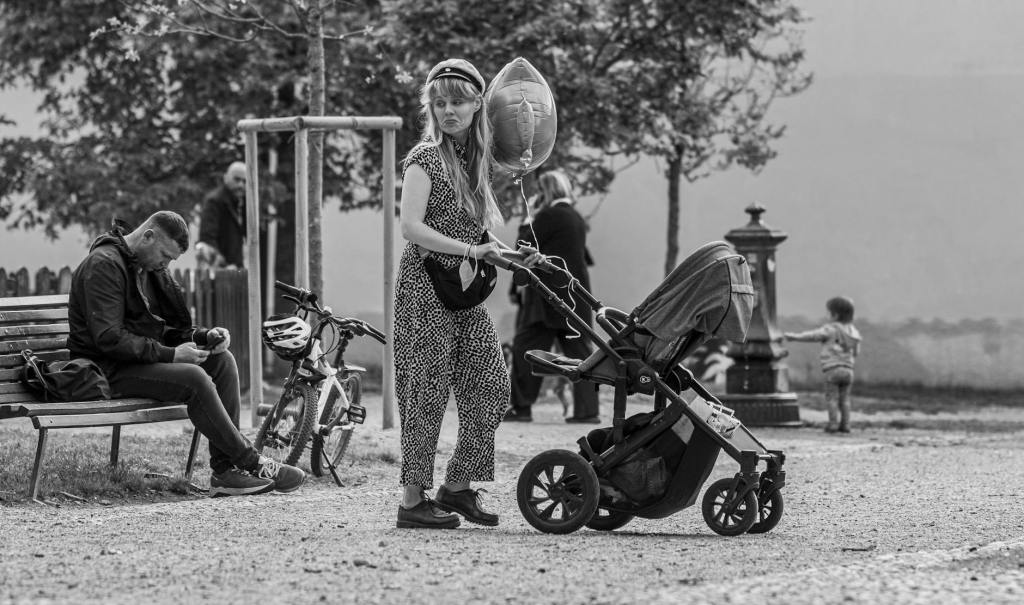
So why then, when I go into town, (Doncaster which, as of 2022 is officially a city, but most local people still refer to it as the shitty rundown market town that it is), do I see teen mothers pushing prams? Girls who I went to school with in parks with their toddlers? Why, when I was 16, did I personally know two girls who were pregnant? If the average age of first-time mothers is 30.6*, then why are all the signs here suggesting otherwise?
*(Take a decade off, and then some, and it might more accurately represent the demographic here in Doncaster)…
When we consider the irrefutable prevalence of the north-south divide and its effect on education for example, and thus job prospects and, ultimately, one’s overall quality of life, we can note that living up North does increase the chances of teen pregnancy.
When there is greater funding in the South, better education, and more opportunities in life, young people are more likely to delay having children so as to pursue their own careers. In the North, however, where those opportunities have historically been far fewer, with a lack of prospects and aspirations, people are more likely to have kids at a younger age, simply because they have no reason to delay/they have nothing that demands their responsibility.
Photo by Vitalii Khodzinskyi on Unsplash Evidence of the difference in prospects in the North compared to the South can be seen in data from the 2021 census.
In 2021, 53.8% of Doncaster residents were employed, vs 74.7% of Londoners. The rates of unpaid work, however, were higher in Doncaster, with 4.1% of Doncaster residents reportedly providing up to 19 hours of unpaid care each week, vs 3.8% in London, the lowest proportion in the UK.
Statistics show that children in London and the South East are 57% more likely to attend university than students in the North (as of 2023), unsurprising when differences (inequalities) are prevalent throughout the entirety of the education system.
Photo by Nguyen Dang Hoang Nhu on Unsplash In 2022, the proportion of GCSE results graded 7 or above in the North East and Yorkshire and Humber was 22.4%, vs 32.6% in London.
And the differences don’t stop with compulsory education, either… At A-Level, the gap between the North East and South East was 8.7%.
When education is poorer in the North, so too are job prospects and thus earnings.
See the graph below to notice the trend.

https://www.comparethemarket.com/life-insurance/content/changing-age-of-uk-parents/ The regions with the youngest mothers also have the lowest median salaries.
In line with the theory that the richer you are, the greater job prospects you have (/the further South you are), the older you are to have children, according to data from Comparethemarket.com, Kensington & Chelsea, the richest local authority area in the UK, (where residents earn three times the national average, £64,868 per head), have the oldest mothers in the UK. At the other end of the scale sits Hartlepool. With an average salary per head of £25,000, Hartlepool has the youngest mothers in the UK.
To look at it more broadly, the North East and Yorkshire and the Humber have the largest percentage of mothers under the age of 30, as well as the lowest salaries of all the regions. London, on the other hand, has the highest median salary, as well as the largest proportion of mothers over the age of 30.
Clearly then, there is a correlation between earning potential and the age of first-time mothers.
Where earning potential is significantly higher in the South than in the North, so too is the age of first-time mothers higher in the South than in the North…
Late twenties, early thirties= South
VS
Late teens, early twenties= North.
Photo by Hollie Santos on Unsplash Our life chances, our quality of life, should not so dramatically differ based on a one-hour 35-minute train ride (the time it takes to get to London from Doncaster).
The north-south divide gap must be closed to ensure that, regardless of where you call home in the UK, you have access to the same support, prospects, and opportunities as your Southern counterparts. Otherwise, the cycle continues;
Teen mothers giving birth to children who grow up in the same system.
With a lack of job prospects, teen pregnancy being seen as the ‘norm’, the children of teen mothers are more likely to become teen mothers themselves, ‘following family tradition.’ And so on and on and on (and on) the cycle goes. People in London queuing outside of Oxford and Cambridge with their 9 GCSE’s and A-level certificates in one hand, rolled up notes, ‘mummy and daddy’s trust fund’ in the other. Meanwhile people in the North queue outside of Mothercare, baby in one hand, benefits in the other, just enough to buy nappies for child number two (at the age of 22).
The fact that there is a decade difference in the age of first-time mothers in the North of England compared to the South, the fact that everything is different, worse off, in the North of England compared to the South, with wealth inequality only set to intensify, (the gap expected to reach £228,800 per head by 2030), proves just how divided we really are as a nation. When people talk of the UK as if London is all there is, forgetting us up here in the North, forgetting people in the Midlands who aren’t even factored into considerations of the north-south divide in many cases, we need (emphasis on ‘need’), greater equality.
-
Capitalism: The Ultimate Source Of Oppression In Society?
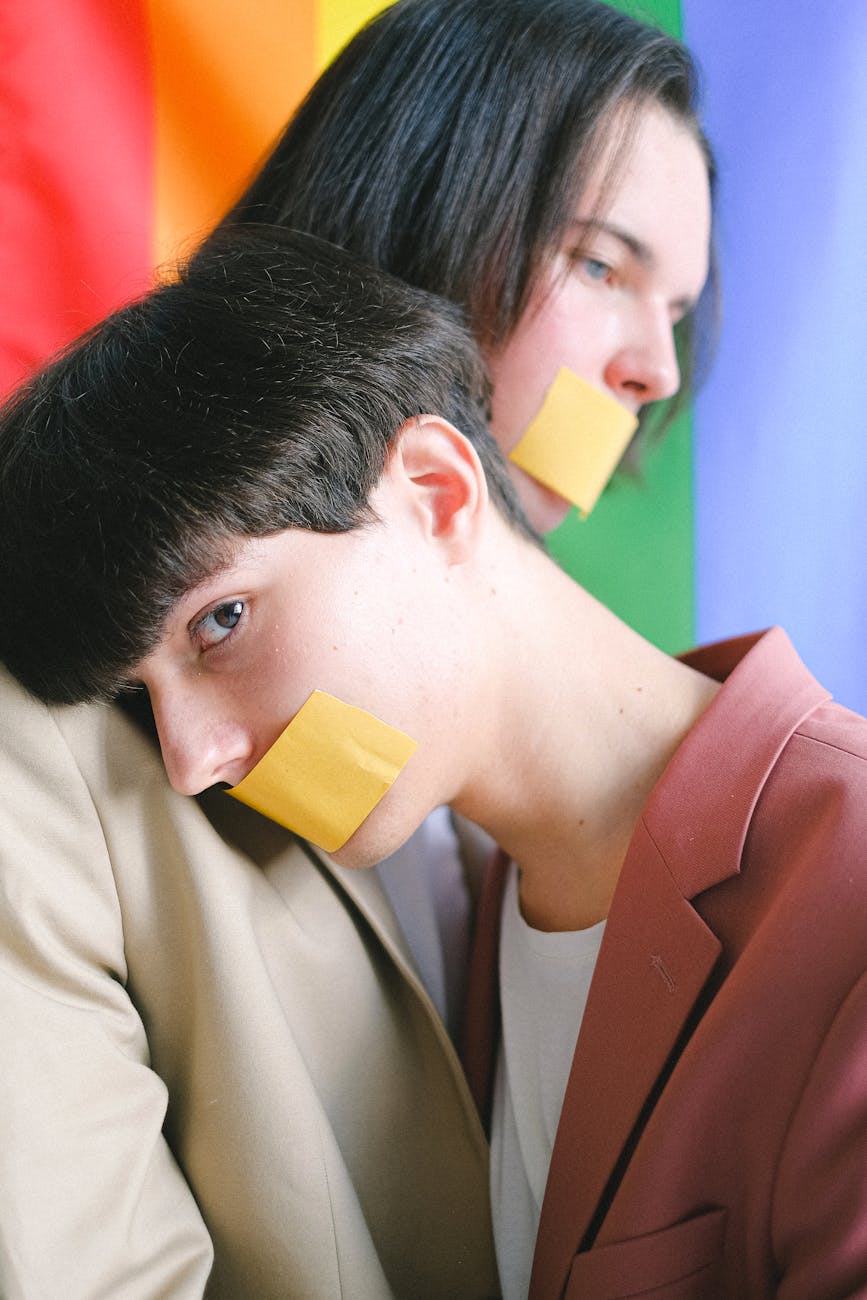
Oppression thrives on interconnectivity. Nothing is independent.
Racism, homophobia, sexism, it all stems from the same place-
the system,
society.No one is born with the awareness of their differences.
Black, white
gay, straight
man, woman:
human.So, where does the sense of ‘othering’ that we so often feel come from?…
Capitalism.
It’s all rooted in capitalism and how society thrives on oppression and domination to uphold that very system of oppression whereby;
the rich keep getting richer,
the poor keep getting poorer,
and the world keeps getting more and more (and more) divided…Photo by Mikhail Odintsov on Unsplash The purpose of human existence, as set by capitalism, is to maximise profit, to yield financial gains, to make the rich richer.
Everything in society is done to uphold power, and without oppression, without the subordination of others, the ‘othering’ of others through the creation of an us vs them dynamic, there can be no power.
Unlike socialism, the antidote to capitalism which calls for equality, shared resources, the actual definition being;
‘A political and economic theory of social organisation which advocates that the means of production, distribution, and exchange should be owned or regulated by the community as a whole’,
capitalism is all about inequality, actual definition,
‘An economic and political system in which a country’s trade and industry are controlled by private owners for profit.’It’s always about profit…
This is what every form of oppression boils down to… The oppressed being used as a cog in the profit-making machine of the greedy, power-hungry oppressor (see examples below).
Photo by Alexander Grey on Unsplash We cannot hope to liberate marginalised bodies without dismantling the systems that oppress them…
Racism- the slave trade.
Between about 1500 and 1900, Europeans forcibly uprooted millions of people from throughout West Africa and shipped them across the Atlantic to become the ‘property’ of capitalists. They were forced to work, without pay, in terrible conditions in order to generate profit for their ‘owners.’
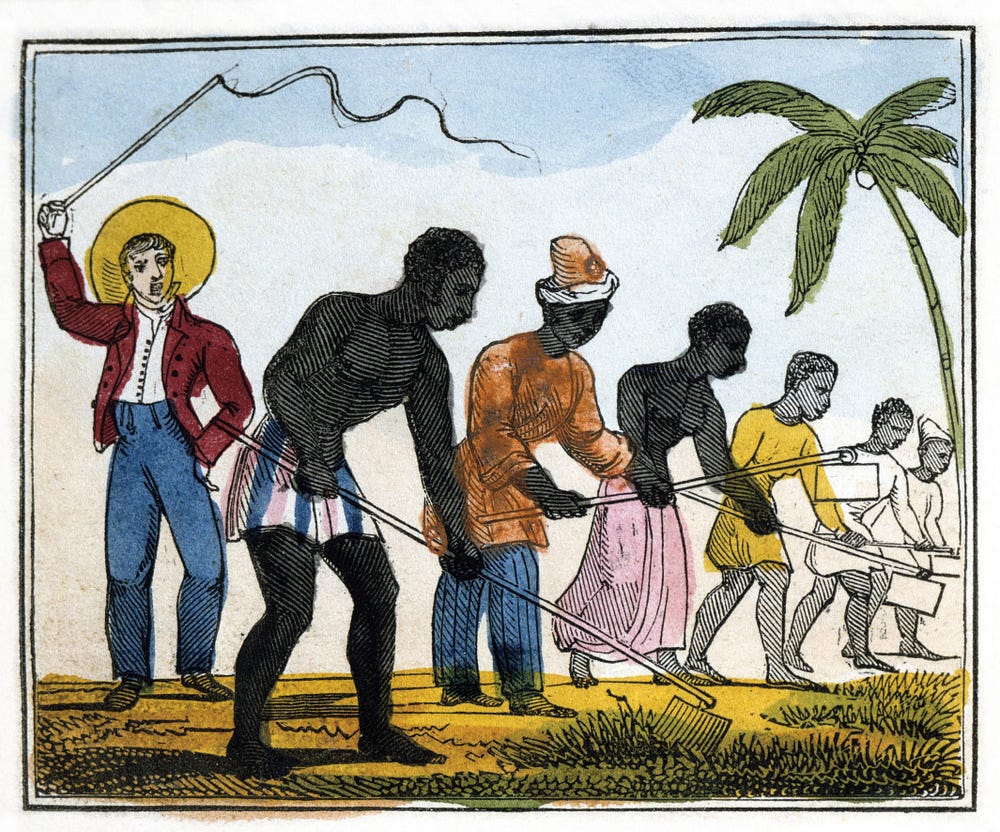
Bitter sugar: an illustration from an 1826 abolitionist poem (Photo By getty images) Misogyny- the subordination of women.
Women are constantly made to feel bad about their appearance, always ‘lacking’ somehow, in something. Why? Because, by constantly shifting trends, what’s in today, tomorrow I ‘wouldn’t be seen dead in’, women are constantly buying what’s ‘in’ to ease their insecurities…
Ten years ago, ‘Does my bum look big in this?’, insecure women would ask their husbands. If the answer was anything other than ‘no’, they would be queuing up outside Slimming World. ‘Too fat.’ ‘Diet starts tomorrow.’ Whereas now when women ask ‘Does my bum look big in this’, they want the answer to be yes. ‘Heroin chic’ having been replaced with ‘thickness’, for which women are now paying for implants; bigger lips, bigger bum.
We are literally having fat, the thing that we used to be told was the ‘root of all evil’, injected into us just to keep up with the constantly changing trends.
But this is the thing.
‘Constantly changing.’
The female body has become a commodity…
By all means, have the operation, get the implants but, when everything we do is to uphold capitalism, and capitalism profits from our insecurities, in a few years, full 360, skinniness will be back in.
Everything you bought to ‘emphasise your curves’
= out.All the latest trends
= in.And it’s always women who are at the brunt of such advertising campaigns. Why? Because capitalism is all about keeping the rich and powerful (men) in power.
By keeping women focused on their appearance, reminding them, daily, of everything that is ‘wrong’ with them- ‘too much’, ‘not enough’, they have no time to think about what’s actually wrong-
the system.
Capitalism.
Photo by chloe s. on Unsplash As explored in socialist feminism, an off-shoot of mainstream Feminism that emphasises the importance of class struggle in addressing social inequalities, we can’t achieve gender equality without overthrowing capitalism. Likewise, we can’t overthrow capitalism without achieving gender equality.
The capitalist system oppresses women to ensure its own success, intertwined with the patriarchy which emphasises how it is the woman’s job to provide free labour for men — cooking, house care, and childcare to ensure the comfort and ease of male supremacy.
Despite the rise in ‘egalitarian’ relationships, where men and women are both in full-time employment (72.1% of women are employed, as of 2023 in the UK), contributing roughly half of their combined earnings, studies have shown that women are still spending more than double the amount of time on housework per week than men (4.6 hours for women vs. 1.9 hours for men), and almost two hours more per week on caregiving. Not because women are just ‘naturally’ supposed to be the cleaner/caregiver, (if that were the case, then it would apply to all relationships, not just heterosexual relationships), but because of capitalism, because capitalism relies on people (women) who will support the workers who work tirelessly to line the pockets of someone else…
Photo by Alex Kotliarskyi on Unsplash Homophobia- conversion therapy.
In heterosexual relationships, it’s easy to uphold the division of labour via the presence of long-held gender roles where the man is the breadwinner, and the woman the homemaker (even when both work full time). As the ‘inferior’ sex, the woman’s work obviously isn’t as important so when she gets home she must do all the other work, unpaid, too…
In same-sex relationships, however, such gender roles aren’t so clear-cut.
When same-sex couples have had to fight for their right to even just exist as equals to their heterosexual counterparts, they are more likely to prioritise equality in every aspect of their relationship, including the division of chores, etc. This poses a threat to a capitalist system which relies on the subordination of women.
Data from the Women in the Workplace survey (2021), which included over 30,000 people in opposite-gender couples and over 900 people in same-gender couples found that, while 53% of women in opposite-gender couples said they did “all or most” of the housework, only about a quarter of women in same-gender partnerships said so.
The discrepancies in the discrepancies themselves when it comes to determining who is expected to cook, clean, look after the children AND hold down a paid job in heterosexual couples VS queer couples is as a result of outdated gender norms designed to uphold the patriarchy/keep women oppressed.
It is such outdated gender norms that serve to contribute to straight men asking queer women in lesbian relationships who the ‘man’ is. A clue in the name ‘lesbian’, there is no man. But, in a society that is centered around the subordination of women at the hands of men, some people (namely, men) just cannot fathom how a relationship could possibly exist without a man in it, or at the very least, without clearly defined ‘masculine’ and ‘feminine’ roles.
But evidently, they can. As this Guardian article states;
‘More than one in ten young women (1.65 million people) identify as lesbian, gay or bisexual.’
And, with the absence of the oppression that is so often featured in heterosexual relationships, such relationships focused on equality thrive.
Photo by Alexander Grey on Unsplash Climate change- the planet.
Arguably the biggest source of oppression in the world though, at the hands of capitalism, is the world itself…
In the same way that women are viewed as inferior/’lesser than’, even when women are working the same hours as men, earning the same amount as men, yet they are still expected to take on the brunt of unpaid work (cooking, cleaning, looking after the children- performing the ‘triple shift’), their most important role, according to capitalism, being to ‘support men’, the same is true of nature.
Even though without nature, like women, we wouldn’t be here, when nature is the very foundation of life, it is still exploited by power-hungry men, operating under the same hierarchical structure that grants them power, thus allowing for the exploitation of both women and nature (the supposed ‘subordinates’), in which both are merely viewed as being ‘resources for reproduction’, a ‘means to an end.’
The people at the top are prepared to do whatever it takes to stay at the top, even if they destroy the planet in the process.
Denying our generation the right to freedom.
Denying future generations the right to life.Photo by Alex Rodríguez Santibáñez on Unsplash When all systems of oppression work hand-in-hand to benefit each other and profit from the people they control, the only way for people to be truly liberated, for the planet to be truly liberated, is to dismantle capitalism and all systems of oppression,
in their entirety.Calls for the eradication of racism and homophobia and misogyny and the patriarchy and the whole shit show of fascism,
(capitalism),
calls for the embracing of equality and equity
(i.e., no more bigotry),
for, not just humankind, but the whole planet.Photo by Tiraya Adam on Unsplash ~ liberation.
-
The Sexual Revolution Of The Swinging Sixties

The Swinging Sixties saw the beginning of the Women’s Liberation movement, as prompted by second-wave feminism which focused on issues of equality and discrimination.
While ‘liberal’ feminism is the overarching type of feminism, calling for equality between men and women, not superiority/inferiority, equality (for the right to vote and stand for election, for access to the labour market, for equal rights when it comes to marriage, education, work, human rights), there are also ‘offshoots’ of feminism that arose in the 60s including;
– Socialist feminism
Emphasising the importance of class struggle in addressing social inequalities, focusing upon the interconnectivity of the patriarchy and capitalism.
– Anarcha-feminism
Holding the principle that ‘the personal is political’ and that the struggle against patriarchy is an inherent part of the struggle to abolish the state and abolish capitalism- ‘the state itself is a patriarchal structure.’
– Black feminism
Focusing on the intersectionality of racism and sexism and the additional marginalisation faced by black women.
– Womanism
Speaking to the injustices faced by black people by centering the experiences, contributions, and efforts of Black feminists in order to better the world around them.
– Eco-feminism
Examining the connection between women and nature, suggesting that patriarchy is the driving source behind the degradation of the planet and exploitation of women — ‘Issues that are inextricably linked and cannot be resolved without dismantling oppressive masculine power systems.’
– Radical feminism
Calling for a radical re-ordering of society in which male supremacy/the patriarchy is eliminated (not just ‘adjusted’), in all contexts.
– Lesbian feminism
Encouraging women to focus their attention on their fellow women rather than men, advocating lesbianism as the logical result of feminism- to free women from male domination and heterosexism, ‘an institution that supports male supremacy and female subordination.’
– Separatist feminism
A form of radical feminism that believes that opposition to patriarchy can only be achieved through women’s separation from men (much of the theory is based on lesbian feminism).
– Pro-feminism
Encouraging men to be sympathetic to the feminist movement/aware of women’s experiences by examining their interactions, thought processes, and themselves.
– Revolutionary feminism
Seeing the liberation of women as inseparable from a broader revolutionary movement to dismantle all forms of exploitation and oppression. Working to build a new society where all people — everywhere on the gender, sexual, and body spectrum — can control their bodies, labour, and identities.
^ While there are subtle differences between the different types of feminism, as highlighted above, what ties them all together is their universal focus on achieving equality for women in the workplace and in the family, and on giving all women, everywhere, equal rights over their own bodies.
To focus on the latter, ‘fighting for rights over their own bodies’, the 60s was a time of female sexual empowerment, a symbol of a new, ‘freewheeling’ sexuality.
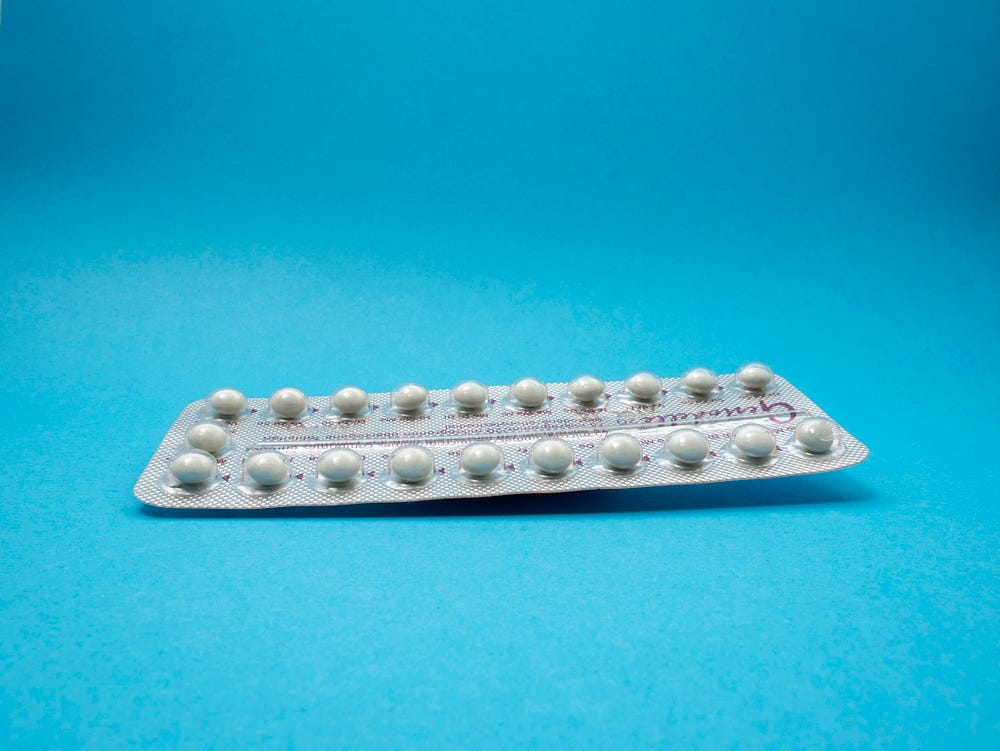
The development of birth control pills in the 1960s was one of the major causes of the sexual revolution given that women could more easily access contraception.
Photo by Reproductive Health Supplies Coalition on Unsplash Despite condoms being invented in 1855, women had to wait over a century, until 1961, for their turn to have autonomy over their bodies. And even then, the contraceptive pill was only made available to married women (it was a further 6 years, in 1967, that the pill was made available to all women, irrespective of their relationship status).
When abortion wasn’t legalised until 1967 in the UK, women who fell pregnant as a result of being denied access to contraception would have no choice but to have the baby (or resort to drastic measures for self-induced abortion).
‘Drastic’ because, according to the World Health Organisation, about 22 million self-induced abortions still take place each year worldwide, with an estimated 47,000 women dying annually from associated complications.
Why, when abortion is supposedly ‘accepted’ in society today, are women still dying in their tens of thousands?
Because, while we’re ‘lucky’ in the UK (sad when what should be a basic human right- the right to autonomy over our bodies- is something that we must be ‘lucky’ to have), the fact is that 40% of women still live under restrictive laws surrounding abortion, with 21 countries prohibiting it all together, even if not having an abortion puts the woman’s life at risk…
Photo by Gayatri Malhotra on Unsplash Thankfully, things are moving in the right direction for women now, however, it has irrefutably taken far too long for us to get to this point.
Far, FAR too long when, before 1992, forced sexual activity within marriage (say it for what it is: rape), wasn’t illegal in the UK.
‘Marital rape’ wasn’t considered a crime because it wasn’t considered possible, the assumption being that in getting wed a woman ties the knot (literally), thus wavering her right to say no…
‘What’s yours is mine’, through marriage, a woman’s bodily autonomy is supposedly tied into a knot that can never be broken.
Women should always be the ones to make decisions about their bodies, not politicians (politicians who, by the way, are overwhelmingly male. Even in the UK, a ‘progressive’ country, the highest percentage of women that has ever been in cabinet is 41%)…
When we have few women in parliament to debate issues that directly affect women, those issues get sidelined, hence why, for a timely example, period poverty goes unspoken.
We hear about the effect of the cost of living crisis on our ability to pay for food, gas, electricity, etc, but we rarely hear about its effect on our ability to pay for sanitary products.
A 2023 poll by the charity ActionAid found that the number of people who menstruate in the UK who are struggling to afford period products had risen by almost double compared to the previous year, from 12% to 21%, despite sanitary products being a necessity for half of the population).

https://shop.labour.org.uk/product/a-womans-place-is-in-the-house-of-commons-poster Our right to equality as women should not be dependent on where in the world we live.
Photo by Jessica Felicio on Unsplash Our right to equality as women should be a right that we are granted, a human right, always.
We must appreciate that feminism is not a ‘trend’, something that comes and goes as the years pass by, but that feminism is life, our right to life, as women, for which we must devote our whole lives pursuing.
Thanking all the women who came before us, for the progress sought in the ‘swinging sixties’, while staying committed to continuing their legacy, with the acceptance that there is still much to be done…
Seeking equality for ourselves.
Seeking equality for our sisters.
Seeking equality for humankind.
Photo by Lindsey LaMont on Unsplash -
Generation Snowflake? – Why Are Young People Moving Out So Late?

According to figures from the Office for National Statistics, there has been a significant increase in people in their early twenties still living at home with their parents, with the average age that people are moving out of their family home in the UK, as of 2023, being 25.
Whether they’ve never left home, or have left and come back (the ‘boomerang’ generation) people are staying at home far later than ever before.
A clear long-term trend…
In 1997, more than half of 21-year-olds had already left home. At that time, the most common living arrangement for an 18–34-year-old was in a couple with one or more children.
However, fast forward two decades, and, by the time of the census in 2021, most people in their early 20s were still at home, living with their parents (56% of people aged 20 to 24, an 11% increase from the previous decade).
This begs the question, ‘Why?’
We know that the cost of living crisis is influencing the ability of young people to seek independence and buy their own property, undoubtedly.
In 1997, the average house price in the UK was £60,000, whereas today you can add 200 to the front of that. The average price of housing in 2024 is £263,600.
Evidently, inflation has made it, and continues to make it, increasingly difficult for young people to get their foot on the property ladder. Even if people do manage to scrape a deposit for a house together (and it often is a ‘scrape’ too, when the average cost of a deposit in London is £144,500– how does one save up enough money to pay their mortgage back, whilst also affording to pay the record high bills for gas and electricity, food, all of the above?…
The ‘cost of living’ is exactly what it says it is:
What we have to expend at staggeringly high amounts ‘just’ to stay alive.Gas & Electricity
The average household’s electricity bill is estimated to be just short of £1200 annually. This is more than four times the annual cost of electricity 25 years ago when it was just £269. Similarly, the average household’s gas bill has also shot up. What was £275 per year in 1997 is now over £1000.
Council Tax
The average council tax bill has also increased, from £564 in 1997 to £1493 in 2022, a rise of 165%.
Food
And food. We’re now spending more than double the amount we spent on food in 1997.
In 1997, the average weekly food shop per person was just £16.71. But, by June 2022, the average had risen to £36.43. That equates to spending £1,025 more on food, per person, per year.
Combined with rising gas and electricity bills, council tax, and increasing house prices, people are forced to choose between ‘heating or eating.’
Or… food banks.
Thank GOD for food banks.

https://consent.yahoo.com/v2/collectConsent?sessionId=3_cc-session_82726e49-0969-4cb6-bb1d-2acb19d33798 In 2021/22, a record number of 2.1 million people in the UK had used a food bank in the previous 12 months. And, one year on, in 2022/23, the Trussell Trust, a charity that works to end the need for food banks in the UK, supplied 2.99 million emergency food parcels to people living in poverty.
Inflation has seen everything rising, from house prices to food to council tax to gas and electricity, all of which contribute to the increasing age of people living at home with their parents, because, how else could they afford to live?
Many people wouldn’t, can’t, hence where the term ‘generation rent’ comes from…
‘Generation Rent’
Recent figures suggest that up to one-third of millennials (people aged 23–38 as of 2019) may never be able to own their own home, leaving them with no option aside from renting for the entirety of their entire lives.
While this can be an understandable concern for many young people, there are ways that one can improve their living experience when renting… Decorating, incorporating customised neon signs throughout their property, for example, can transform a house to a home, making it comfortable, ‘warm’, and full of personality.

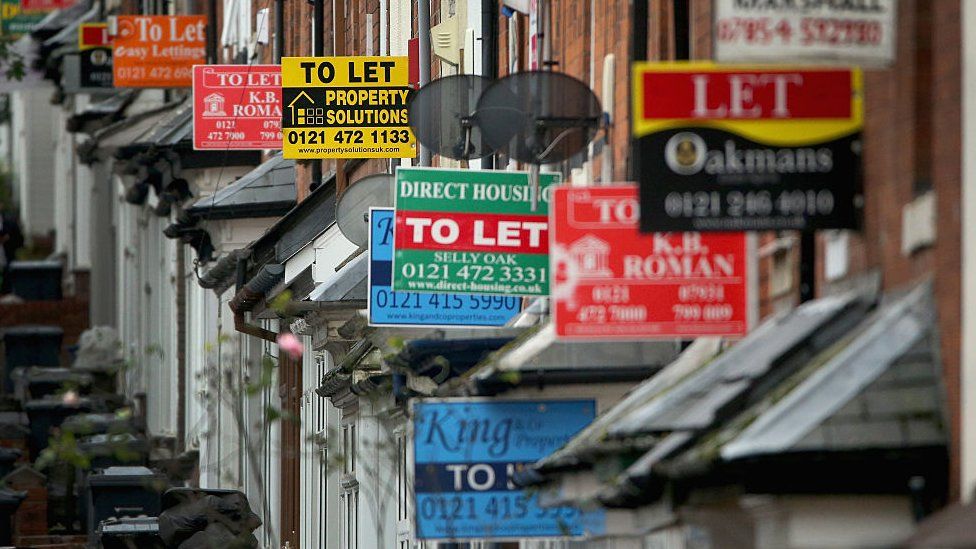
https://neonsigns.com/uk/ Unfortunately, though, it’s not just house prices/mortgages that have dramatically increased either, but so too has rent, with what affordable housing does still exist being snapped up by buy-to-let landlords who rent properties out to desperate tenants at extortionate* prices.
*Consistent with the theme of literally everything increasing in price, from 1989 to 2023, the average price for renting across the whole of the UK has increased by around 3.71% year on year.
If we use the stats from above and assume that rent continues to increase by around 3.71% on average annually, then in 25 years we can expect that rent will be a staggering £3023 per month.
And so ultimately then, people have two choices.
They can either
1) Bankrupt themselves by paying rent for a home that they will never actually own,
Or 2) Fork out an extortionate sum to secure a deposit for a house (which they will probably also never own considering the historically high mortgage rates in the UK).
For people who can’t afford either, they’re essentially stuck, hence why homelessness is such a big issue.
According to the homeless charity Shelter, at least 309,000 people are homeless in England today, with over 3,000 people reported as sleeping rough on any given night (a stark increase of 14% in one year).
Since the Conservatives came to power in 2010, it has only gotten worse…

https://twitter.com/petejeffrey/status/1489516974413688833 Despite bills increasing, how much money we have to pay them is not [increasing], with the average person in the UK being £10,200 poorer than they would’ve been had the economy continued to grow at pre-2010 rates (i.e. pre-tory rates).
‘Although the Conservatives made a bid to level up the economy, it seems everywhere has been leveled down.’
With the increase in homelessness, we need an increase in social housing (one can wish).
Fewer than 54,000 council homes have been built in England since 1990, yet 14.4 million people (one in five) live in poverty, with an income sitting far below the standard poverty line.
As this article in the Guardian comments:
https://www.bbc.co.uk/news/business-45113867 But, is the cost of living the only influencing factor in why young people are living with their parents for longer? While it is certainly a major factor, if we look at trends in reaching ‘milestones’ in adulthood, everything is happening later.
First comes love, then comes marriage.
In the 70s, the average age of marriage for women was 22.8 (25.1 for men), with over a quarter of all women being married by the age of 20, over three-quarters by the age of 25, and 9 in 10 by the age of 30. The average age of marriage now, however, is 31, with only one in three women ‘tying the knot’ before the age of 30.
Then comes a baby in a golden carriage.
In 2021, the average age of mothers who gave birth in England and Wales was 30.9 years, an increase from the 70s when the average age of first-time mothers was 26.4.
Then comes the…
Snowflake?
Gen Z’ers, people born between 1997 and 2012, are told that they’re the ‘snowflake’ generation, ‘too soft, ‘too sensitive’, ‘too emotional’, ‘too woke’, ‘too liberal’, ‘too progressive’, ‘too quick to take offense’- ‘political correctness gone mad.’
Born in 2001, I sit firmly in the Gen Z, supposed ‘snowflake’ category.
In fact, only yesterday I had someone informing me that I am ‘the worst type’ and that I ‘make them feel sick’ for *daring* to call out racism. As I replied to them, ‘I’d much rather be a lightning-fast racist accuser than a lightning-fast racist.’
Perhaps rather surprisingly though, I do actually agree with many aspects of what boomers dub ‘snowflake’ characteristics.
Writing for myself, I am sensitive.
I am liberal.
Why?
Because I care.
And I do think that these characteristics lend some reason, alongside the housing crisis of course, as to why people are moving out later, getting married later, having kids later, doing everything ‘later’ because, again, writing for myself here as an angsty 22-year-old, (‘angsty’ because I don’t really know what I’m doing here- does anyone?!), I cannot quite get my head around the fact that I am actually an adult, let alone an adult who is supposed to be doing ‘adult’ things like…
Moving out.
What is that all about?
(Although, dear God PLEASE can we end the fourteen-year Tory hellscape at the next general election? I’d quite like to be able to afford to buy a house, one day
-
Is AI Going To Be The Downfall Of Humanity?

The phrase ‘if it ain’t broke, don’t fix it’ is widely used for a reason, because it’s true.
Human greed; it’s the cause of all grievances in the world. It’s what every war ultimately boils down to. Greed for land, greed for money, greed for control. If we look at what’s happening in Palestine, a ‘war’ that has seen over 30,000 Palestinians killed, where greed is concerned, people just don’t know when to stop.
What started as, according to Israel, a ‘special military operation’ to eradicate Hamas, a designated terrorist organisation, five months on, is still going on. We’re seeing innocent civilians being targeted as they go to collect aid in a period of famine due to the lack of resources being allowed into Gaza. We’re seeing kids orphaned and parents carrying bags containing their children’s ashes, yet they tell us that it’s still about ‘eradicating Hamas.’ ‘NOT a genocide’, they say…
But the fact is that greed has taken over, and that is exactly what it is… Power-hungry leaders a killing machine for which we, the masses, the innocent civilians, are the target. Not just Netanyahu in Israel, but Putin in Russia where he is, over two years on, still steadfast in his determination to turn Ukraine into a Russian state…
Why?
What is this all for if not greed?…
In the case of Putin: Ukraine
Netanyahu: Russia.
Elon Musk: Humanity (as in the advancements we are seeing in the world of AI).
Photo by Barbara Zandoval on Unsplash To reference the quote at the start of this article again,
‘If it ain’t broke, don’t fix it.’Why do we need to be able to scroll on our phones with the use of our eyes? We have fingers for that…
Why do we need self-driving cars, and implants that allow for telepathy? We have humans for that.
Nothing exists without contrast. With all the good that might come from AI will inevitably come bad.
When they invented the car, they invented the collision.
When they invented AI, they invented the downfall of humanity.Tell me I’m overreacting if you wish, but the advancements that we are seeing in AI are genuinely terrifying to me. Sci-fi movies that show robots taking over, I’m not suggesting that this is what is going to happen here, but even Elon Musk himself has said how AI is going to be far more advanced than human intelligence, and with that, the lines between humans and robots become blurred.
What makes someone human?
Consciousness?
What is consciousness?
If we’re being told by Musk that in the future we will be able to import the memories of a deceased human into a robot, does the robot then become human?…
Not just a philosophical question, but an existential one too…

Photo by cottonbro studio on Pexels.com If we rely on AI to make art and serve us in stores and drive our cars and buses and trains and planes and diagnose us and treat us and talk to us then…
Why are we here at all?
We cannot let our greed for more, (always wanting more), be our downfall.
We don’t need AI, we need humanity.
I don’t need Chat GPT to tell me what a human is, I know what a human is. I know what humans need. Connection and love and a sense of belonging and passion and purpose, none of which AI can offer…
I don’t want AI to write me a poem about the human experience when we are the humans living that experience.
I don’t want AI to describe the feeling of sitting in long grass on a summer’s day, or stepping on leaves in the crisp of winter when I can go outside and feel those things for myself.
To ask AI to describe our own life is akin to when you’re at a concert and you look around to see everyone in the crowd filming it on their iPhone, uploading it to TikTok to impress people inside of their phone who they’ve never even met…
With the advent of technology and AI, we forget that we are here, that we are human, that this is our experience, and that we have everything we need within ourselves. We don’t need robots to tell us what we need.
I went to a show in London last year, ABBA Voyage, and when I say it was the most bizarre thing I have ever been to… The show was performed entirely by holograms, people clapping for these projected holograms of ABBA on a screen: bizarre. Now, don’t get me wrong, it was very clever how it was done, and it was a great experience for people who were drinking, thinking that ABBA was actually in front of them, (the fact that the holograms represented how they looked in the 80s lost on them amidst the alcohol), but as someone sober, it was all just a weird concept for me to get my head around. Clapping before catching myself; ‘What are you doing, Lisa? No one is actually there. Who/what are you clapping for?’
After that wholly weird experience, I now recognise, at least for myself anyway that, when we go to shows, concerts, or whatever it is that we pay to go and see, we’re not just going to hear the music, otherwise we would’ve just saved our money and listened to it at home/watched it at home, we’re going for the whole experience.
The way the performers react to the audience,
the emotions shed,
the connection felt,
it’s all lost when a human isn’t performing…
I don’t want to clap for a hologram, I want to clap for a human, and I want them to feel the emotion I’m feeling and I want to feel the emotion they’re feeling and I want us all to realise how much more similar we are than separate, but AI is denying us of that, causing further division and separation. Those who can afford to ‘dive into’ AI sit at home in front of a screen in a land of make-believe, meanwhile those who can’t afford it sit at home wondering what happened to their friends/why they don’t want to know anymore (because they’ve been replaced with AI chatbots, of course, what else? Terrifying).
Terrifying that we’re wasting our lives like this…
Remember:
When you’re buried six feet under, no one is going to stand at your funeral reading a eulogy about how great that video you uploaded to TikTok from the Taylor Swift concert was, going through the videos clogging up the memory on your phone, but they will talk about how great that night was, going through memories that sit firmly in their head of the friends you made in the queue to the bathroom, the girl you kissed whose lips tasted like dark fruits, the night you fell in love with life.
All the things that you, we already have,
that work,
that don’t need changing,
that AI cannot change.All the things that matter.

https://twitter.com/CivilEngCo/status/1502396735364153352 ‘If It Ain’t Broke, Don’t Fix It.’
-
Is Being Gay A Choice? – What Causes Sexual Orientation?
‘Sexuality’ tends to be used as an all-encompassing term, with the expectation that our sexual attraction (i.e, who we are romantically and/or sexually attracted to) is always in line with our sexual identity (how we label ourselves- queer, gay, lesbian, bisexual, straight, etc), and sexual behavior (who we have sex with). However, this isn’t always the case, especially for members of the LGBTQ+ community where sexuality isn’t so black and white as ‘fall in love with who you are attracted to.’ This can be due to several reasons such as the prejudice that sexual minorities can so often face, either from society at large (remember that only 3.2% of people in the UK identify as LGBTQ+, and that it was only 10 years ago* that gay marriage was legalised in the UK), or even from themselves via internalised homophobia, something which can see people labeling and presenting their sexuality in a way that does not fit with who they actually are/their sexual orientation. Not because being gay is a choice and they are ‘choosing’ to be straight instead, but because acting on one’s sexuality is a choice and they are choosing not to act on it.
*When gay marriage was only legalised in the UK 10 years ago, in 2014, it’s irrefutable that we are a minority and that we do face prejudice for that. Before 2014, homosexual couples weren’t afforded the same rights as heterosexual couples. They couldn’t pledge their love for each other in a formal marriage ceremony, with their love deemed to be ‘unworthy’ of being recognised by the state, simply for being two members of the same sex. What does that tell a kid who is realising their sexuality, confused about the feelings they have, and why what the world is telling them is ‘wrong’ feels so right, but wrong, but… right? It doesn’t offer much hope in easing that confusion/in reassuring them that their feelings are not ‘wrong’, hence why so many people do struggle to express their sexuality as it actually is and not as they think it should be in order to appease society’s expectations…


A notable example of someone who publically struggled to express his sexuality back in’t day can be seen in Elton John when his marriage to a woman (pictured above) made the news, arguably an attempt to detract from any narrative of him being gay, a potential career-ender in the 60s when he first started out.
As Elton John wrote in an Instagram post to address his first marriage,
‘I wanted more than anything to be a good husband, but I denied who I really was, which caused my wife sadness, and caused me huge guilt and regret.’Elton and his sound technician wife, Renate Blauel, divorced after four years, with Elton coming out as gay shortly afterward. Not that his coming out came as a surprise… Rod Stewart’s congratulatory telegram to Elton on his wedding day just about summed up the mood:
“You may still be standing, but we’re all on the fucking floor.”
The choice to embrace ones queerness is very much that- a choice. However, being queer itself is not a choice. As Elton John proved, to use the example above, one can deny their sexuality, and choose to live a lie, but it doesn’t change anything. Marrying a woman as a gay man doesn’t eradicate same-sex attraction. And so ultimately, denying who you are, pretending to be something/someone that you are not, is futile. It doesn’t change who you are, it just leaves you thinking that who you are is ‘wrong’/something that you have to hide. And, as we all know, when you deny yourself something, it only makes you want it more, as is proven by diets (they don’t work) and, to stick with the theme of this article, conversion therapy (it doesn’t work).
Having sex with another woman, as a woman, is a choice, but the fundamental sexual attraction to said woman isn’t a choice. People cannot choose how their nervous system reacts to stimuli.
To people who do claim that being gay is a choice, the concept should be turned on its head and applied to them.
‘If being gay is a ‘lifestyle choice’, then so is being straight.’
‘You have chosen the straight lifestyle, but you can just as easily choose the gay one.’
‘I want you to flip the switch and become gay.’
^ You can’t. You just really, really, can’t… But, alas, see how they respond. Because, based on their theory that sexuality is chosen, they are choosing to be straight, in which case they could sleep with someone of the same sex and be turned on. Sounds ridiculous, right? That’s because it is, yet it is exactly what straight people say about gay people. When straight men say to lesbians ‘You’ve not tried this one’, as though they genuinely believe that sexuality can change at the click of a finger, ridiculous. Ridiculous that, if a gay man were to echo this sentiment to a straight man, ‘You’ve not tried this one’, they’d be punched in the face. But as always, double standards.
‘Being gay is not a choice, just like being straight is not a choice. People don’t wake up one morning when they are 12 and decide they want to be harassed and hated by the ignorant masses for the rest of their lives.’
The choice to act on one’s sexual attraction is what some religious people use against gay people. Just because someone is born a ‘sinner’, it doesn’t mean that they should sin, is what some religious people claim. But to them, I would ask, what’s the alternative? To live a lie? Because yes, one can indeed deny their desires, squash them down, wish away their existence, but they’re always going to be there (squashing something down does not get rid of it) when ‘it’ is out of control, ‘in-built’, something within, NOT a choice.
Like trying to change our eye color, we cannot change our sexuality because it is who we are, not something that we ‘choose.’
Kids are kicked out of their homes for being gay, and disowned by their entire families, simply for falling in love with the ‘wrong’ gender. if sexuality was a choice, do you really think that people would choose that? Do you think that people would choose to risk their lives for being open about their desires? To risk prosecution, execution, even? Who would choose that, if it were a choice?
Overcome with a sense of gratitude for all those who came before us, for all of the people who had to fight for their right to exist in a world within which being gay was a crime, not just in their own minds but according to society at large:
Thank you.
<3





 Portfolio of Hope