-
You Don’t Hate Mondays, You Hate Capitalism
Monday: The start of the working week, for which people in employment (30.1 million of us- 75.5% of the UK population) spend the majority of their waking hours partaking in what can be likened to ‘slave labour…’
With the average working week being Monday to Friday, most people only have weekends off work, thus meaning that Saturday and Sunday is the only time they have to do what they genuinely want to do with their life, not what they have to do (as is the case from Monday when they are back in the role of employer as opposed to human)…
The problem with this is that the traditional Monday to Friday, 9–5 job (40 hour working week), when added up over the course of one’s lifetime, equates to 90,000 hours (just over 10 years). That’s a decade spent at work.
Where the average life expectancy (in the UK) is 80, 10 years might not seem excessive, but consider the hours that the average person works (9am to 5pm)- daytime hours. When the average person sleeps for 8 hours per night, with this equating, over a lifetime, to 26 years of being asleep, it’s easy to see just how little time we have left…
Finishing work at 5pm, by the time we get through the rush hour traffic back home, it’s nearly 6pm.
Cooking dinner, putting the kids to bed, getting a shower, by the time we properly sit down, it’s 9pm,
thus leaving us with one hour (if we’re lucky) ‘free’ time before we go to bed
(and, I say ‘free’ time, but we’re limited by what we can do at that time, especially when we’re up early for work the next day. It’s hardly the ideal time to dust off your old roller-skates to honour your new years resolution of taking up a ‘new hobby’, is it?)…And so, the only time that we *actually* have ‘free’ is on the days when we’re not at work which, for most people, is Saturday and Sunday- this being just two days out of seven
(quick maths).After a stressful week at work though, people might not feel like doing anything on their days off, or they might have to catch up on chores/all the boring things that they didn’t have time to do during the week.
Is ‘free’ time ever really free when the weight of ‘just’ living comes with so much responsibility?
As is evident by the statistics highlighted above- where 8 hours a day at work turns into 40 hours a week at work turns into 10 years a lifetime at work, how we spend our days is how we spend our lives.
And, for most of us? Our days, our lives, are spent at work…
Where the average age of retirement in the UK is 66, and where there is an average of 52 weekends per year, the average person who starts work at 18 will have 2496 weekends (4992 days) in their lifetime. That equates to 13 years of ‘free’ time.
And, when the average life expectancy is 80 years, suddenly 13 years seems very very short… Yet, for people who work full-time, 13 years is all they end up having. Such a short amount of time for which we’re still not truly ‘free.’ Why? Because, unfortunately for us, as humans, ‘creatures of habit’, we tend to lean towards familiarity, meaning that how we spent yesterday and how we’re spending today will largely mirror how we spend tomorrow…It can be so easy to keep doing the same things, telling yourself that you’ll ‘take up that new hobby next week’ [when you’re less tired]… But, the issue is that saying that you will do something VS actually doing it are two very different things… Residing yourself to the fact that ‘next week?’ It will probably never come…
What greater (/sadder) juxtaposition is there than this ( ^ ) …
The fact that we spend our whole lives working in order to afford to stay alive, meanwhile, in the process, we sacrifice doing the things that make us feel alive, that make us want to be alive, therefore leaving us questioning;
‘What’s the point?’
Underappreciated, far too many of us work tirelessly for someone else, lining THEIR pockets with the profits that WE make (but, of course, never see), just so that we can get by/so that we can afford to stay alive…
Surely this provides all possible reasoning as to why Monday is such a dreaded day- back to the grind whereby our lives aren’t really ‘our’ lives at all… No freedom, no choice, dependent on a wage in order to stay alive, we have no choice BUT to work.
The reality of capitalism = the need to earn…
Where passion and purpose is what makes life worthwhile, without doing the things that make me feel alive, why would I work to stay alive? It makes no sense, hence why the two — work and ‘play’ — must go hand-in-hand…
‘Work hard play harder’ n all that, we should work to live, not live to work, finding the time to do the things that make us feel alive/the things that light us up inside.
Like living in a mansion on your own- no family or friends to call your own, no connection other than that of your mobile phone, no purpose, when you’re at home but simultaneously wanting to go home (‘this place doesn’t fall like home’), what use is money?…
What’s the point in spending your whole life working, generating money for which you run out of life to spend it?…Unable to take it with you, what a waste of a life.
I’d rather have no money and have a life that I don’t have to ‘endure’, but that I love, than loads of money in the bank with nothing to do,
nowhere to go,
no one to see
to spend it on.
For, where money does not equal happiness, in my happiness, I am far wealthier than the person living in the mansion on their own.
Find Your Purpose
When we spend so much of our lives working, we must prioritise finding a job that gives us a sense of purpose in life,
that doesn’t make us dread Mondays,
that doesn’t make us question the meaning (/futility) of life…For, the fact is that time passes us by
so SO quickly,
sometimes, quite literally (or, so it seems) in the blink of an eye
and, before we know it, we’re on our deathbed saying goodbye,
questioning why we didn’t do all that we wanted to do when we still had the time.There is so much more to life-
your one, precious life.
Don’t let it pass you by
amidst the mundanity of the daily grind-
don’t.Don’t let it be you.
You’re not a machine, you’re alive for a greater reason than to make profit for someone else.
FIND THAT REASON.
-
Why Context Matters In The Use Of Slurs

It’s all about context and intention.
Take the ’N’ word, for example… Commonly used in grime music amongst black rappers for which we take no offence, yet if a white person were to go around brandishing black people with the N word, then they would be accused of, in their use of such discriminatory language, being ‘racist’ (and rightfully so, I hasten to add)…
As a white person, I would never use the N word (which is why I won’t even write the full word out) because, being white, I have no comprehension of what racism is like- I empathise with the experience as someone who has also faced marginalisation in terms of other aspects of my identity (neurodivergence, sexuality), but I can’t pretend, nor would I want to pretend, that I have first-hand experience of racism… Of course, I’ve read the history books regarding the slave trade etc, but I cannot personally relate to that experience/it is not my story to tell. And so, to use the N word knowing all of this would be incredibly ignorant of me and a prime example of white privilege.
Where the use of the N word is steeped in history of racism and white supremacy/abuse of power, we have to be aware of how loaded a word it is, and the offense that using it, in the wrong context, can have.
Black people have essentially ‘reclaimed’ the word in their own community though and, today, use it as a source of empowerment…
Whereas THEY once used it to berate us, WE now use it to empower ourselves…’
And, the same applies with any marginalised group. The LGBTQ+ community, for example, who were previously tarnished with words intended to offend, condemn, and berate, have now reclaimed those words for their own, positive, use.
Again, doing so as a source of empowerment, reclaiming what they used against us FOR us- taking back what is ours…
Because, when you can stand up and say
‘Yes, I am a raging lezza, fag, dyke, all of the above, and I LOVE it.’
‘So what?’
‘Your point is?’
Any power that they had over you in using those words is suddenly
gone…
For, if you are unreactive to their intended abuse, then they will quickly get bored (it’s retaliation they want- precisely how bullying works. Don’t retaliate, don’t stoop to their level, and they will soon move on)…Where words are just words, language merely a social construct, the meaning of words are devised only via the meaning we attach to them. Remove the meaning, create our own meaning, and we remove the power they have to offend, hurt, humiliate.
Just consider the word ‘lesbian’ for proof that the power of words lies in the meaning WE attach to them…
Lesbian: denoting or relating to women who are sexually or romantically attracted exclusively to other women, or to sexual attraction or activity between women.
( ^ The Oxford Dictionary definition).
Evidently not a slur, but a sexual orientation denoting women who are only sexually attracted to women, but something that has historically been used, at least writing from my own experience, in schools as a bullying tactic (like the word ‘gay’, used as an insult amongst pre-teens). The literal meaning of the words ‘gay’ and ‘’lesbian’ though are no more insulting than the word straight (that is, not offensive at all). It is the intention behind using those words that, in some cases, can be offensive depending on the context in which they are used.
It’s alllll about the context, always.
A queer party using words such as ‘dyke’ and ‘fag’ in their promotional material is not the same as your homophobic grandad referring to you as a ‘faggot’ when he finds out you’re gay. The intention of the former being about empowerment, VS the intention of the latter being about discrimination…

Big Dyke Energy 007 at Venue MOT, London (ra.co) And so, I can understand why it would cause offence in people when being thrown around out of context, hence why I won’t stop reiterating the fact that
CONTEXT
IS
EVERYTHING.
-
David Wojnarowicz, A Queer Trailblazer: When Art Meets Activism

David Wojnarowicz, a gay American artist/writer/activist, was a figurehead in the 1980s New York art scene. Born in 1954 in New Jersey to a Polish/American marine from Detroit and an Australian orphan mother who was 10 years his fathers junior (26 VS 16), Wojnarowicz’s childhood was certainly one of the ‘unconventional’ variety…
An alcoholic, Wojnarowicz’s father was abusive to both his mother as well as David himself (and his two siblings). Although his parents divorced when he was just two years old and he and his siblings went to live with their mother, his father abducted them from their mothers care. By the age of just 17, Wojnarowicz was traumatised from years of psychological and physical abuse, homeless, living on the streets full time, and sleeping in halfway houses and squats.
But then he found art…
Never one to shy away from ‘taboo’ themes- homosexuality, drug addiction, sadomasochism- 32 years on since his death, Wojnarowicz is remembered for his bitingly political work, in which he addressed issues of poverty, abuse of power, greed, homophobia, and the devastation of the AIDS epidemic*, via hard-hitting art and activism.
*On the latter point- the AIDS epidemic- Wojnarowicz produced some of his most famous work inspired by the injustices his community faced.
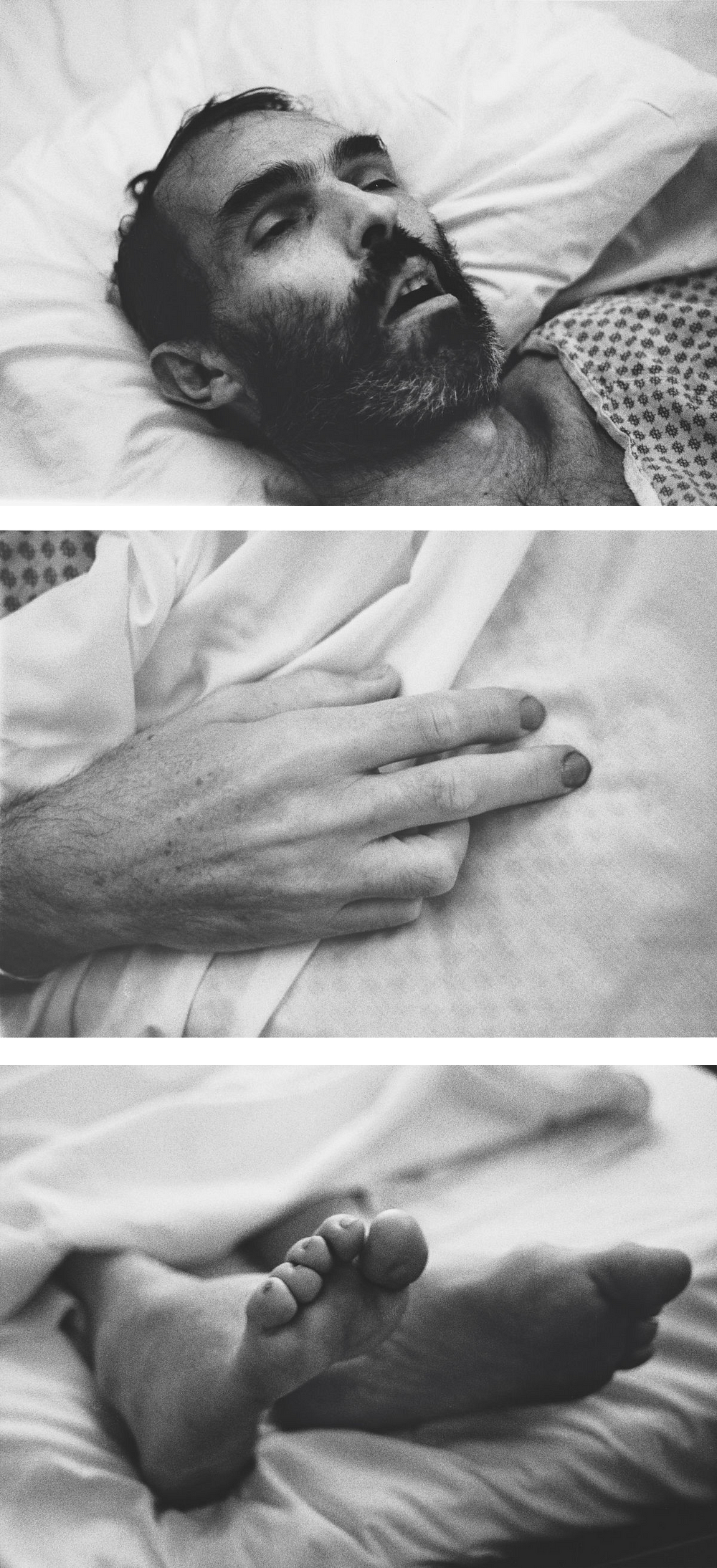
Review: Finding hope in the anger of David Wojnarowicz | America Magazine ‘A photographic image can be a disruption of previously unchallenged power.’ — giving voice to the unspeakable.
When in 1987 his best friend/lover (lines somewhat blurred), Peter Hujar, died of AIDS, Wojnarowicz photographed the body, taking 23 photos (purposefully 23 as he associated that number with the evolution of consciousness- 23 is the number of chromosome pairs in a human cell), a nod to his spirituality, with this- spirituality- being something that has reoccurred in his work, e.g., ‘Something from Sleep III (For Tom Rauffenbart).’
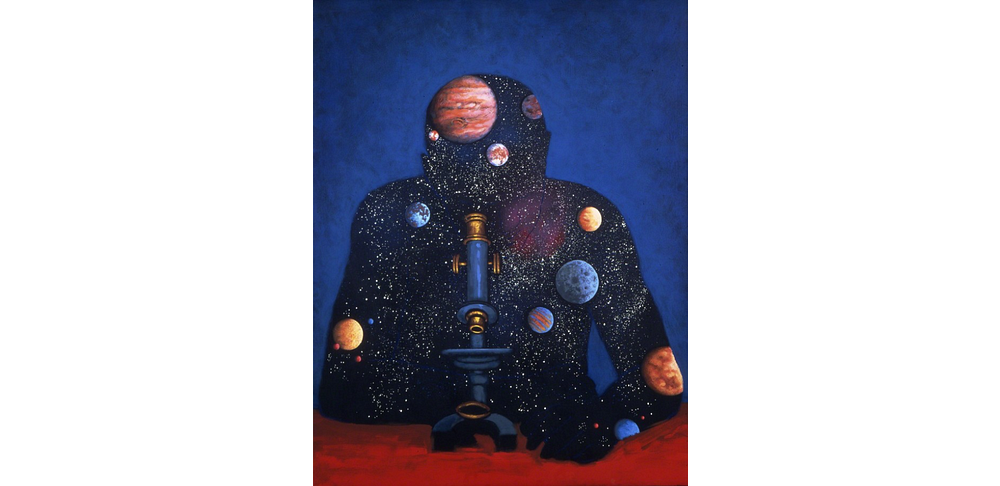
David Wojnarowicz | Something from Sleep III (For Tom Rauffenbart) (1989) | Artsy Despite the authorities attempts to ‘drag Wojnarowicz through the dirt’, branding him as a ‘radical homosexual artist/activist’, ‘offensive’, the cause of ‘spiritual injury’, Wojnarowicz refused to let this deter him with, if anything, the backlash he received serving only to reaffirm the need for reform…
An example of some of Wojnarowicz’s most famous, controversial works: 1980, ‘Rimbaud in New York’ (image below). For this piece, Wojnarowicz posed throughout New York in masks of 19th century French poet, Arthur Rimbaud, who was also no stranger to a life of sexual taboos (Rimbaud was described by The New York Times as a “sexually fluid renegade genius”), wearing the mask to highlight the parallels of their life, despite the 100+ year difference (i.e., highlighting the urgency, still, for societal change)…

David Wojnarowicz — Arthur Rimbaud in New York (museoreinasofia.es) Wojnarowicz was compelled to be himself even if that meant risking everything, including his life. One of his most famous works; ‘One Day This Kid,” a black-and-white self-portrait of the artist as a prepubescent, surrounded by text, reaffirmed this risk, the risk of same-sex desire…
The text:
‘One day this kid will get larger… One day this kid will feel something stir… One day this kid will do something that causes men who wear the uniforms of priests and rabbis, men who inhabit certain stone buildings, to call for his death. One day politicians will enact legislation against this kid… He will be subject to loss of home, civil rights, jobs and all conceivable freedoms. All this will begin to happen in one or two years when he discovers he desires to place his naked body on the naked body of another boy.’The last line ( ^ ) really gets me in my feels, every time.
What does it mean if what you desire is illegal? Fear, frustration, fury, yes, but also a kind of political awakening, a fertile paranoia. “My queerness,” Wojnarowicz once wrote, “is a wedge that separates me from a sick society.”
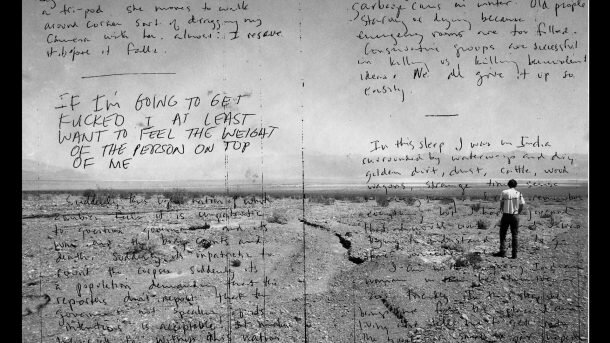
“One Day This Boy…”: How David Wojnarowicz Gave Me Life – ArtReview Making art out of political anger was Wojnarowicz’s forte, and he had plenty to be angry about- the injustices of the abuse he faced in his childhood at the hands of his alcoholic father, of witnessing his friends (and, eventually, himself- Wojnarowicz died of AIDS in 1992, aged just 37) fall victim to AIDS, navigating through a world of inequality, homelessness, homophobia, people trying to shut him up.
Everything about Wojnarowicz’s work centred around the fact that we are born into a pre-invented existence, and our need to awaken to this fact, as he hoped to aid us in via his art in which he explored the collective human experience, aiming to penetrate public consciousness- getting people to stop, listen, and take note of what he was saying, demanding real change from the people in power.
In fact, even his death demands this from us- the need to awaken. Killed at 37, not by aids the disease, but by a diseased society (in Texas, 1985, a local politician said that one way to solve the AIDS crisis was to “shoot the queers’)…
‘I’m amazed we’re not running amok in the streets, and that we can still be capable of gestures of loving after lifetimes of all this.’
In a letter to his friend Philip Zimmerman, Wojnarowicz wrote;
‘I feel kind of satisfied in mapping down my interior world with each thing I make. I’m realizing that there is something elementally important in bringing what is deep inside to light… It can ease the pressure of being alien.’
Being ‘alien’= Being Queer, Wojnarowicz made the ‘outsider’ his subject through his, oftentimes radical, always politically charged, art.
Making us fellow ‘aliens’/’outsiders’ feel seen-
An inspiration.What…
an…
icon.David Wojnarowicz everybody ❤
May everyone remember his name.
-
Is Social Mobility A Myth?

Class: something which no amount of watering can change.
Where the tree grows
the roots stay the same.To the world, the tree is getting taller, but what you can’t see is that, no matter how much you water the tree, no matter how tall the tree grows, its roots will remain the same-
unchanged
forever.And the same principle, I’d argue, is true of us.
No matter how much we go ‘up’ in the world,
no matter how much money we acquire,
who we are at our core,
who we have been since the day we were born
gets left unchanged,
growing
only in the space within which we were planted.Class: something which no amount of watering can change.
Where the tree grows
the roots stay the same.(it’s all pre-arranged).
If you’re working-class and you come into money (you buy a lottery ticket on Friday night, the numbers being drawn on Saturday night confirming that you are now a millionaire), do you become middle-class?
Do you go from working-class to middle-class overnight?
And, likewise, if you’re middle-class, the founder of a multi-million pound business that goes into insolvency, leaving you bankrupt/forcing you onto the streets, do you become working-class?
Do you go from middle-class to working-class overnight?
In other words: Is class solely based on money, or does it run deeper than that?…
Consider someone from a working-class family who finds themselves caught up in a world of drug dealing. Their friends are all working-class, as are their parents, but they have accumulated money. With several houses, they are living a stereotypically ‘middle-class’ lifestyle. Except they’re not [middle-class].
With different values being attached to different classes- attitudes, priorities, in some cases, morals, the fact is that coming into (or falling out of) money, cannot change what we have spent the entirety of our lives being socialised into. ..
I could marry into wealth, but would that take me away from my working-class roots and see me labelling myself as middle-class?
No.
For when I am a northerner, Doncaster born ‘n bred, when my Grandad worked down the pit, when I am a first-generation university student, when I am working-class, from the accent to the opportunities to, well, pretty much every facet of my life, suddenly becoming rich, whether through myself or someone else, wouldn’t take any of this away. I would still have all the same experiences etched into my psyche of the state comp school in Doncaster, rated ‘inadequate’ by OFSTED several years running, of the tales I heard my Grandad tell of the 80s- the miners strikes which, as a pit worker, put my Mums family on the breadline, all of these things would still exist.
Where our class is concerned, is our fate sealed/predetermined by the family within which we are born?
While it’s true that we can rewrite the future, as believers of social mobility would say, ‘we can all climb the social mobility ladder and change our lives’, when we are unable to rewrite the past, when the way in which we were socialised/the class within which we were born into is unchangeable, to what extent, and to what effect, can we truly ‘rewrite the future?’
Social mobility is based on the narrowminded view that ‘if you work hard and apply yourself, you can achieve great things’, but fails to take into account all of the disadvantages of class, where people are defined by the class they were born into rather than by their achievements.
Consider private schools, for example.
When private school admissions are based on parental wealth, (only those of us who are born into wealth will have the luxury of private schooling afforded to us), how can we say that we live in a meritocratic society? How can we say that we all have an equal footing when it comes to acquiring capital, this (capital/the acquisition of it) being something which goes hand-in-hand with private schooling- not just economic capital, but also cultural capital (the social assets of a person- education, intellect, style of speech, style of dress, etc), as well as social capital (networks/connections with others- who people know and the status of those people- friends, teachers etc- the age old trope of ‘it’s not what you know, it’s who you know’, summed up)…
‘In my house growing up, we didn’t discuss politics and art around the dinner table, we didn’t even have a dinner table, trays on knees sat on the settee in front of the telly, Emmerdale omnibus- as good as it gets…’
Money= Wealth, Not Class
Unlike our economic capital which can increase or decrease depending on our job, our cultural and social capital will remain largely unchanged throughout our lives.
Why? Because, ultimately, class starts with upbringing. Whereas we can change our income based on how much we earn, we cannot change our upbringing (hence the argument for social mobility being a myth, because when our primary socialisation is what gives us cultural and social capital, if we are born into a working-class family, no matter how much wealth we acquire throughout our life, we will arguably stay working-class).
‘Working-class and wealthy’… A juxtaposition when we have been led to believe that class is solely based on money… But, as I hope this essay has proven, class is about far more than what we have in the bank, it’s about cultural and social capital too, neither of which can be ‘won.’
Born into it, class is inherited through family rather than ‘earnt’ through money.
SOCIAL MOBILITY IS A MYTH !
getty images -
Political bias In The News: Left-Wing VS Right-Wing British Newspapers

Unlike the BBC, Britain’s oldest and largest broadcaster which prides itself on its impartiality- instead delivering unbiased news from all sides, indistinguishable from being either left or right wing, most tabloids/newspapers in the UK today cannot be said to be impartial, with their bias easily determinable as being either on the left or the right of the political spectrum (and, even in the papers that do claim to be ‘impartial’, their political leaning tends to be evident).
Where right wing newspapers are more conservative, left wing newspapers are more liberal, therefore two papers that run the same story, depending on whether they are left or right leaning, will see the news being delivered differently.
With news outlets competing for your attention, this article provides you with the know-how to make an informative decision regarding where you direct your attention.
In other words, it tells you where to go if you want a good newspaper to read
VS
Where to go if you need a good toilet paper substitute.
Left-wing
VS
Right Wing
News-paper
VS
Toilet-paper.
Left-Wing:
– The Guardian
Founded in 1821 as ‘The Manchester Guardian’ by John Edward Taylor, a Somerset born (turned Mancunian) cotton merchant, and a ‘Nonconformist Liberal’, the political stance of the paper’s readership is in line with the late Taylor’s — generally on the mainstream left of British political opinion. So much so, in fact, that the term “Guardian reader” has been claimed to imply a stereotype of a person with liberal, left-wing or “politically correct” views.
– The Daily Mirror
The Daily Mirror, upon its founding in 1903, was intended to represent women’s interests, thought, and work, and was thus run by women. During the 1930s and 40s, The Daily Mirror was transformed into a left-wing paper for the working class, making no disguise of their steadfast support of the Labour party. They have been left of centre since.
– The Independent
Although the independent (founded in 1986), traditionally had no affiliation with any political party, hence the name ‘independent’ (which stands for ‘independent-minded’, including independence of political party allegiance), it is, today, considered ‘centre-left’, owing to its progressive, liberal stance on issues.
– The New Statesman
The New Statesman is celebrated for its progressive and liberal politics.
Founded in 1913 by Sidney and Beatrice Webb, he a Fabian Socialist, and she his political and literary partner, the NS reflected their views, becoming an independent, socialist forum, the ‘in-house journal of Britain’s Labour party’, for intellectual discussion, political commentary, and criticism. It’s overarching aim being to ‘permeate the educated and influential classes with socialist ideas.’VS
Right-Wing:
– The Sun
Initially launched as the Daily Herald in 1911, The Sun, upon its founding, served as an independent left-wing paper committed to offering support to strikers, and it subsequently became the official newspaper of the Trades Union Congress in 1922, supporting the Labour Party.
In 1964, the Daily Herald, after being acquired by Daily Mirror Newspapers in 1961, became what it is known as today, ‘The Sun’, with their change in name also seeing a change in their political stance (in 1978, the Sun switched allegiance to the Conservative Party under Margaret Thatcher).
Since then, despite publishing an article in 2019 in which editors of The Sun reiterate that they have ‘never been shackled to a political party’, the Sun have been considered ‘centre-right.’
– The Daily Mail
Launched in 1896, the Daily Mail has always been a right leaning paper, endorsing the conservatives steadfastly, and, in 2015, making their political stance clear in their calls for ‘anyone but labour.’
Renowned for sensationalism in which loaded language, often brash and exaggerated, is used, the Daily Mail is irrefutably a right wing tabloid publication, arguably a ‘propaganda sheet for the Tories’, a sentiment which is echoed by participants in a YouGov survey.
Results from the survey reveal how a hefty 44% of people consider the paper to be ‘very right wing’, 26% ‘fairly right wing’, and 11% ‘right of centre’ (in other words, 81% of people consider the Daily Mail to be right wing leaning, winning it the position as the, perceived, most right wing paper in the UK).

yougov.co.uk – The Daily Express
Since its founding in 1900, the Daily Express has made no attempts to hide their right-wing bias.
The paper’s editorial stances have often been seen as aligned to Euroscepticism and supportive of the UK Independence Party (UKIP). They have also been accused of racism and islamophobia in their sensationalist headlines such as, ‘migrants rob young Britons of jobs’ and ‘workers are fired for being British’ (to name just two).
The Daily Express describe themselves, on their website, as being a ‘proudly conservative newspaper on the centre right of British politics.’ I don’t think their political stance could be clearer than that!
– The Daily Telegraph
Founded in 1855, The Daily Telegraph is undoubtedly a right-wing publication, evident by them having endorsed the Conservative Party at every UK general election since 1945…
Suggested to be the most widely read newspaper amongst conservative party members, our ex prime minister, Boris Johnson, even worked at the Telegraph as their political columnist in the late 80s.
– The Times
Formed in 1785 as the ‘Daily Universal Register’, it was rebranded 3 years later, in 1788, as ‘The Times.’
While right-wing leaning- The Times is generally conservative and Eurosceptic in its approach- compared to other right wing papers, it adopts a much more neutral position/more ‘central.’
Unlike the Telegraph, which has remained unchanging in its right-wing views since its founding, the Times has changed political sides a number of times, backing labour in the 2001 and 2005 elections, and the Tories since 2010.
– The Spectator
Founded in 1828, and ran by Boris Johnson from 1999 to 2005, after his position of columnist at the Daily Telegraph, and before his position of the Mayor of London and British Prime Minister, the Spectator is a right-wing, conservative publication.
While the above list is by no means exhaustive (there are of course several other newspapers, both national and local, that publish stories), I hope that, in listing the ‘key players’, you will feel better equipped to make informed choices regarding where you direct your attention/who you give your time to, in the consumption of news.
To reiterate what I said in the opening of this article:
‘Where you consume your news matters.’
Don’t just grab the closest paper, or the cheapest paper off the shelf, do your research so that you can make an informed choice.
Why is this so important? Because, when the news infiltrates so much of our lives, often swaying our opinion on things, you want to ensure that the news that you’re consuming, the ideology that you’re, sometimes subconsciously, being ‘drip-fed’, aligns with your own values.
In other words, don’t let the ‘immigrants are stealing our jobs’, ‘poor people are lazy’ rhetoric get in…
-
The Shocking Reality Of The North-South Divide In The UK
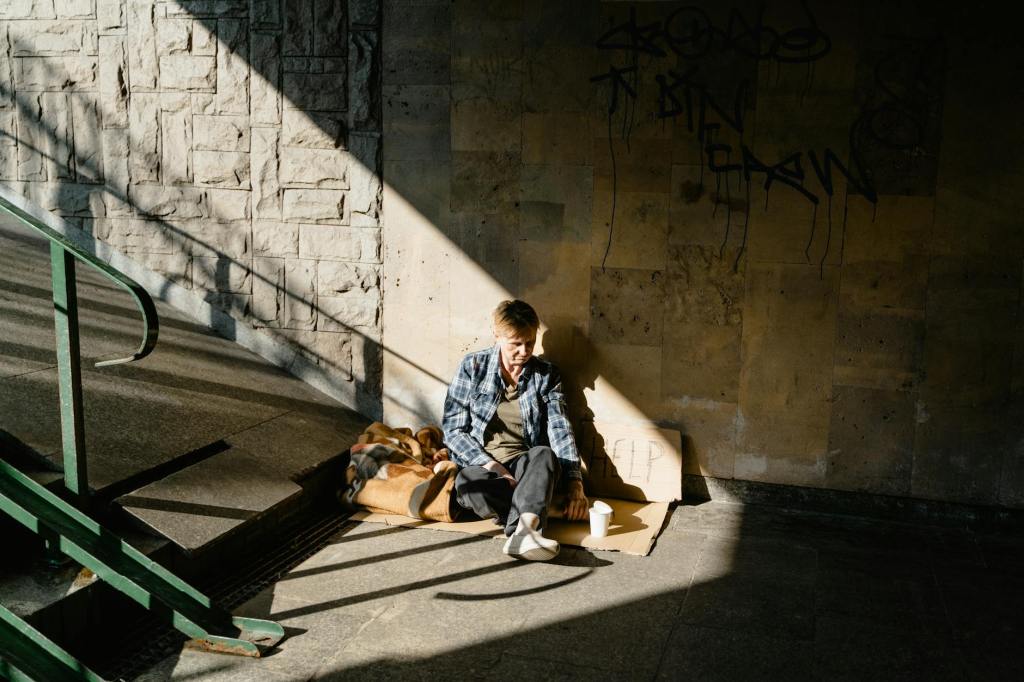
From education:
In 2017, more offers to Oxbridge universities were made to Home Counties pupils (students residing in counties surrounding London) than the whole of northern England combined, owing to pupils in the north being likelier to finish school with poorer grades than those in the south…to life expectancy:
Life expectancy in the north in 2020 was 77.6, VS 80.6 in the south…The north-south divide is evident throughout the entirety of our lives…
From the moment we’re born, to the moment we die, there’s no escaping the starkness of the inequality that exists. A government report published in 2021 highlights how 79% of adults across all regions consider there to be a large gap between social classes in Britain today. Furthermore, around three quarters (74%) of adults believe there to be a ‘very large difference’ in the opportunities available in different parts of Britain, a direct result of class differences…
How Class (Wrongfully) Determines Outcome
Overwhelmingly, the class we are born into dictates the class we will spend the rest of our lives within because, as a 258-page report by the Social Mobility Commission published this year found, social mobility is largely a myth.
The report highlights how, in 2017, four-fifths of students from England and Wales accepted at Oxbridge between 2010 and 2015 had parents with top professional and managerial jobs, and the numbers have been edging upwards since.
Not just at Oxford and Cambridge either, but at all British universities, statistics highlight how people whose parents had degrees are far more likely — 64% against 18% — to get a degree than those whose parents had no qualifications. Furthermore, adults with working-class parents are about 3 times as likely — 30% against 11% — to be in a working-class occupation themselves compared with adults with higher professional parents.
Discussing class divide is not just people being pessimistic/viewing life from a ‘glass half empty’ perspective, but a genuine reality, whereby wealth is unevenly spread across the country, with the south east* being the wealthiest of all regions (median household total wealth= £503,400, over twice the amount of wealth in households in the north of England)…
*(The south-east which, by the way, despite being home to just one-third of the UK population, now accounts for 45% of Britain’s economy, and 42% of its wealth)…
Why Is Wealth So Disproportionately Spread Across The Country?
Largely due to employment opportunities.
Unemployment in the north sits at 5% (as of 2022), compared to unemployment in the south, which sits at 3.2%.
For those who are employed in the north, rates of pay are considerably lower than they are in the south (in 2018, the average household gross disposable income was £16,995 in the NE region, VS £24,318 in London).
There are also big regional differences in, not just employment prospects, but also perceptions of opportunities, as a 2021 report published by the Social Mobility Commission highlights…
People in London are much more likely to be of the belief that the opportunities to progress in their area are ‘good’ (74%), compared with people in the north (31%).
It is this perceived lack of opportunities that sees the north losing graduates to the south- a report in the Guardian found that the north sees a net loss of around 75,000 graduates per decade to the south. This is reflected in the average age of people living in northern towns VS southern towns. More than one in five people living in inner London (23.1%), are aged between 25 and 34, compared to just 12.7% of those living in the rest of England…
Not Only Are People Earning More Money In The South, But People Are Being Given More Money, Too…
Despite, in 2020, making up only 14% of the total UK population, London is given disproportionate funding and opportunities compared to the rest of the UK. For example, levels of public investment in London and the south-east (2019–20) equate to £12,147 per person, VS public investment in the north which sits at considerably less- £8,125.
While there are some perceived ‘benefits’ of living up north, e.g., lower house prices (average price in 2021 for a house in the north= £143,129, VS average price in the south = £350,016), upon considering other factors such as the lack of employment opportunities, particularly in creative industries (a report found that for every job created in the north, just under three were created in the south), and the lower rate of pay (in work poverty has risen in the north from 3.4 million people in 2009/10 to 3.5 million in 2019/20), any perceived ‘upper-hand’ that the north has in terms of things being cheaper is illusionary. Things are cheaper because it’s all northerners can afford… If there were more employment opportunities/a better overall standard of living etc, then house prices would reflect this. Things wouldn’t be so much cheaper up here.
House prices are not better in the north because things are ‘better’ in the north, they are ‘better’ in the north because everything else is worse.
What Can We Do About It?
While the buck stops with the government- the north needs more funding from the government (more funding=more opportunities), as residents, we can do our bit too. Rather than putting ourselves down, looking around in dismay at the ‘state’ of it/listing everything that is ‘wrong’ with the north, we can focus on the positives.
There Isn’t Just A North-South Divide, But A North-North, South-South Divide Too, With Class Divide Even Existing Within Classes.
Every town/city has it’s better and worse off areas, including those in the South. In fact, our capital, London, has the highest inequality rate than anywhere else, with London overrepresented at both the bottom and the top of income distribution nationally. Measured after housing costs, 28% of Londoners live in poverty, compared with 22% across the UK as a whole.
If you’re a creative living up north, instead of upping and moving down south where there are ‘more opportunities for creatives’, why not stay and strive to change the perception of the north? Because, to use Doncaster as an example, there is nothing inherently ‘wrong’ with our city (at all). With some of the best transport links in the country, ample green spaces etc, Doncaster has so much going for it, what there is something wrong with, however, is the lack of opportunities that we have here.
This though ( ^ ), this can be changed, for…
The more creatives that reside here, the more opportunities will arise here.
The fact is that, when creatives leave in their flocks to move down south, all we are doing is reinforcing the perception that the north has few opportunities for creatives, and so the cycle will continue/the class divide will continue…
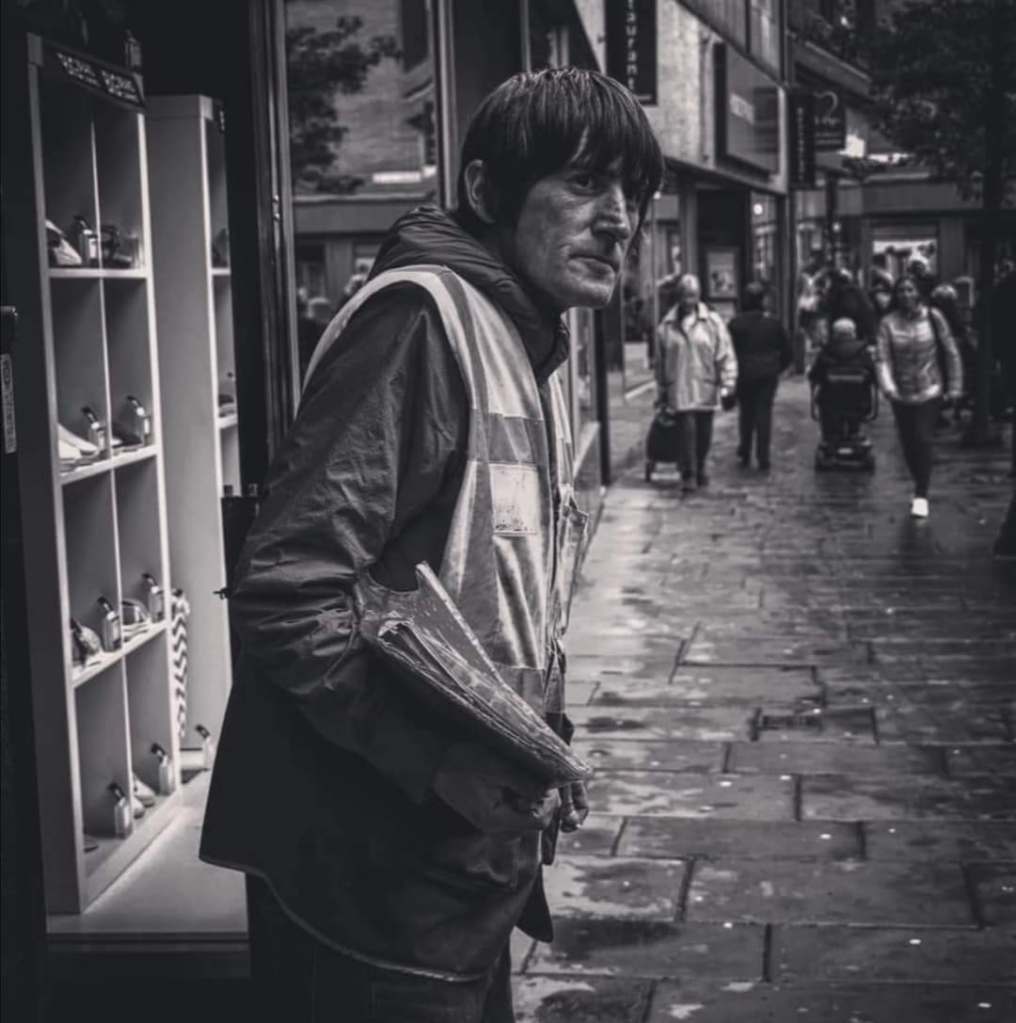
Man selling big issue in Doncaster City Centre (Author’s own photography) Be proud of your roots, and do your bit to put your Northern hometown on the map for all the right reasons.
-
Disparities In Mental Health: Are Minority Groups Being Disproportionately Diagnosed?

‘Mental illness’ is, arguably, just a form of reaction, rebellion, against systems of oppression.
Mental illness= a normal response to an abnormal society.
Dr. Gabor Maté
It therefore makes sense that people who are in minority ‘categories’, whether that be in terms of race, sexuality, gender, (dis)ability (anything that sees one being oppressed), are more likely to be diagnosed with a mental illness compared to their ‘normal’ (i.e., white, cishet, able-bodied) counterparts. Why? Because, people who go against the grain in their refusal to conform are seen as a threat to the idealised version of society that keeps capitalism upheld.
‘Better to just label them as mentally ill so as not to let their ideas gain traction’, as the two examples below highlight…
1) Queer women are much more likely to be diagnosed with BPD than straight women.
When BPD is characterised by impulsive behaviour, uncertainty about oneself, and relationship difficulties, the fact that queer people are disproportionately diagnosed with BPD compared to their heterosexual counterparts makes one question;
Is queerness being dismissed as ‘uncertainty’, a symptom of BPD, the age-old ‘it’s just a phase’ trope making a comeback?
(as though it ever left)…
When queer is ‘the cohesion of everything in conflict with the heterosexual capitalist world/a total rejection of the regime of the normal’, really it should come as no surprise that homosexuality was (/still is, in some countries) considered a mental illness. Perceived as being a ‘threat’ to the patriarchal, heteronormative society under which capitalism thrives, it’s why conversion therapy was (and again, still is, in some countries) used in a desperate attempt to ‘cure’ people from their homosexuality. Anything to uphold the system, however oppressive (seemingly, the more oppressive the better) that system is…
2) Black men are at least three times more likely to be diagnosed with severe mental illnesses, such as schizophrenia, compared to white men.
(&, of those who are diagnosed, they [black men] are four times more likely to be sectioned and given medication over talking therapy than white men).
With the acknowledgement of such disparities comes the question, why?…
As in the whole nature VS nurture debate, the question that we should be asking is this:
Is the increased rate of mental illness diagnoses amongst marginalised groups as a result of such people genuinely being more likely to struggle with their mental health- due to societal/cultural factors, perhaps (e.g., discrimination/segregation/marginalisation), or is it due to preconceived ideas/stereotypes that we, including the health care professionals whom are responsible for diagnoses, have towards such people, (e.g., ‘same-sex attraction is a phase’, ‘black men are dangerous’), meaning that they are disproportionately diagnosed with mental health conditions which, in many cases, they might not even have.
Are they really a threat to themselves and/or others, or are they a threat to a capitalist utopia?…
Even more important to ask then, is not what causes mental ill health amongst the marginalised in society, but whether the ‘mental health condition’ is there at all…
‘It’s not about disproportionate diagnoses amongst marginalised groups, but misdiagnoses- this is what I am interested in uncovering the prominence of.’
How much of it is a genuine mental illness, VS how much of it is prejudice* towards the person being diagnosed?…
*’Prejudice’ which sees, whether directly or indirectly, intentionally or unintentionally, people who do not follow the ‘norms’ being reminded of their position- the fact that they sit firmly ‘outside of the box’- everywhere, in everything, all the time…
From the things that we are taught in school- PSHE lessons that fervently remind queer people that they are not ‘normal’, (via the teaching of sex education solely focused on heterosexual relations, and the importance of the nuclear family), to the things that we are taught in history, a curriculum which has historically (pardon the pun) excluded much of black history, it should come as no surprise that we are impacted by this sense of ‘othering’ in adulthood, with people being diagnosed with every mental health condition under the sun…
But, to pose the question again, how much of it is genuine?
How much of it is about helping them, the patient who is supposedly mentally ill, to recover, VS how much of it is about helping THEM, the leaders, to keep capitalism in place?…
How much of it is about ‘#profits over people’, the Tory way, whereby, through our corrupted thinking (owing to a heteronormative society which promotes the ideological image of the heterosexual, nuclear, homogamous family as the ‘be all and end all’), we, again, whether directly or indirectly, intentionally or unintentionally, judge people who do not align with that ideal, thus keeping the systematic cycle of oppression going?…
The good news though is that we are not ‘trapped’ in this cycle. Where everything is learnt, so too can everything be unlearnt.
The first step to unlearning is to acknowledge that the society within which we live is corrupt in the first place. Only then can we take steps to correct the corruptness, stop the discrimination, and let everyone just live their lives however they want to.
I am not ‘mentally ill’, I am mentally, physically, sick of living under systems of oppression…
For society to change, we each must individually commit to change, for no one is going to do it for us. When the authority figures, the government, the world leaders, benefit from everyone being on the ‘straight and narrow’, discrimination and segregation of people who rebel will not change whilst ever we give them the power to dictate our lives.
It’s bad enough that the government govern our lives, don’t let them govern your mind, too.
How ironic it is that the people whom are most likely to rebel from capitalism/to ‘forge their own way in life’ are disproportionately (mis)diagnosed as being mentally ill, yet it is these very people who are arguably the only sane ones amidst a society governed by money hungry, would-be-totalitarian sociopaths…
Photo by Zulmaury Saavedra on Unsplash BREAK OUT OF THE CYCLE.
-
Who Is bell hooks? – Author, Feminist, Social Activist, ICON.

bell hooks, real name, Gloria Jean Watkins (1952–2021), was an American poet, author, feminist, professor, cultural critic, and social activist, who was dedicated to the cause of ending sexism, sexist exploitation, and oppression.
Her pen name, ‘bell hooks’ (deliberately spelt in lowercase- always- so as to draw people’s attention to the content of her work rather than her identity or personhood), was the name of her maternal great-grandmother, Bell Blair Hooks, whom she was often compared to as a child, with Watkins using it as a pseudonym to honour female legacies.
Best known for her writings on race, feminism, and her commitment to exploring the intersectionality of these things, and what she described as their ‘ability to produce and perpetuate systems of oppression and class domination’, hooks published around 40 books throughout her career, all of which ask readers to question their understanding of how patriarchy, capitalism, and white supremacy intermingle.
hooks wrote her first book, ‘Ain’t I a Woman: Black Women and Feminism’, when she was just 19 years old, with her first ‘officially’ published work being released in 1978- a chapbook of poems titled, ‘And There We Wept.’
Following the completion of her studies in 1983, (a Ph.D. in English literature), hooks went on to forge a career in academia as an English professor and lecturer, teaching at several institutions before joining Berea College in 2004 as a professor in residence. The bell hooks Institute was later founded there in 2014.
‘My writing is a form of activism.’
Early Years
Though hooks’ childhood in the segregated community of the American South exposed her to vicious examples of white supremacy, where her mother, Rosa Bell, was a maid for white families, and her father, Veodis Watkins, a postal worker, her tight-knit Black community showed her the possibility of resistance from the margins, of finding community among the oppressed, and of drawing power from those connections — a theme to which she would return frequently in her work…
It was her sense of community amongst the oppressed that saw hooks identifying as ‘queer’ (‘queer-pas-gay’), with her famous quote, as below, perfectly encapsulating who bell hooks was- ‘at odds with everything’, but never letting that deter her from doing what she really wanted to do/ never losing sight of hope.
‘Queer’ not as being about who you’re having sex with (that can be a dimension of it); but ‘queer’ as being about the self that is at odds with everything around it and that has to invent and create and find a place to speak and to thrive and to live.’
hooks Was Not A ‘Doom’ Writer
Although she wrote about hard-hitting subjects, exposing the unjust, devoting her life to naming the power structures around us, hooks was also full of hope for the future, providing a roadmap to freedom, naming the power inside of us to resist the oppression.
E.g., — while hooks recognised the ‘elitism’ of some universities, she also recognised how they were(/are), a site of revolutionary possibility.
‘There’s nothing but love within me for the world around me.’
Combining her Buddhist outlook on life, hooks provided hope by reminding us all (or at least, those of us who were willing to listen), that true transformation starts internally. That, in order to live in a more loving society, we all must become love*.
*Love, according to hooks, being the most powerful antidote to the politics of domination.
‘It is only love that heals the wounds of oppression.’
Never washing over the important things, however hard-hitting, and never losing sight of the possibility for change, this is why bell hooks is remembered as the trailblazer that she truly is.

-
How To Overcome Your Need To Be Productive In A Capitalist Society…

To be productive, according to the Oxford dictionary, is to
‘Produce large amounts of goods, crops, or other commodities.’With so many of us basing our entire self-worth on how productive we’ve been (i.e., on how much we’ve produced- on how much we’ve produced yet they’ve benefitted from…), it really is no wonder then that so many of us, in turn, feel so devoid of hope in life…
How Productivity Upholds Capitalism (& Vice Versa)
Welcome To The Rat Race…
Productivity is a product of production- when we are in the ‘cycle’ of production, whether as the one doing the producing itself (the producer), or as the one consuming the production (the consumer), when we engage with it, we are contributing to the wholly unforgiving capitalist economy. Why? Because, when production is rooted in capitalism (in order to feel ‘productive enough’, we are told that we need to work more, this being the very thing [working] which keeps capitalism upheld), we remain stuck in a loop that keeps us, the workers, at the bottom of society, whilst they, the top 1%, are kept at the top…
Why don’t we ‘jump off’ the metaphorical ‘loop?’, because, under a capitalist system, we have no choice but to work to live- everything costs money, and so, we can’t not engage with it.
It’s important to note here that productivity itself is not the problem (without being productive we wouldn’t be alive. We need to make food and exercise and engage in the things that we enjoy for our mental health, if for nothing else) the problem is the bartering that goes on that keeps us stuck in a rat race.
Even when we get sick, we can’t rest, not properly, for what’s the first thing that we have to think about? Work. Ringing in sick, getting a sick note so that we don’t lose our jobs. ‘Will I lose my job? I can’t lose my job. When can I go back to work?’ We are completely blindsided by the fact that, in many cases, it was work that got us into such a dire state in the first place… But don’t worry about that. You’ll be back at work in no time. Just take this tablet and the capitalist machine (i.e., you) will be revitalised and ready for round two!!’
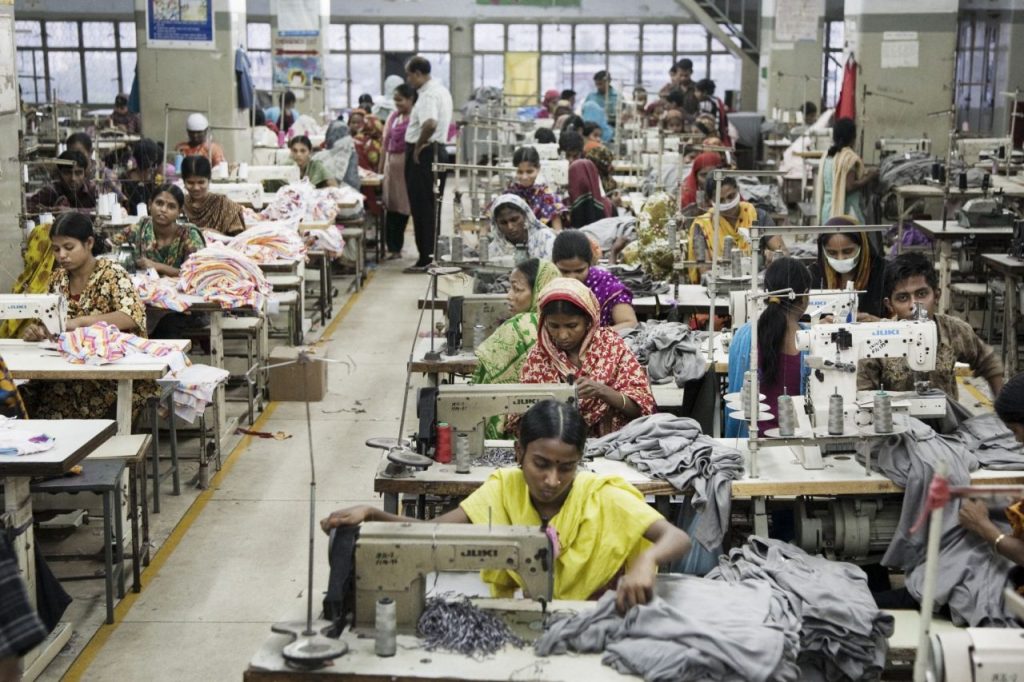
In Plain Sight
Fortunately, in the UK we have a national health service which means that we don’t have to pay to receive health care, but in many other countries around the world, the US being the most notable example, if people get ill and can’t afford treatment, they are essentially left to die.
At least in the UK, the government tries to hide the fact that they prioritise money over human life (arguably, they don’t do a very good job at it, but points for trying I suppose). In the US, they don’t even try to hide it.
‘If you have money, you deserve to live, if you don’t, you deserve to die.’
Are We Our Own Worst Critic?
The fact that we are judged based on our productivity, not just by our bosses at work, but even by ourselves, at home, is a sure-fire signifier that capitalism really has seeped into every element of our lives…
What should be our ‘down time’, a time for us to do the things that we love for the sole reason that we love them, not because we love the monetary rewards that they give us, (you know, those things that were once known as ‘hobbies’), has become just another productivity seeking opportunity. A side hustle, maybe, a chore, definitely, all the things that we used to do to recharge ultimately end up depleting us even further.
Human Beings Are, Ironically, The Only Species That Refuses To Allow Themselves To Just ‘Be’…
Consider every other species on the planet besides humans. Looking out of my window right now as I write this, I can see three birds delicately balancing on a tree branch at the end of my garden.
What do birds do with their days? They spend them looking for food, looking for nest material (time of year dependent), just being. We are the only species that prioritises ‘doing’ over ‘being’, which is ironic really, when you think about it… We are human beings, yet we rarely, if ever, allow ourselves to just ‘be’.
How Can We Stop Prioritising Productivity Above All Else?
Unfortunately, it’s unlikely that we will ever go completely anti-capitalist. As much as I relish the idea of living in such a utopia, having been in place for hundreds of years, its removal would require an overhaul of literally everything we know, and when the people in power (i.e., the government) who can initiate such a move benefit from the system, it will never happen… What we can do, though, is recognise what capitalism is.
⦁ Focus on eradicating your internalised capitalism
We can learn to ‘cut ties’ with the association we make in our minds of our self worth being determinable by how ‘productive’ we have been, and lean in to our worth as human beings with nothing to prove, reminding ourselves that we are worthy of everything good in the world simply by virtue of us being alive.
-
Crime VS Sin
When crime is a sin against humanity, an action that goes against the law/a legal concept, sin is a crime against religion, an action that goes against ‘God’, a moral concept.
For example, whereas adultery is not a crime today, it is considered to be a sin- morally wrong.
If we cast our minds back to medieval times, though, then we will see that not only was adultery a crime, but it was punishable by death.
Thankfully, the law was overturned in the UK in 1857 because the courts found adultery to be a private matter in which the state should not intervene.
If ‘private matters’ are not punishable by law, then based on this, surely drugs should be decriminalised too, since our choice to take drugs is exactly that, our choice/a private matter?..
But it’s not.
In fact, only this year a new law was passed in the UK which will stop any child aged 14 or under from ever legally being able to buy cigarettes…
Why?
Why are we being told what we can and can’t do with our bodies?
Who gets to decide, if not ourselves?…
Who decides what is and isn’t against the law?
Who decides what is morally right and wrong?
Who defines sin?
What does the word ‘sin’ even mean?…
Where sin is anything that goes against the commands of God/anything that breaches the laws and norms laid out by society, when the word itself translates to ‘off the mark’, a Greek word to describe ‘a transgression of the law’, the question is;
Who makes the law for which sin is based on?
Who defines crime for which, if we breach, we are guilty of having committed a ‘sin?’
When the passing of laws is the governments responsibility, where does ‘God’ fit into all of this? Unless you think that God was a politician, that Parliament proceeded God?…
When all crime is deemed to be inherently sinful, simply by virtue of one going against authority to do so, surely this is all the evidence we need to see that religion, at its core, is centred on authority- the need for them, the few, to control, whilst we, the masses, blindly, unquestionably, comply…
Religion is simply a vehicle for controlling the masses, using fear to get us to comply/to behave in the ‘right’ way. Whilst there are some countries that are yet to differentiate between crime and sin- those which are stuck in the middle ages, Sharia law, for example, on the whole, as society becomes more secular, as fewer people prescribe to organised religions and more people embrace, either spirituality or existentialism, ‘sins’ have become not legally binding, but morally binding- we are told that we ‘should’ do things by God’s will, however failing to do so is not punishable by law.
‘Not getting a permit to build a shed on your property is not inherently sinful, but if it is required by law, then it becomes sinful to do it by virtue of disobeying just authority.’*
(*Like a higher power would have any knowledge, let alone opinion, on where you build your shed… If it wasn’t the source of so many wars/so much suffering, then our naivety/sheer delusion would be laughable!)
Is getting tattoos a sin? Drinking alcohol? Taking drugs? Being gay?
Why do we say that drug taking is morally wrong/illegal/a ‘sin’, when it is our choice, when it is our body?
Why do we say that sex work is morally wrong,
that eating certain food is morally wrong when, again, it is our body, our choice?Why do we say that these things are morally wrong, yet the things which genuinely are morally wrong-
war,
exploitation of the poor,
the subordination of women etc-
are not?( ^ ) Because the lawmakers profit from it, that’s why… And, when law is nothing more than a social construct, the lawmakers can do as they please- whatever suits them goes…

If you need evidence of the fact that law is a social construct, that there is no basis to it, at all, then just look at how quickly laws can be made and demolished…
A few weeks ago, when the supreme court ruled against Britain’s plan to send asylum seekers to Rwanda on the basis of it breaching human rights legislations, Rishi Sunak vowed to change the law to ensure that his plans could still go ahead…
Surely denying the human rights of someone is morally wrong, as Britain will be doing if they proceed to send asylum seekers to Rwanda despite it being ruled unlawful?
Apparently not… For, on the basis of any and all law breaking being a sin, to do so must be ‘in God’s will.’
Nonsensical.
Nonsensical like the fact that religion and the government are the two biggest sources of suffering in the world, just think of ISIS killing people in God’s name, and the Israeli government committing an act of genocide against Palestinian’s (death toll= almost 15,000), yet they are also two of the things to which we so blindly conform…
?! Can someone make it make sense ?!
And so, to answer the question posed as the title of this article:
Crime VS Sin: Is There Really A Difference?
The answer…
is no.There is no difference, both are made by the same people to scare us into conformity.
Both are made to control.


 Portfolio of Hope