-
Why Are So Few People Self Employed?
Fearing the unknown/liking that which is familiar to us, we value having a regular income, working regular hours, and, in turn, having a routine.
The sense of safety and security that comes with being employed by someone else is why so few people are self-employed.
With pension and career prospects and progression and a salary, knowing exactly how much we will earn each month and what our workload will be is nice.
Nice (adjective)
Making English teachers across the world squirm, ‘Use a better word.’
It’s comforting.
Nothing more, nothing less, is that what we were really put on this earth to do though?
To live a life of ‘niceness?’
With so few years in a lifetime, 73.16 years being the average life expectancy globally, our time here is over in the blink of an eye in comparison to the 13.7 billion-year-old universe. We therefore should not be spending what little (and oh so incredibly precious) time we have here saying no to opportunities because we fear the outcome.
Try, fail, try again.
If you do nothing, nothing will ever happen.
This is the catch-22 situation that will all too often arise in self-employment, particularly in the arts, whereby, if you’re not writing, making, painting, designing, or creating then you’re not earning.
With no safety net, the onus is entirely on us to put the work in in order to make it work.
This is why the arts as a sector is so unequal, filled with such privilege, because in order to make art you need to have ample time, space, and money set aside, something which the working class, all too often, simply do not have, as statistics by the ONS highlights…
Research conducted by the Office for National Statistics found that the proportion of working-class actors, musicians, and writers has shrunk by half since the 1970s.
If you’re not creating then you’re not earning, but how can you earn from creating when you have no money to begin with?
How can you afford to do art as a job if you have no money?
You can’t, which is why there is such a discrepancy in the arts when it comes to the middle class vs. the working class.
Whereas middle-class artists have the financial means to focus entirely on developing their craft without worrying about how they will pay the bills, working-class artists don’t have such a privilege.
For the middle class, art is a job, and a respected job at that.
For the working class, they’re lucky if they can call it a hobby.
‘If only…’
Not being in a position, unlike their middle-class peers, to undertake unpaid internships and projects for exposure, as well as spend hours of unpaid time applying for funding, can make it too precarious for working-class artists, nearly 80% of whom live in poverty, to continue.
The need for time to dream, and space to think and create often simply isn’t there, and so they have to put their art on the back burner and pursue a ‘normal’ job that promises security instead.
Security does not breed space for day-dreaming.
The universe, our home, is shrouded in so much mysticism and mystery, yet still, we live as though work is life.
The reality though, away from all the capitalistic bullshit that we are fed via the media, is that we were not born to be money-making robots for money-guzzling corporations where profits are always (and openly) prioritised over people.
We were born to bring the creator’s vision to life, to be physical manifestations of the metaphysical.
To escape from the rat race and the constraints of the soul-sucking nine-to-five.
To dream of a more just and beautiful world.
Photo by Craig Adderley on Pexels.com -
Why Is The Catholic Church So Preoccupied With Sex?

Stephen Fry, a British writer and broadcaster, argues that the paedophile priest scandal can be explained by the Church’s repressive attitude towards sex.
Because sex is a primary impulse, it can be dangerous and dark and difficult; a bit like food in that respect. A bit like food in that the only people who are obsessed with it are anorexics and the morbidly obese. And that, in erotic terms, is the Catholic Church in a nutshell. The twisted, neurotic, and hysterical way that leaders are chosen; the celibacy, the nuns, the monks, the priesthood, is not natural.
Repression breeds toxicity.
Worshipping the Virgin Mary, and making role models out of Nuns, celibacy is at the forefront of catholicism where sex (or rather, refraining from sex) is dubbed the be-all and end-all.
‘No sex before marriage, no homosexuality, no adultery, monogamy only, no masturbation, no sodomy, no birth control…‘
From contraception to homosexuality, premarital sex to adultery, people’s private sexual decisions seem to be the domain over which the Church likes to exercise maximum possible control.
Convincing us that we are all sinners, ‘broken, sinful, and doomed to eternal torture’, religion and its use of systematic fearmongering and brainwashing is all about control and manipulation.
We are in need of redemption, they tell us, our sexuality demanding attention since it is one of the few things in life that offers us autonomy over our lives.
If the church can control the way that people conduct their intimate relationships, then it can control every single family unit from the inside out.
If the church says that marriage is only to be between a man and a woman/that homosexuality and polyamory are ‘wrong’, then the patriarchy (the continued oppression of women) can be upheld.
Taking one step forward, we take two (hundred) steps back.
People who branch away from the church’s incredibly narrow-minded view of what constitutes ‘love’ (i.e., people who fail to abide by the rules set out by the church) can expect to be brandished as ‘sinners’, the guilt and shame inflicted upon them being enough to keep everyone on the straight and narrow.
Seeking redemption, many people give up their power (and money) to have even the smallest grasp on something that they have always had within
Freedom.Something that they have always had, yet something that is taken away by the very thing that proposes to give them it back…
‘Freedom, TRUE freedom, is your right to do what we tell you to do. And nothing more’ religion says.
Stigmatising us and making us feel deeply ashamed and guilty for what is human nature, religion tells us that we need saving from our ‘savage desires’, for which they have the cure.
What better way to convince people that they need to buy your cure, than to convince them that something as universal as sex makes them ‘sick’?…
What religion conveniently forgets to tell us, however, is that ‘the cure’ doesn’t actually take away our desires, because they [our desires] are innate (human nature). We are therefore kept trapped in an infinite loop of feeling disgust followed by a momentary sense of relief (and it is momentary, before the cycle starts again) when we seek salvation in the very thing that we need saving from (religion).
Blind faith is dangerous when those who can get you to believe absurdities can make you commit atrocities.
Justifying slavery, white supremacy, racial segregation, homophobia, (need I go on?), the majority of messages of ‘love’ and ‘compassion’ that supposedly constitutes religion are actually bigotry and prejudice under the disguise of a smile.
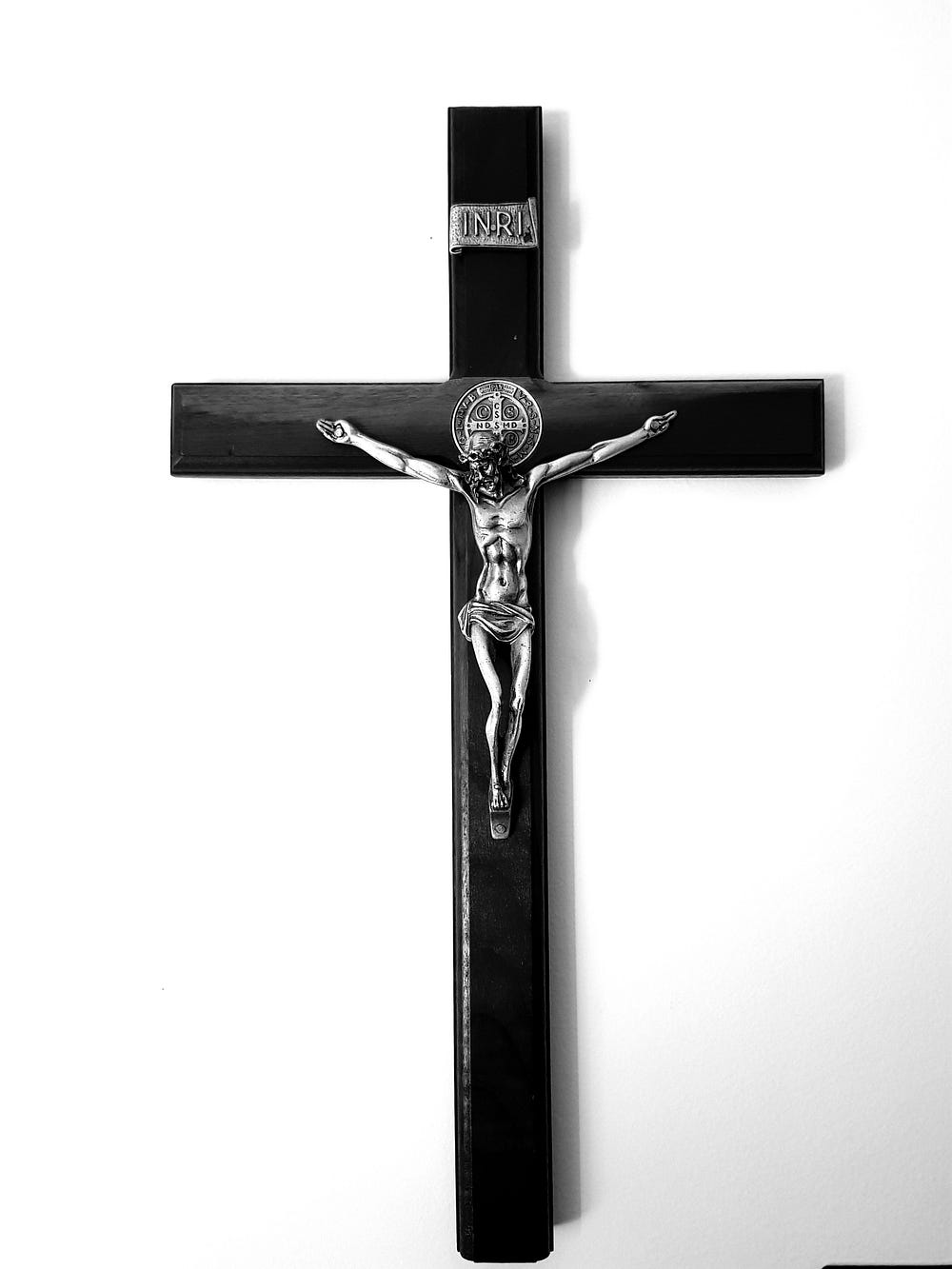
As above, so below, when we are all reflections of the god we worship, Jesus Christ, there’s no hate quite like Christian love.
Photo by Museums Victoria on Unsplash -
The Innocence Of Lost Youth
We wore shorts under our skirts at 8.
Our hair down to stop them from pulling our pigtails at 10,
‘When a boy pulls your hair it means that he likes you.’Sitting diligently in assembly while they handed out rape alarms at 12,
‘Boys will be boys.’‘Hold your keys in your hand like this’ at 14,
‘Just in case.’‘If a man approaches you, you scream’
at 16.When will we stop telling girls to scream louder
and start telling men to stop raping them? -
Class Inequality In The Arts: Why Does It Exist?

What is a job?
It’s something that adds value to people’s lives.Who gets to decide what is and isn’t worthy of being classified as a job?
The government.How do they decide?
Via its profitability.All jobs are equal, but some jobs are more equal than others.
Despite the arts adding so much value to people’s lives, with so much joy and happiness being sought in both the creation and the consumption of art, unfortunately, it is often regarded as little more than a hobby.
With a severe lack of funding available for aspiring artists and limited job opportunities on offer when it comes to creative professions, most creatives are forced to reimagine their art as a hobby, or as a side hustle if they’re lucky, and get a ‘proper’ job to pay the bills instead.
People subsequently find themselves trapped in a cycle where in order to make their art pay they need to put the time in, devoting their days to finetuning their craft, but in order to be able to put the time in, they need to have a job that pays.
Based on this then, how can one ever find the time to fine-tune their craft when they have no choice but to give their time away to the highest bidder in order to survive?
We can’t afford to make art for a living so we join the rat race of capitalism, but in joining the rat race of capitalism, we never have the time to make art for a living.
And with short-term ‘solutions’ causing long-term problems, we see the same happening in the housing market.
Photo by Fons Heijnsbroek on Unsplash The worsening cost of living and housing crises in London, and other cities where the creative industries are headquartered, have meant that now more than ever, pursuing the arts is an option only for those who don’t have to depend on them to make a living, and those who have the financial freedom to develop their craft.
This is why it’s so important for us all to recognise our privilege (or lack thereof), because no matter how much people might advocate for free will, ‘we all have the same twenty-four hours in the day to do with as we please’, the reality is that while we might all have the same number of hours in the day, what we can do with those hours differs dramatically based on our individual circumstances.
A single mum, for example, cannot afford to quit her full-time job to focus on her art, when Instagram likes and comments don’t put food on the table…
In contrast, a ‘Nepo’ baby, for example, or someone who comes from a family with a lot of money, probably can, knowing that they have a safety blanket in their parents if things don’t work out, a pot of money for a rainy day, and no pressing thought of, ‘Will I be able to feed my child tomorrow if I do this today?’, hanging over them…
Photo by Green Liu on Unsplash The Class Ceiling: When It Pays To Be Privileged…
A survey commissioned by Create London found that 76% of respondents working in the arts had at least one parent working in a managerial or professional job while they were growing up and that over half had at least one parent with a degree while growing up.
When this is paired with the fact that nearly 90% of respondents had worked for free at some point in their career, the research paints a bleak picture that if young people don’t have parents that are able to support them in their pursuit of a creative career then it is extremely hard to break into the industry.
Unfortunately, it really is about who you know, not what you know in the vast majority of cases…
Photo by Ben Collins on Unsplash Golden Globe-winning actor Emily Blunt said in an interview that her career ‘fell into her lap’ after she was head-hunted through her private school’s drama programme.
Her first real non-school play was opposite Dame Judi Dench.
It must be nice…
Talent is everywhere, opportunity isn’t.
The arts sector is a closed shop where the worlds of TV, film, music, and the arts are dominated by “straight, able-bodied white men living in London”, despite such a democratic only accounting for 3.5% of the population.
Furthermore, despite just 7 percent of the British population being privately educated, privately educated actors make up much of the talent pool, as a 2016 report from the Sutton Trust revealed, where two-thirds (67%) of British Oscar winners were privately educated…
Why? Because of cuts to funding for the arts in state schools.
Art, in its requirement of us to create something original and new, is one of the few things that can increase our chances of social mobility. Unable to say where it could lead, you could submit an article to a magazine today and get published tomorrow.
Is this why funding for the arts is cut in state schools then, unlike in private schools where the arts are celebrated? As a way to keep the working class ‘in their lane?’ James McAvoy thinks so (see the video linked below).
Art is amongst one of the most elite occupations in the entire British economy, with key creative roles now being more dominated by people from privileged backgrounds than doctors, judges, management consultants, and stockbrokers.
We see art galleries, for creation and consumption purposes, being filled with predominantly white, middle-class men. Why? Because middle-class people are twice as likely to work in the creative industries than working-class people.
What’s more, a third of the workforce in the creative industries is actually upper-middle class — elite private school or raised-by-a-nanny territory.
With an obvious, and perhaps inevitable relationship between who makes decisions in commissioning, and the kinds of stories that get made, particularly worrying is how the people who are in the position to effect change are the very people who most strongly support such classist inequality in the arts in the first place…
Photo by James Padolsey on Unsplash When TV commissioners and publishers come from an elite social background, as we have established they overwhelmingly do, they have a narrower view of what is ‘interesting.’
This means that with fewer film directors, authors, and songwriters to describe the experience of growing up working-class, their stories are being squeezed out of culture or confined to “poverty porn”.
Working-class voices and their lens on life are disappearing, and their stories are being told through the inaccurate prism of the privileged.

Photo by Tamara Velazquez on Pexels.com When it is the humble background of the working-class creative, however, that gives them the resilience and the creative point of difference to be the artists they are today, we are artists, no matter where we come from or if we have had a leg-up to get there.
United by a common uncommon experience, we are artists.
(Can we say it louder for the people at the back).(artists who would really appreciate some more funding, please and thank you).
-
The Sexualisation Of Girlhood & The Infantilisation Of Womanhood

It should not be a revolutionary thing for me to say that women are over-sexualised in the media all too often, (girls are over-sexualised, even), and no truer is this than in the music industry.
Popstars, instead of being idolised by teenage girls for their music, are frequently idealised by middle-aged men for their sex appeal.
Being cast as ‘Lolita’s’ (girls who are too young to have sex legally but who behave in sexually attractive ways), it’s all about the male gaze…
Dressing women up in school uniforms on music videos to appeal to the male gaze, selling stories about the sex lives of people who are barely of age (‘Has she lost her virginity yet? Has she had breast implants?), it’s so wrong.
It’s so wrong that so much pressure is placed on young women who are expected to live up to unrealistic expectations.
Being hounded by the press and turned into little more than objects of desire for men, they’re bound to get fed up and declare that they’ve had enough, but when they do? They’re labelled as ‘psychotic.’
We saw it with Demi Lavato who, in 2011, aged just eighteen, was sent to rehab and diagnosed with bipolar disorder.
In a recent interview (conducted in 2020), Demi Lavato stated that she had been misdiagnosed. In her own words, ‘bipolar was used as a convenient excuse for what was really happening.’
And we saw it with Miley Cyrus, too.
In 2010, at seventeen years old, Miley Cyrus’ management released ‘Can’t Be Tamed’, a song that describes her as crazy, sexy, wild, damaged, jagged and uncontrollable.
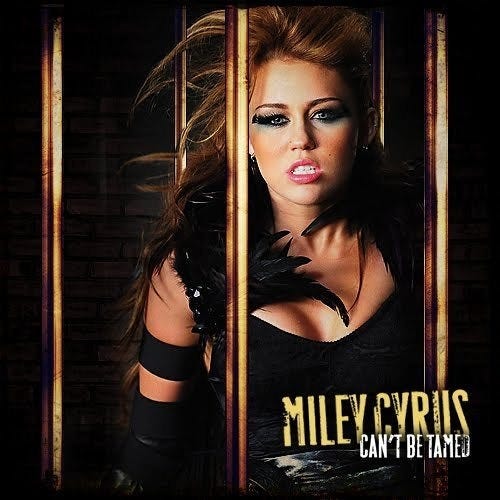
https://soundcloud.com/ncyrus/cant-be-tamed-judas-miley In the video, Miley is dressed as a wild animal in a large cage that rich people have paid to see. When she becomes uncontrollable and difficult to tame, however, the rich people become frightened of her and leave.
The most famous case study to reference here though is Britney Spears.
Something to link Britney, Miley, and Demi together?
They were all child stars, having been recruited by the Disney franchise as actors before becoming pop singers.
Britney started off as a child star. Getting cast on The Mickey Mouse Club at the age of just 11, she was catapulted into the limelight.
By 15 years old, she had signed a record deal.
By 17 years old, she was a sex symbol.
The music video for ‘…Baby One More Time’ (see above) was subject to much controversy surrounding the rationale for having Britney Spears sporting a catholic school girl’s uniform throughout.
Performative pedophilia.
Her short skirt, paired with knee-length socks, a white blouse rolled up to reveal her flesh, and pink bow-tied plaits were the epitome of sexual objectification.
Looking into the camera with an innocent, pure expression on her face, the music video sold the innocence of youth at the expense of selling Britney Spears’ own youth.

https://cripplemedia.com/tag/britney-spears/ A few years later, t.A.T.u, a Russian pop group famed for their hit song, ‘All The Things You Said’ (2002), released their own version of the sexualisation of youth, where their music video featured two teenage girls making out with each other in school uniform.
Like Britney, they too started off as child stars.
The duo started out as part of the children’s group, ‘Neposedy’, at the age of just 9. By the age of 14, however, they auditioned for what would go on to become t.A.T.u, a pop group with “lesbian teenagers” as its image.
Again, another marketing tactic designed to appeal to the male gaze… Although this time, both misogynistic and homophobic, and the prime example of ‘queer baiting’ (‘a marketing technique involving intentional homoeroticism/LGBTQ+ themes intended to draw in an LGBTQ+ audience).
Serving to uphold the narrative that ‘lesbianism is for men’, even Yulia Volkova, the more ‘masculine’ presenting half of t.A.T.u (though still heterosexual, as per the queer baiting allegations) said in an interview:
Two girls together is not the same thing as the two men together. It seems to me that lesbians look aesthetically much nicer than two men holding their hands or kissing.
Sexualising sex and sexuality.
But why?
Why, following the release of the music video for ‘… Baby One More Time’ in 1998, did the sales of adult schoolgirl uniforms surge?
Infantilising, why are ponytails and school uniforms sexualised by men old enough to be the fathers of the girls they catcall when they’re walking home from school?
Why is pedophilia fetishised?
A social experiment that was doing the rounds on TikTok last year suggested that female workers in the service industry earn more tips from their customers, specifically older men if they are sporting pigtails.
Why are schoolboys not portrayed in such a hyper-sexualised way by heterosexual women but school girls are [hyper-sexualised] by heterosexual men?…

Google Search: School Boy/School Girl (Author’s photo) Upon googling ‘School Boy’, the first result shown is of a young boy in a school uniform. Upon googling ‘School Girl’ however, the first result is of a ‘Sexy School Girl Uniform Role Play Naughty Costume’ (see photo above).
For many men, the female high school uniform is more than just a reminder of the past. It is very much a part of their sexual desire in the present. The desire to control and to dominate. The desire to uphold the patriarchy where…
Men take, fighting for dominion over femininity, sexuality, and power. Women give.
Despite the fact that we are now living in a largely secular society, ‘back in the day’ when no sex before marriage was a rule that was implemented rather than scoffed at, women who were virgins were valued more.
This is why so much media attention was on Britney’s virginity (so weird) because virginity denotes innocence, we are told, and innocence denotes submission.
Girls are more attractive to men than women because they are easier to control and manipulate. They are easier to force into it.
When I was a teenage girl
I opened the CD in my bedroom
there was a poster folded up inside
to put up on my wall
it had Britney dressed in
a perfect white vest top
sat astride a chair
legs parted for the camera
camera zoomed onto her crotch.
– Hollie McNish.While ‘… Baby One More Time’ was arguably Britney’s most famous, and most controversial song, in 2003, aged 22, she released ‘Everytime’ (see video below).
In the music video for Everytime, Britney was shown to die of an overdose in the bath and drown. Being pulled out of the bath and rushed to the hospital, paparazzi, even then, were depicted as scrambling around to take pictures of her dying body.
The constant hounding by the press at the expense of a young woman’s health was disgusting. What was this music video if not a cry for help?…
But did anyone help?
No.
A few years later, in 2007, aged 26, Britney had, what the media described as a ‘breakdown.’ The media were quick to report on the events that unfolded in this period, but not so quick to take accountability.
It made sense to me that Britney struggled so much. It’s not natural to have your every move scrutinised by the press, and your whole life pulled apart by people who don’t even know you.
Global media outlets, however, wavered their need to take personal responsibility for Britney’s declining health, and instead positioned her to be violent and psychotic, and a bad mother to her children.
Britney Spears quickly became the caricature of the ‘sexy but insane’ woman…
At the end of 2007, Britney’s father, Jamie, placed her under a ‘temporary conservatorship’ which lasted over thirteen years.
She was subsequently in and out of rehab during this time, sectioned several times, and placed on psychiatric medication as a result of her very public ‘breakdown.’
The hypersexualisation to pathologisation pipeline…

https://whatwouldjesssay.substack.com/p/britney-spears-the-mickey-mouse-club The most famous and commonly cited part of Britney’s ‘breakdown’ was when she shaved all her hair off. What a sad state of affairs it is when people were more concerned about this, her lack of hair and what it did for her ‘image’, than with the music video that she had released four years prior within which she had implied that she was suicidal.
In between a string of stints in rehab, Britney walked into a haircutting studio one night in 2007 and asked for all her hair to be shaved off.
The salon’s owner, however, refused, and so Britney took matters into her own hands by grabbing the clippers and giving herself a buzzcut, all the while paparazzi snapped photo after photo of her through the window.
Now of course, no one asked why Britney shaved all her hair off, for had they done so, then they would’ve been unable to sell their photos with the rhetoric of, ‘Look at this psycho.’
Instead, skip the context, that’s exactly what they did.
‘Look at this umbrella-smashing, hair-cutting psycho.’
In an interview some years later, however, Britney revealed that she hadn’t ‘lost the plot’, as the media depicted her to have done, but that shaving her hair was, in fact, a very thought-out decision, as she explains in her bestselling memoir, ‘The Woman in Me.’
I’d been eyeballed so much growing up. I’d been looked up and down and had people telling me what they thought of my body since I was a teenager. Shaving my head and acting out were my ways of pushing back.
Having been objectified and sexualised and made to question if she even wanted to be alive, this was Britney’s time to push back, and push back she certainly did.
Women are not psychotic for rallying against misogyny.
-
How Women Can Reclaim their Sexuality Through Art

Is sexuality an art form? Not sexual orientation, (whether we’re straight, gay, bisexual, etc), but sexuality itself- the way in which we present ourselves sexually? The way that we dress, communicate our desires, the act of sex itself, even.
Is it art?
In the context of women’s rights, erotic art has played an important role in promoting social justice, and advocating for the sexual liberation of women, for decades.
Through its ability to challenge societal norms and push the boundaries of what is considered ‘acceptable’, erotic art is a powerful tool allowing for artists to address previously taboo issues relating to sexuality, gender, and identity.
Through their work, female artists have been able to advocate for greater sexual freedom and push back against the constraints of oppressive systems, thus offering them the chance of a sexual revolution. How? By presenting women with an opportunity to depict themselves as sexual beings on their own terms, something which, historically, has been unheard of where women have been the bearer of meaning, not the maker of meaning.
The muse, not the artist.
But for the male gaze no more…
Throughout the course of art history, women’s bodies have been depicted in artwork by men, often objectified as ‘muses.’
Women are put on display by male artists for the pleasure of male spectators and their imaginary knowledge of female sexuality. Such ‘knowledge’ has seen men viewing nude women as valuable, not for their individuality, but for their ability to conform and appeal to general male fantasies.
In the past hundred years, however, female sexuality in art has been through a process of reclamation.
These days, erotic art is less about objectification, men using women as muses to sell more by depicting them as nothing more than sex objects, and more about female empowerment.
Artists informed by feminism and/or queerness are radically challenging and changing the landscape of art, shifting portrays of eroticism by using the female body as the desiring subject rather than the fetishised ‘object.’ This comes as more women are depicting themselves in the nude, and therefore becoming their own muses.
And rightfully so.
It’s so important that we see more women represented in the arts as both artist and muse, so that we can see an accurate representation of female sexuality being brought to light.
When a male artist is painting a woman nude, for example, they are more likely to accentuate all the features that appeal to the male gaze, and brush over (pardon the pun), everything else.
Just look at porn to see how this works.
The directors of porn (who are disproportionately male), focus on creating footage that will satisfy men- ‘P-in-V’ sex (which, in case you aren’t already aware of, 81.6% of women don’t orgasm from), and yet, this is all we’re shown.
Created by men, for men, porn exists to satisfy a predominantly male demographic.
The male perception of female sexuality though, it’s never going to be an accurate representation, because men just don’t have the lived experience of female sexuality that females have because… well, they’re not female.
In contrast, when women are responsible for representing themselves and their sexuality through art/when women are both the ‘creator’ and the ‘created’, then the art shown will be accurate.
Accurate and… deeper, with it being forged with so much more meaning than the incredibly shallow idea that men have surrounding women existing to appease men…
If you want something done properly, do it yourself…
^ Make of that (erotic art, please!), what you will.
-
This Is How Religion Reinforces The Subordination Of Women
According to the United Nations, Human rights are universal and inalienable.
They are universal because everyone is born with and possesses the same rights, regardless of where they live, their gender or race, or their religious, cultural, or ethnic background, and they are inalienable because people’s rights can never be taken away.
All human beings are born free and equal in dignity and rights.
You can’t give someone rights, you can only withhold their rights or stop withholding their rights. That’s the difference between a right and a privilege.
According to the bible, however, such equality does not (and should not) exist.
A source of control, the purpose of organised, monotheistic religion is to uphold division between people, and no more evident is this than in the division we see between men and women…
We live in a society that is governed by the patriarchy, where women, even in the 21st century are, in many ways, still considered ‘lesser than’ their male counterparts.
Photo by visuals on Unsplash What do we call God?
‘Father.’
Our Father, who art in heaven, hallowed by thy name.
We’re told that a man, ‘God’, ‘Father’, is responsible for creating everything.
‘God made the earth in seven days.’
What do we call earth, however?
‘Mother.’
Mother Earth.
Like in a game of chess where the king always trumps the queen, the father always trumps the mother.
Man always trumps woman.
Man always trumps earth.
And God said, Let us make man in our image, after our likeness: and let them have dominion over the fish of the sea, and over the fowl of the air, and over the cattle, and over all the earth, and over every creeping thing that creepeth upon the earth.
– Genesis 1:26–28.It is through corruption and greed that the earth is warming at an unprecedented rate.
It is because of man that the planet is dying.
Even what is hailed as being one of the most romantic/magical things in life, marriage, was founded on a need for men to control women.
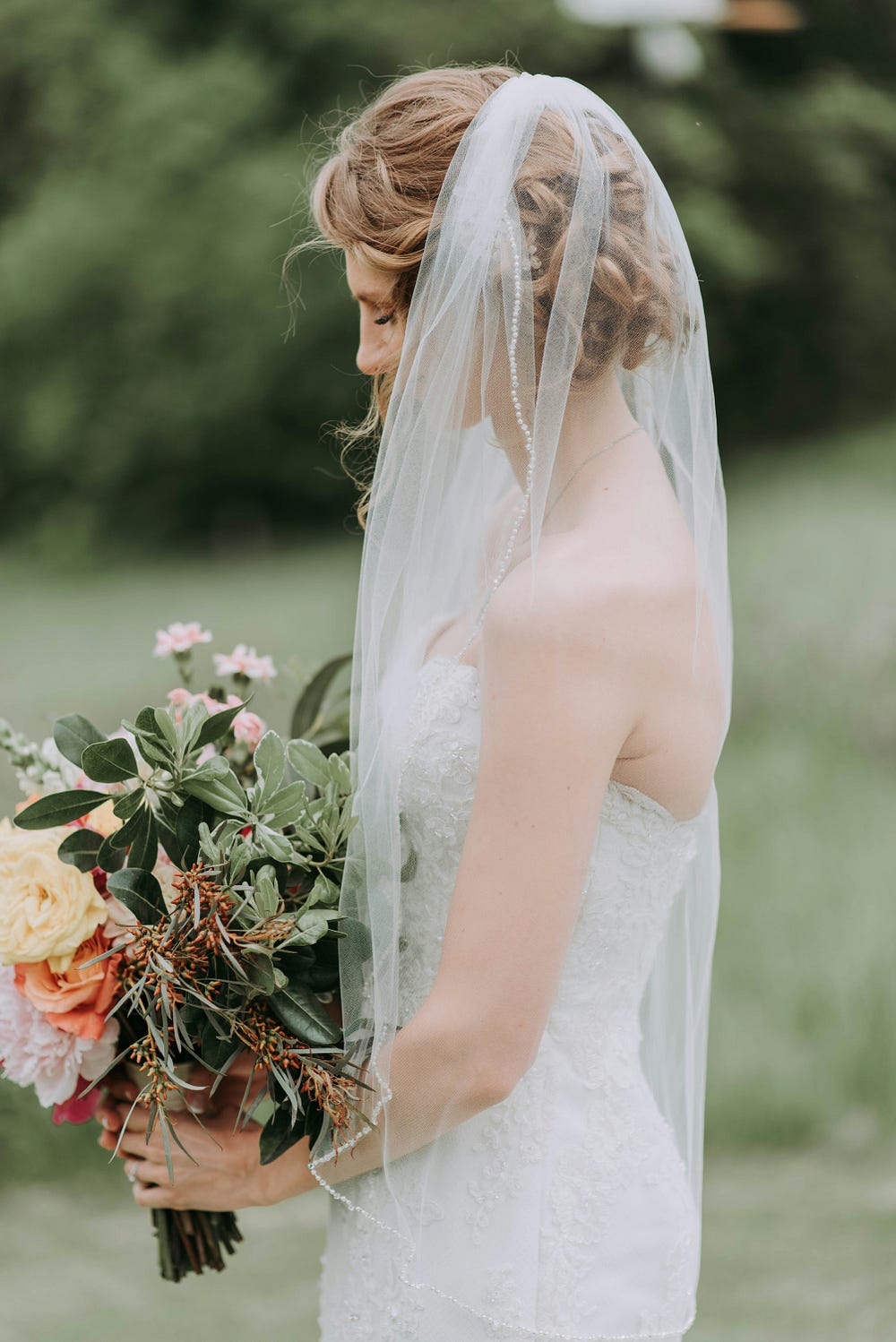
Walking down the aisle, a woman’s father is traditionally the person to ‘give her away’, as though by virtue of being a woman she belongs to a man, ‘because how could she possibly survive on her own?’
Why are women defined by the men they know (daughter of their father, wife of their husband, mother of their sons), and not as human in their own right?
Photo by Samantha Gades on Unsplash First, the property of her father, and then the property of her husband, such inequality between men and women is stark and prevalent throughout every aspect of society, from marriage, as above (marriage was literally a property transfer from father to husband), to work, where the median pay gap in the UK, as of 2024 is 1.2%.*
*And while this is considerably better than could be seen in prior years, (even just last year, for example, the pay gap sat at a far more oppressive 6%), the fact that there is a gap at all, however small, highlights the view of women in society, still, as being ‘lesser than’…
‘All animals are equal but some animals are more equal than others.’
Alas, religion facilitates the continued subordination of both the earth and women in its depiction of man as the ‘creator.’
And from the rib that the Lord had taken from the man, he made a woman and brought her to him.
– Genesis 2:22.Unlike spirituality which seeks to understand the bigger picture, zooming out on the micro to understand the macro, the realisation that we are all one, our differences illusory, (
man,woman, HUMAN), organised religion operates under the same principle as society, fearmongering to force compliance.Ignoring the macro, we believe that a man in the sky is looking down on us and judging us for who we happen to fall in love with, when the reality, first of all, is that ‘God’ is not a man, (and how egotistical of us to think that a human, just like us, could be), and that where we are all one, gender is but a construct anyway…
We don’t fall in love with a man or a woman, but with a human.
When gender is a construct then, there can be no hierarchal order between men and women, yet there overwhelmingly…
is.Why?
Because, again, we focus too much on the micro.
Having been blindsided to the macro, we think that the same man-made rules of society (men=superior to women) also govern the creation of life.
We align ourselves with this theory, despite it making no rational sense (how could a woman have been made from a man’s rib is the primary question that I have on my mind right now), because the alternative is to accept that there are just some things that exist too far beyond human comprehension…
And with a fear of the unknown, we’d rather believe a lie than seek to find the truth.
We’d rather uphold the continued oppression of women than demand change.
Like telling us ‘You only have that car because I haven’t stolen it’, men tell us that we should be grateful for what (little) we have when the reality is that we are all entitled to human rights simply by virtue of being human.
Men don’t deserve a medal because they took our rights away and then allowed us to have them back. To suggest that they do is like suggesting that slave owners should’ve been rewarded for allowing their slaves freedom.
‘White people freed black people from slavery.’
Ahem… Who was enslaving said black people in the first place?…
They wouldn’t have needed freeing if they weren’t enslaved to begin with, and the same is true of women and voting, for example.
Women were not born without a right to vote, men took it away from us to claim all the power for themselves.
Full of life, just like yourself, with hopes and dreams and goals, vulnerabilities and shortcomings and feelings, a history and an existence that parallels your own, I want women to be the subject, not the object.
– Jill Soloway.Why are men so desperate to have power?
(Wo)man was not created by god, or for god. Woman created god.
The irony is that men only have lives, let alone rights, because women allow them to, (in a very literal sense), yet still women are deemed to be ‘lesser than’, despite the fact that every woman made every man…
(Unless you subscribe to the bible’s version, whereby man supposedly made woman by… a rib? A belief that, as of 2022, 31.6 percent of the global population still believe).
Photo by Mateus Campos Felipe on Unsplash It’s unsurprising that we have such a skewed view toward women and their position in society when the most widely practiced religion in the world, Christianity, centres its teachings on the fact that women are ‘below’ men.
A woman’s purpose in life, according to the bible?
To please men.
The Lord said, it is not good for the man to be alone. I will make a helper suitable for him.
– GENESIS 2:18–20.Never the main character, a woman’s sole purpose in life is seemingly to assist men, as per the assumption that it is a man’s natural state to be in power, and a woman’s to be the subordinate.
Men=Dominant,
Women=Submissive.If women are naturally submissive though, as we are told they are, then men wouldn’t spend so much time telling them that they need to be [submissive]…
Despite society becoming increasingly secular, particularly in the West where in 2018, for example, just over a third of people in the UK identified as Christian, compared with two-thirds 25 years earlier in 1983, people have swapped worshipping ‘God’ for worshipping celebrities, thus allowing the oppression of women to continue.
Whether it be watching YouTube videos and hearing from the likes of self-proclaimed misogynist, Andrew Tate, at a darts venue clapping for the walk-on girls, or at a gallery observing all the nude paintings of women by male artists (always the creation, never the creator. Male artist, female muse), the patriarchy is upheld, even when the influence of religion is dwindling, throughout every aspect of society.
Covert or overt, it is there, and it is for this reason that it’s important to keep men ‘on our side.’
Radical, separatist feminism, which dubs all men as ‘the enemy’, does little to incentivise men to stand with women to call for change.
The fact is that we cannot swap misogyny for misandry and call it equality, any more than we can swap religion for capitalism and call it freedom.
When the patriarchy is so ingrained in society, when men are still taken more seriously than women, and few things bring them [men] closer together than the violence they commit against women, it is only through us all coming together, men, women, and everything in between, to educate each other, that we will see real systemic change happening in society.
This is the call for change.
-
Sex Work: Exploiting The System Designed To Exploit Us

Criminalising consensual sex between adults, under any circumstances, is a violation of our human rights against personal autonomy and privacy.
No government should be telling consenting adults who they can and can’t have sexual relations with and on what terms. Women have a right to do with their bodies whatever they want to do with their bodies. Yet sex workers have faced decades of ignorance and misunderstanding by a government, and a society at large, that has vilified sex workers.
Why is she doing this to herself?
Regardless of what the media would have us believe, sex work is not always a ‘last resort’ for desperate women, for addicts and teenage mums struggling to get by, it’s just… a job.
Sex workers are not selling their bodies any more than office workers are selling their brains. What a woman does for work does not define who she is, it’s just how she earns her money.
‘Everybody has sex’, a long-time sex worker, Tamika Spellman from Washington D.C says. ‘The only difference is that we charge for it.’
Sex work has been considered a form of employment by many female activists since the 1970s. It allows women to creatively express their sexuality against a patriarchal society that has long endeavoured to repress it.
Some feminists, however, argue that sex work upholds the patriarchy by allowing men to objectify women. ‘If consent has to be bought, it isn’t consent.’ To those people though, I would pose the counterargument that sex workers are in fact in control. They are taking advantage of a man’s sexual needs, and it is their choice to do so.
They are not victims, they are empowered.
They are liberated.
They are not working for a man who is going to take 90% of their earnings…
She’s not a prostitute or an escort, don’t make that her entire personality, she is a sex worker. It’s just her job.
Albeit, an (unnecessarily) risky job at that…
Being a criminal offence in many countries around the world (sex work in a private place is not illegal in the UK, but kerb-crawling is), means that victimised sex workers (women who have been subject to rape, for example), are often too scared of being penalised to report the crime to the police.
A report published in 2010 by the Human Rights charity, Amnesty International, highlighted several cases of women who were told that because they were selling sex they were ‘asking for it’, and that ‘a prostitute can’t be raped.’
As one sex worker, ‘Queen’ (name changed), told Amnesty International:
I have never reported any crimes such as rape because I’m afraid I’ll get charged with soliciting.
Legal recognition of sex workers and their occupation maximises their protection, dignity, and equality. This is an important step toward destigmatising sex work.
When laws exist to keep society safe, yet laws against sex workers are putting women in grave danger, there must be an overhaul, a change to the system, where the focus is on protecting women from exploitation and abuse, rather than on trying to ban all sex work and thus further penalising sex workers.
It’s not only the government who ‘tut’ and shake their heads in dismay at sex workers, either, but so too do men.
The double standards when men have been exploiting and sexualising women since the dawn of time and objectifying them daily are stark. When walking down the street is reason enough for unsolicited comments and whistles, (of which, not giving men attention back qualifies us as being ‘frigid’ or ‘prudish’), yet when women ‘objectify’ themselves, they’re a ‘slut’, it proves to be the biggest contradiction.
Alas, in a society that has seen men profiting from women for decades, women are reclaiming their power back, and rightfully so.
Men force women to sell their bodies at a price, and the lowest-paid body is that of a wife. All women are prostitutes of one kind or another.
– Nawal el Saadawi, Woman at Point Zero.Men love porn when it’s free and it suits them, but when the pornstar actually gets something out of it, they hate it.
Why?
Because it’s all about control.
Photo by ammar sabaa on Unsplash When a man objectifies a woman, he is in control of that situation. He is in control of how she feels (overwhelmingly, intimidated), therefore allowing him to maintain his dominant position in society.
In contrast, when a woman ‘objectifies’ herself as the creator, when she is in control of what she does and how she feels, and when she can get paid for her time, it’s ‘immoral.’
She’s a slut.
‘Whorephobia’: the fear or hate of sex workers.
Even some women hold this view, having had their minds infiltrated by the same men who catcall them when they leave the house, following them home with their eyes while they rush across the street, phone out, head down, praying that they will make it home safe.
Women must stand with women.
Hate multiplies hate, violence multiplies violence, and toughness multiplies toughness in a descending spiral of destruction
– Martin Luther King Jr.Sex workers are not an exception to the calls for women to have agency and self-determination over their work and their bodies.
You’re not a feminist if you pick and choose which women’s rights you want to support.
Women, again, must stand with women.
Photo by Shaojie on Unsplash -
Glam Rock: The Face Of Music & Fashion In The ’70s
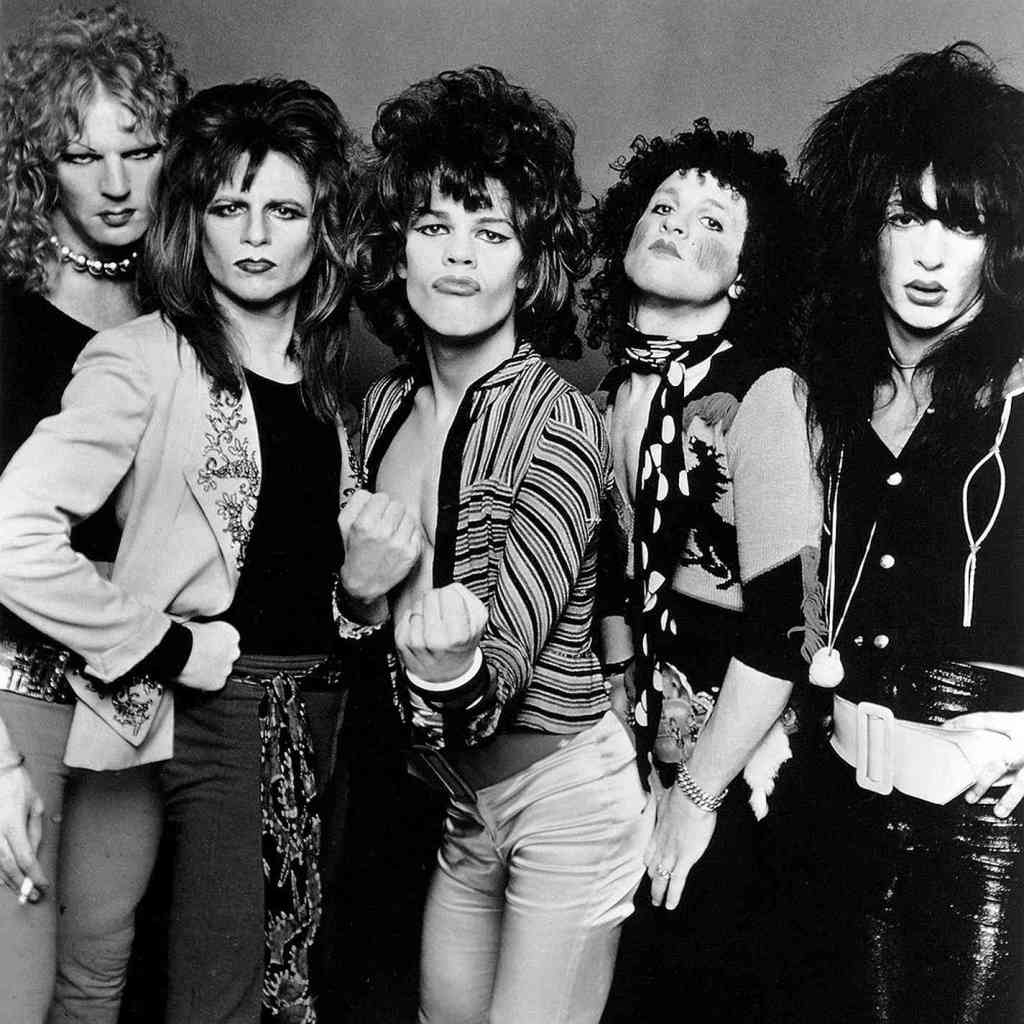
Glam rock, a musical movement that began in Britain in the early ‘70s in celebration of all things camp*, was inspired, at least in part, by the gay liberation movement of the ‘60s.
*(Camp can be defined as being characterised by bright colours, loud sounds, and ‘unusual behaviour’).
Emerging out of this climate of social and cultural conflict and tension regarding the dominance of both heterosexuality and masculinity came artists such as David Bowie and his alter ego Ziggy Stardust the ‘androgynous alien’, Freddie Mercury of Queen, Marc Bolan of T Rex, Elton John, Lou Reed, and Iggy Pop (as just a few prominent examples of glam artists).
One thing that ties all glam artists together?
Their willingness to experiment/to subvert the norms and the acceptable way that things are done.
An explosive, ‘play-at-maximum-volume’ politics to challenge the dominating heteronormative, oppressive, and conservative attitudes of the seventies, both the music and the culture of Glam Rock were a liberating force that challenged prevailing attitudes towards [subverting] gender and sexuality.
In its celebration of liberation from strictly binary notions of masculinity and femininity, an audience of ‘outsiders’ was created, most of whom were fluid in their own identities, relishing the representation they saw on the screen (/stage) at a time when being gay was still a prosecutable offence.
When you make yourself at home on the margins of society, you don’t fret about being accepted by the mainstream.

https://dbknews.com/0999/12/31/arc-7zcl2lbxlfes7gr2s5oklcy4du/ Intentionally playing around with gender conventions to challenge the status quo, upon dressing themselves up in outlandish, androgynous costumes and unconventional makeup, male musicians, often with their adopted theatrical personas, would take to the stage as an expression of diversity and a ‘fuck you’ to conformity.
Whereas punk rock was more about social class, consider the likes of the sex pistols, for example, and more ‘traditional’ rock (the head-banging kind) was more about exerting displays of more traditional (see also: toxic) masculinity, (in terms of exerting signs of power and dominance), glam rock was all about sexuality and gender.
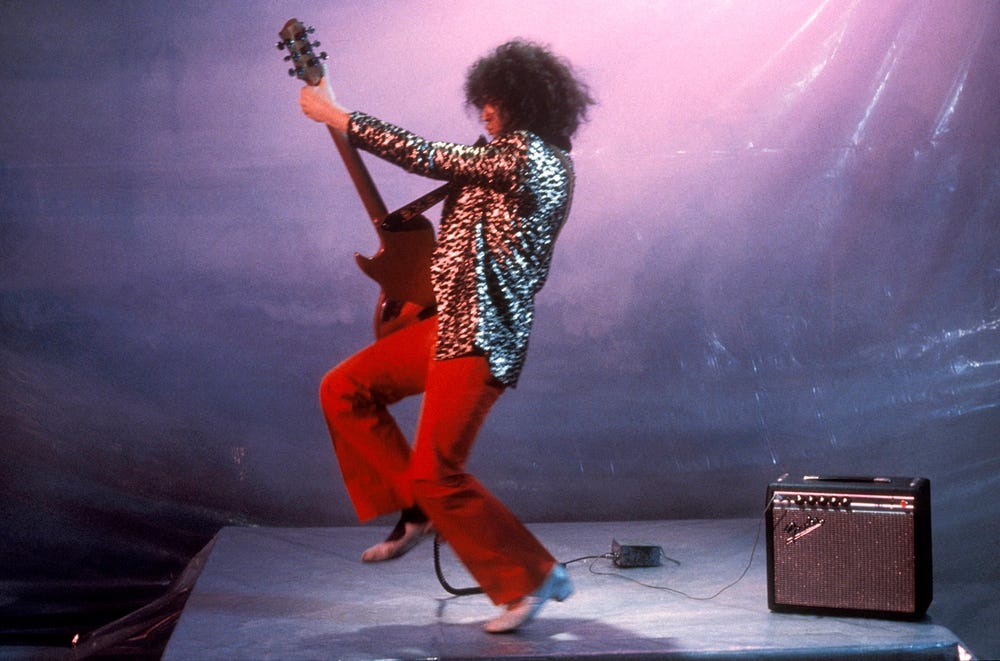
https://www.mrporter.com/en-dk/journal/fashion/marc-bolan-style-t-rex-anniversary-glam-rock-1970s-10661102 Being heavily influenced by gender performativity and queerness, glam rock was concerned with exploring the boundaries of what it means to be, not a man, not a woman, but an icon.
Girls will be boys, and boys will be girls/It’s a mixed up, muddled up, shook up world.
– The Kinks, Lola.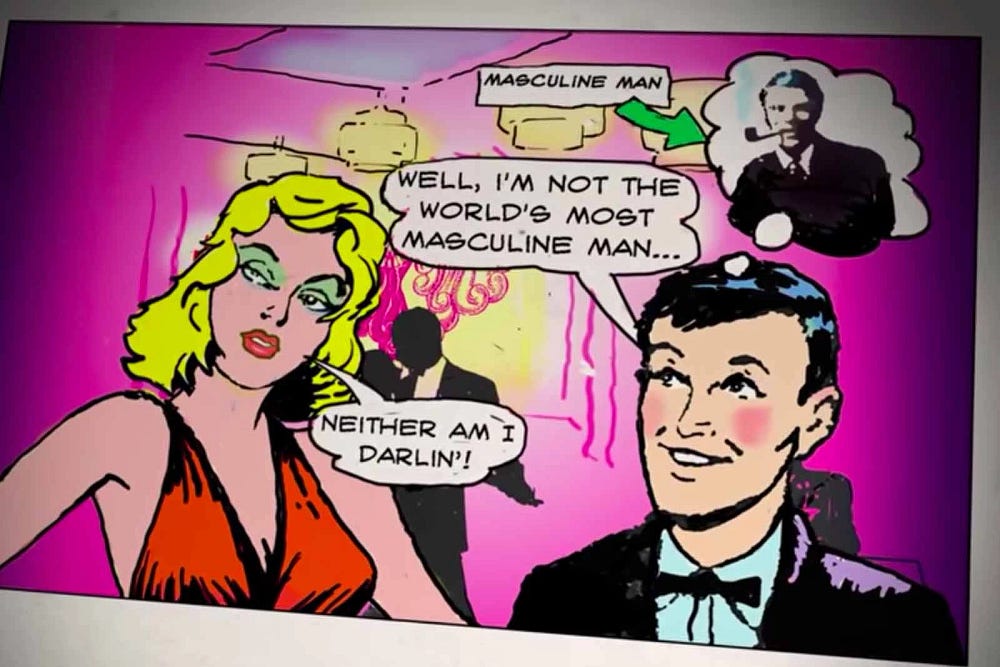
https://ultimateclassicrock.com/kinks-lola-video/ We have much to thank the ’70s for when it comes to liberation from oppression, and for helping society progress toward having freedom of self-expression.
While glam rock was founded from the gay liberation movement of the ‘60s, its mission to challenge the continued prevalence of the cishet culture of the ‘70s allowed people to see that queerness isn’t only ‘acceptable’, but something to be celebrated, too, a sentiment that has been carried forward today.
Photo by Nikolas Gannon on Unsplash When you see thousands of people screaming Bowie’s name, worshipping a man who was famous for bending allllll the stereotypes, you realise that…
-
‘Capacity for Tenderness’: A Poem Inspired By Stone Butch Blues
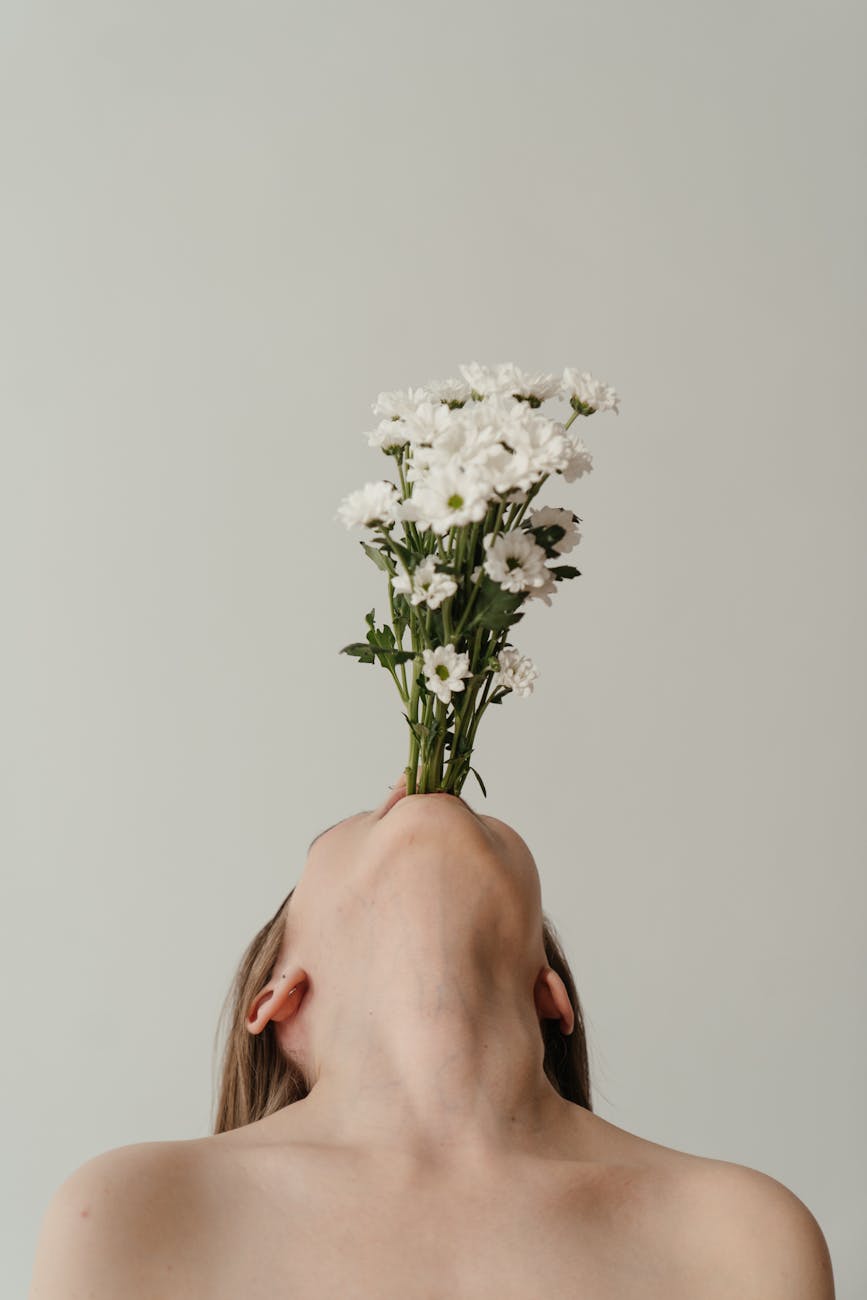
I wondered how it would feel to be touched,
finally giving way to trust
and not be afraid.– melt the stone–
“Yearning,”
I repeatedsoftly.
What a beautiful word to hear a butch say out loud.





 Portfolio of Hope