-
Citizen: An American Lyric by Claudia Rankine review

More than just a book, Citizen is a piece of art/a lyrical tribute to Black Americans and all that isn’t shouted about on a daily basis; microaggression and casual racism.
The epitome of the American lyric, a hood (empty) graces the front cover, representing the fear that people feel, wholly unfounded, towards black youth.
A representation of stereotyping, oppression, and systemic racism, as we read on, Rankine’s words fill the emptiness of the hood with the experiences of Americans whose color has rendered them invisible to the many who are privileged enough to be blind.
Page 148: ‘When the waitress hands your friend the card she took from you, you laugh and ask what else her privilege gets her? Oh, my perfect life, she answers. Then you both are laughing so hard, everyone in the restaurant smiles.’
As Rankine notes in an interview with the American literary magazine, TriQuarterly (Schwartz, C. 2015), ‘During protests, you have white people saying, “How can I help you?” And when I hear this, I think, “Why isn’t it about a national failure? Why isn’t it an injustice for you as well as for me? Why don’t you want to help yourself as a citizen, a participant in this democracy?’
Experimental and defying genres, Citizen is a combination of text, verse, and prose with images and photography scattered throughout. Where the critical text gets us to think about society and its role in upholding racism, the poetry gets us to think about ourselves and the role that we play (are we the micro aggressors?) particularly since the book is narrated entirely in second person.
You are not sick, you are injured. You* ache for the rest of life (page 143).
*The ‘you’ is Rankine, but the ‘you’ is also all black people, past and present, and the reader, and any citizen who lives in our racist world (including Donovan Harris, Charles Kelly, Frankie Porter, and Richard Roderick, the four black men whom Citizen is credited as being for) …
‘And you are not the guy and still you fit the description because there is only one guy who is always the guy fitting the description’ (page 105).
Harris, Kelly, Porter, and Rederick went on a robbing spree in 1991 when they were just teenagers after stealing from a string of restaurants. Their sentences, however, were extremely disproportionate to their crimes. Despite no one being so much as injured during the robberies, Porter was sentenced to an unfathomable 500+ years in prison (Warner, S. 2011).
Now, considering how statistics highlight that one in five black men born in 2001 are likely to experience imprisonment within their lifetime (Ghandnoosh, N. 2023), we can see that racism was undoubtedly the judge at Porter’s trial…
‘Look closely’, Rankine tells us. ‘This is what this nanosecond of racism is like, this is how this nanosecond of racism feels.’
White privilege and failed judicial systems and stereotyping, ‘What do you see in me that you wish to suffocate?’
Racist comments and ‘jokes’ and judgement, ‘What about my being unsettles you? What is it about this figure that says ‘threat?’
To encourage a national dialogue surrounding such topics, Johari Osayi Idusuyi, a twenty-year-old student and writer from the US made the tabloids when, in 2015 at a Trump rally, she got out a copy of Citizen, its cover facing the cameras, ‘speaking truth to Power’, and began reading.
https://www.youtube.com/watch?v=HvWVTPu4A7Q Upon speaking about the viral moment afterward, Idusuyi explained that she had attended the rally intending to take an unbiased stance. When protestors were treated disrespectfully, however, (a man snatched a protester’s hat with such force that her hair went with it, for example), and bullying tactics were used, she disengaged from Trump’s speech, and that’s when she picked up Citizen.
‘I’m in the middle, I’m on camera, so why not use the opportunity to promote a great book?’, Idusuyi said (Poetry Foundation, 2015).
And why was Idusuyi in the middle and on camera? Because of her race. A token gesture that backfired, she was allocated a complimentary VIP seat solely because she was a minority in a room with an overwhelming lack of diversity…
Although Citizen is based on Rankine’s experiences as a black woman, regardless of our race, we can still feel the pain of not belonging through the pages. Why? Because Citizen, as per the James Baldwin quote included in the book, ‘lays bare the questions hidden by the answers’ (page 115). Questions such as…
How is racism embedded in everyday life?
The man at the cash register wants to know if you think your card will work. If this is his routine, he didn’t use it on the friend who went before you…
&
How do we address bigotry when society refuses to acknowledge it?
The woman with the multiple degrees says, ‘I didn’t know black women could get cancer.’
The fact is that microaggressions, all the subtle ways that racism plays out in society, add up to become macro aggressions, where what we see we believe.
Blackness in the white imagination has nothing to do with black people, but everything to do with unrealistic stereotypes, hence why so many black men die at the hands of white men who ‘can’t police their imagination’ (page 135).
Holding up a mirror to systemic racism, ‘I do not always feel colored. I feel most colored when I am thrown against a sharp white background’ (page 25), Citizen is activism through the lens of literature, arguably the most important piece of literature that you will ever read.
‘The book of a generation’ (Sunday Times).
‘The state of emergency is also always a state of emergence.’
-
‘Man, Woman, Other’

We live in a society where diverging from the ordinary doesn’t make you ‘extraordinary’
but a freak,our bodies deemed ‘incomplete’
by the owners of sharp tongues and wandering eyes,strangers whose unspoken questions about gender hang in the air
like a storm cloud.You know the storm is coming but ‘when’ is the lingering question
(It’s always there)…Like the question that resides in the back of my mind
with every turning head,
pointing finger,
& indiscriminate stareIs the discrimination that comes with their constant observation of me deserved?
When I am a woman
(but not quite a woman),
the curves of my hips existing as a juxtaposition to the shortness of my hair,
to be myself is to go against the ways of the world.Man ⮽
Woman ⮽
Other ☑‘We’re just trying to work out what’s under there’…
Love me
love me
not(a woman)
Who is she?
What is she?
Asks the woman with the LV bag
(classy)
on the number 53.Nameless
faceless
shameless‘Am I the problem?’
I ask myself
at the close of every day.Try
fail
try again.Why is my choice to wear boxers over thongs
a prerequisite to a lifetime spent trying
(and failing)
to belong? -
Are We Losing Touch With Reality?

Losing touch with reality,
captivity disguised as freedom
(illusory),we try to create a world in which we can, finally, belong.
Experiencing life through the mind
where ecosystems are sustained and whole worlds are realised,it’s the macro to the micro
that is life experienced through the body.Most people, however, get the two mixed up,
getting so caught up
in the trivialities that we are told underpin lifefrom politics and money
to black vs whitethat they forget that soul equals soul
(universal),
and that the ego is a construct
like wrong vs right.It is only in stopping and reassessing what really matters in life
that we realise that we have let ourselves be brainwashed into partaking in pointless* debates
that the system creates.*‘Pointless’ when, by virtue of existing,
we are all one and the same. -
Are Witches Real? Why Were So Many Women Accused Of Witchcraft?
To be a woman is to exist in a world that wasn’t designed for you. Like being queer, it’s to exist in a world that has spent decades, millennia, trying to erase you from the face of it, and to get up every day despite that.
It’s to be all of the things that men tell you that you shouldn’t be, sensual, sexual beings, not merely objects of a man’s desire.
It’s to be successful, not despite you being a woman but precisely because you are a woman, with a body that is capable of creating lives, a mind that is capable of changing lives, and a heart that is someone’s reason to stay alive…
I have just finished reading ‘Bright I Burn’, a novel of gripping historical fiction by Molly Aitken, and despite knowing how women have historically been treated owing to the patriarchy I, perhaps naively, wasn’t aware of the full extent of the treatment that women had to endure, particularly surrounding the witch trials in the 17th and 18th centuries.
Aitken, however, shines a light on this, giving a voice to Alice Kyteler, the first recorded person to be accused of witchcraft in Ireland.
Dame Alice Kyteler was born in County Kilkenny, a ‘town built upon the church’, where religion held a stronger power over its people than anything else, in 1280. The only child of wealthy parents, her father, Jose de Kyteler was a banker, a career path that Alice herself would embark upon along with her first husband, merchant and moneylender, William Outlaw, whom she wed in 1299.
Three years after their marriage, William Outlaw died suddenly under mysterious circumstances, and so Alice remarried Adam le Blund of Callan who was also a moneylender. Like an unfortunate bout of Deja Vu, eight years after her first marriage, le Blund also died, leaving Alice a widow once again. But not for long. In 1311, Alice met landowner Richard de Valle who became husband number three.
Upon meeting his death in 1316, he left his entire estate to Alice, thus making her one of the wealthiest people in Kilkenny. Only the church was wealthier, in fact. Widowed once again and still only in her forties, Alice soon married her fourth (and final, as far as records show) husband, Sir John le Poer.
It was when John le Poer was on his deathbed that Alice was accused of witchcraft.
As le Poer lay dying, his children, along with the remaining children from her husband’s previous marriages, banded together to make the accusation of witchcraft against Alice, perhaps in an attempt to recover their fathers’ fortunes which they believed Alice had wrongly stolen from them.
Her stepchildren, joined by the local bishop of Ossory, alleged that Alice had murdered her husbands and had acquired her wealth through magic. She and a band of “devil-worshipping” co-accused were persecuted, but in 1325, Alice managed to escape. There is no record of her following this.
Despite Alice managing to get away, (it is believed that she fled to England), her maid, Petronella de Meath, wasn’t so lucky (there has to be someone to be made an example of), and she became the first Irish victim of the witch hunts. She was tortured and whipped in place of Alice before being burned at the stake in front of a crowd who relished the opportunity to watch the fall (or rather, the shove) of a successful woman.
This is just the story of one place, Kilkenny, and a few of its inhabitants who were accused of witchcraft. But when for almost four hundred years tens of thousands of people in Europe and North America were executed for witchcraft, and witch hunts still exist today in some regions, there are countless stories just like Alice’s that highlight how people are willing to do anything to discredit a successful woman.
Torturing women who stay silent to force confessions out of them, it’s all about control.
Alice Kyteler broke boundaries when it came to gender norms. A successful businesswoman, she wasn’t just a ‘nepo’ baby living off her father’s wealth.
In 1299, shortly after the birth of her son with William Outlaw, William Junior, Alice expanded her house and founded Kytelers Inn, something that was unheard of in the male-dominated world of business (or rather, in the male-dominated world full stop)…
Alice wasn’t a ‘witch’, she was a woman in power. And when this is a man’s greatest fear, ‘stay in line, woman’, there was only one solution: she had to go.
As Robert Bowes said in writing about the witch trials taking place in 1597, the accused were ‘not only of the meanest sort but also of the best’ (Calendar of State Papers relating to Scotland and Mary Queen of Scots, volume 13, Sept 5, 1597). This is a statement that is supported by official statistics.
According to research conducted at the University of Edinburgh’s Survey of Scottish Witchcraft, where social background was recorded, 70% of witches came from middle or upper-class backgrounds.
A woman can be either beautiful or successful, but never both.
If witchcraft were real, if it were based on anything legitimate, then what explanation is there for old women being persecuted by their neighbours for no reason other than that they ‘weren’t very attractive.’
Why are women always society’s scapegoats?
In 1643, Agnes Finnie, a shopkeeper and money lender in Edinburgh, was accused of having witched several people who became ill after she argued with them. Agnes was found guilty of witchcraft and executed in March 1645.
Why can men argue and they’re ‘strong-willed’, yet when a woman does what a man is celebrated for doing, she is struck down, or in the case of Agnes Finnie, killed?…
What men are overwhelmingly celebrated for being, women are struck down for. They’re not ‘strong-willed’ like men, they’re ‘bossy’, and ‘brash.’ They think they’re ‘it.’
Although it’s true that men were accused of witchcraft too (between 20–25% of those accused were men, they were mostly charged in connection to female witches, ‘guilt by association’ (e.g. the husbands or brothers of the accused), or because they defended a woman accused of witchcraft.
This doesn’t come as a shock, and while it should, (such blatant oppression and misogyny should be shocking to everyone), when it’s so commonplace it’s become ‘just one of those things.’ What is shocking, however, is that the majority of the accusers of witchcraft, i.e. the people making accusations against women, were also women…
Women against women, this is a commonality that we still see happening today, unfortunately. Why? Because it works in men’s favour to pit us against each other since when we are arguing amongst ourselves for a place at the table, we turn a blind eye to the real injustices/the real source of our oppression- men.
By making us compete with each other, whether it be based on the way we look or our job roles, we lack the energy or the headspace to do anything about what really needs changing in our society… What can only be described as systematic misogyny.
It’s where the ‘I’m not like other girls’ trope comes from because God Forbid a woman is like a woman…
‘Too female.’
Photo by Kayla Maurais on Unsplash -
Why Are Women Portrayed To Be The Lesser Sex?

There’s a reason why God is portrayed to be a man, and it’s because of religion’s purpose… To control and oppress. Having been founded based on the need to control society, it was always going to be men controlling women.
Girls are born with the awareness that it is their ‘privilege’ as the lesser sex to have no privilege.
From what they wear on their feet to what name graces their birth certificate, many women find themselves on the receiving end of condescending remarks, time and time again, by misogynistic men who try to discredit their right to be there…
‘There must have been a mistake.’
Because of the cards that they are dealt at birth, the innocence of lost youth brings with it a starkness that no girl can escape, try as she might, when whatever she does in life/ however hard she works she is almost always guaranteed to be several steps behind her male counterparts, the ‘superior’ sex.
With reduced life experiences and a reduced lifespan, even, based entirely on what is contained between their legs, girls are poised to fly but destined to fall, the patriarchy underpinning their whole existence.
Getting sent home from school for wearing ‘inappropriate’ clothing (See also: skirts that sit above the knee), girls have been treated like they are just a body and not anything or anybody for generations, a theme that unfortunately persists throughout most women’s lives.
Walking down the street, keys sandwiched between knuckles ‘just in case’, necks straining over shoulders with every step, a woman never knows when (or how, or why) a man will strike…
Will it be at eighteen when you’re leaving a nightclub on the arm of a man who promised your mum that he’d get you home safe?
(He did, this time. One of the good ‘uns).
Will it be at nineteen when you’re walking home from college and a man pulls up alongside you and asks you if you want a ride? It’s only 5 pm but the clocks went back last week so it’s dark already. You say no because you’ve never seen this man before in your life, and you might be nineteen now but you still remember what your mother used to say, and your mother’s mother, and your mother’s mother’s mother.
Will it be at twenty?
Twenty-one?
Will it be today?
Will today be the day that they all stand at your graveside asking why…couldn’t she have just…covered up?…
The question that persists in my mind, however, is:
Why is it always the responsibility of girls to resolve the responsibility of men?
Baby tries to take what’s not theirs = Bad baby. Baby punished.
Learn. Do better. Try again.Man tries to take what’s not his = ‘Here, let me help you with the rest.’
Uphold. The system. Of the patriarchy.
(& repeat) -
Lesbian Is A Gender

Constantly defined by their relationship to men, to everything they are not, ‘a woman is someone who isn’t a man’, to be a woman who loves women is to resist the patriarchy. It’s to be defined by our relationship with other women, instead.
This is what my womanhood is intrinsically tied to…
My love for other women.Being queer, I don’t feel the need to conform to society’s expectations of what it means to be a woman (what does that even mean) because I am not preoccupied with ensuring that I am attractive enough for men.
The same beauty standards that exist in straight relationships do not apply in queer relationships. We are free to make our own rules, the overarching one being that there are none.
When society at large finds women who are not attracted to men unimaginable, lesbians by virtue are, according to such (il)logic, similarly unimaginable.
Subverting normativity as a woman in a relationship with another woman, what is a woman if she is not on the arm of a man?
Many people find it hard to comprehend how a relationship could possibly exist without a man to head it, a perspective which has made living a life within which men are so decentred feel like a revolutionary act.
When a central part of womanhood is male attraction (i.e., being attracted to men and only men), many lesbians have spent their whole lives feeling a deep-rooted sense of isolation, unable to work out where they ‘fit’ in life.
‘Honestly, as a lesbian, I do sometimes feel excluded from womanhood, because so many things have to do with dating men and all of that stuff.’
Feeling uncomfortable around men, the very same men who love to sexualise us, and not quite fitting in with women either based on such a big part of a woman’s identity (or so we are told, loving men) being absent, this is why so many lesbians have historically felt isolated when it comes to determining their gender.
I wasn’t a woman, but a lesbian, an identity so powerful it’s the closest thing to a gender I have.
With so much shared history and community around the term and its opposition to the patriarchy, there’s just something about the word lesbian that feels like home.

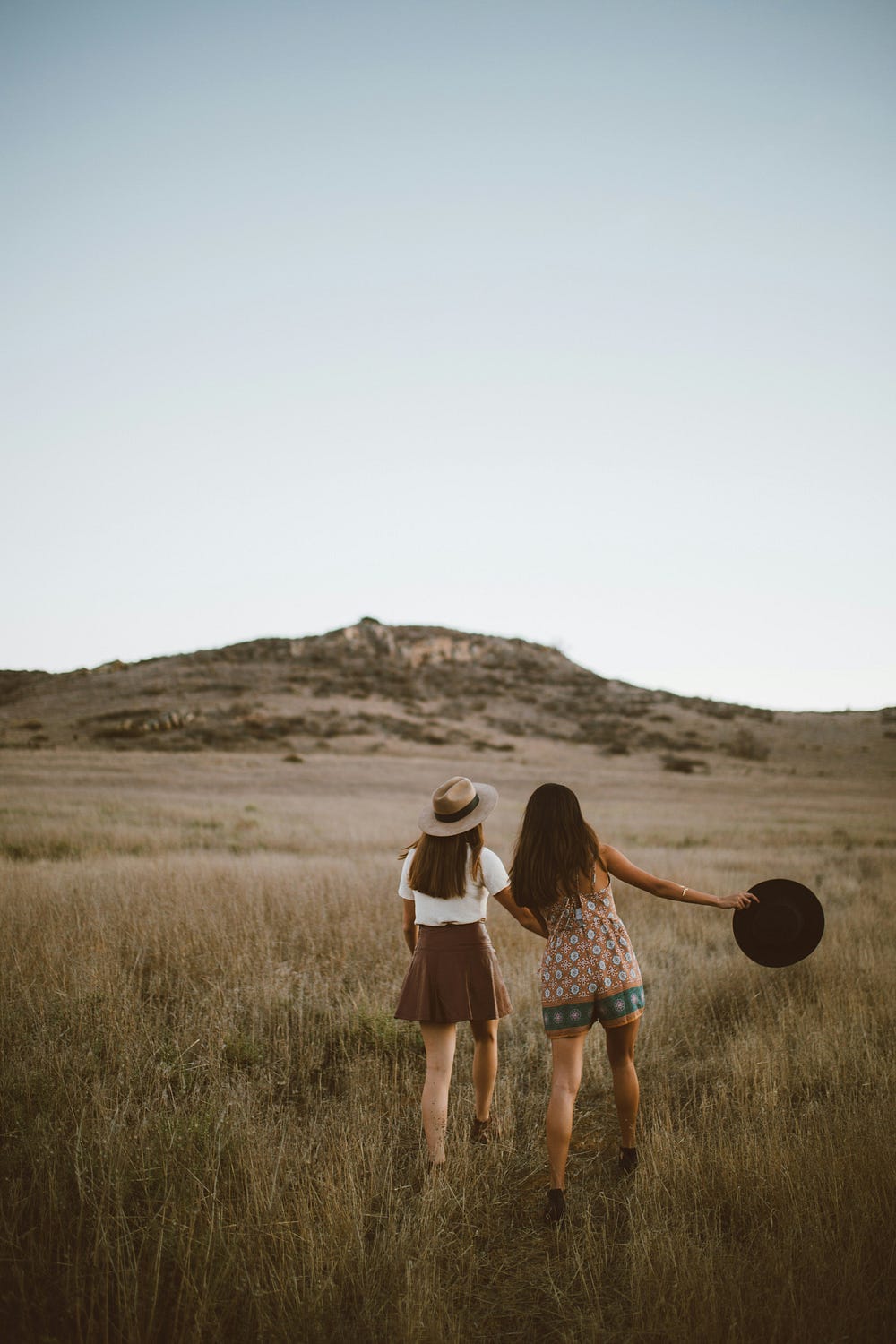
Photo by Ronê Ferreira on Pexels.com -
Virginity Is A Social Construct
Virginity has, throughout history, been hailed as the ‘be-all and end-all.’ Something sacred, it is the ultimate decider of a woman’s worth, with marriage itself, what should be a celebration of love, having its origins in the continued oppression of women via the patriarchy.
From fathers giving their daughters away to waiting husbands, as though all a woman can ever be is a man’s property, to mothers and older sisters giving warnings because they know what is coming, ‘make sure you save yourself for ‘the one’, when a woman’s virginity is taken, so too is her respect.
To seek to have autonomy over your own sexuality as a woman is to have no respect in the eyes of a society that loves to demonise a woman who knows what she wants…
‘You’re so promiscuous.’
To the moralist, prostitution does not consist so much in the fact that the woman sells her body, but rather that she sells it out of wedlock.
– Emma GoldmanWhen women are told that to be a virgin is to be pure and innocent (everything a man wants), yet women are also told that to be unwed is to be unwanted, what greater proof is there of the prevalence of the patriarchy than this?
Being told that they should remain virgins in one breath, and then being asked when they’re going to settle down and have children in the next, the contradictions are stark.
When to take means to have means to own a part of her forever, men relish the idea of ‘taking’ a woman’s virginity.
Primal, medieval, making our lives political, a woman who has ‘lost’* her virginity is a slag, a slut, a whore, she is told, unless she has lost it to you. Unless you are the one who gets to control and subjugate her, she is worthless.
*(Note: I write lost in inverted commas because virginity is not something that can be lost since it is not a physical thing. What it is, in fact, is merely a social construct designed to uphold the patriarchy).
(Notice how you never hear men being asked if they’re virgins, it’s always women)…
Dear Men: Pleaser stop slut shaming women for doing the same things that you smack each other on the back and shake hands with each other about.
Conflating sexuality with morality, why are promiscuous men seen as ‘lads’, something to be celebrated, while promiscuous women are seen as ‘sluts’, something to be shamed?
Why does the shame always lie with women?
When a baby is crying on public transport, the mum is given looks- headshakes and tuts of dismay, while the dad is given looks of sympathy. Why are women expected to carry the load of the family’s emotional wellbeing?
Who gives the therapist therapy?
Who is going to mother the mother?
When girls are sent home from school because their skirts are too short and it’s too much of a ‘temptation’ for the boys. Girls shouldn’t be taught not to wear certain items of clothing to school, boys should be taught not to rape.
Alas, turning women into property for men to invade, bailiffs coming to evict them from their own homes, the concept (construct) of virginity is all about control. It’s all about policing and gatekeeping women’s bodies.
It’s all a lie.
‘If Eve ate that apple, then why do men have Adam’s apple still stuck in their lyin ass throats?’
The fact is that it is impossible for a woman to remain a virgin when she has ‘wife’ and ‘mother’ sewn into her seams as a marker of her identity from the day she is born… When she is nameless, faceless, shameless if she doesn’t have a ring on her finger and a baby in her arms…
Wanting everything all ways, always, like throwing a baby’s dummy in the bin and then screaming at them when they start crying because of your actions, men want to take what they deem to be a woman’s ‘innocence’, and then berate, degrade, and humiliate them when they are no longer, in their eyes, ‘pure.’
This is why lesbians are, in one instance demonised by men, and in the next, sexualised, because men only accept a woman’s sexuality when it is on their terms…
‘A woman is only sexually active if a cis man and his penis are involved.’
This, of course, discredits anyone who isn’t in a heterosexual relationship, because God forbid a relationship that has, not only no man in it, but also no man observing it.
What a (beautiful) concept.
And where penis in vagina sex is involved, sex finishes when the man finishes, because only his orgasm matters…
Despite less than 20% of women reaching orgasm from penetration alone, penetrative sex has long been considered to be the only sex that is ‘real’, with everything else denoting ‘foreplay.’ This emphasis on male pleasure is very telling in how women are viewed in society: unequal.
It doesn’t help the matter either when in schools, sex education is almost entirely focused on male pleasure.
What will it take to get men and women to be viewed as equal? To have sex education spend less time demonstrating how to put a condom on a banana and more time focusing on female pleasure.
In order to make progress going forward then, first, we must go backward. We must look at the systems that contribute to the patriarchy and hold the institutions that feed into the rhetoric that male pleasure always comes before female pleasure accountable.
We must destroy the harmful narrative that women exist to appease and satiate men’s desires once and for all. Only then will women be free.
-
Liberalism And Secularisation: Is There A Link?

The manmade construct of religion has, since the dawn of time, seen man turning himself into a martyr in pursuit of repentance from the all-knowing, ever-elusive ‘God.’
Like an author killing the protagonist in her novel, only to then start crying over the injustice of them no longer being alive, it’s nonsensical that man has spent millennia living in fear of the very thing that doesn’t exist outside of his mind…
God is an atheist who no longer believes in himself
The real injustice though is that, through fearmongering, millions upon millions of people around the world have had their minds infected by such spiel to the extent that they are killing each other in the name of fictional characters.
Whole families disown their children who come out as gay, as though to love someone of the same sex is a bigger ‘sin’ than to order the extermination of whole countries purely because their inhabitants align themselves to a different fairytale (sorry, religion)…

Photo by Mario Wallner on Pexels.com Pledging their allegiance to an institution whose sole purpose is to lie and deceive, religion packages control and oppression up with a pretty bow and sells it as ‘repentance.’
So much conflict has been triggered by man’s ego because God forbid (pardon the pun) that there is something out there that he doesn’t understand…
Yes, we have been told by all the greatest scientists in the world that there are some things, including all the questions that religion attempts to answer, that simply lie beyond human comprehension and therefore, try as we might, we will never understand, but I haven’t tried yet. Watch ME try…
(And watch me claim the lives of several hundred innocent civilians along the way)…
There’s a reason why the world is becoming more liberal now, and the answer can be found amidst stacks of statistics from the Office for National Statistics surrounding secularisation.
The reason?
Because religion has far less of an impact on society in 2024 than it did even as little as a decade ago…
In 2021, 46.2% of people identified themselves as Christian, compared with 59.3% of the population in the 2011 census.
Feeling freer, (no longer fearing being zapped down by the big man in the sky for being a man who wears lipstick), and safer, to live their lives as their authentic selves, people are exploring themselves outside of binaries and scripture to find who they really are.
-
This Is A Poem About Being Gay

This is a poem about the discrimination that I face as a gay woman
when walking down the street holding hands with my girlfriend I am subject to stare after stare
by people who supposedly ‘care’ about equality.(But only if it’s not being shoved in their face
s).Making faces when we can’t hold hands but they can display the most gip-worthy PDA, yet because it’s a man and a woman, they have nothing to say.
‘Why can’t we just exist?’,
I want to say.‘Why is our right to exist a debatable topic?’,
I’m too scared to say.Fear.
This is a poem about the fear that I feel as a gay woman
when walking down the street holding hands with my girlfriend I am struck by the realisationthat all it would take is one extremist with an unfounded source of hatred against gays to decide that today is the day for my life, our lives, to be over…
Blink your eyes and it’s over
and we have become just a couple more deaths for our community to get overa community that is founded on love
yet a community that is filled with so much hate from people who have no place in it.A place to be seen and heard and not told that we have ‘nerve’ when we dare to step foot outside of the house
as though we are contagious,
as though we are monsters,
evilman-hating,
bra-burning,
‘rad-fem’ lesbians.Please,
just let us have this for us.Stop trying to ban us,
eradicate us,
trip us up
with‘But there’s no straight pride’,
the guise that they use to accuse us of wanting ‘special treatment’
when really all we want is human treatment…To not be treated like animals by men who love to sexualise lesbians as though we exist only to appease the male gaze.
This is a poem about the anger that I feel as a gay woman
when walking down the street holding hands with my girlfriend the male ego forces us to let go so that we can get past.Because they can’t comprehend a relationship without them in it even when that relationship consists of two women.
‘Well one of them must not be cis,
one of them must have a dick,
which one has the dick?’#Not all men,
but all women.#Not all straight people,
but all queer people.United in the oppression,
the discrimination,
it’s constant.Can you believe that it’s 2024 yet we’re still living like it’s 2004, a decade before gay marriage was legalised, when stares were expected because
how dare we.‘It’s not natural,
it’s not right.’This is a poem about the need for change that I feel as a gay woman
when walking down the street holding hands with my girlfriend I can’t help but notice how it’s been 20 years, yet still, they stare.Aren’t they tired?
Don’t they want to blink?
Aren’t they curious about what lies behind our eyes?
About what lies beyond their lies?…
About all of the things that they can’t see when we go home with our lovers at night?
We’re not monsters,
we’re not evil
we’re in love.And if you, dear reader, have ever been in love, genuinely been in love, then you will know that there is nothing that anyone could ever say or do that would take away from what you have at the end of the day
when the door is closed and the curtains are shut and it’s just you and your lover against the world.
This is why we have pride
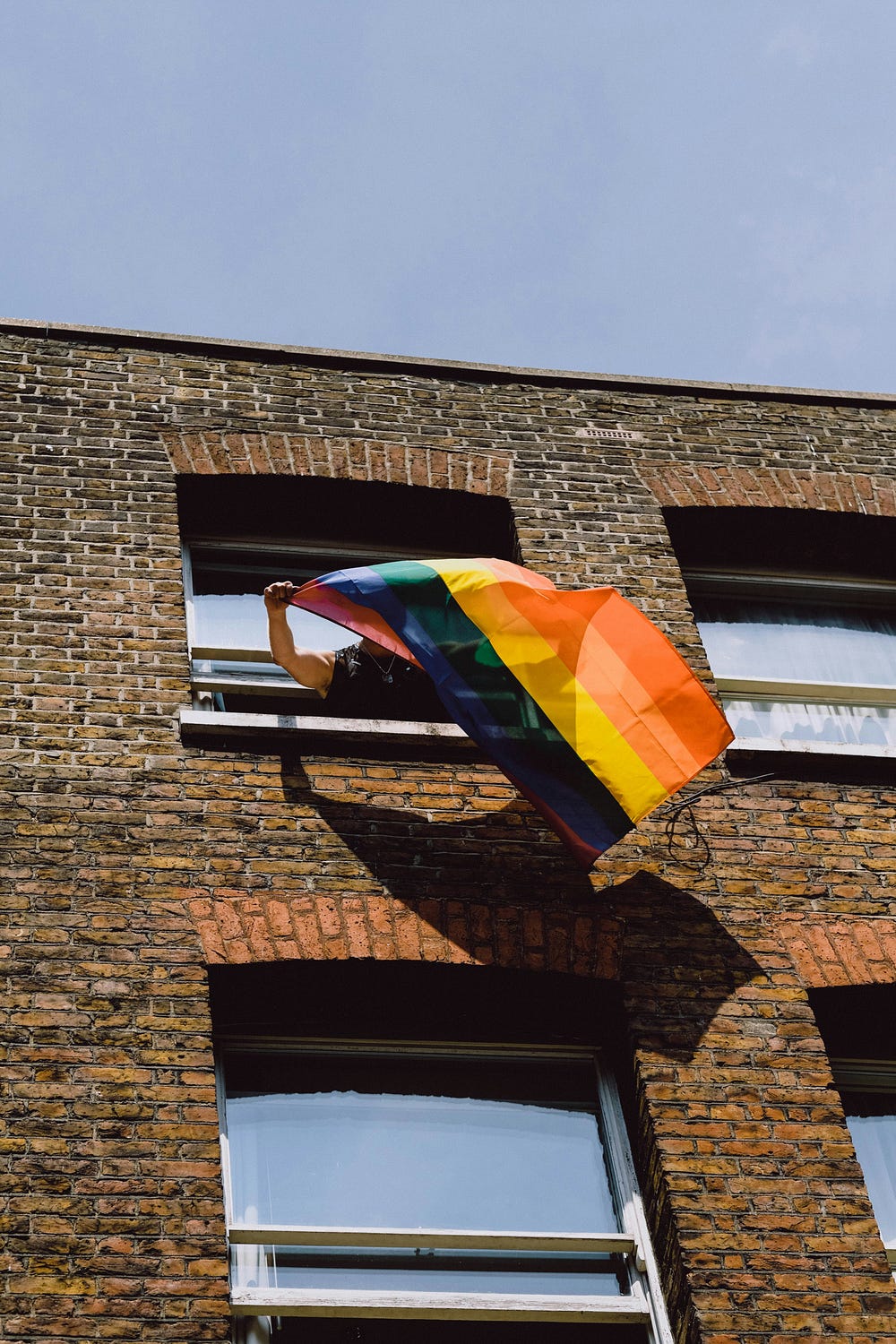
because even in the face of it all, still, we rise.Photo by Clem Onojeghuo on Unsplash -
Discrimination Against Lesbians: It’s All About Control
In almost a quarter of the world’s countries, it is illegal to be a lesbian.
The fact that it’s 2024 yet people are still being discriminated against for something that they cannot change is shrouded with injustice.
When the choice to be gay is as much of a choice as the choice to have naturally straight hair over naturally curly hair (that is to say, it’s not a choice at all), why can’t people see the injustice?
Of the Jackrollers who, between 1940 and 1960, would go club to club searching for masculine presenting women (any woman wearing less than three pieces of traditional women’s clothing) and, upon finding them, would subject them to public shaming. They would be arrested, stripped, and subjected to what they dubbed ‘corrective’ rape (what was essentially a type of conversion therapy; ‘How to turn a lesbian straight, 101’).
Of the lesbians in Germany during the Second World War who were forced to wear inverted black triangle badges.
The thing about triangles is that there are always three sides- your lover, yourself, and whoever is watching.
A trespasser in their own bodies, the landowners are the men who pass them in the street. They are the resistance groups who force them [lesbians] to go undercover, marry men, wear dresses, and give birth.
Turning their lives political, they try to erase their whole existence.
Photo by Clarisse Meyer on Unsplash In Nazi Germany, lesbians were sent to concentration camps, but not because of their sexuality in the way that gay men were. They were subjected to such horrors for the sole reason that they refused to conform to the prescribed gender norms.
A woman’s job is to give birth to children, to have sex only to procreate.
Laughing in the face of such a backward ideology, lesbians posed a threat to the patriarchy in their refusal to conform, hence why they would be sent to concentration camps.
It’s all about control.
It’s the same reason that female police officers were not allowed to marry or have children until 1946.
When the patriarchy dictates that men must remain superior at all costs, women can have power, but not too much power…
Open your eyes to the injustice.
- Of the 72 countries that still criminalise same-sex relationships (44 of which explicitly criminalise female homosexuality).
- Of the 11 countries that still support the death penalty for lesbians and gays.
There is so much division, and it’s all about men controlling women, to some of whom ‘no’ is an act of aggression, something innately personal because, ‘How could anyone turn down this?!’ (God’s gift).
Seeing red, they’ll take what they’re (not) given.
Men are broken things breaking things. They are monsters dressed as people.
And it’s not just external either. Sometimes it comes from within.
Inhabiting separate rooms in the same club, we spend more time policing each other than protecting each other, handing out intimidating stares over nods of solidarity.
Alas, we must build the road we walk on together, acknowledging that two truths can exist in the same space.
Butch/femme, we all speak the same language.
We are stronger together, and we must come together to join in the fight for equality.
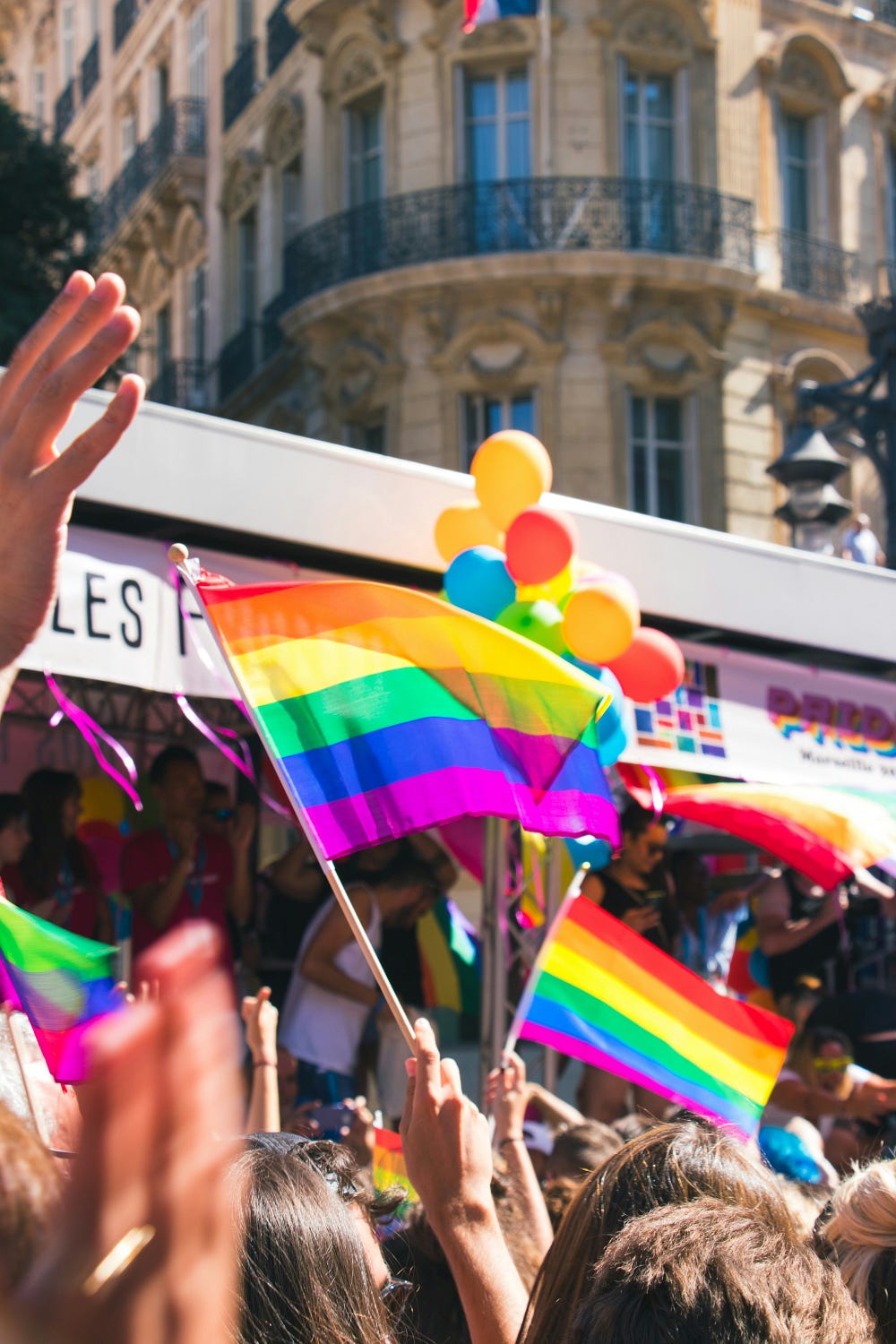
Photo by Tristan B. on Unsplash

 Portfolio of Hope