-
Is Elon Musk A Threat To Democracy?
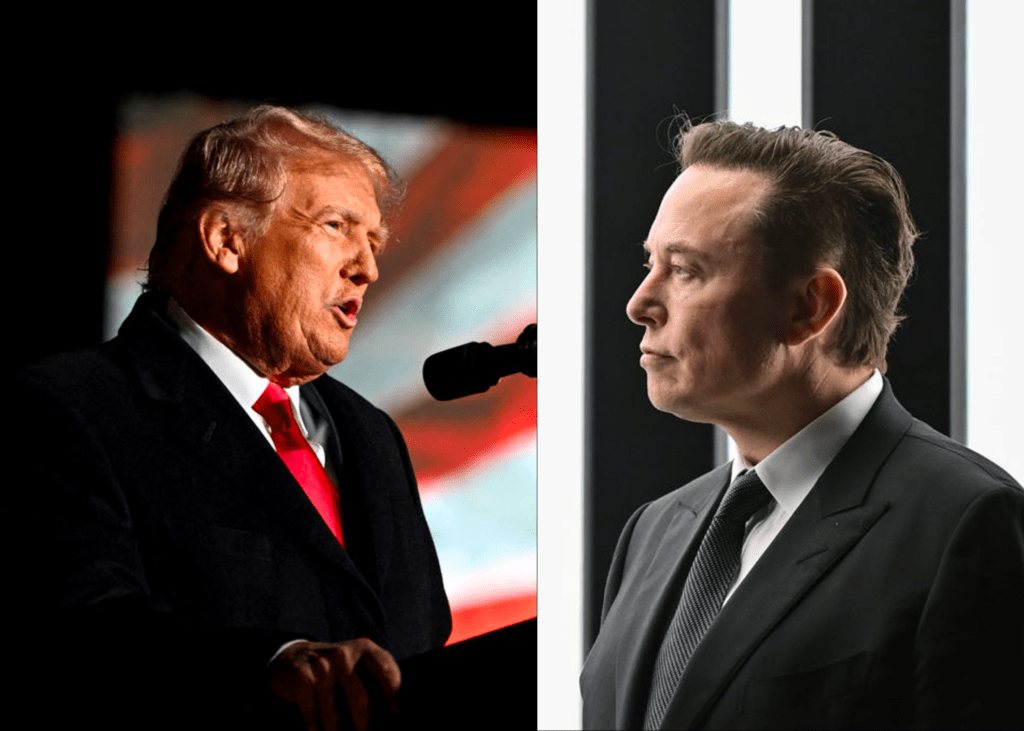
What do you think of when you hear the name Elon Musk? Electric cars and money? AI and politics? Probably not politics. At least, not prior to 2024. So, why has Musk been in all the headlines recently for precisely that?
- ‘Trump addresses Elon Musk’s growing political influence.’
- ‘Trump downplays talk of Elon Musk’s increasing influence in Republican politics.’
- ‘Elon Musk among billionaires set to donate to Reform UK.’
Power.
Corruption.
The makings of a dictator.
This is what I think of when I hear the name Elon Musk. This and…
Fear.

https://www.vietnam.vn/en/chien-thang-cua-ong-donald-trump-co-dong-gop-lon-cua-ty-phu-elon-musk/ Elon Musk, the 53-year-old South African-born businessman (pictured above, on the right), is the richest person in the world with a net worth of $343 billion.
As the CEO of Tesla Inc., the first auto manufacturer to produce one million electric cars, and the founder of Space X, the first rocket company to successfully launch a privately developed, fully liquid-fuelled rocket into orbit, something that all Musk’s entrepreneurial escapades have in common? The futuristic, almost sci-fi-like quality they have about them.

https://www.nytimes.com/2022/06/01/technology/elon-musk-tesla-spacex-office.html All of Musk’s ventures are seemingly undertaken with the aim of breaking records in some way, like X (formerly Twitter). Musk said that he wanted to ‘create a common digital town square for civilization’ and told the media that he was not buying Twitter (now X) to make more money, but to ‘help humanity.’
Who gets to define what ‘help’ actually is, though?…
As Lisa Jennings Young, the former head of content design at X said in a BBC interview, ‘I feel like we’re all living through a vast social experiment [on humanity], and no one really knows what the final result could be.’
The prime example of capitalism at its worst, in our pursuit for more we forget how much we already have. We forget that we don’t need artificial intelligence when we have human intelligence, as we don’t need driverless cars when we have people who can drive. And nor do we need to find a way to live on Mars when we can live on Earth (at least, for now, we can anyway)…
What we do need, however, is an answer to the question, ‘What are Musk’s intentions?’
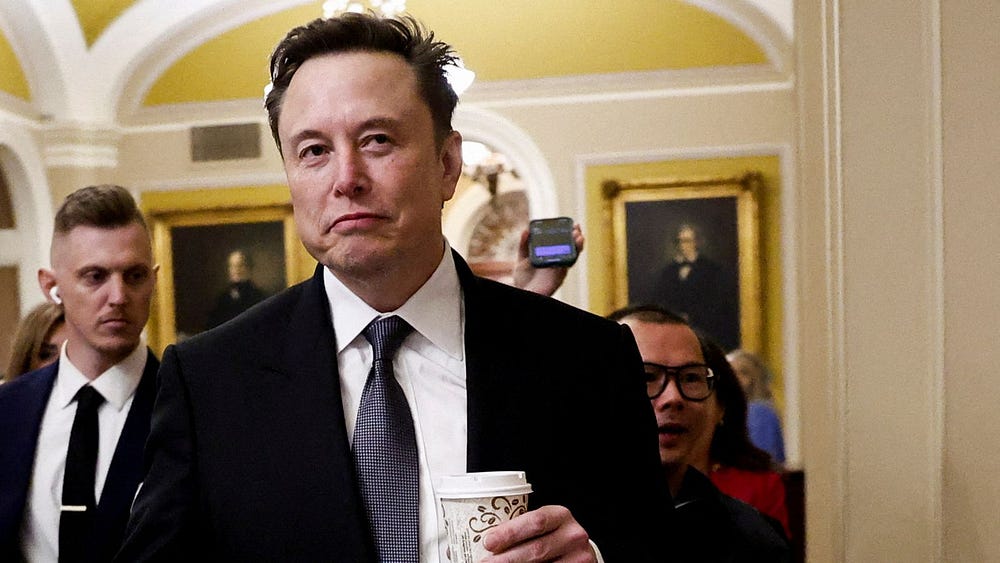
https://news.sky.com/story/elon-musk-accused-of-censoring-right-wing-x-accounts-who-disagree-with-him-on-immigration-13280740 Despite co-founding OpenAI, the company responsible for creating chat GPT, Musk stepped down in 2018 and went on to found his own AI company, xAI, in 2023. Why? Because he wanted majority equity.
‘The most promising option I can think of would be for OpenAI to attach to Tesla. It could significantly help to accelerate the building of a fully functioning self-driving solution’, Musk said.
Alas, ‘we couldn’t agree to terms with Elon because we felt it was against the mission for any individual to have absolute control* over OpenAI’, Ilya Sutskever, another founder of the tech company said in response to Musk’s suggestion.
And this is precisely the concern… ‘Absolute control.’
When one post from Musk about his dislike of a bill to fund the US government led to the sudden collapse of said bill, despite it having previously had bipartisan support, are you seeing the scarily similar parallels between Musk and a dictator yet?…

https://stablediffusionweb.com/image/17251506-elon-musk-with-evil-grin-counting-money With hundreds of billions of dollars in his back pocket, the risk of bribery taking place is high, particularly when it comes to politics, within which Musk now has his foot in the door, having even been offered an official government position in the Department of Government Efficiency (Doge), which is tasked with restructuring the federal government of the United States.
It isn’t just US politics that Musk has been getting involved with, either, but also British politics…
Musk has expressed his support for far-right parties across the world, such as in Germany. A comment within which he claimed that only AfD could ‘save’ Germany, (AFD being the far-right, anti-immigrant party that has been classed as extremist by Germany’s domestic intelligence services), sparked outrage.
Elmar Brok, former chairman of the European Parliament Committee on Foreign Affairs, dismissed Musk’s comments as ‘world domination fantasies.’
It is very disturbing, the way in which X, which I use very intensively myself, is increasingly being used to spread the political positions and goals of Mr. Musk.
Another far-right politician to whom Musk has shown his support is Italian Prime Minister Giorgia Meloni.
Meloni, pictured below, is reportedly planning to shift power from MPs to her own hands, in a reform called the “premierato”. She has also targeted minority groups such as the LGBTQ+ community that is, in her words, ‘attempting to impose its gender ideology’ on her country.
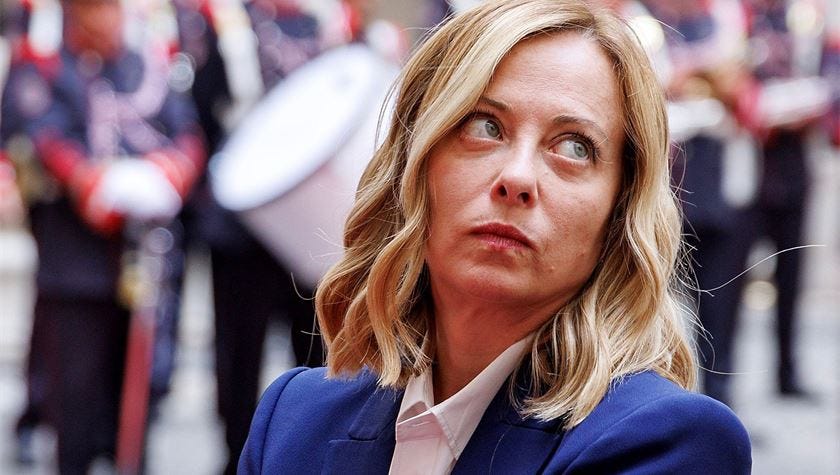
https://www.theparliamentmagazine.eu/news/article/melonis-tightrope-walk-will-italys-pm-leverage-her-influence-in-the-postelection-power-struggle Musk’s capacity to wield political influence evidently stretches beyond U.S. borders…
Musk has become a prominent critic of Labour Prime Minister Sir Keir Starmer and has backed Reform UK to form the next government, ‘We only have one more chance left to save the West and we can do great things together.’ Media reports suggest that Musk is set to make a large donation to Reform UK.
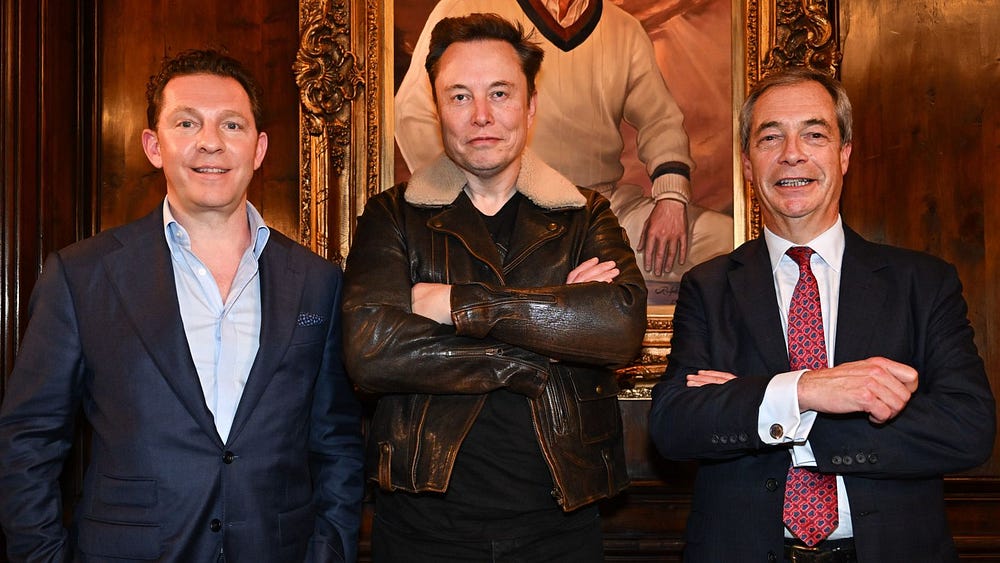
https://news.sky.com/story/nigel-farage-and-reform-party-treasurer-nick-candy-meet-elon-musk-at-trumps-mar-a-lago-resort-13275478 (Description of the above photo: Nigel Farage, the leader of Reform UK stands with his arms folded beside billionaire Elon Musk and Reform UK treasurer, Nick Candy. Behind them hangs a large portrait of President-elect Donald Trump, and in front of them, the prospect of a political revolution looms).
The worry is, what influence will such a wealthy individual wield over British politics, and, perhaps more worryingly, why does Elon want to wield such influence?
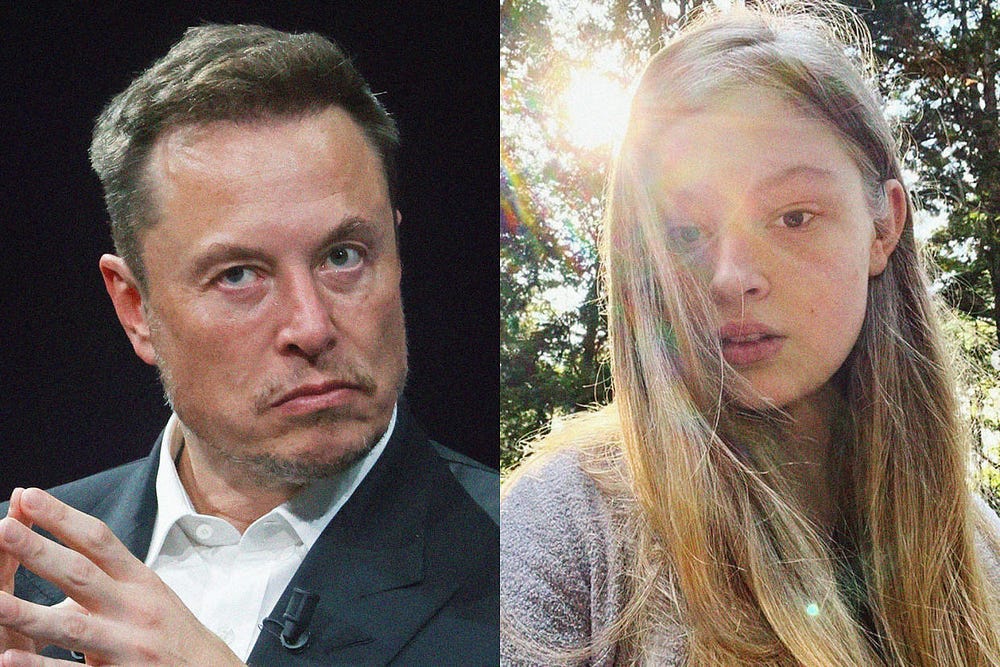
https://www.yahoo.com/entertainment/elon-musk-transgender-daughter-first-013039771.html Estranged from his transgender daughter, Vivian Wilson (pictured above), Elon Musk has a personal vendetta against so-called ‘wokism.’
Musk claimed that he had been “tricked” into letting his daughter Vivian receive gender-affirming care (or to use Musk’s words, ‘child mutilation’) when she was 16. ‘So, my son … is dead. Killed by the woke mind virus.’
Wilson, on the other hand, said that her father, Musk, is a ‘narcissist’ who ‘relentlessly harassed her for her femininity and queerness.’
Is this why Musk has pledged to support Reform UK, the party that promised to ban what it called “transgender ideology” in schools within the first 100 days of government, and promised to replace the Equality Act while scrapping diversity, equality, and inclusion rules? Because Musk is hellbent on making, not just the US be governed by the right, but the whole world. Musk wants the whole world to subscribe to his archaic thinking, whatever the cost.
A threat to democracy?
Musk has made no secret of the fact that he is a Trump supporter, hence why he donated roughly $75m to the political action committee (PAC), an organisation he founded to support Donald Trump’s 2024 presidential campaign, and not for the first time…
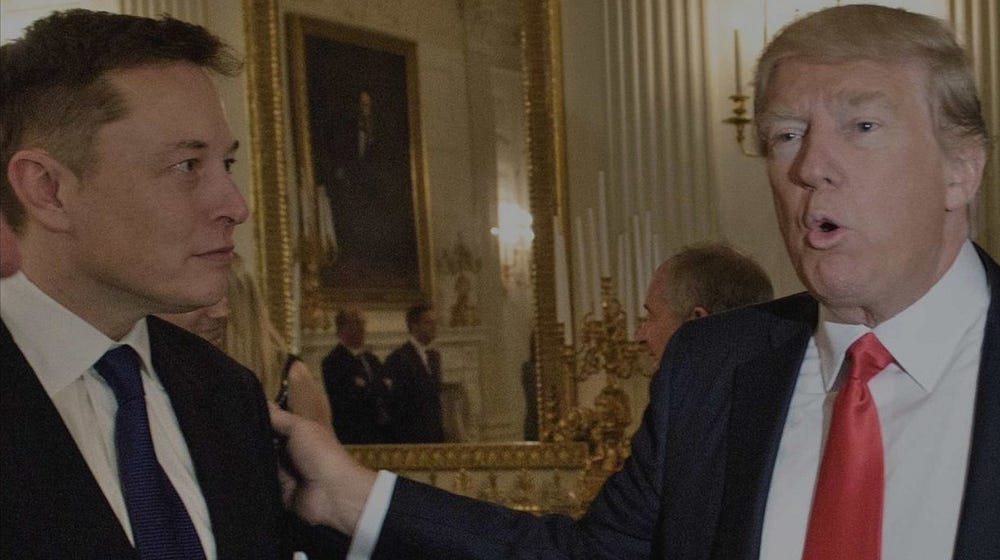
https://www.theaustralian.com.au/ Musk has been posting on X for several months with messages of support for the 45th, and soon-to-be 47th US President. This alone is problematic given that Musk is the CEO of X, and there will inevitably be bias in favour of Trump in terms of propaganda.
(NB: If Musk were to offer the same level of support and funding to Kamala Harris as he is offering to Trump, then the concerns would persist, for it’s not about Trump, it’s about democracy and the potential for it to get taken away. When the world’s richest man, a man who has a proven tendency to want to be in control, has formed such a close relationship with our soon-to-be president, alarm bells must surely start to ring)…
A threat to democracy is a concern that American Author Stephen King echoes, too…
Stephen King (pictured below, on the left), delivered a warning to his fans about the influence that Musk has over Trump. One person wrote in response to him, ‘This real life is eminently scarier than any of the books of yours that I’ve read.’

https://ew.com/books/stephen-king-twitter-elon-musk/ As Musk’s words amass millions of views and thousands of shares, they illustrate the ability of one of the world’s most influential people to spread fear, hate, and misinformation around the world, something which Musk manages to do quite well to his over 200 million followers.
Since acquiring Twitter, Musk has directed engineers to improve the visibility of his tweets, therefore meaning that the algorithm now boosts his tweets beyond that of other users. What’s more, Musk has also dismantled the Trust and Safety advisory group on X and stopped enforcing content moderation rules. Consequently, policies relating to issues such as the spreading of uncensored misinformation have been scrapped, thus contributing to, what the European Union is describing as, ‘a haven for disinformation and illegal content.’
In an interview for a BBC Panorama investigation that aired in 2023, Twitter insiders said that, in their view, X was going to ‘struggle to protect users from trolling, state-coordinated disinformation, and child sexual exploitation as a result.’
Musk’s response? ‘Sorry for turning Twitter from a nurturing paradise into a place that has trolls but… Trolls are kinda fun.’
What an arse hole.
A very rich and powerful arsehole, but an arsehole, all the same…
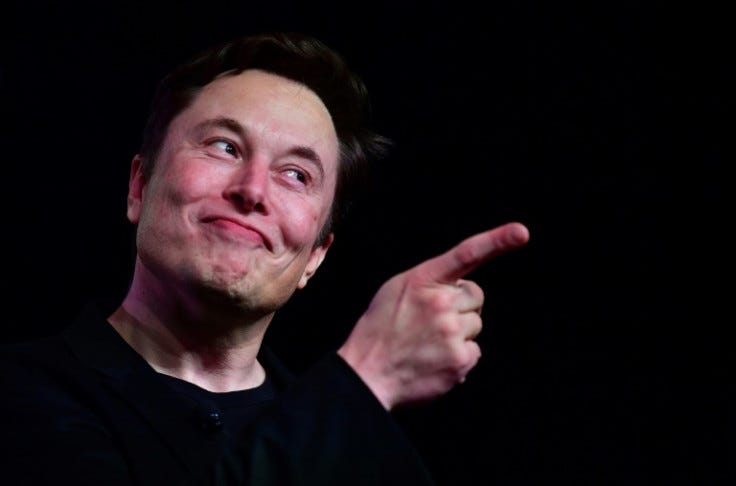
https://www.ibtimes.com/elon-musk-laughs-zuckerbergs-facebook-instagram-subscription-service-similar-twitter-3669581 Power.
Corruption.
The makings of a dictator.
(A.K.A. Elon Musk)…
-
Why Is There So Much Division In The World?

When politics is man-made, a desperate attempt to stifle man’s failed attempts to comprehend the incomprehensible, why do we let our minds be corrupted by their minds?
Sitting by, ever the silent (see also: spineless) observer, we watch wars taking place, innocent civilians being killed in their masses, all because of a petty dispute over religion, or land, or some other division that doesn’t even exist when we are all one, a fact that we forget amid the chaos of the twenty-first century, where we buy into the illusion of ‘better than’ and ‘less than.’
Forgetting that human is human, we believe the lies that politicians feed us, consuming the illusion and lapping up distrust like we’re at an all-you-can-eat buffet.
It’s lie after lie after lie…
Peace will never be found in a society that places productivity and consumption above health and happiness.
Like a painting, society is the appearance of the truth, not the truth itself. While the painting itself isn’t real, (like life, the truth and the appearance of the truth are opposites), what it represents, however, is.
‘Art is a lie that tells the truth.’
Pablo Picasso.In other words, while society might seem real to us, it is not the original copy, but a reproduction. With bits that have been added on and taken away, it is not the same.
Society is not the truth.
To discover the truth of life then? One must look beyond the canvas of the body and the mind (and, most importantly, the ego), and instead focus their attention on the universe.
- Infinite.
- Loving.
- At one (with everything and everyone).
It is only by understanding the illusion of society that we can understand the reality of the universe.
With no ulterior motive, no interpretation of the human race as literal (we are not in competition with each other. There is no race), and no notion of better than and less than, it is only by letting go of the ego that we can hold on to the soul.
Photo by Greg Rakozy on Unsplash -
Why Are So Few Ministers Experienced In Their Field?

The way that government ministers are selected is absurd. No other high-paying job in the world would allow someone with no prior knowledge of the subject to be put in a managerial position in the way that ministers are. Yet, as is the case with everything related to the government, it’s not so much one rule for us and another rule for them, as it’s lots of rules for us, and no rules for them…
Under Tory leadership (2010–2024), we had a total of sixteen people hold the position of housing minister, with some lasting only seven weeks in the role (Lee Rowley, 2022). Rowley went to university (Oxford, of course) to study Modern History. With no prior background in housing, the question is, ‘Why aren’t decisions being made by experts/people who actually know what they’re talking about?’
It’s not just a Tory issue, either, but a parliament-wide one, as we can see in our current government headed by Keir Starmer…
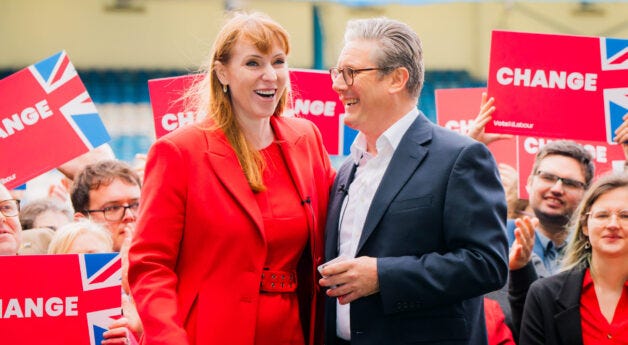
https://labour.org.uk/ The current secretary of state for Health & Social Care, as of December 2024, is Labour’s Wes Streeting. Streeting studied History at the University of Cambridge. As for the secretary of state for Transportation, the role is filled by Heidi Alexander who studied Geography at Durham University.
With no qualifications or equivalent experience working in a directly related job to housing or transportation, where is the rationale for having the most important decisions about our country being made by people who have no idea about the subject matters?
We only have to look at the fake promises that governments make to get in power, only to go against them all when they secure the key to number ten, to see the impact that selecting ministers, seemingly out of thin air, has on politics.
Policies make no sense because the people who are setting them have no clue how to implement them…
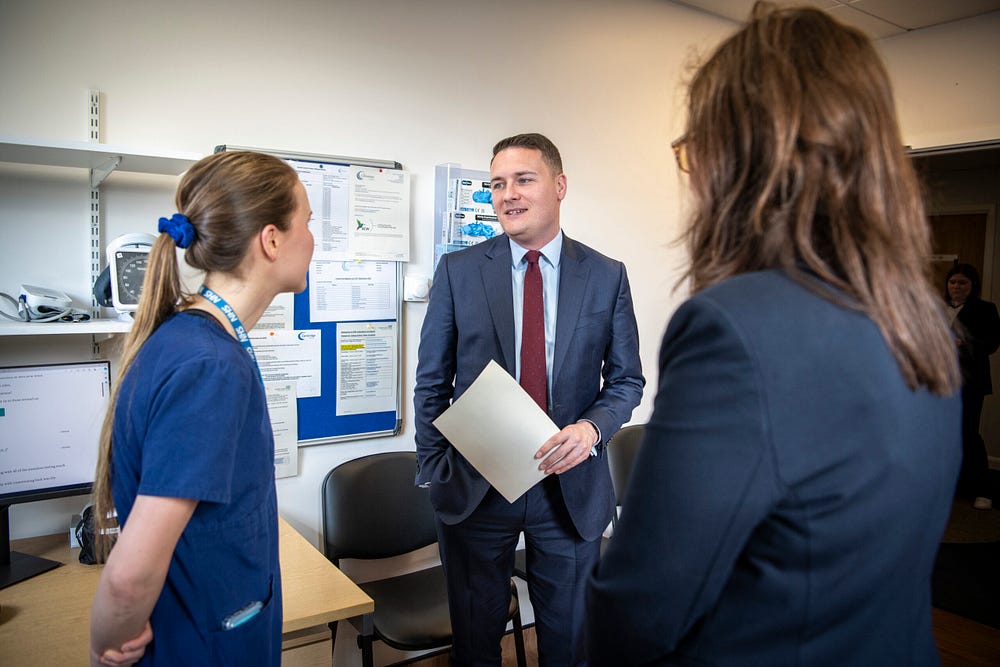
https://magazine.unison.org.uk/2024/05/28/wes-streeting-the-man-who-can/ Can you imagine waking up one day to be delivered the news that you are now responsible for making all the decisions in the UK regarding health, with the onus now being on you to ensure the delivery of care in the NHS, despite having never done anything even remotely like this before?… This is the position that Ministers find themselves in upon being elected. Completely out of their depth, this is why their proposals so often make zero sense, because there is no logic behind them. They’ll say what sounds good because all they’re focused on is winning the seat. Upon winning the seat though? ‘Time to blag it.’
And so, this is why our country is in such a shambles. Because our attitude is one of ‘it will be okay’, as opposed to what it should actually be, ‘we’ll make it okay.’
Alas, we need less blagging, and more acting on knowledge and experience.
It’s wrong and it shouldn’t happen, but unfortunately in our current climate, to say that politicians shouldn’t lie about their policies is the biggest juxtaposition.
When democracy isn’t really democracy, but more so a case of ‘voting for the lesser of two evils’, and promises aren’t really promises, but more so a case of ‘make it and then break it’, like saying that babies shouldn’t cry, to say that politicians shouldn’t lie is, unfortunately, inevitable.
When power corrupts, the chance to be in power means that people will do anything to get to the top, at whatever cost… For, while they might not have any expertise in their field (at all), something that all politicians do have is a lack of morals.
-
The Housing Crisis Is A Crisis Of Greed
Angela Rayner, the Deputy Prime Minister of the United Kingdom and the current Housing Secretary, made headlines earlier this month for her controversial comments about the housing crisis.
‘We can’t have a situation where we have a desperate housing crisis and we can’t build houses’, Rayner said while discussing Labour’s pledge to build 1.5 million new homes.
Her comments were Controversial because the housing crisis is not a crisis regarding the number of houses, as the media reports, at all. What it’s actually a crisis of, however, is price.
Buy-to-let is going through the roof for the few, while buy-to-live remains a distant dream for the many.
When houses are being bought by private landlords who are simply out to make a quick buck, house prices are rising (official figures show that rent prices rose by 10% this year), as home quality is declining. Why? Because landlords don’t care. As long as they’re making money out of you, that’s all they’re bothered about, a fact that is emphasised by the number of people who are claiming benefits…
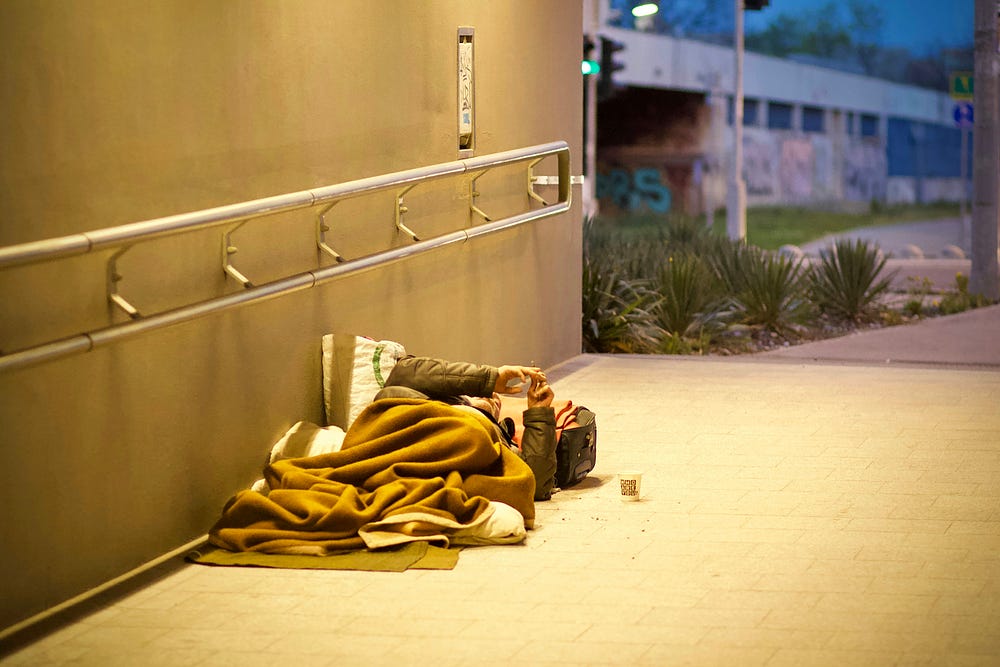
Photo by K. Mitch Hodge on Unsplash Last year, when 22.6 million people in England, Scotland, and Wales were claiming some form of benefit, more than one-fifth of landlords were making over £1,000 in pre-tax profit on their portfolio each month. It is for this reason that there were over 300,000 people forced onto the streets this year, despite there being more than enough houses for everyone.
And, to reiterate the point again, this isn’t because of too few houses being built, either, it’s because too many houses are being bought for the purpose of making a profit instead of for their actual purpose, to provide a roof over someone’s head.
Alas, how can a party which is supposedly ‘for the people’ sit by and let this happen? How is it fair that there are people in the UK who own several houses, while others can’t even afford to rent a house?
The situation is even worse in tourist areas, too, where homes are being bought and marketed as B&Bs, and luxury high rises are taking the construction resources away from council houses in major cities like London.
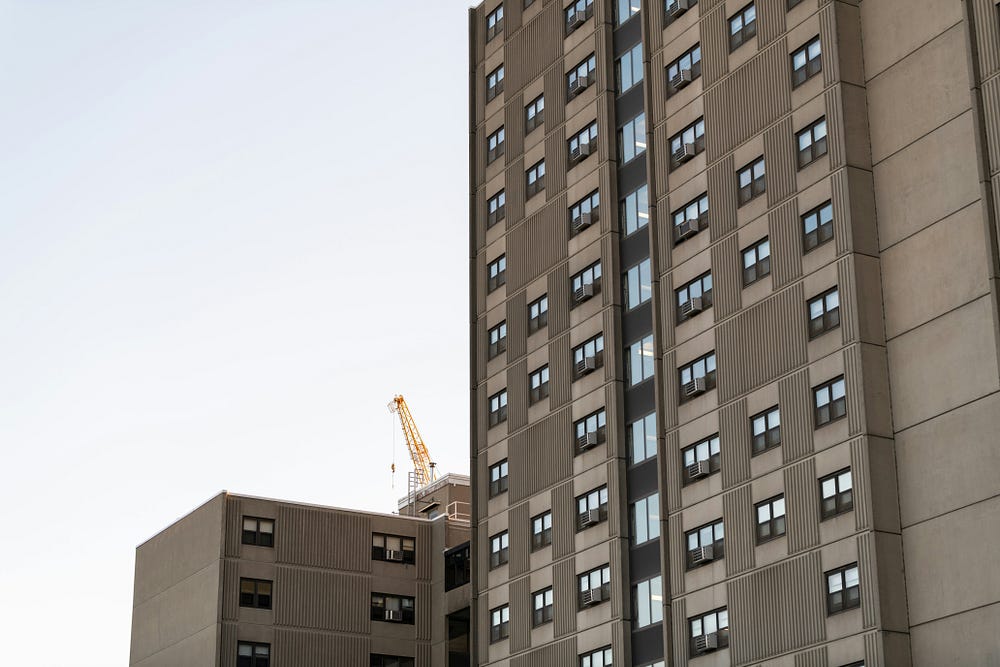
Photo by Mihály Köles on Unsplash I never thought I’d see the day when the Labour Party needed reminding that people come before profits, yet it’s 2024, and here we are. Putting profits over people, and people and profits over the planet…
Councils are being ‘pushed into’ building new houses on green belt sites to account for the housing crisis, as outlined in a document by the Ministry of Housing, Communities, & Local Government, despite Labour’s manifesto promising to preserve the green belt.
‘Say one thing to get in power, get in power, and then do the complete opposite’, this is the government’s real manifesto. Like keeping the right-to-buy scheme, which has seen two-thirds of council homes being transferred from public to private hands over the last four decades.
Why are profits always prioritised over people?
Under the labour government of the 1970s, local authorities were buying properties from private landlords and turning them into council homes. When the Conservatives came into power in 1979, however, this all changed with the introduction of the right-to-buy scheme.
The scheme, which was introduced by Margaret Thatcher in 1980, played, and continues to play, a major role in the housing crisis.
While the right-to-buy scheme was brought in to give people in council houses an opportunity to own their own homes, as they increased in value, many people ended up selling them on and subsequently moving on, meaning they are now in the possession of private landlords ( a staggering 40% of former right-to-buy properties are, in fact)…
Unable to afford to buy a house of their own, renters will pay the asking price, however extortionate, because what other choice do they have when council housing is almost all but a thing of the past?…
How can anyone expect to save up to buy a house of their own when they spend all of their wages each month paying their rent?
Photo by FilterGrade on Unsplash ‘For most people, owning one’s house is a basic and natural desire’, was the argument the conservatives used to justify the right-to-buy scheme when it was introduced, yet the hypocrisy of their logic was (/is) stark.
‘Owning one’s house is a natural desire’ they say, ‘so we’ll make sure that houses are sold to private landlords who will hike the prices up so high that you’ll never be able to escape the hell hole that is renting in the twenty-first century’, they might as well say…
While the right-to-buy scheme worked well for some people on an individual level, (as this article in the Guardian points out, Phil Salter, a 79-year-old retiree, bought his council house in the early 80s for £17,000. When it was valued at £80,000 in 1989, he sold it and put the money towards buying a £135,000 cottage which is now valued at £1.1m), for society, the cost was evidently high…
The privatisation of homes is the gateway to the desensitisation of souls.
To address the crisis in renting then, we must keep homes in the social sector, thus giving councils the ability to properly cater to the demands of its people over the profits of their landlords. Only by doing this will we get to a place where people are not forced onto the streets for not being able to line the pocket of, yet another, money-hungry landlord.
-
Assisted Dying Bill: How To Provide Dignity In Death
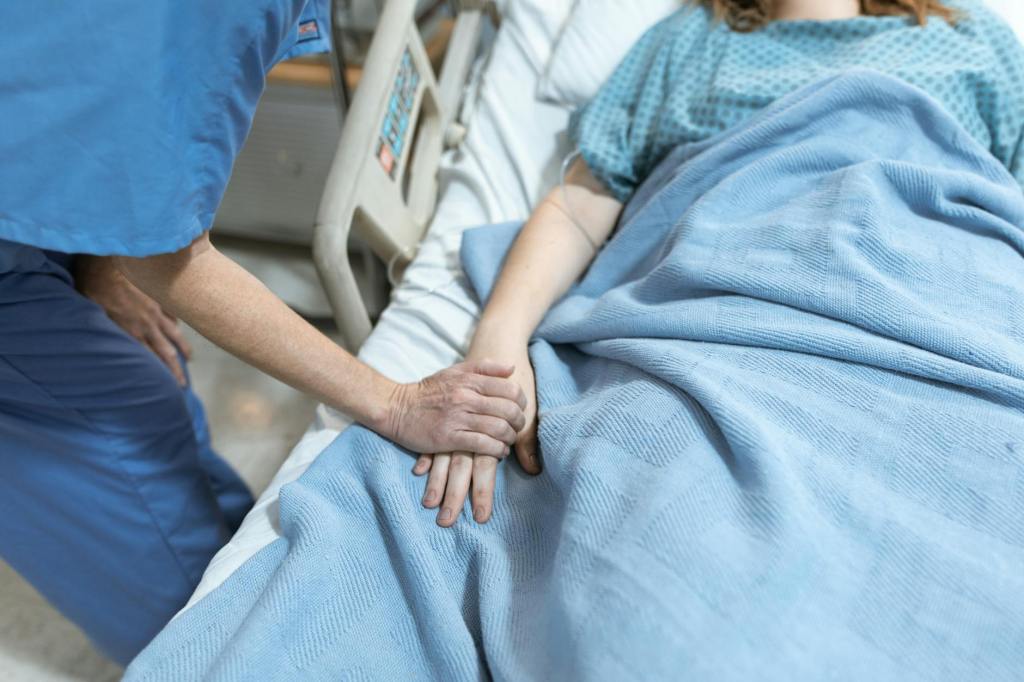
Last week, after decades of fierce debate surrounding the complex topic of assisted dying, MPs voted on a bill, the Kim Leadbeater’s Terminally Ill Adults (End of Life) Bill. Its broad aim is to allow adults aged 18 and over, who have mental capacity, are terminally ill, and are in the final six months of their life, to request assistance from a doctor to end their life.
Three-quarters of the public are in favour of the bill, according to recent polling.
The bill was passed, albeit at a relatively tight margin (330 votes for versus 275 against), with people believing that a change in the law might ‘offer dignity and relief for terminally ill people at the end of their life.’ 40% of people, however, had their concerns, worrying that ‘vulnerable people might feel pressured to choose assisted dying.’
Although the bill passed, as the first step of many in a long parliamentary process, MPs who voted in favour of the bill reserve the right to change their minds later if safeguards aren’t strong enough. It is therefore paramount that concerns are addressed early on to prevent misconceptions from arising surrounding what the bill entails.
It is essential that loopholes are closed, and gaps are filled.
The topic of assisted dying has always been heavily debated because the worry is… Where does it end?
Photo by Daniel Tafjord on Unsplash If we’re arguing that everyone should be granted the right to die, does this include people with mental health issues, people in prison, and people who are just going through a rough patch in their lives? Would they all be granted the right to resolve their temporary pain with a permanent solution?
The answer lies in the difference between assisted dying and assisted suicide…
Unlike the former, assisted dying, which is only approved in cases where a terminal illness is present, assisted suicide can be done in any context, whether an illness is present or not. This inevitably poses many issues, particularly for people who struggle with their mental health.
Suicide is a permanent solution to a temporary problem. It cannot be reversed.
Will people start opting for painless but permanent death over painful but temporary recovery?
It is concerns such as these that point to the importance of why it’s so important that assisted dying, should it be legalised, is only done in strict, controlled environments; in a hospital setting where it is administered by a senior medical professional, witnessed by other medics, and agreed upon by the patient if they have the capacity, their family, and/or other medics, to eliminate the risk of euthanasia being misused.
Where there are strict rules in place and it’s a case of ‘when, not if’, (i.e. Death = imminent), the passing of the assisted dying bill will grant people dignity in their final moments.
The assisted dying bill is not about ending life, it’s about shortening death.
Photo by The New York Public Library on Unsplash It is the job of a doctor to relieve the suffering of their patients. Therefore, in circumstances where there is no further treatment available, euthanasia is the only viable way to relieve that suffering.
We know this to be the case with animals, but why are we so opposed to it with humans?
At present, cats have greater rights when it comes to dying than humans…
We don’t leave animals to suffer. At the first sign of illness, we’re on the phone to our local veterinary surgery to request an appointment.
Filled with anxiety, we hope and pray that everything will be okay and that the vet will be able to prescribe them medication to help. Residing in the back of our mind, existing as a great big shadow that overpowers the hope we have of things working out, however, is the question of… ‘But what if there’s something more going on?…’
An incurable illness.
We’re sorry but there’s no treatment we can offer. There’s nothing more we can do.
In this situation, we weigh up our options (why aren’t humans granted options?) and realise that to go home with them would be to prolong their suffering where their quality of life would be non-existent. And whilst we love them and don’t want to say goodbye, to not do so would be for selfish reasons, we realise.
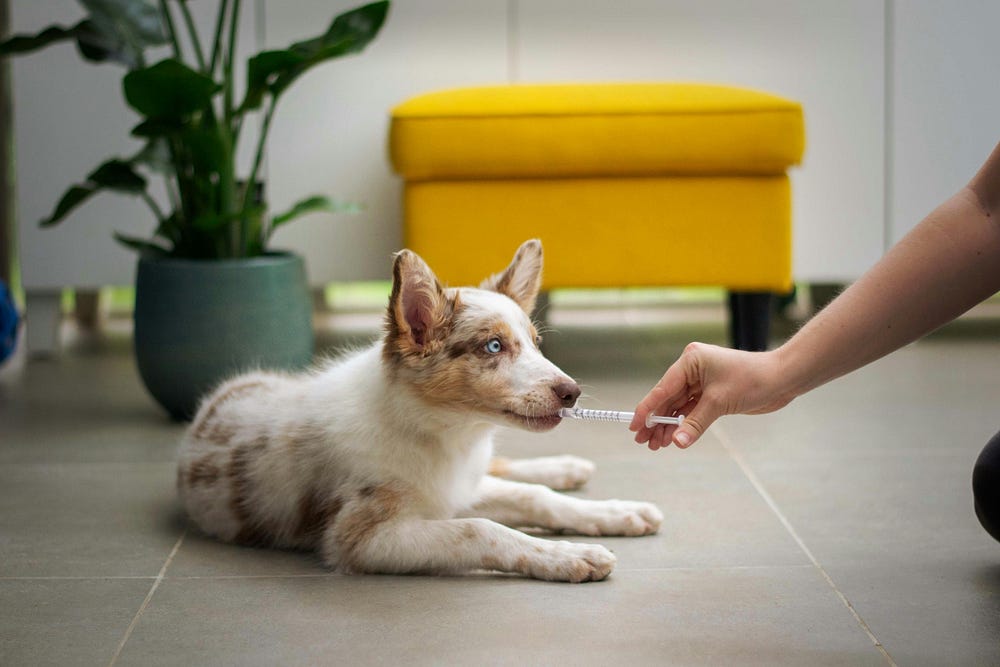
Photo by Ayla Verschueren on Unsplash With the option to end their suffering only a ‘yes or a no’, ‘tick here’, ‘sign here’ away, ‘it’s the kindest thing you can do for them.’
And so, we make that decision, because they can’t make it for themselves. A soul-wrenching decision to make but one that we know, should we ever find ourselves in such a position, we would want to be made for us, for no living being deserves to have their suffering prolonged for longer than it needs to be. Unfortunately, however, far too many people are being made to suffer unnecessarily because of current laws, including my Grandad who passed away in January 2023.
Should assisted dying be legalised?
Although assisted dying is illegal in the UK, ‘passive euthanasia’, (intentionally letting a patient die by withholding life support), is happening all the time (albeit it’s not being named as such) … This is what happened to my Grandad who was admitted to the hospital following a stroke. After food and fluids were taken away, he was put on a syringe driver through which large doses of morphine were administered to speed up his death.
Unfortunately, though, despite the decision being made to withdraw all treatment to ‘speed up’ his death, it still took nearly a week for him to pass away. During this time, my memories of him were tainted after witnessing the strongest man I know (it’s been two years, and I still struggle to write about him in the past tense), in a hospital bed, his face white and his hands cold, being starved and dehydrated.
Deteriorating in front of our eyes, all we could do to alleviate his discomfort was dip a sponge in a glass of water and drip it into his parched, open mouth.
It was a week of hell for us and him, and the fact that it could’ve been prevented if we had better laws in place is infuriating. It’s infuriating that the law meant (and still means for other families) that doctors were forbidden to give my Grandad a painless injection, but they were allowed to subject him to a week of what was essentially torture (what else can you call keeping someone alive who can’t eat, drink, or speak if not torture)?…
To strip someone of their dignity in the final stages of their life is dehumanising, yet for some reason, we’re happy to do it to humans. We’re happy to prolong their suffering even when the outcome is inevitable…
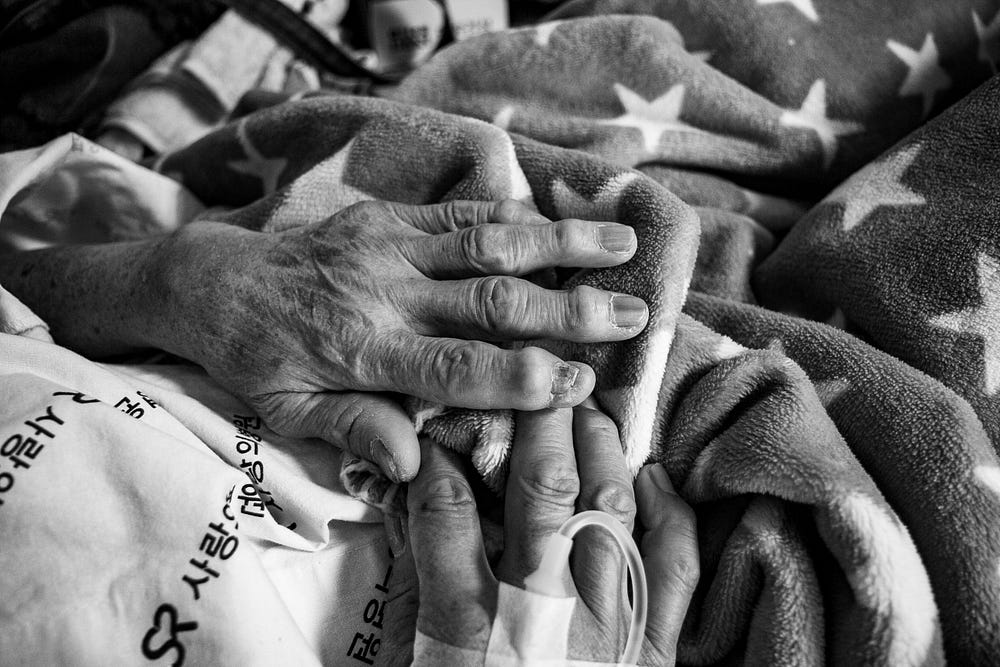
Photo by Kim Ui Jin on Unsplash ‘As the right to life, the right to death.’
When the ultimate act of bodily autonomy is being able to have input into how and when we want to die, how can it possibly be right that vets are granted more power than doctors, and cats and dogs are granted more freedom than us?
-
Violence Against Girls And Women: The Threat Of Toxic Masculinity

The little boy made blaster gun noises, for no reason except that they were inside him and needed to come out. I winced, the mum winced, and the dad turned round and smiled at him. ‘What are you doing? Come here.’ He pulled the child closer and ruffled his mouse-blond hair.
Page.107, A Flat Place, Noreen Masud.
To men, a little boy holding a toy gun is just a little boy holding a toy gun, yet to women, it’s a symbol of a lifetime of fear.
This is because attitudes towards violence, whether perceived or real, differ depending on whose perspective it is being viewed from, hence why women feel the need to cross the road when they see a man walking behind them, whereas men think nothing of it, continuing on their way as if their lives aren’t at risk (because they’re not). It’s girls and women who are at risk, and the perpetrators, overwhelmingly, are men…
As safeguarding minister Jess Phillips said in a recent interview, ‘The scale of violence against women and girls in our country is intolerable.’
Toxic masculinity has created a national emergency, with the figures to back it up.
The latest statistics from the National Police Chiefs’ Council analysis (2024) reveal that two million women a year are estimated to be the victims of male violence, with one woman being killed by a man every three days on average.
The analysis goes on to report that crimes including stalking, harassment, sexual assault, and domestic violence affect one in twelve women in England and Wales, with the number of recorded offences having grown by 37% in the past five years (they now run at 3,000 offences a day, adding up to 20% of all police-recorded crimes/more than one million offences a year). And, worryingly, the perpetrators are getting younger.
Data shows the fastest-growing groups of domestic abuse offenders are teenage boys aged 16 to 19.
The question, though, is why?
There are a multitude of factors that play a role in violence against girls and women, particularly amongst a younger demographic, with issues of widespread misogyny being at the forefront.
Depictions of women in the media, for example, including porn which has very little, if any safeguarding measures in place to prevent young people from viewing its content, has put a skewed image in people’s minds regarding consent and what it means to be in a healthy relationship.
BDSM, which is a very specific sexual preference (note the word preference. It is not the norm) has been put forth as the ‘mainstream’ on sites like Pornhub. And when porn is the first experience that many people have with sex, this means that boys are growing up thinking that strangulation, for example, is a necessary element of sex that all women want.
What’s more, when girls watch porn too (yes, women do watch porn, despite the stereotypes), and they are also seeing such content that portrays what is undoubtedly abuse, if it’s not consensual, as the ‘norm’, they are at risk of putting themselves in dangerous situations, believing that this is ‘just what is expected’ of them.
So, what can we do about it?
It’s not enough to have porn sites asking people to confirm if they are 18 or above with the click of a button. We’ve all been kids once, and we all know that curiosity gets the better of us and a ‘yes or no’ isn’t going to stop children from accessing harmful material.
To protect women’s lives then, we must safeguard the minds of our children, reminding them, several times daily, that oppression towards women is never acceptable.
It’s not acceptable (ever) that women must live with snipers poised against their chests solely for being born the so-called ‘lesser’ sex.
When a national emergency requires a national effort to rectify, we need an overhaul to the system to ensure that boys are protected from having their minds corrupted, and girls and women are protected from having their bodies violated.
‘Nobody’s free until everybody’s free…’
-
Why Are So Many More Women Diagnosed With BPD Than Men?

From the moment they are born, boys and girls are told who they are and who/what they should be, thus creating a society of men and women where a stark divide exists. This divide is heavily prevalent when it comes to processing our emotions.
Phrases such as ‘man up’ arise in response to stereotypes surrounding gender roles and expectations, where boys are shamed for crying, ‘I’ll give you something to cry about.’ Far too many men see violence as the ‘cure’ for what they perceive to be a weakness. This completely contrasts attitudes towards emotions in girls who are encouraged to be open in showing how they feel.
Such double standards are stark.
Boys are socialised to be tough and to strive to be in power (to dominate), whereas girls are socialised to be dependent and submissive, albeit often covertly.
The type of toys that children are given- toy soldiers and guns for boys, barbie princesses and dolls for girls, for example, only serve to feed into this ideal.
Boys = Ruthless & Aggressive.
Girls = Caring & Nurturing.Perceived to have greater authority than women, men get to decide whether a woman’s complaints are plausible, hence why so many women feel like they aren’t taken seriously; ‘it’s just another hysterical woman.’ It is for this reason that doctors, of which, as of 2019, two in three consultants are men, are so quick to medicate women with antidepressants and/or antipsychotics.
Borderline personality disorder, for example, is diagnosed at a ratio of 3:1, where 75% of individuals with BPD are women.
Likewise, judges are quick to hand out sentences to men, as proven in this study, where 85% of the people arrested were men…
Neither doctors nor judges, however, stop to consider, let alone question, the reasoning behind the rise in mental ill health amongst women, and the rise in crime amongst men.
This means that people in their droves are being medicated through the health system, and punished through the (in)justice system, without anyone ever understanding the reasoning behind their behaviour.
The overarching question that we should be asking ourselves then is…
‘Why are so many women being diagnosed as mentally ill, and so many men being labelled as criminals in our society?…’
Disconnection.
Despite us seemingly being more connected than ever what with the influx of social media, as a society we are, in fact, lonelier than ever before.
Being reachable 24/7 means nothing when it is a fake connection.
Having 500 friends on Facebook, or 3000 followers on Instagram means nothing when you have no one to turn to in real life when you’re struggling.
Social media is an artificial connection, and its downfall is our collective downfall when we believe that what we see is real.
A ‘picture perfect’ life presented to us in squares on an Instagram feed does nothing to help us when we feel like we’re ‘lacking’ in life. We know that it means nothing, yet we buy into the illusion of perfectionism that it enforces, all the while berating ourselves for not being able to attain the unattainable.
Alas, ‘What is going wrong?’, we should be asking, not only ourselves but also the people in power- the politicians and the leaders- who have the capacity to make a change.
When are people going to stop and take note of the real problem, whereby mental ill health and a tendency to criminality are just the symptoms/the products, of a sick society?…
You can’t stick a plaster over a broken heart and expect it to mend.
Photo by Eli Pluma on Unsplash -
Actions Speak louder Than Words: Practice What You Preach

Like the ‘I can’t be racist because my friend is black’ argument or the ‘I can’t be homophobic because my friend’s daughter is gay’ rhetoric, words, whether written, read, or said mean nothing when your actions do not align with the ideology that you preach.
Too many people view politics and, with that, values and ideals as a ‘get popular quick’ scheme. They vote tactically, not to get the party they want in power, but to get the people they want to like them/to get ‘in’ with the crowd.
Men who pose as feminists to gain the trust of women. If ‘bell hooks quotes’ falls below ‘How to force a woman into submission’ on your search history, reading feminist literature will not and does not make you a feminist.
In order to be a good person, you have to practice what you preach.
It’s not enough to do the bare minimum, and then sit back and watch oppression unfold because ‘I’ve done my bit now.’
It’s not enough to share one graphic on Instagram advocating for women’s rights because you want to look ‘good’ in the public eye, meanwhile what is going directly into your eyes (and ears, and mind) is the disgusting spiel preached by the likes of Andrew Tate.
World change arises through societal change, and when society is comprised of people [us], it is on us to be the change we want to see in the world.
We are the mirror through which younger generations can find their conscience. We owe it to them to set a good example.
-
Why Do So Many People Get Away With Rape?

Rape. It’s arguably the most traumatising crime there is, and it’s something that, horrifyingly, one in four women over the age of 16 have experienced. Owing to the invasion of one’s body, and the corruption of one’s sanity, its effects are long-term and can often result in the development of mental health issues such as PTSD as a direct result.
Despite having such a profound impact on the lives of its victims, however, the conviction rate for rape in the UK is staggeringly low.
Statistics by the charity Rape Crisis highlight how 69,184 rapes were recorded by the police between 2023 and 2024, yet just 2.7% of these cases were charged.
In other words, fewer than three in one hundred rapes recorded by the police between 2023 and 2024 resulted in someone being charged that same year, let alone convicted…
This is horrifying when we consider that the CPS must have substantial evidence that a rape took place for it to even get to court in the first place.
Based on the extremely low charge/conviction rate then, it’s unsurprising that so many people drop out of rape investigations before their case goes to trial.
Latest statistics show that, in 2023, nearly 70% of rape victims dropped out of investigations in England and Wales, compared to 66.9% in 2021, and 55.5% in 2016. And when evidence from both the Office for National Statistics and several rape survivor charities suggests that five in six women who are raped don’t report it, that’s an awful lot of men who are walking free.
Data suggests that 798,000 women are raped or sexually assaulted every year in the UK…
The increase year-on-year of people who report that they have been raped only to decide not to take it any further, as highlighted in the figures above, or who just don’t report it at all, is undoubtedly concerning and yet, worryingly, unsurprising…
When just the referral of a rape case to the CPS, (the body that conducts criminal prosecutions in England and Wales), requires substantial evidence that often involves the invaded privacy of the accuser more than it does the accused (make it make sense), it’s easy to see why so many people drop out…
Turning the victim into the defendant…
The intrusiveness of rape investigations is truly shocking. Mobile phones are taken to recover deleted messages. Social media accounts, medical history, and even therapy notes are sought through. Characters are assassinated through cross-examinations that make victims feel like criminals. It’s traumatising, adding salt to the wound of what, for most people, will still be so raw and painful.
The whole process has been more traumatic than the actual rape. I have zero belief in the justice system.
Victim Response to Victims’ Commissioner Survey, 2021.And what are they looking for, exactly? What are the police hoping to find when they go through the phone of a woman who has reported being raped? A nude photo? A tab on her computer of Pornhub? Seemingly any signs of a woman being a sexual being is ‘proof’ that she wanted it.
It is for this reason, due to a lack of evidence and a lack of people who are willing to live out the moment their body was turned into a crime scene again that, despite there being a record number of rape cases being reported in the UK, there has been such a stark collapse in the number of rape prosecutions. Why? Because many people just don’t see it as being worth the smear campaign that will inevitably follow for the next two years (on average, rape cases take a staggering 817 days to reach court).
A criminal barrister recently wrote:
‘I am increasingly numb to the cruelty of telling broken human beings that the worst thing that ever happened to them will not be resolved for years.’Why are conviction rates so low?
There are several arguments that people use to try to explain why so few rape cases result in a conviction, yet their reasoning holds no weight.
A common argument is that it’s because rape happens ‘behind closed doors’/away from the public eye, and therefore there are unlikely to be witnesses who can back up a victim’s testimony. It’s more likely to be a ‘he said she said’ situation, people argue. While this is true, rape is more likely to happen behind closed doors, it’s not a good enough reason to account for the shockingly low conviction rates.
When domestic abuse (non-sexual) also happens behind closed doors, based on the logic above (‘conviction rates are low because there’s no one to back it up’), why is domestic abuse more than twice as likely to lead to both prosecution and conviction than rape (76.4% of domestic abuse-related prosecutions were successful in securing a conviction in the year ending March 2022, compared to 30% of rape cases)? The answer, I believe, is rooted in our attitudes as a society surrounding sex.
‘I’d never hit a woman, I’m not a wife beater’, says the man who had sex with his wife while she was asleep last night.
With so many people who are self-confessedly ‘prudish’ in our society/people who shy away from any discussions of sex, there is so much shame and stigma surrounding rape. The danger of this, however, is that such stigma can result in victims not coming forward out of fear of how they will be perceived. It can also result in victims who do come forward being on the receiving end of other people’s prejudices.
Photo by Enric Moreu on Unsplash The influence of rape culture
The terrifying reality is that the sole reason for someone not being convicted of rape could be due to something as simple as three people believing that she who goes out at night on her own is ‘asking for it…’ And, unfortunately, despite being in the twenty-first century where you’d hope that such basic human decency and empathy towards each other would be commonplace, rape culture and, with that, all the myths that it conjures up, are still highly prevalent.
It’s why nine in ten school-age girls have reportedly experienced sexist name-calling and have been on the receiving end of unsolicited ‘dick pics.’ Such objectification of children is evidence of just how early the sexualisation of women starts.
Viewed as objects that exist to entertain, serve, and/or pleasure men instead of as equal human beings, this serves to uphold the patriarchy whose very premise is centred on the ideology that girls and women are less deserving of respect and power than men and boys.
And, while today women have more rights in society, it hasn’t always been this way…
Before 1992, for example, marital rape wasn’t illegal in the UK, the assumption being that a wife’s consent to marriage also meant consent to sexual intercourse with her husband. This belief was based on the idea that many people still hold today; that women are the property of men.
Furthermore, in twenty countries around the world, the idea that women are the property of men is upheld to a heightened level with the presence of ‘marry your rapist’ laws, sometimes also referred to as ‘rehabilitating marriage.’ This law, which gives rapists the option to marry their victims in order to escape criminal prosecution, exists to reinforce the concept of women belonging to men.
Heavily influenced by religion, it exists to absolve the shame that sex outside of marriage supposedly imposes on society. With absolutely nothing at all to do with preserving justice, it’s all about preserving the status quo (in other words, it’s all about upholding the subjugation of women).
This is a prime example of how culture plays a significant role in attitudes towards rape, particularly when standing in court. A juror living in the UK who is originally from Russia, for example, where ‘marry your rapist’ laws are implemented and, consequently, rape isn’t viewed as a crime so much as an inconvenience, is less likely to find a man standing on trial for rape guilty compared to someone who was born in the UK. This is because the messages (see also: lies) that have been fed into their brains regarding a woman’s ‘place’ in society starkly differ. And when all it takes for a conviction to be dropped is three out of the twelve jurors being unsure of guilt, the fractured and prejudice-filled views held by people towards women, and in turn, their attitudes towards rape, is deeply troubling. It is for this reason that we must continue to talk about women’s rights, remembering that ‘nobody’s free until everybody’s free.’
Rapists must be prosecuted for their crimes, not protected, and victims of rape must be supported, not stigmatised.
Photo by Lindsey LaMont on Unsplash -
Why You Should Stop Saying I Don’t See Colour

To say that you don’t see colour is to tell a blatant lie when, as humans, we see the world in colour.
From opening our eyes in the morning to closing them at night, colour is one of the only constants in our lives. It’s something that we base our whole lives upon.
Without a watch, we can tell the time based on what colour the sky is.
Daylight vs darkness.
Sunrise vs sunset.
We can determine whether it’s safe to go out (if you’re a woman. Men generally don’t have this concern because, as with race, privilege is also based on gender). We can determine what to wear if we do go out (is the sky grey, dulled by clouds, or is it yellow, lit up by the sun)?
Colour forms such a big part of our lives but, as with most things that are a constant (like our sense of smell, for example), we overlook its importance, forgetting the value that we attach to it.
Not only can colour determine our actions (to go out or not to go out/to take an umbrella or not to take an umbrella), but also, our thoughts.
We all have a favourite colour, choosing specific shades for our homes and cars and clothes based on what it is that we want to feel, since to colour we subconsciously attach meaning…
Red = Anger
Yellow = Optimism
White = Innocence
Black = Dangerbut based on what?
Where do our subconscious beliefs come from?
To answer this question, we must first understand the basics behind colour psychology.
Colour psychology is the study of how different colours affect human mood and behaviour.
While our perception of colour often varies on an individual basis, one 2020 study, linked here, found that associations are often societal as opposed to purely personal (see below).
- 51% of respondents associated black with sadness
- 43% of people associated white with relief
- 68% associated red with love
- 39% linked green to contentment
- 52% felt that yellow means joy
Consequently, the study’s researchers suggested that colour-emotion associations appear to have universal qualities. Although this, in the majority of cases, is harmless (we use our perception of colour to interpret paintings, for example), it can also be harmful when division is created based on class (blue collar vs. white collar), gender (pink vs. blue), and/or race (black vs. white)…
*While I have been discussing colour in a general sense thus far, the real purpose of this blog post is to open up a (much-needed) conversation surrounding race.*
Where do our stereotypes of black vs white come from?
Consider the meaning and use of terms like blacklist or black sheep, for example. Black has become symbolic of the outcast/the ‘one to be avoided’, and it is for this reason that lighter skin tones are considered more desirable than darker skin tones.
Dating back to the slave trade of the 18th century where skin colour was often used as the basis for the division of labour (darker-skinned slaves typically had more physically demanding jobs, whereas lighter-skinned slaves were given more desirable positions), in the West, beauty standards are Eurocentric. Women who have lighter skin, straighter hair, and more European facial features are preferred over features that are considered more ‘historically’ African. Why? Because it’s easier to hate someone when they don’t look like you…
Alas, it’s not about ‘not seeing colour’, (as we have discussed, colour is not something that cannot be seen when it is everywhere). It is, however, about recognising privilege and the imbalance of power. It’s about recognising, if you’re white, that you are given a head start in life solely due to the colour of your skin.
As a white person, you do not have to worry when you leave the house that you will be attacked.
You do not have to worry about the way that you will be perceived when you walk down the street. ‘He looks like a criminal.’
As a white person, life is just life and not an obstacle course for which you have no instruction manual.
And this is precisely your privilege, to not have to say ‘It’s a privilege to be here’ when you’re in a ‘white’ space.
When you’ve worked twice as hard to get into the very same space that white people sleepwalk into, what does that even mean?
I’ll tell you what it means… It means that being white is still viewed as being ‘superior.’
To reiterate again, though, it’s not about not seeing colour, it’s about opening your eyes wide enough to see it better than all the [racist] people who came before…
It’s about opening your eyes wide enough to
Recognise…
your…
privilege.




 Portfolio of Hope