-
Our Interconnected World: No One Is Free Until We Are All Free

Around 450,000 years ago, Britain was a part of mainland Europe; however, a cataclysmic flood, the aftermath of one of the biggest tsunamis ever recorded on Earth, changed all that, turning Britain into an island nation.
Determined to find new lands to call their own, the British Empire was subsequently created just a few decades after the tsunami. It grew to become the largest the world had ever seen, whereby, at its height, it controlled over 450 million people…
The British Empire existed for nearly 400 years in total, and in this time, it controlled a quarter of the world’s land surface, including colonies and protectorates across North America, Australia, New Zealand, Asia, Africa, and parts of Central and South America. The empire also held influence in the Middle East and the Pacific region.
Headed by Queen Elizabeth I, the people colonised by the British had British laws and customs imposed upon them. Their traditional languages, religions, and ways of living, for example, were replaced with the English language, Christianity, and British systems of government and education.
Colonised countries also lost their ability to govern themselves and were, in many cases, violently oppressed.
Why did Britain want to do this?
To gain more money and power, and to spread Christianity and British ways of life…
Source Influencing international affairs, economics, and culture for a considerable period of time, Britain’s dominance allowed it to exert considerable sway over other nations.
Colonisation is the reason why so many countries are essentially ‘split up’ and speak different languages.
The USA, as a former British colony, has English as its native language. Not every country in America is classed as the USA, though, and therefore not every country in America speaks English.
Consider Brazil, for example. Despite being located in South America, Brazilians do not speak English, but Portuguese. This is because Brazil was a Portuguese colony for over 300 years.
Similarly, Argentina is also a country in South America, yet having been colonised by Spain, alongside much of the rest of South America, its dominant language is Spanish.
It’s all about power and control from the so-called ‘United’ nations…

Source Whilst some countries managed to gain their independence back (America, for example, went to war against Britain in 1775, and declared itself independent in 1776), others were not so lucky, one such ‘other’ being India…
After being under British rule since 1858, on the 13th of April 1919, over 10,000 people gathered in a park to (peacefully) protest British rule in India. Without warning, however, the British general had his troops block the only exit and fire openly on the unarmed crowd, killing over 350 people and injuring over a thousand more.
Likewise, the ‘scramble for Africa’ was also stained with blood…
The ‘Scramble for Africa’ saw several African kingdoms being destroyed by Britain. In their effort to colonise the continent (as it would transpire, Britain came to control 30% of the African population), they exiled the kingdom’s leaders, looted their treasures, burned several of their cities to the ground, and killed many people.
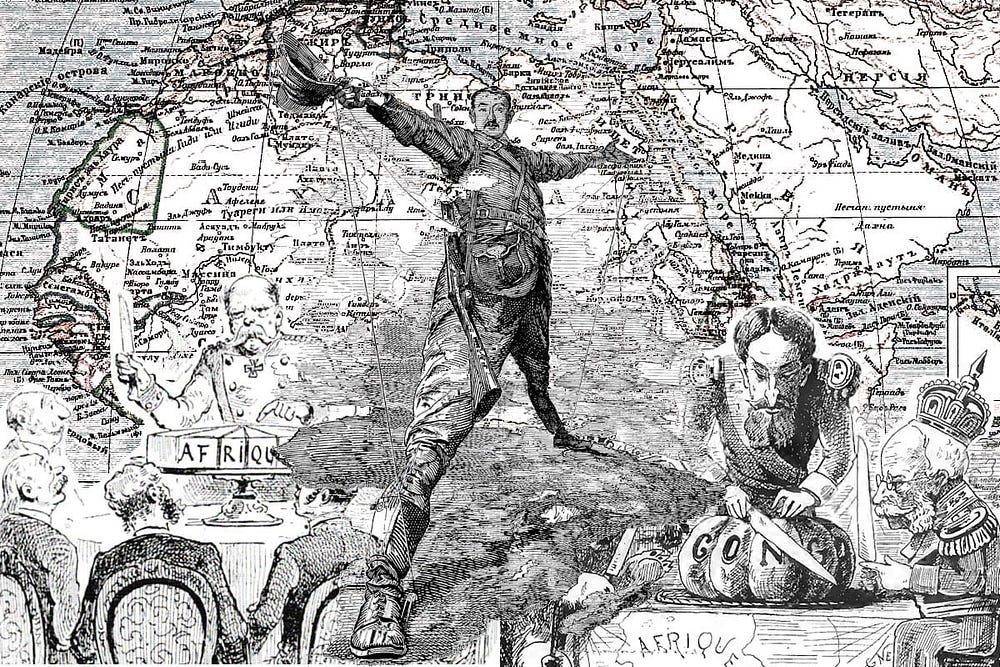
Source Alas, having substantial power over Africa, Britain became a major player in the slave trade.
As George Orwell once said, ‘Britain is like a wealthy family that maintains a guilty silence about the sources of its wealth.’
Prior to its abolition, it is estimated that British ships transported more than 3 million Africans across the Atlantic as slaves, mainly to its Caribbean and North American colonies.
At first, few people raised moral or religious doubts about slavery, since it benefited many parts of British life and its economy. It was only when external pressures started to pour in from Britain’s allies that the slave trade, and, eventually, colonisation, were finally abolished…
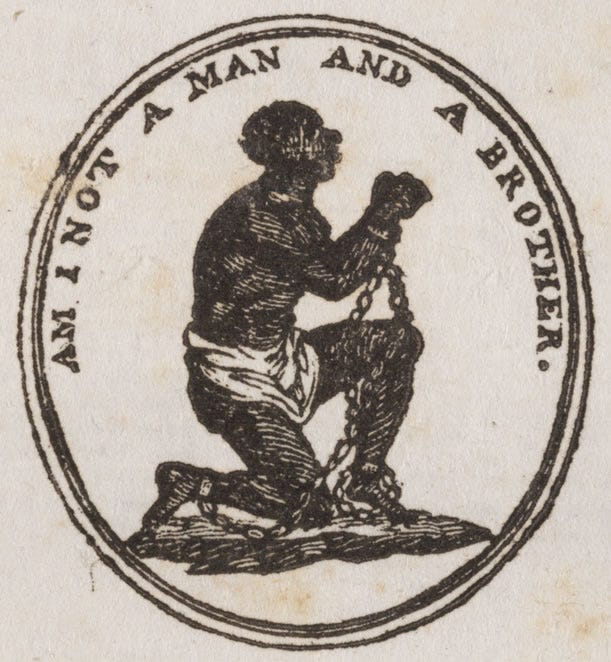
Source The Slavery Abolition Act of 1833 freed 800,000 Africans who were then the legal property of Britain’s slave owners. What many people don’t know, however, is that the act contained a provision for the financial compensation of the owners of those slaves, by the British taxpayer, for the loss of their “property”.
While the slave owners received the modern equivalent of between £16bn and £17bn (the amount of money borrowed was so large that it wasn’t paid off until 2015), the slaves received nothing. Instead of compensation, they were forced to provide 45 hours of unpaid labour each week for their former masters, for a further four years after their supposed* ‘liberation’.
*‘Supposed’ because even today, almost two centuries after slavery was criminalised, we can still see the remnants of the British Empire within our culture…

Source The influence of the British Empire on modern-day Britain
Using pounds instead of euros, driving on the left-hand side instead of the right, not measuring in kilometres but in miles, why do we want to distance ourselves from the rest of Europe? Is it because we have some unwarranted superiority complex? (English is the most commonly spoken language around the world, after all) …
We still sing the same national anthem that we sang in the 17th century. ‘Scatter our enemies and make them fall! Confound their politics, God save us all!’ (Hypocritical when just a few lines later it’s, ‘Lord make the nations see that men should brothers be) …’
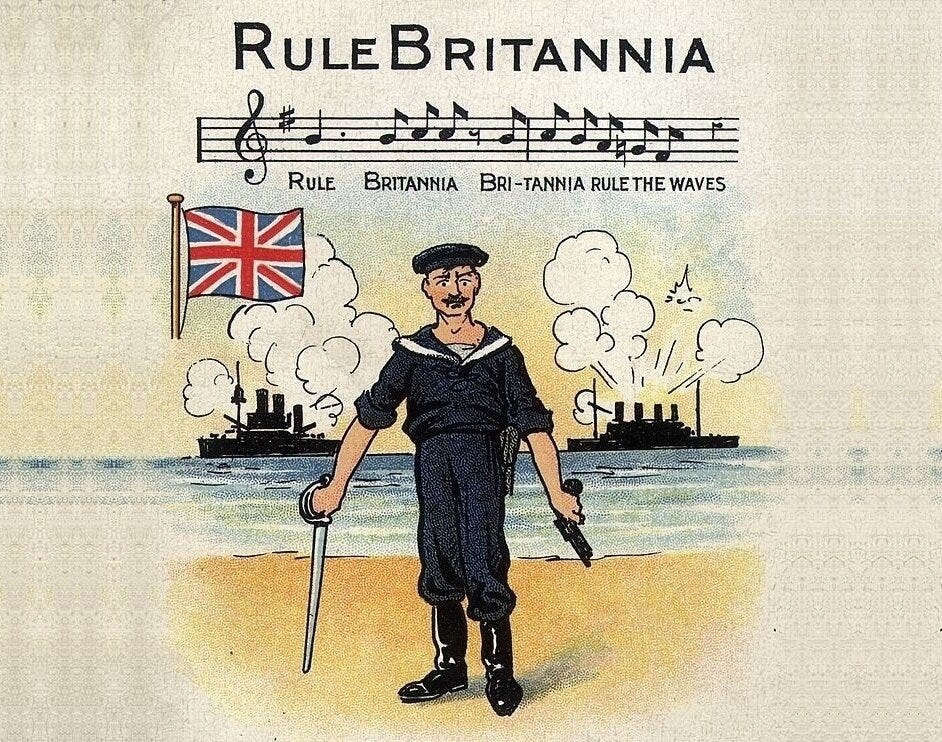
We also still sing ‘Rule Britannia’, a blatantly racist song that, for some reason, is still used as the anthem at the BBC’s ‘The Last Night of the Proms.’
Marking a continuing attachment to a historical era of global domination, to sing the words of such songs now is to glory in Britain’s subjugation of other races and nations, and to declare that, not only does Britain not care about those past inhumanities, but that it revels in them.
Source Despite being a part of Europe, English people are some of the least likely in the whole continent to see themselves as truly European.
In places like Spain, nearly 75% of its citizens see themselves as belonging to a broader European community, whereas in England, some polls come back as low as 15%.
It is such division that, I believe, is the cause of much of our distaste toward immigrants.
Across Britain, misrule by disinformation has created in many people a particular dislike of almost all foreigners, immigrants, refugees, and asylum seekers. Instead of focusing on the real cause of Britain’s grotesque inequalities, they have been blamed on the most vulnerable.
The 1905 Aliens Act in Britain was the first to introduce immigration controls and registration, primarily focused on restricting “undesirable” immigrants from areas outside the British Empire, particularly East European Jewish immigrants. While the Act provided a legal definition of refugees, it also restricted entry based on perceived economic or cultural burdens on the state.
Policy makers push forth the rhetoric that ‘stopping the boats’ is all about preserving the safety of our country, yet really it’s, yet again, all about money, as it has been for decades.
Why does Britain think that it’s so much better than the rest of the world?
We might be an island, but the fact is that we are separated from the rest of Europe only by a narrow stretch of water that we call the English Channel. We are not ‘superior’ for being separate… If it wasn’t for the tsunami that occurred 450,000 years ago, then it is entirely possible that Britain would never have become an island or developed the seafaring culture that eventually turned so much of the global map pink.
Maybe we’d be speaking French and eating snails…

Source If there hadn’t been a flood that led to the separation of Britain from mainland Europe, then ‘maybe we’d be one of them’, the Reform UK supporters say with a grimace.
‘Ugh.’
Perhaps it’s best not to tell them that we already are [one of them] …

Source Borders don’t exist.
We are all interconnected, and not just geographically (although, as we now know, there is only a very narrow stretch of water separating the UK from the rest of Europe), but also, and primarily, in terms of our humanity.
While our cultures might differ (’tis the way of the world when we’re socialised to think that being separated geographically means being separated morally), our humanity remains the same. It is only when the greed for power and money takes over that this fact gets clouded.
There’s a reason why news channels don’t just cover national news stories, but international stories too, and that reason is precisely for the above. Because we’re all interconnected.
It’s why what is happening in Gaza has struck a chord with so many of us, sparking calls for a ceasefire all over the world. And it’s also why, after the murder of George Floyd at the hands of a police officer, protests broke out everywhere.
When humanity is not dependent on geographical boundaries, we can feel their pain. You don’t have to know someone or speak their language to have empathy. Unless you’re a sociopath, being human is enough.
The struggles we fight are not confined to our own countries.
Look at a map or a globe, and notice how close all the countries are to each other. Nothing is isolated. While we might live in different countries, or even on different continents, we all live on the same shared planet.
Borders between nations are simply abstractions, imaginary boundaries established by agreement or conflict.
The fact is that we all bleed the same. We will all experience love and loss and pain and pleasure. We all occupy the same amount of space on the same ball of rock that is currently hurtling through the universe with an estimated 100 sextillion other balls of rock. Our differences are, therefore, far rarer than our similarities…
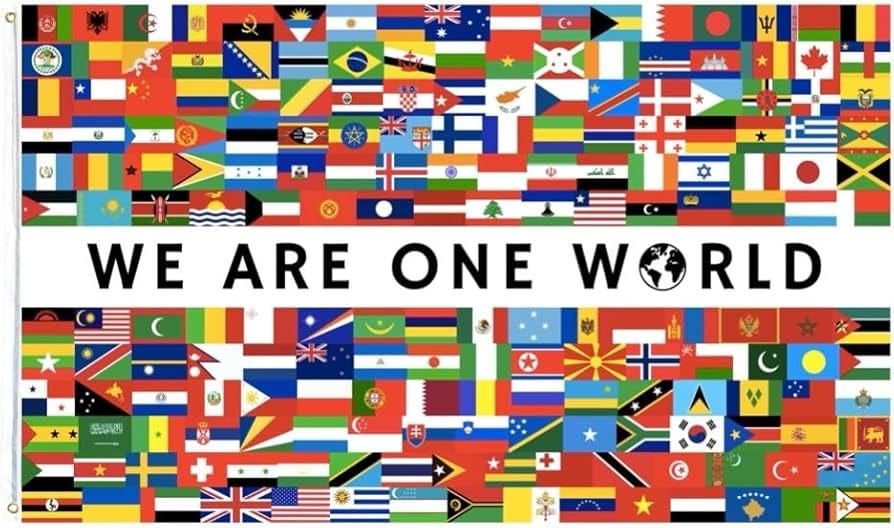
Source Upon realising the interconnectedness of our world, you realise the importance of taking an intersectional approach toward politics.
It’s no use just keeping up with party politics when that represents just one tiny piece of one very large jigsaw puzzle (the micro to the macro). As the late Dr. Martin Luther King Jr. said…
No one is free until we are all free.
When you stop viewing the world from the perspective of what is a largely socially constructed bubble that is individual countries, you realise this.
United in our shared mission of achieving world peace (we don’t want nations to tolerate each other; we want them to love each other), we must keep on fighting the good fight, together.
One world,
One love,
One community.We belong to the Earth rather than to a nation, and to a species rather than a nationality.
We are one.
Source -
We Are All In The Same Carriage: State Negligence Kills

Just before midnight on February 28th, 2023, a head-on collision occurred between a passenger train and a freight train travelling on the same track but in opposite directions between Athens and Thessaloniki in Greece. The result? 57 dead, many of them in their teens and twenties, and 85 injured. The question on everyone’s lips is… How did such an incident occur?
State negligence kills.
Railway workers’ unions have repeatedly denounced the lack of maintenance and non-implementation of modern security systems, whereby signalling systems are still reliant on manual operation despite chronic understaffing.
To put things into perspective, 2,000 railway staff have been fired since 2010, resulting in a workforce which currently stands at just 750 employees. Despite the government dubbing the crash as ‘human error’, it is this, as well as the privatisation that took place in 2017, that is the real cause of the crash.
Knowing this, thousands took to the streets in the aftermath of the collision to call the Greek government out for what transpired to be a double blow. Not only did the train crash due to state negligence, but it also caught fire following the collision for precisely the same reason.
While the reason for the fire hasn’t yet been proven, experts who analysed the footage suggested that one of the tanks on the freight train may have held illegal cargo, namely silicone oil.
It’s unsurprising that the Greek government wanted to pin the blame on someone, attributing the crash to ‘human error.’ Anything to shift the blame…
Several official reports have highlighted delays in the forensic examination of railway security footage of the crash. Hard drives from nine railway stations along the route, including the one covering the critical segment, were only handed over for analysis in November 2024, 21 months after the accident. And that’s only the files that remained… It has been alleged that 649,000 audio and video files from the official case file were excluded from investigations. These files reportedly contained critical data from railway communication logs and surveillance footage across Greece’s rail network.
If the government had nothing to hide, then why were they hiding?
Led by Maria Karystianou, because of the government’s unwillingness to publish all their evidence, some of the relatives of the victims filed lawsuits as a result, arguing that ‘the missing files contain evidence of negligence and systemic misconduct that has been deliberately kept out of court proceedings.’
So again, to pose the same question, if the government had nothing to hide, then why were they hiding?
Unfortunately, what happened in Greece in 2023 happens all over the world, every single day. While not every act of state negligence will end in the same tragic circumstances as the Tempi train crash (thank God), they will all lead to the same feelings of powerlessness and division between governments and their people, and this, in turn, will lead to protests.
‘When our cries fall on deaf ears, we scream.‘
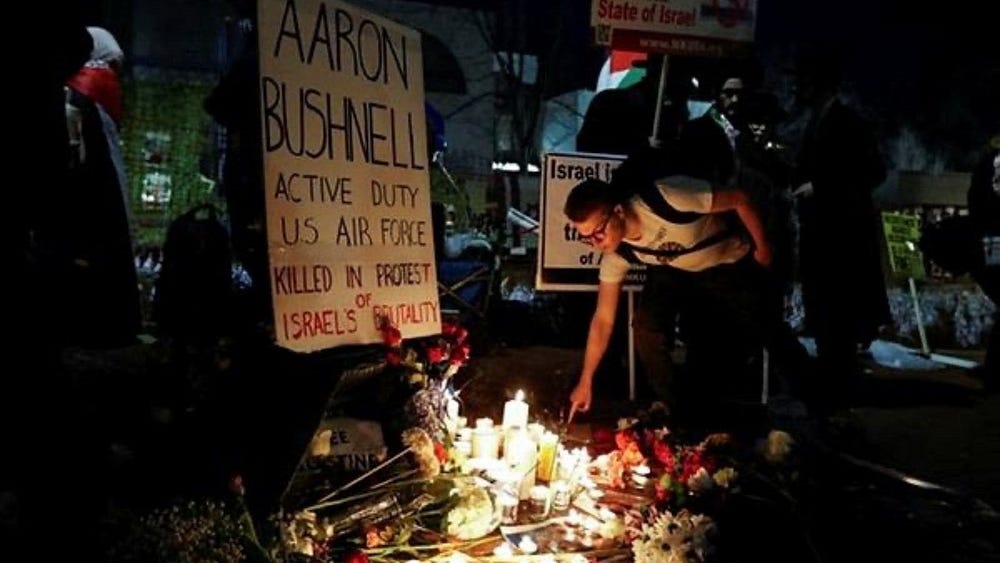
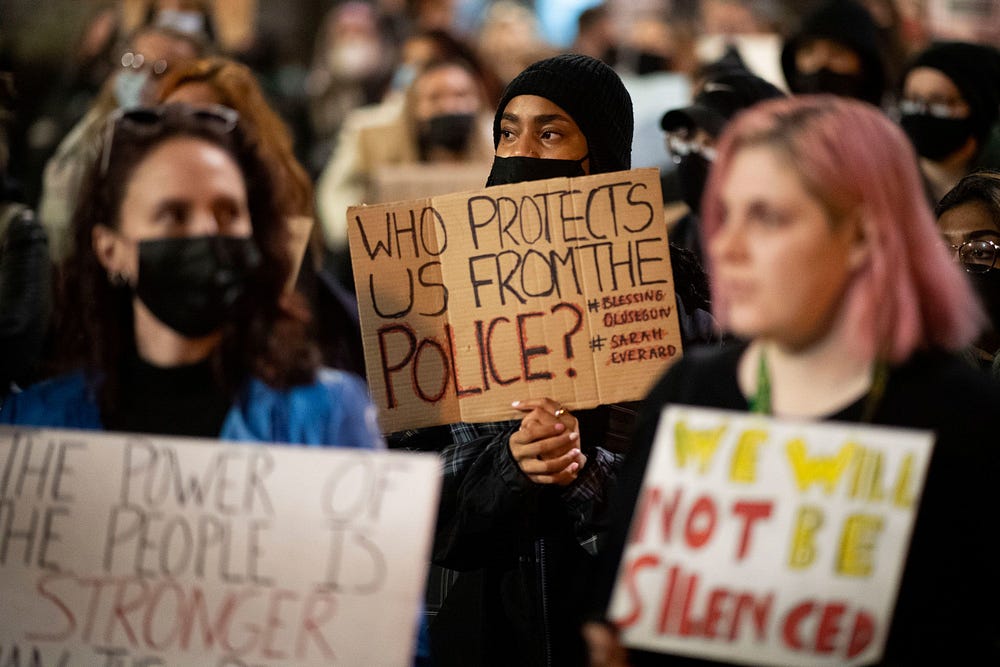
Looking closer to home, in March 2021, Britain was plunged into a state of shock and unrest following the murder of 33-year-old Sarah Everard at the hands of a serving metropolitan police officer, PC Wayne Couzens.
Ten days after the attack that cost Everard her life, a vigil took place at the Clapham bandstand where thousands gathered to pay their respects. The evening turned sour, however, when not even an hour after the gathering had begun, officers moved in to order people to leave. Arguments erupted and several people were subsequently arrested under the grounds of breaking COVID-19 restrictions, but not without backlash.
As women were put in handcuffs (ironic, given that this is exactly what happened to Sarah. She was handcuffed and ‘arrested’ for breaking lockdown rules), the crowd shouted, “Arrest your own.”
Countless people have since asked themselves why it took a young woman’s senseless death for the outpouring of indignation to finally burst forth.
An enquiry revealed how the police had repeatedly failed to spot warning signs about Couzens’ unsuitability to be an officer, including the fact that he had allegedly committed a very serious sexual assault against a child, described as barely in her teens, before his policing career began.
Kent Police also apologised for failing to properly investigate when Couzens was reported for indecent exposure, twice, just one month before Sarah’s murder. For this, PC Samantha Lee was sacked, however, the former officer later claimed that she was made a “scapegoat” for wider failings.
Sound familiar? A police officer blamed for the systemic failures of the met police // A station master blamed for the systemic failures of the Greek railway… It’s always a cover-up, the intersectionality of humanity proving that the struggles that we fight are never exclusive to one country. They are international.
No matter where we’re located in the world, the rise of the powerful at the expense of the people is a situation that we all endure.
Alas, prevention is better than cure.
Instead of focusing our efforts on looking for someone to blame following a disaster, we should, instead, be looking at ways to ensure that there is no disaster in the first place.
No more funding cuts or staff cuts to transport or the police. No more privatisation of public services. Only when the people in power use their power for something good, not merely as a form of coercion and control, will we, finally, be on our way to achieving the ultimate form of justice, the kind that benefits the many, not just the few… World peace.
-
When We Lack For Nothing We Want For Everything
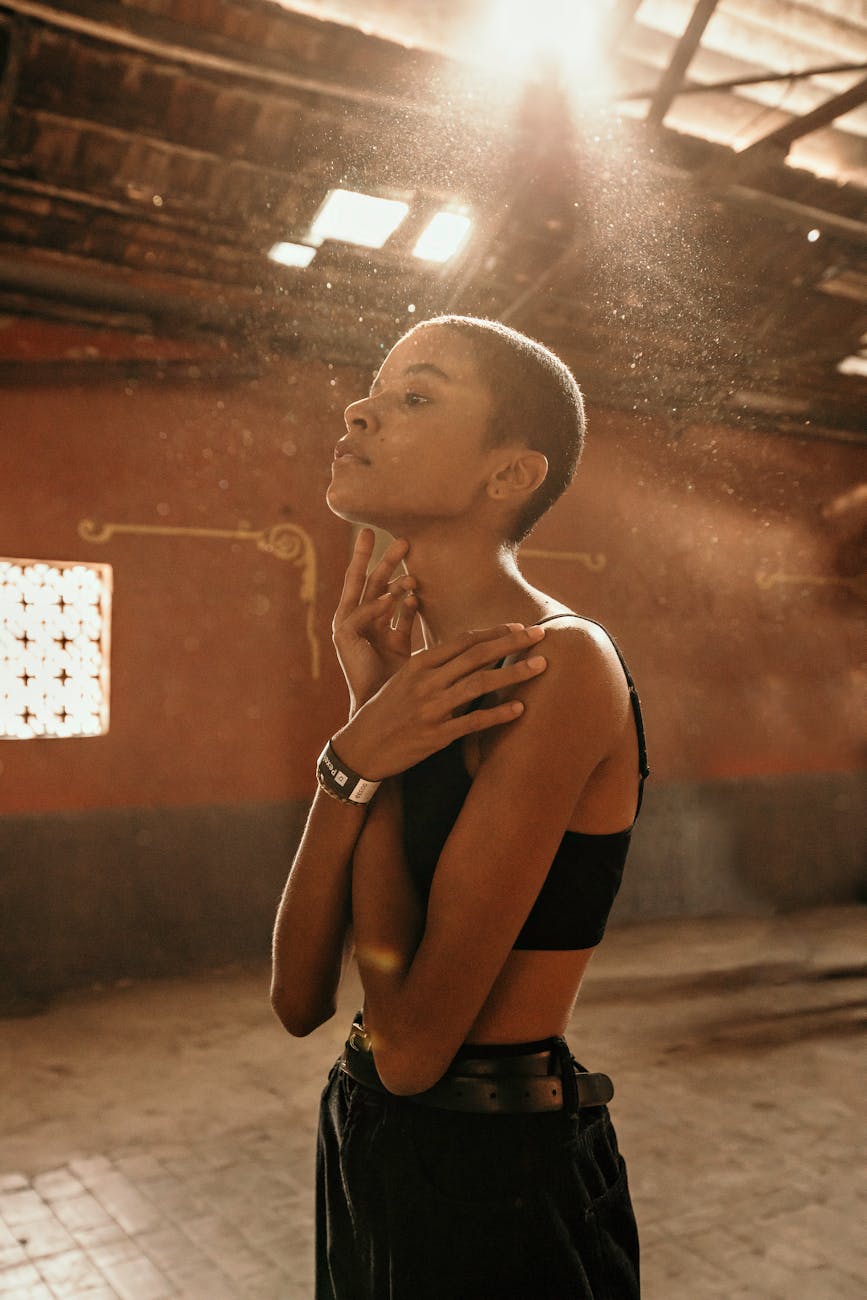
It’s no coincidence that eating disorders are most prominent in Western civilisations where capitalism has replaced community. In such civilisations, we are sold the lie that we need to change ourselves in order to be enough, and, heartbreakingly, people actually believe this lie. It is for this reason that so many people spend their whole lives chasing the ever-elusive feeling of enoughness.
*‘Ever elusive’ because by making our bodies a trend, beauty standards are constantly shifting; therefore, no sooner have we reached one ideal than we are sold another, yo-yoing from heroin chic to curvy, over and over again.
One might look at the media and, in turn, the influencers that young people are looking up to and worry about such ‘trends’, but upon looking to other cultures, we can see that the issues that we are facing today are not just part and parcel of being human, and therefore they can change.
Eastern civilisations, for example, who focus not on money and power but health and wellbeing, place far less, if any, value on body image compared to people in the West. Tending to be of a more spiritual mindset, they have bigger, more important things to think about than being lean and muscular if they’re a man, or as small as possible if they’re a woman.
So, what’s the obsession in the West?
It can be argued that an increase in wealth in the West is contributing to an increase in eating disorder cases, especially since less economically developed countries show significantly lower rates of eating disorders compared to their wealthier counterparts.
Headed by capitalism, Western civilisations are all about money. Forsaking morals and a conscience for a quick buck, the people in power in countries in the West recognise that self-loathing is profitable.
Just think about it. If everyone were content with themselves, then there would be no diets to sell, or gym memberships, or cosmetic surgeries, or makeup, or any of the other pointless things that we’re sold to make us ‘good enough’. In recognition of our own self-worth, we wouldn’t be driven to work every hour under the sun to pay to feed our insecurities. Like the animals of whom our similarities are far starker than our differences, we would be content enough to just…live.
Alas, we don’t permit ourselves to just live. Instead, we spend our whole lives trying to escape what we are. Dancing with death and living life on the edge, we forget that embracing the simple way of living that being an animal offers would make us happier than any of our human wants possibly could, this being a fact that is proven when we go on holiday.
Diving headfirst into different cultures where bodies aren’t celebrated for how they look but for what they do, when we’re on holiday, we can slow down enough to understand that the pressures that we have to look a certain way in the West are, perhaps ironically, based on greed.
When we lack for nothing, we want for everything.
Escaping the hustle and bustle of work commitments and the need to be ‘enough’, on holiday, away from the pressures of the West, we grant ourselves permission to just be.
Taking a step back, we lean into something which is even more elusive than our feelings of enoughness, perspective.
Embracing who we are at a deeper level, our souls, as opposed to settling for who we think we are at a surface level, our egos… This* is the only way to live a meaningful existence.
*(And if you can’t do it for yourself, then do it for your wallet. It’s amazing how much money a bit of self-love and a refusal to conform can save).
-
Priced out of Freedom: The Reality of Life Under Capitalism
Above the clouds and below the sky, the roads are unfolding balls of string. Long and winding, they take up whole islands upon which mountains are hills, and oceans are ponds, and whole settlements are condensed to tiny squares of land. Unfathomably small compared to what we know, this is what people mean when they talk about perspective.
Alas, we’re all guilty of letting the ego take charge and thinking that life, for which we know it, is equivocal to existence, for which it is, but one must only take a step back to see how grand* the world truly is, in every sense of the word…
*(Grand, but inaccessible to many owing to what we need to increase, yet what is seemingly destined to decrease, money).
Travel is made so inaccessible by the people in power because they don’t want us to see that there’s more out there. If we could travel freely, then we would be savvy to the beauty of the world and, in our refusal to subscribe to their limited ways of thinking, would finally come to understand that there is so much more to life than power and money (see also: corruption).
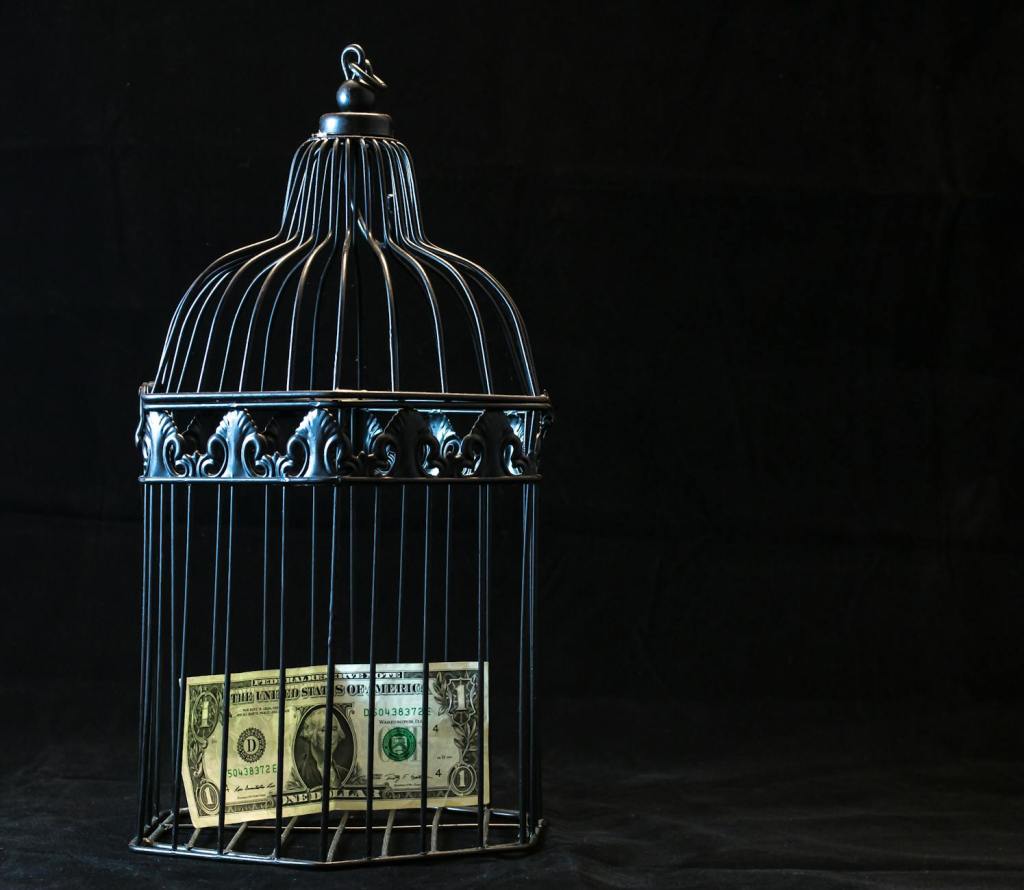
Money is freedom, yet it is also the source of our collective unhappiness.
Representing far more than the paper it’s printed on, money symbolises what we are trying to escape from: a life within which we let our ego decide what we want, all the while ignoring what our soul needs. To blame for this? The age of capitalism and consumerism that we find ourselves caught up in, an age that dictates to us all how we should and shouldn’t live our lives…
Who made life so complicated?
When we go on holiday, we can’t just relax on the beach with a towel anymore. Having to walk through hotel complexes to reach beaches that are verging on being (illegally) privatised, we’re sold sunbeds at £15 a pop, and boat excursions, because our fear of missing out is so great that we can’t explore the land that isn’t yet even a quarter explored before we’re lining the pockets of yet another greedy billionaire to whom the law doesn’t apply. ‘Queue up here to have the best experience of your holiday. Just ignore the fallen trees that we had to fell to bring it to you…’
By capitalising on the essentials of survival, they subject us to the perils of existence.
It’s a recurring theme. Despite having it so easy, we have access to the whole world, we take our privilege for granted. Getting so caught up in thinking about all the things that we don’t have, we end up forgetting about all the things that we do have. Forsaking an abundance mindset for a scarcity mindset, we constantly yearn for ‘More. More. More.’
It’s such yearning that sees a 40-hour working week on minimum wage being the norm for all too many of us. Despite our time being the most precious asset we have, we so readily exchange it for money (the most socially constructed asset we have). And, while it’s so nonsensical, there’s no way around it.
Although having access to this world is a human right, without having money to pay for the plane, train, or boat fare to get there, and without having money to afford to pay for the accommodation once you’re there, you can’t explore it. Some people will therefore get to the end of their life having not ventured outside of the town within which they were born, let alone the country.
Trapped in a bubble, some people will never realise how much wonder and beauty lies out there, hence the phrase ‘the cost-of-living crisis.’ It’s a crisis because there should be no cost to living, yet there is, and it’s extortionate, both in terms of money and happiness.
Photo by John Moeses Bauan on Unsplash If you want to migrate to another country, you’re demonised by being presented with a racist rhetoric disguised as ‘patriotic concern’… A holiday is fine (it’s encouraged, in fact, because it pays into the tourism industry and therefore feeds capitalism), but moving countries is a no-go (unless you’re from the West and white, then it’s allowed).
Every other animal in the world understands that our right to roam is just that, a right, yet the labour that we, as humans, are forced to endure to access that right is extortionate.
Alas, how would it feel to live as we were born to live? To spend our little and oh so incredibly precious time we have exploring every corner of this masterpiece we call home?…
One can but dream.
-
Do Men Make Better Artists Than Women? – Dismantling The Myth

Art by men is valued considerably higher than art by women. This is a renowned and indisputable fact.
As this article in the Guardian highlights, for every £1 fetched by a male artist’s work, one by a woman gets a mere 10p (and if this statistic isn’t already shocking enough, its value plummets yet further still if she signs it)…
To put some real examples to the above, consider the most expensive painting ever sold by a man (or woman)– Salvator Mundi by Leonardo da Vinci. In 2017, Da Vinci’s work fetched a staggering $450m at auction. In contrast, however, the most expensive painting ever sold by a woman, Jimson Weed/White Flower No 1 by Georgia O’Keeffe, sold for considerably less, $44.4m in 2019. This shows the discrepancy in how art is valued based on the artist’s gender (a 164.078% discrepancy, to be exact) …
Although countless organisations exist to shine a light on such inequality, one example of which is the Guerrilla Girls, a group which formed in response to MoMA’s 1984 exhibition whose ratio of female to male artists was a shocking 13:156, we don’t want to merely recognise what is happening within the arts but ask why it is happening.
Why, when women earn 65–75% of master of fine arts degrees in the U.S., are only 46% of working artists women? Similarly, why, when 64% of art and design undergraduates in the UK are women, are 68% of the artists represented at top London commercial galleries men?
It’s not that women just aren’t ‘good’ at art, clearly. A far greater proportion of women graduate from art school than men. It’s that women have, for centuries, been regarded as ‘lesser than’ their male counterparts through no fault of their own.
The existence of the patriarchy
Misogynistic views rooted in the patriarchy still see society viewing women as being worth less than men. Even little things that we overlook, such as women generally taking the surnames of their partners when they marry, serve to contribute to the patriarchy being upheld.
To focus on women taking their partner’s surnames for a moment, this means that when female artists sign their work, they are essentially attributing it to their husbands, therefore further contributing to the notion that women don’t create art, let alone ‘good’ art.
A vicious cycle is then created.
With a lack of female artists in the media, the phrase ‘you can’t be what you can’t see’ rings ever truer. How can anyone give art created by women the same level of respect as they give art created by men when all they see is the latter? It’s just not going to happen. For it to happen, we need to see a societal shift in attitudes towards female artists.
First, however, we just need to see female artist’s full stop.
Women shouldn’t have to sacrifice being honest about who runs their business in order to stay in business, but unfortunately, that is what is happening today.
Where are all the women?
In 2017, two women, Penelope Gazin and Kate Dwyer, decided to start an online art marketplace. It didn’t, however, take long for them to notice a pattern…
In many cases, the external developers and designers that Gazin and Dwyer enlisted to help took a condescending tone over email. These collaborators, who were almost always male, were often ‘short, slow to respond, and disrespectful in correspondence’. In response, Gazin and Dwyer introduced a third cofounder: Keith Mann, a fictional character who could communicate with outsiders over email.
“It was like night and day,” Dwyer said in an interview with the Fast Company. “It would take me days to get a response, but Keith could not only get a response and a status update but also be asked if there was anything else that he needed help with.”
In exchange after exchange, the perceived involvement of a man seemed to have an effect on people’s assumptions about Gazin and Dwyer’s business, therefore prompting me to ask the question, again, of…
Why are men held on such a pedestal?
A combination of the patriarchy, misogyny, and the cause of it all, man’s massive ego, we cannot have this in our future.
Alas, for something that is all about breaking down walls, the art world sure does love to keep a pile of bricks on hand… However, with greater awareness of what is happening within the industry, as well as across all the industries in society at large, we can get rid of those bricks once and for all. For the first time ever, men, women, and everyone in between can all start from a level playing field.
For artists to be known, not for their gender, but because of what they do and what they support… This is the goal.

Photo by Pavel Danilyuk on Pexels.com -
God’s Not Real And I Am: A Poem

There is so much to live for
yet they focus on what (they think) happens when we die,holding not themselves but us accountable
when we stray from their painted-on lines…‘It’s a sin to be gay.
They/them makes no literary sense.Have you tried reading the bible?
I promise, it’s not all pretend.’(Only most of it) …
This is what makes no sense.
It makes no sense that their focus is on us
when their focus should be on them.Discussing what resides between a stranger’s legs at this ripe old age?
Ha. ‘But I promise, not all the vicars are bent.’‘Get on your knees.’
Sure…
Before anyone starts branding us as ‘sinners’,
I suggest that they first look inwards and see,that we all get on our knees for the same things,
salvation and a sense of release.And while they might call us evil,
‘You’re destined for hell, just you wait and see’,their words lose the power to offend
when what is a sin for them could never be a sin for you and me. -
Declining Quality. Increasing Prices
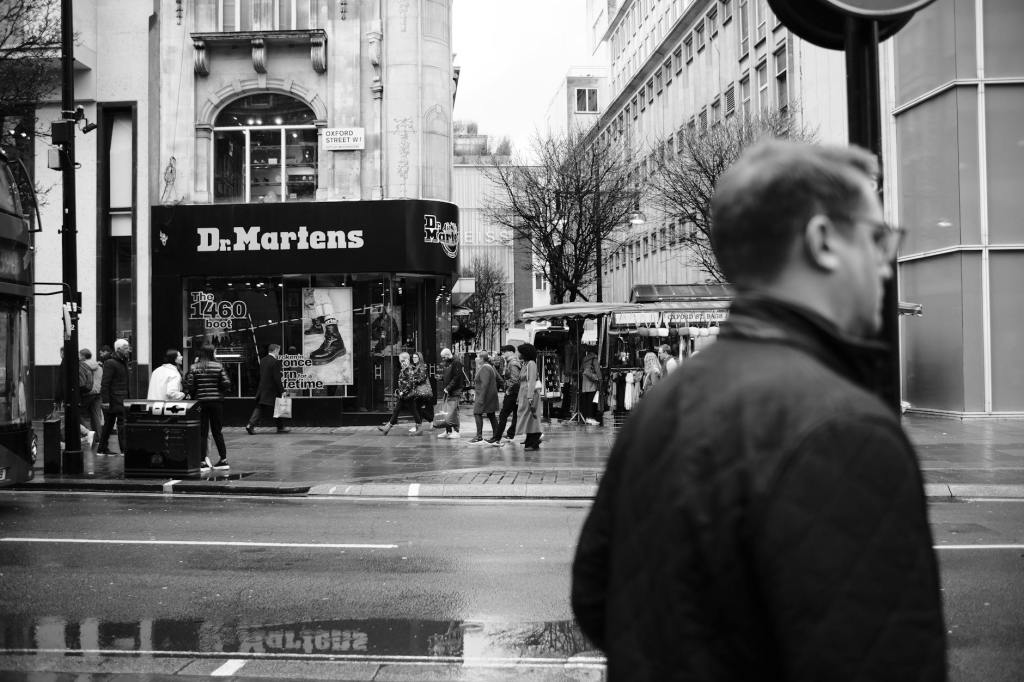
They were once the epitome of British subculture. The brand to have for punks and skinheads, they were British-made and long-lasting, and everyone wanted to have a pair. Now, however, they are a shell of their former self…
What happened?
Dr. Martens are no longer being produced in the UK. Following a private equity deal in 2013 with the £30 billion group Permira, production for the iconic brand has been taking place abroad. While the UK factory is still running, to have a pair from that store (i.e., to have a pair that won’t fall apart in the first six months- 2% of the current Dr Marten inventory), there’s a price, and it isn’t cheap. For the classic 1460 Quilon leather ankle boot, for example, the price is £220. The price for a ‘normal’ pair (i.e., a pair made in Asia- 98% of the current inventory), however, is just £122.
Just over half the price for well under half the quality…
When Dr Martens were still being made in the UK, they were known for their quality. People could go decades without needing a new pair and, when they finally did need an upgrade, they could benefit from DM’s ‘For Life’ program.
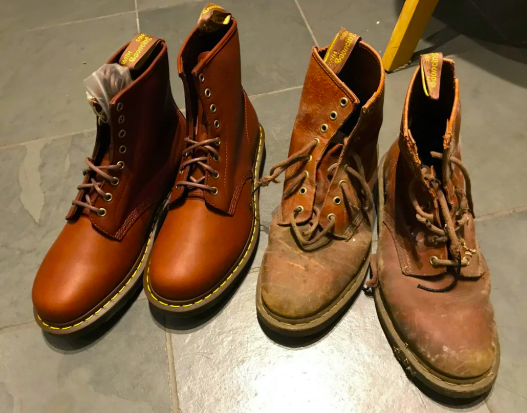
Source: Reddit Prior to 2018, all DM boots were sold with a lifetime warranty. The program guaranteed replacement or repair of worn-out shoes for free. Now, however, there is no such thing.
It’s all about profit.
Fast Fashion
No longer ‘counterculture’, Dr Martens is aimed at a mass market now, which is sad. It’s sad that a brand that once represented the working class has now been ‘gentrified’, one could say, by greedy businessmen.
Unfortunately, this is not just a quality issue reserved for Dr. Martens, either. The fact is that what we are seeing, increasing prices and decreasing quality, is affecting just about everything we buy and consume today, across the board…
Shein and Temu, AliExpress and Wish, they all sell Chinese-made products at extremely low prices that UK manufacturers simply cannot compete with. Their business model, one of mass production, where workers labour extensively in order to fulfil demand, therefore, unsurprisingly, has many ethical implications…
You Pay Less, They Pay More.
Working up to fourteen hours a day (standard working hours tend to be from 08:00 to well past 22:00) with only one day off per month in all too many cases, the work in factories for the likes of Shein and Temu is gruelling*.
*(Gruelling, and unquestionably a violation of human rights)…
For however long we keep buying from the likes of Shein and Temu, though, the suffering will continue, as Marco Rubio, a leading Republican on the US Senate Intelligence Committee, and an ally of Donald Trump, echoed…
‘With every purchase made on these platforms, the abuse of human rights is further normalised and reinforced.’
Last year, Rubio wrote to then-UK Chancellor Jeremy Hunt, warning him about “grave ethics concerns” surrounding Shein. “Slave labour, sweat shops, and trade tricks are the dirty secrets behind Shein’s success,” Mr Rubio wrote in his letter to Mr Hunt. Did the UK listen, though? No, of course they didn’t listen because, as always, business is centered on the premise of prioritising profit over people.
Gone are the subcultures of yesterday, when getting a pair of Docs was a nod to being a part of something bigger than oneself (see the image below). Now we are all buying into the ever-moving, never resting, always manufacturing world of fast fashion.
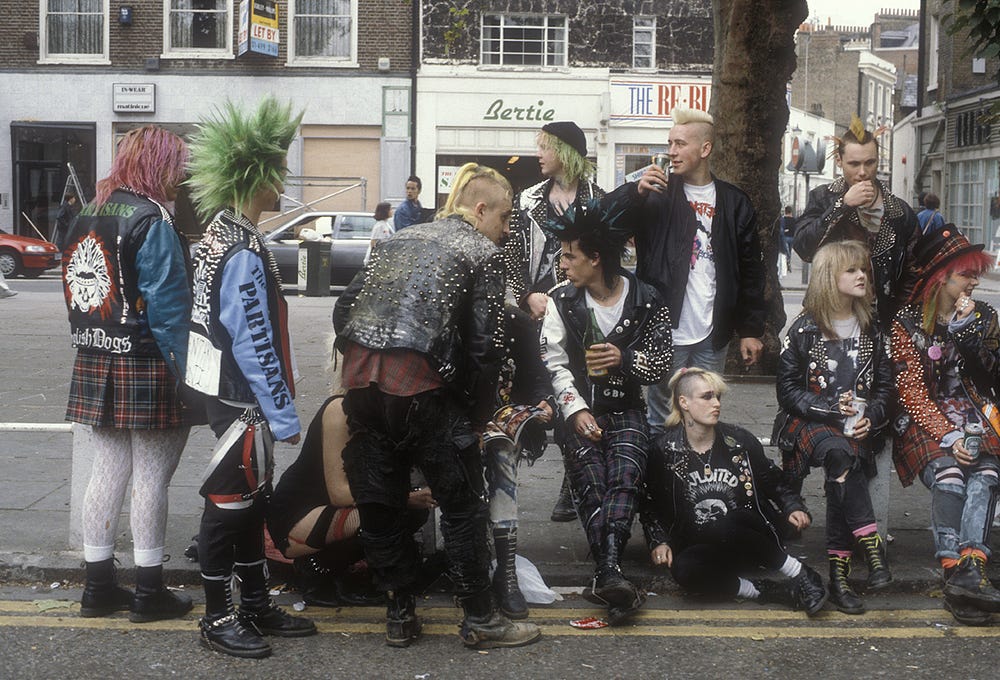
Source: Hero Magazine To end with a more positive sentiment (it’s not all doom and gloom, I promise!), it’s hopeful that there are sites that encourage recycled fashion to at least counteract some of the damage that companies like Shein and Temu are inflicting upon the world. Sites such as Vinted and Depop, for example, exist to encourage people to buy second-hand, as do charity shops. It’s also hopeful that younger demographics are increasingly seeking out vintage clothes over mass-produced garments. We must continue to foster this and encourage it since fast fashion not only hurts individual workers, but also the world. How do you think your Shein haul gets to you from China? (Hint: It’s not via electric car or bicycle) …
The more people who buy and sell second-hand clothes, favouring vintage over new, the more hope we have for humanity.
Photo by Sincerely Media on Unsplash -
Like For Like, Rich For Rich: The Hidden Secrets of Paris
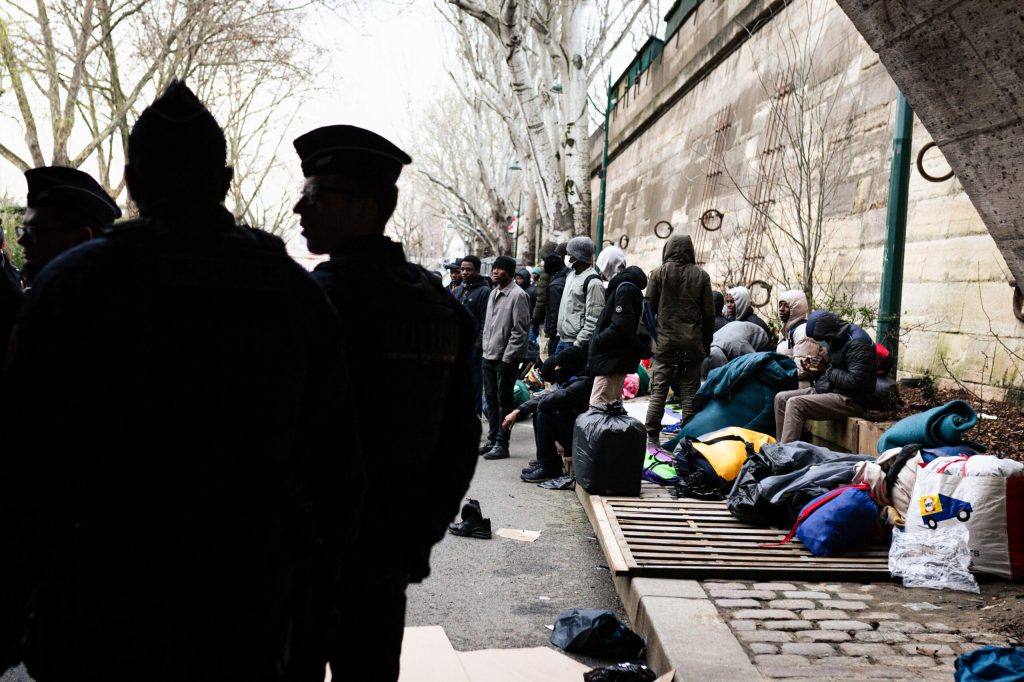
Paris, the ‘city of love’, is romanticised by the bourgeoisie but… for what? Is it for the 3.3 trillion-euro debt and the 100,000 people living on the streets, or am I missing something?… These are the hidden secrets of Paris.
5 AM: Adorned with a Tesla, a suit, and a lack of conscience, he signals for the briefcase to cross the road but slams his hands on the car horn for the bag of struggle on a bike.
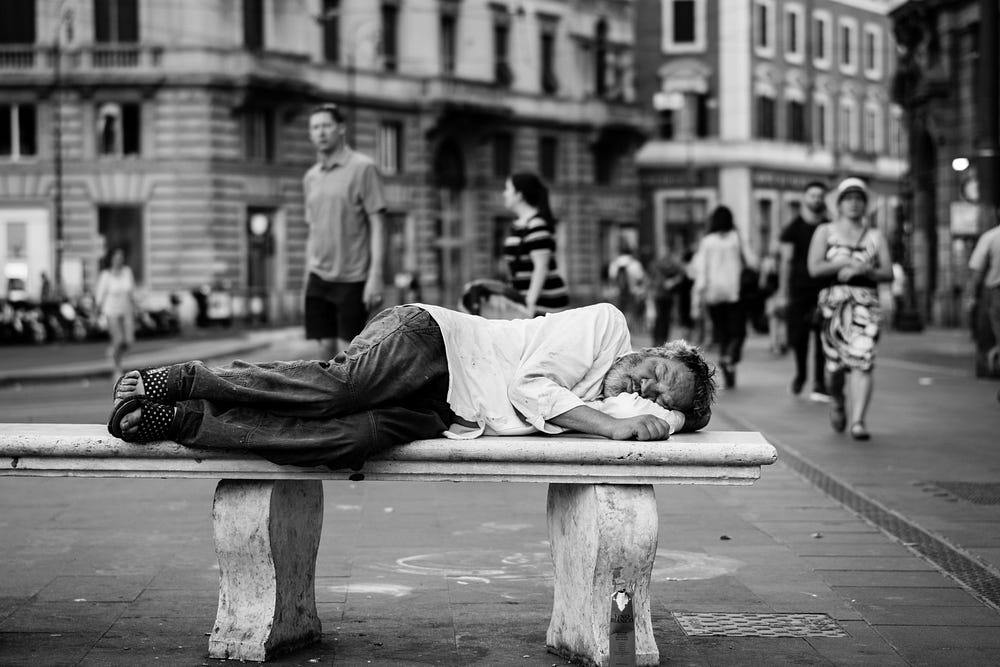
Slumped across the handlebars, the delivery guy works for a pittance at the cost of his sanity. After work, he uses the reflection in the shop window to shave his stubble… until he’s moved on by a policeman standing on the street corner.
Heaving the bag containing the weight of the world onto his back, he clutches the cross dangling from his wrist, clinging to any semblance of hope.
Why, when this man delivers pizzas for a living, is he knee-deep in a trash can searching for crumbs at 5 AM?… And why, when he suffers so much, do they care so little?… They queue up for half an hour for a 20-euro thimble of hot chocolate, but say ‘I have none, sorry’ when he asks them for spare change…

https://www.aljazeera.com/gallery/2018/12/23/this-is-europe-an-image-of-homelessness-in-paris-16 6 AM: We’re drifting in and out of sleep in the back of a Tesla on the way to the airport.
Hearing the sharp shrill of a car horn, we awaken, look up, and see a bag of struggle cycling across the road. Familiar, it’s a sight we’ve come to associate with Paris.
(Well, that and graffitied walls everywhere, the stamp of disillusioned youth)…
Behind the carefully angled camera lenses (‘Look, I touched the Eiffel Tower!’), and the romanticised movies, there exists a wealth divide so stark that upwards of 100,000 people are hungry, cold, and suffering on Paris’ streets as I type.
But the French authorities don’t want you to see that…
Social cleansing: ‘It concerns all people who live and work in the streets– migrants, homeless, drug users, and even sex workers. They are just pushed away instead of being taken care of’.
In 2024, Paris hosted the Olympic Games. Before the world turned its eyes to the French capital, however, the local authorities made sure that all homeless people were removed from its streets. Approximately 12,500 people were subsequently left without shelter following this heartless move, all the while President Emmanuel Macron (commonly referred to as ‘the president of the rich’), hosted an extravaganza at the Élysée Palace for the richest men in the world. This all formed part of Macron’s plan to showcase France’s grandeur during the Games.
Did it work? Well, that depends on your definition of ‘work…’
If you mean, ‘Did it divert the world’s attention away from the social injustices of yet another capital?’, then yes, I’d say that it worked. I, for one, was perhaps ignorantly oblivious to just how extreme homelessness was in Paris. But if you mean, ‘Did it work work?’ (i.e., did it eradicate the problem), then the answer is an irrefutable no, of course it didn’t work…
As wrapping a bridge in gold leaf doesn’t get rid of the people living (or rather, surviving, just about) under it, just because you can’t see something, it doesn’t mean it isn’t there.
Alas, money is making this society blind to love.

https://www.infomigrants.net/en/post/55699/paris-police-evacuate-400-young-migrants-without-offering-alternative-shelter 7 AM: We are on our way back to the UK, travelling home with the awareness that, while we get to leave and, for us, the struggle gets left behind, they have no choice but to stay and endure the struggle that continues.
Like for like,
rich for rich,
this is the reality
of the people in the know
about the hidden secrets
of Paris. -
What Happened To The Party For The People?

The run-up to last year’s general election saw the country coming together, united by one common goal, to demand an end to Tory leadership.
From May 2010 (when David Cameron took over from Labour’s Gordon Brown) to July 2024 (when Rishi Sunak handed the keys to number ten over to Sir Keir Starmer in Labour’s landslide win), Britain has been dragged through it in more ways than can be discussed in one article.
Focusing on COVID-19 in particular, between 2020 and 2023, over 225,000 people died from the virus in the UK. Since then, countless investigations have taken place into the government’s approach to the pandemic, most notably, to their neglect.
Despite knowing the threat that COVID-19 posed to the lives of the most vulnerable members of society, the government did nothing to stop the spread of the disease among the older, and therefore most at-risk, demographic. By discharging them from hospitals before they were tested for COVID-19 (or, in some cases, even after they tested positive), the government effectively abandoned them. The blame for the 40,000 excess deaths therefore rests on the British government, undoubtedly.
‘It is as if care home residents were seen as expendable. Despite thousands of empty beds, they were de-prioritized when it came to getting access to hospital care and had blanket do-not-resuscitate orders imposed on them without due process. Such abuses are deeply disturbing’, says Amnesty International’s Senior Crisis Response Adviser, Donatella Rovera.
It was the government’s neglect, (the pandemic inquiry heard that Boris Johnson told senior advisers that the Covid virus was “just nature’s way of dealing with old people”), that saw care homes in England, at the height of the pandemic, peaking at around 400 deaths a day.
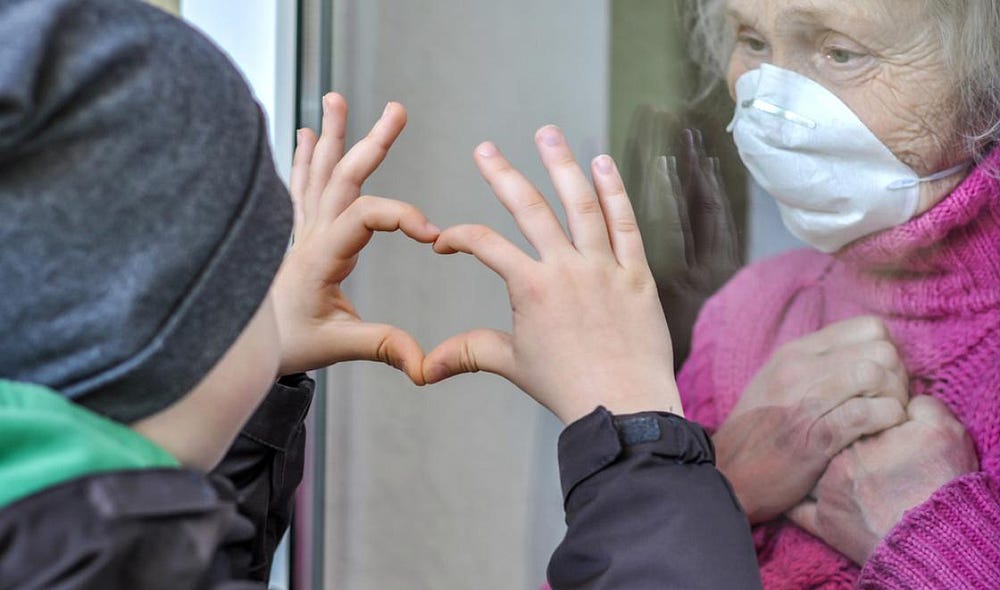
Why were old people told that they must ‘accept their fate’ while young people were told that they must ‘get on with their lives?’ Because it’s all about money, hence why the UK saw one of the worst waves of COVID-19 deaths in the world.
We were one of the countries to be hit with COVID-19 the hardest because we were, because we are, one of the countries to be hit with greed the hardest… Our government is founded on it.
With the ability to impose new laws and sanctions at their discretion, the government is above us, regardless of who is in power. Whether Conservative or Labour, preach as they may about being the ‘party for the people’, Liberal Democrats, Green or, dare I say it, Reform UK, every political party in the UK operates under authoritarianism (Adjective: ‘Favouring or enforcing strict obedience to authority at the expense of personal freedom’) disguised as democracy.
Each side will stand up in parliament bickering over policies. We saw it happen in the last election, and every election prior. S VS S, we watched Starmer slating Sunak at BBC’s question time, berating him for not doing right by the country. Needing to believe that things would get better, people with decency believed Starmer’s promise, clinging to the hope that the chant-turned-trend of ‘Fuck the Tories’ would bring about change. And yet, here we are. Nine months on, here we are, still waiting for any real change to arise…
And so, where does that leave us now?
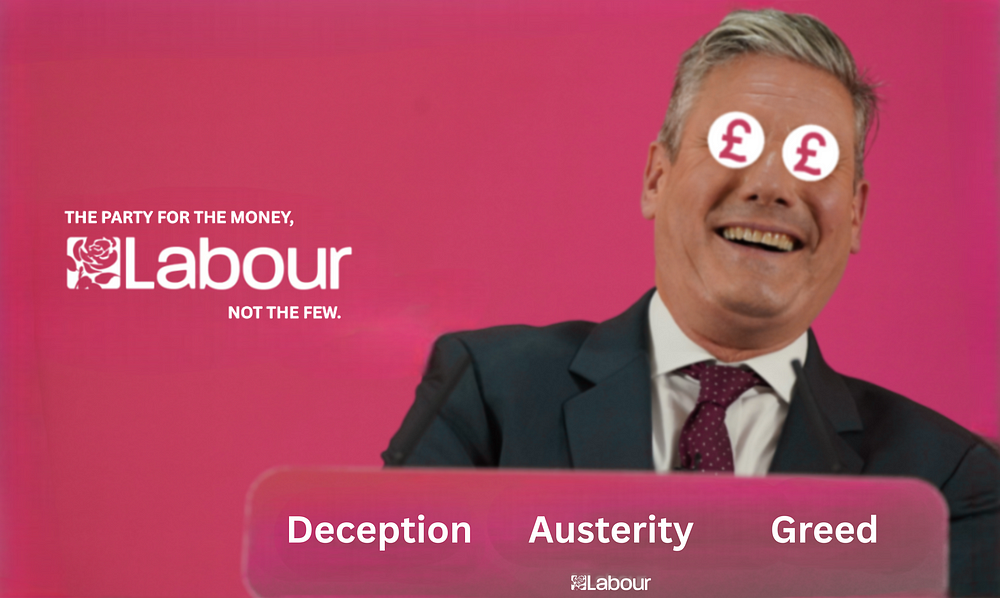
I used to have hope in politics. I used to believe that, once in power, Labour would put it all right, but when nine months is enough time to conceive a child, yet the only thing that Labour has conceived is (more) austerity, what hope I had in the system has, unfortunately, all faded.
The question therefore persists of… What next? What is the next step to restoring hope in a system when those who govern the system are all corrupt™ packaged up slightly differently?
If anything, the ‘lesser of two evils’ is actually worse, for with the Tories et.al. at least you know exactly who they are and who they represent — the elite and the entitled. Labour was the counterbalance to the exploitation of the working class. But now? Starmer is more Tory than the Tories.
Alas, why can’t we have a system that is actually for the people, not the privileged? Why can’t we live in a world within which humanity counting for more than profit isn’t seen as utopic?
Chance would be a fine thing.
I don’t want to have to vote for the lesser of two evils anymore, but what is the alternative? To not vote at all? As a woman especially, not voting, in my opinion, is an ignorant move. When the Suffragettes died for our right to vote, I cannot let that be in vain. And so yes, I will vote for the ‘lesser of two evils’, but I will not be complicit in these times of great deceit. I will write and I will write and I will write. It might never be enough to have any great impact, but small impacts are still impacts.
Tap on a wall enough times and eventually the whole thing will come down and, sitting amongst piles of bricks and rubble, from the wreckage, we will rebuild.
Anarchism. It’s the only way forward.

“The proletarians have nothing to lose but their chains .”
Karl Marx. -
Why Netflix’s New Mini-Series Adolescence Felt So Close To Home
‘Most boys would’ve touched her, but I didn’t. I was tempted, I was so tempted, but I didn’t, and that makes me better.‘
The above is a quote from the hit Netflix mini-series and most talked about show of the year, Adolescence.
Written and produced by Jack Thorne and Stephen Graham, the first episode of the four-part series was watched by a staggering 6.45 million people in its first week alone, therefore making it the first streaming show to top the UK’s weekly TV ratings.
Its success, however, is somewhat of a bitter blow. Is the reason we are all so gripped because we relate? And if so, what does that tell us about the state of our society?…
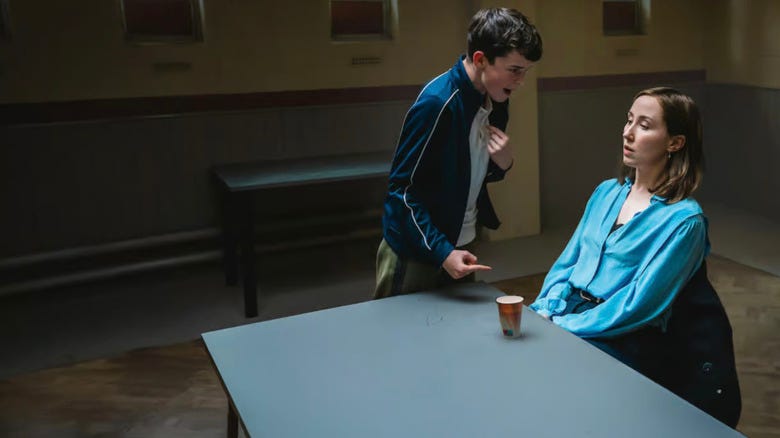
https://www.slashfilm.com/1814670/teacher-saw-netflix-adolescence-chilling-moments-firsthand/ Adolescence tells the story of a 13-year-old boy, ‘Jamie’ (Owen Cooper), who is arrested on suspicion of murdering a girl from his school.
Concerned not with who did it (Adolescence is not a typical ‘whodunnit’ drama, we know from the get-go who is responsible), but with why he did it, the show looks into the eye of male rage. What’s more, it forces viewers to grapple with the morality of feeling sorry for Jamie’s lack of morality.
The viewers are made to feel sorrier for Jamie, the perpetrator, than they are for Katie, the victim.
Exploring Jamie’s psyche, something that society has corrupted, we cannot help feeling sorry for him. We cannot help feeling sorry that, in his 13 short years on earth, society has so vehemently plagued his mind.
Jamie might not have died, but the essence of Jamie, his morals, did.
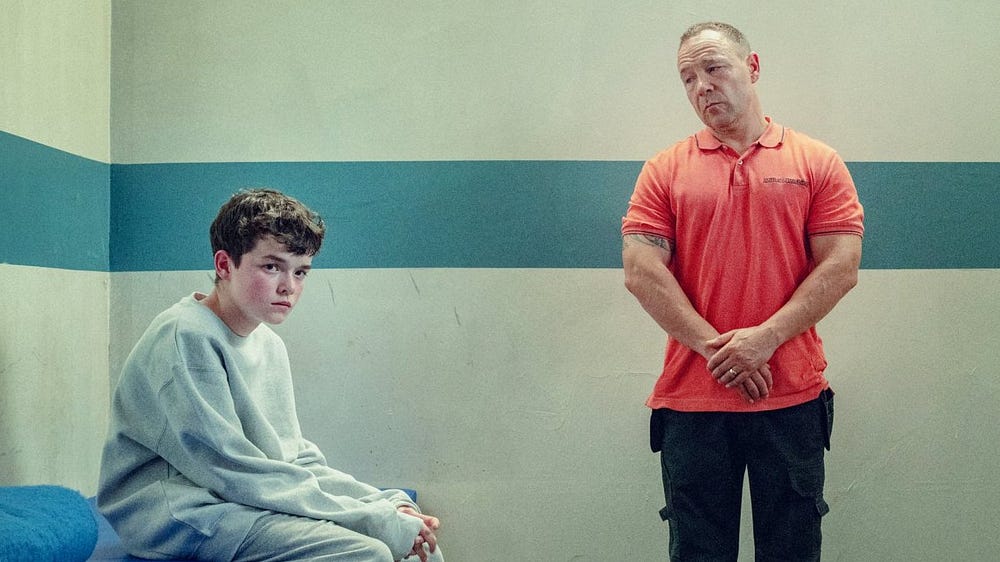
https://www.thetimes.com/culture/tv-radio/article/adolescence-the-tv-drama-that-every-parent-should-watch-z8dvjwv3p Because of the shows, unfortunately, all too relevant themes, Adolescence has sparked a national conversation, including with Britain’s Prime Minister, Sir Keir Starmer, no less…
In an interview with Sky News, Sir Keir said that he was worried about the “crisis in masculinity” raised in the programme.
Adolescence explores the impact of social media and the effect that misogynistic online influencers such as the likes of Andrew Tate can have on young men.
Have you ever wondered why cases of domestic abuse are staggeringly male against female (1 in 4 women vs 1 in 7 men)? It is precisely because of the type of toxic masculinity portrayed in Adolescence…
People feel oppressed when equality is closer. If you were once the king of the hill and now everyone’s almost on your level, you feel threatened.
The ‘manosphere’ is corrupting young minds through the array of websites and online forums that exist to promote misogyny and oppose feminism. Here, incel culture thrives.
The Anti-Defamation League, which works to address hate and extremism, defines incels as ‘heterosexual men who blame women and society for their lack of romantic success’.
It is the blame placed on women that explains why, throughout Adolescence, Jamie repeats, ‘I didn’t do anything wrong.’ Jamie doesn’t deny doing anything, just that he didn’t do anything ‘wrong.’
Acts of incel-related violence tend to be seen by the community as a form of liberating action that constitutes an act of revenge.
As it was feminism that promoted and encouraged women to have a right to sexual agency, there has been much discussion in incel forums dedicated to the reversal of gender equity, too. Many of the proposed solutions involve some form of coercion, rape, or a complete return to enforced monogamy under strict patriarchal rule.
The idea of a ‘men’s rights movement’ sees men wanting to reverse the progress seen in the twenty-first century and revert to a society headed by the oppression of women at the hands of men. Most incels want to return to such an era where women marry young, and all men are entitled to sex with women. Why? Because it is their right, they believe, to have sex and reproduce, and women are the ‘vessels’ for said needs.

https://edition.cnn.com/2023/03/16/us/incel-involuntary-celibate-explained-cec/index.html The issue (amongst many) of incel communities is their ability to suck people in. Through peer pressure, they seek to cause as much damage and destruction as possible.
If you don’t take drastic action against women, you are deemed to be a ‘blue pill’ (ignorant of what is happening). The desirable status is the red pill.
Among incels, the red pill represents the realisation that feminism has caused a massive shift in power, and that feminism (understood by incels as women having the right to sleep with anyone they wish), gives women far too much power, and has led to “hypergamy,” incel speak for women pairing up with men who are more attractive. It is for this reason, incels believe, that the ‘80/20’ rule exists (80% of women desire 20% of men). The 80/20 rule tells men that they will never be desirable and, consequently, will never find sexual fulfillment and happiness.
It is perhaps unsurprising then, given the rhetoric that impressionable young boys are fed, that violence against girls and women is ever-increasing.

https://www.itv.com/news/westcountry/2021-08-13/who-was-jake-davison-plymouth-gunman-who-killed-five-in-massacre In August 2021, Jake Davison (pictured above), aged 22 from Plymouth, carried out the deadliest mass shooting since 2010.
Davison, who frequently posted on incel forums, shot and killed five people, before shooting himself. His victims included a three-year-old girl and his own mother whom, it was later revealed, frequently clashed with Davison over his violent opinions of women.
In July 2021, just one month before he struck, Davison filmed himself talking about his “lack of success at dating apps, disillusionment of life, and self-hatred”. This was just one post amongst many in the months leading up to the attack.
Davison expressed views that he had missed out on relationships because, in his words, he was ‘a virgin … fat, ugly.’
Someone else whose attitude toward women ended in heartbreak was Kyle Clifford (pictured below with his ex-girlfriend who he would go on to murder)…
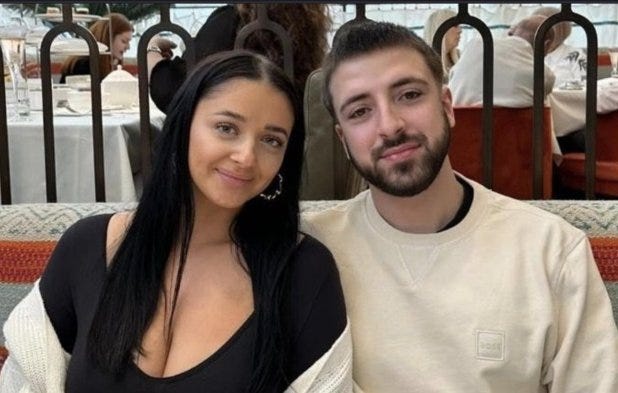
https://www.telegraph.co.uk/news/2025/01/22/kyle-clifford-crossbow-killer-soldier-guilty-murder-brother/ In July 2024, Clifford, 26, admitted murdering Carol, 61, with a butcher’s knife and using a crossbow to fatally shoot Louise, 25, and 28-year-old Hannah.
The attacks came two weeks after Louise ended an 18-month relationship with Clifford after being urged to do so by her family (including her mother and sister who were also murdered during the attack).
In his trial, the court heard how Clifford had searched for self-described misogynist Andrew Tate’s podcast less than 24 hours before carrying out his attack.
Andrew Tate is a British American former reality TV star with millions of social media followers (over 10 million on X alone).
Styled as a self-help guru, offering his mostly male fans a recipe for making money, pulling girls, and ‘escaping the matrix’, Tate uses his platform to deliver his disturbing views on rape, relationships, and power. Many in his audience are teenagers who are just beginning to understand their own sexuality.
Tate, who says he is “absolutely a misogynist,” teaches his acolytes that women are inferior and morally deficient beings who are good only for sex and status building, and who deserve to be physically, sexually, and emotionally abused. And that he has done…
Accused of the sex trafficking and rape of seven women from Romania, the U.S., and Britain, Tate was arrested in December 2022.
Prosecutors allege that Tate raped at least one of the women repeatedly, controlled them by threatening them with violence and financial ruin, and posted pornographic videos to the women’s social media accounts.
Speaking via their legal representatives, the British victims said: ‘Hearing that Kyle Clifford watched videos of Andrew Tate in the lead up to his murders of his ex-girlfriend, her mother, and sister, is deeply upsetting to us, but sadly not surprising. Clifford’s case should be a warning to world leaders and all those who belittle the seriousness of allowing incitement of violence against women online to fester.’

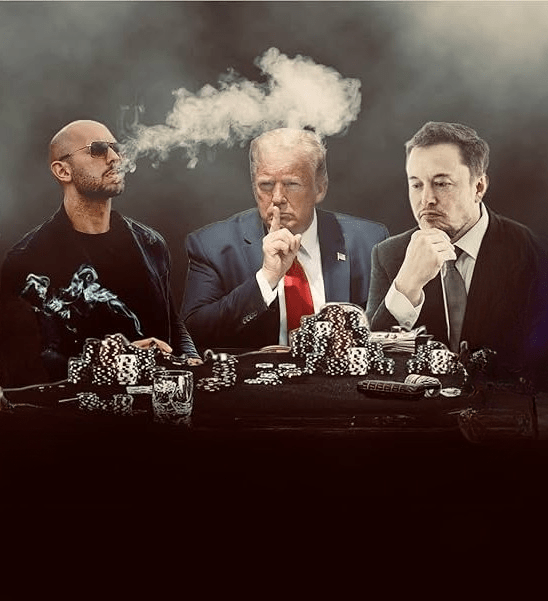
Retrieved from here The ‘manosphere’, a theme covered in Adolescence of which Andrew Tate (pictured above) is the figurehead, attracts men and boys who are angry, depressed, and feeling victimised by women and society.
Rather than teaching lonely boys how to be emotionally resilient, the so-called ‘manosphere’ teaches them to lean into their anger and supplement it with lists of perceived grievances against girls and women.
Unfortunately, however, Tate’s many followers are not exclusively teenage boys…
In February 2025, Tate landed back in the US after being held detained for over two years in Romania on rape, sex trafficking, and money laundering charges. The Romanian courts, however, abruptly reversed their previous refusal to allow Tate to leave the country after several high-level Trump administration officials took an interest in his case — including Trump’s son Donald Trump Jr, who called Tate’s arrest in Romania “absolute insanity”.
When asked if Trump had played a role in Tate and his brother’s release; ‘Do the math’, the Tates’ lawyer Joseph McBride said. These guys are on the plane.”
It’s terrifying that one of the most powerful men in the world can support someone like Andrew Tate…

https://www.newsweek.com/donald-trump-reacts-news-andrew-tate-returning-us-2037402 Alas, it speaks volumes when one of the lawyers Tate hired to fight his human trafficking case, Paul Ingrassia, was appointed the White House liaison for the Department of Justice.
‘Justice…’ It would be laughable if the situation wasn’t so dire.
When a quarter of Britons say they would consider voting for Reform UK in a future election, a party run by Nigel Farage, the man who just last year publicly praised Andrew Tate for being an ‘important voice for emasculated boys’, and in America, Trump, a man who was found liable for sexual abuse is in power, it’s a scary time for women indeed…


 Portfolio of Hope