-
Gender Performativity And Queer Resistance

Gender performativity has skewed what it means to be a woman in today’s society.
When heterosexuality is the norm, and so much of our experience as women is shaped by our relationships with men, to be a lesbian and live a life where men are so decentered feels like something different, hence why I, like so many other queer kids, grew up thinking that there must be something ‘wrong’ with me because I didn’t fit the stereotype.
I don’t wear makeup. Or skirts. Or dresses. My identity is a barrage of confusion. I feel masc and I look masc (‘masc’ being short for masculine), but I am not a man. I don’t feel like a man, but nor do I feel like a woman. I am a lesbian.
A gender (for me) as much as a sexual orientation, lesbianism is my whole identity.
‘Lesbian’ as a gender is the lived experience of women who feel disconnected from society’s understanding of what it means to be a woman.
Gender Performativity
While biologically I am a woman, my gender is of the same importance to me as being biologically right-handed (i.e. Not important at all). This is why I go by any pronouns, she/he/they, because you cannot get wrong what is essentially nothing but a concept.
What is far more important than gender to me, and is a real signifier of my identity, is the term ‘lesbian’, and it’s why I do not relate to any gender in the ‘normal’, heterosexual world.
I don’t relate to man’s version of womanhood, as created by them and for them, where even the term ‘woman’, a combination of the words ‘wife’ and ‘man’, is rooted in the idea that men have dominion over women. For me, the term ‘woman’ only becomes meaningful in the context of lesbianism.
Am I a man? Am I a woman? I don’t feel like either. Yet in the queer, lesbian world, I do.
As white Americans just identify as ‘American’, yet black Americans typically identify as ‘black American’ (the white folks are the dominant group, so the white part is unspoken), I identify as a masc (/soft butch*) woman, unable to separate my sexual orientation from my gender because the two are so interconnected.
*Some people consider the term ‘masc’ to be more about expression (external) and consider the term ‘butch’ to be more about identity (internal), but ultimately, they can be used interchangeably to describe a more masculine presenting woman. It is, however, important to check someone’s preferences when it comes to labels, especially due to the negative associations that many people still have with the word ‘butch…’
The issue we have is that people believe the lies that society sells them surrounding gender, and what it means to be a man versus what it means to be a woman.
Alas, it hasn’t always been this way. Prior to the late 20th century, there was only one word, a universal term to describe everyone, and that word was ‘man’ (hence the term ‘mankind’). You could call anybody a man as long as they were human.
It wasn’t until after this that the gender-neutral term stopped being that, gender-neutral, translatable as human/person, and came to be attached exclusively to men. This coincided with feminist scholars such as Judith Butler making a differentiation between biological sex and what they dubbed ‘gender.’
It is therefore unsurprising that the people who are the most transphobic, and who consider anything that goes outside the heteronormative binary as ‘woke bullshit’, are wealthy businessmen of the likes of Elon Musk and Donald Trump.
When the binary maintains the patriarchy, and the idea that gender can be different from biological sex is a feminist ‘theory’, it’s unsurprising why such people are so vehemently offended by it.
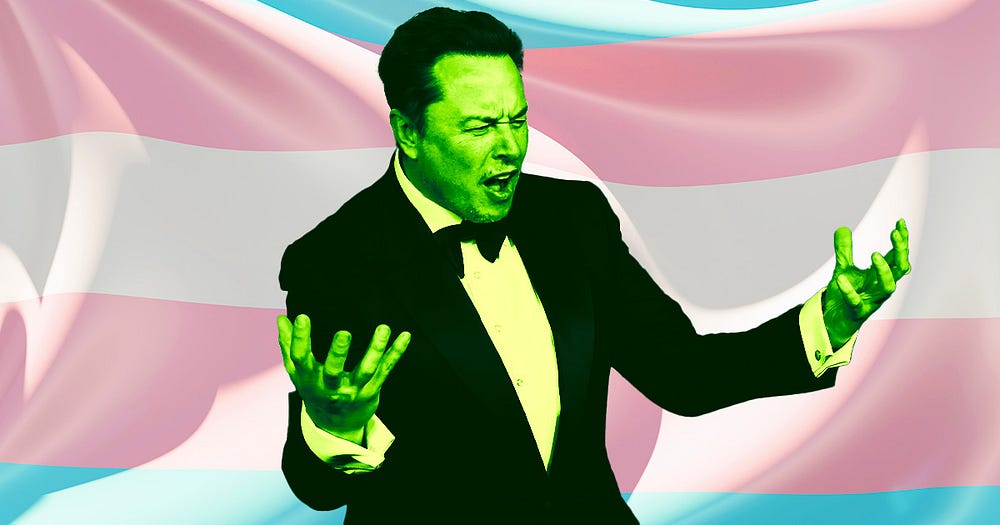
https://www.yahoo.com/entertainment/elon-musk-goes-transphobic-tirade-203118876.html Similarly to how there was no distinction between female adults and male adults pre-twentieth century, there was also no distinction between male children and female children in the past.
In the same way that ‘man’ was the universal term for all adults, ‘girl’ was the universal term for all children. However, also like the term ‘man’, the term ‘girl’ no longer has the same meaning. No longer a universal term, it is now just another stereotype used to cause yet further division in society.
We use the word ‘girly’ to describe something stereotypically weak and delicate in contrast to the stereotype of masculinity which we deem to be ‘strong’ and ‘tough.’
The idea that toughness is the epitome of strength and that softness, as a man, is something to run away from feeds into toxic masculinity. ‘Boys should play with guns and soldiers; girls should play with princesses and fairies.’ Men who don’t live up to this heteronormative ideal (see also: toxicity) might subsequently struggle with knowing who they are as a result.
Similarly, women who don’t live up to their ideal of being nurturing, for example, or ‘soft’ are also likely to struggle. ‘If my favourite colour isn’t pink and I don’t like playing with dolls, am I really a girl?’
‘If I don’t like kissing boys but I do like kissing girls, am I really a girl?’…
Such stereotyping and division, whereby one feeds on the other, is an increasingly modern-day phenomenon when, as we have discovered, there used to be only gender-neutral terms. And, what’s more, it is the likes of Elon Musk who regard transgenderism as ‘woke bullshit’ that are to blame…
The fact is that if the world wasn’t set up to be so black and white then we wouldn’t be having this conversation because it wouldn’t matter how, if at all, someone chooses to identify, whether in terms of their gender, their sexuality, or both.
And so, the next time a bigot makes a ‘joke’ that in the good old days, man was man and woman was woman, you can correct them…
In the good old days?
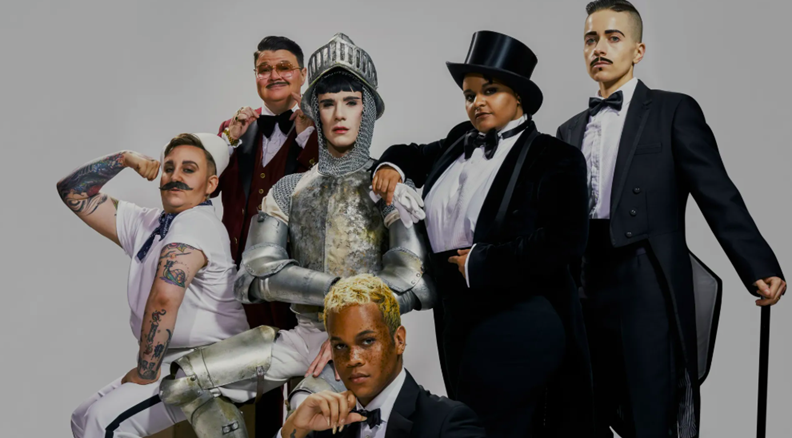
https://www.gq.com/story/drag-kings-sasha-velour-roundtable Human was human.
-
How Has Society Progressed Since The Cold War?
To all those who knew me in my earliest years, I was an ‘awkward’ child. Having always had this deep-rooted stubbornness, (yet also sensitivity), I’ve always known my own mind. I’ve always wanted to ask…
Why?
Why do we place so much emphasis on change (copper), when what we really should be focusing on is change (systematic)?
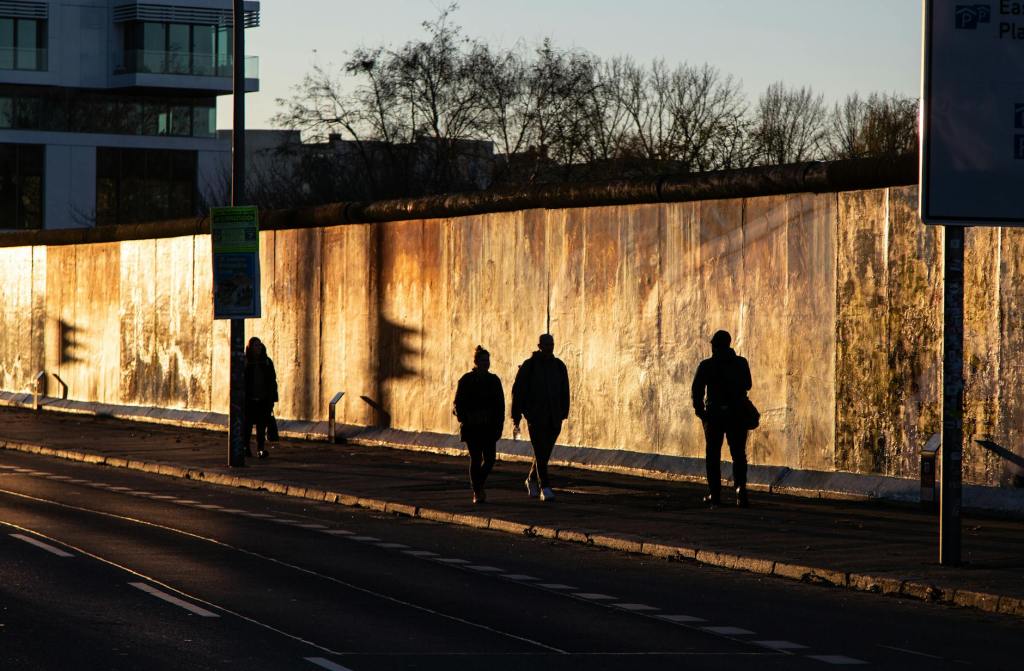
Alas, with the post-Cold War decade having only just been left behind, (the Berlin Wall fell in 1981, triggering the collapse of the Soviet Union in 1991), at the advent of my birth on August the 11th 2001, the world was still getting used to the reduced power that politics held over it.
No longer fronted by division and control as it had been for the previous 42 years, now there was a newfound sense of freedom in the world (seemingly), a world within which democracy would come to replace communism, and the world would finally be granted permission to move forward.
And move forward it certainly did…
Photo by Bruna Araujo on Unsplash In the late 90s to early noughties, the economy was prospering, norms were being challenged through music, movies, TV shows, and transgressive art, and technology was being developed at breakneck speed.
In 2007, for example, the first iPhone was introduced, a touchscreen mobile phone with music-playing capabilities and internet access. This revolutionised communication by granting people access to each other from anywhere, via, not only smartphones but also social media (another product of the noughties) …
In 2003, Myspace and Skype were founded. Facebook followed suit a year later, and then came Instagram in 2010, and TikTok, (formerly Musical.ly), in 2014.
Photo by Mati Flo on Unsplash The noughties truly was a time of technological advancement, within which AI started to become less like something to be read about in sci-fi movies, and more like something to witness in day-to-day life.
But… What is AI actually all about? Is it really just about making our lives ‘easier’, or is there a deeper motive?…
Most people think that AI is something new, yet it has, in fact, been around for decades, and like most of the technological advances that we see today, originated from war…
Rooted in warfare, the first example of AI was facial recognition used in 1987 as part of a project hosted by the US government to create a database of facial images that could be used to identify soldiers.
The internet has similar origins, too, as well as mobile phones…

https://en.wikipedia.org/wiki/SCR-536 The modern internet evolved from ARPANET, a computer network (and the first of its kind) that was used in the late 60s and early 70s by the US Department of Defence. As for mobile phones, their development was funded by the military owing to the need for mobile communication during the Second World War. Ever wondered why mobiles looked so bulky back then? It’s due to them having originated from the U.S. Armies’ ‘Handie-Talkie’ (pictured above), a two-way radio that was small enough to hold in one hand.
Designed for far greater reasons than the ability to turn phones on more easily, despite the post-Cold War promise of peace, such military history is also the case with driverless cars, too…
In the mid-noughties, a US defence research agency, as part of their mission to accelerate the development of autonomous vehicles, offered a $1m cash prize to the first person to create a working driverless car. The brief was to ‘create a vehicle that can be used in hazardous military operations.’ The challenge quickly turned into a race between various tech companies, therefore proving that war = profit, and leaving us with the lingering doubt of… ‘Did we ever actually leave the division and control of the Cold War times behind?’…
Society is founded on the dynamic duo of war and profit, within which one feeds the other.
Stemming from the desire that countries have to achieve one-upmanship over each other, this is why technology, as the number one source of profit in the world, has always had a major influence on society, and in turn, war.
During the Cold War, for example, money was thrown into technology for the sake of countries, namely the United States and Russia, wanting to be the ‘top dog’. While seemingly nothing more than petty child’s play, such competitiveness proved to be an effective source of innovation.
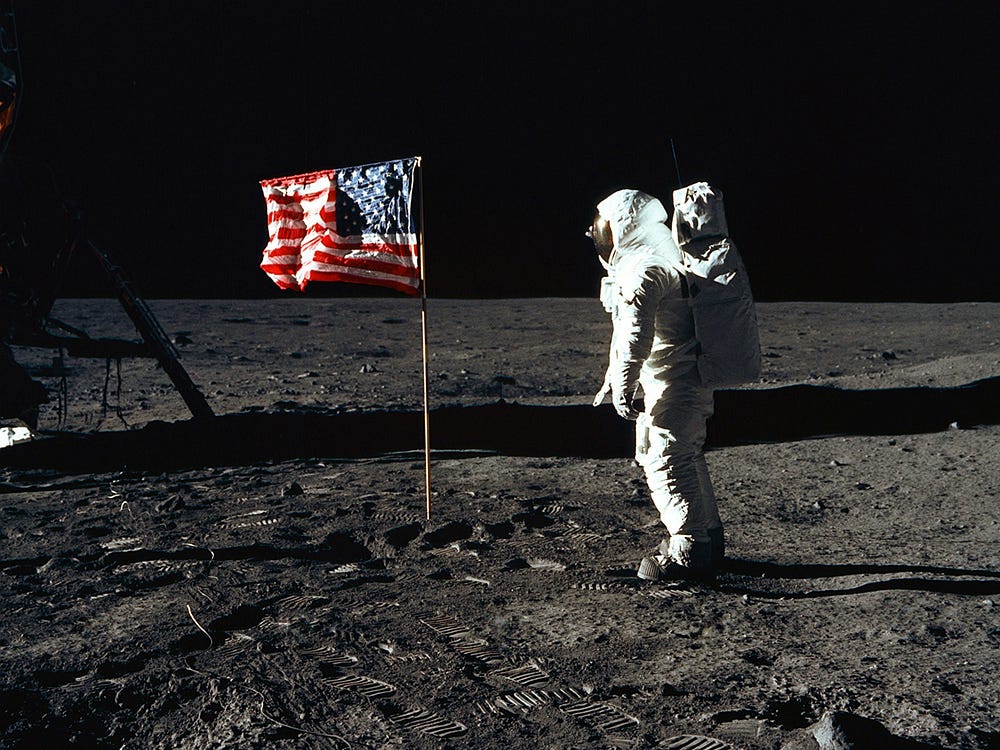
Consider man’s greatest achievement (as some would say), walking on the moon…
Believe it or not, it was the US’ desire to have an advantage over Russia that led to the Apollo 11 mission.
Photo by NASA on Unsplash In 1957, the USSR launched the Sputnik 1 satellite into orbit. America’s response to this was to rally around its own space program, NASA, and get one-upmanship over Russia. The US achieved this when, in 1969, the Apollo 11 mission successfully landed the first man on the moon, thus proving that the United States’s space program had excelled past the USSR’s program.
Technology has always been a global contest over power, security, wealth, influence, and status. It’s always been ‘We’re doing this for military purposes’ disguised as ‘We’re doing this to make your lives easier…’
While the technology that we are seeing today is undoubtedly innovative, as something that is rooted in warfare, how good can we say that it really is when warfare is rooted in power and control?…
And, likewise, how good can we say that we are when we still haven’t learned from our past mistakes?…
Photo by Aidan Bartos on Unsplash The fact is that we can have all the technological advancements in the world, but no feature on a mobile phone can give us what I, for one, am still yet to witness in my 23 years on earth…
Peace.
Where is the peace?
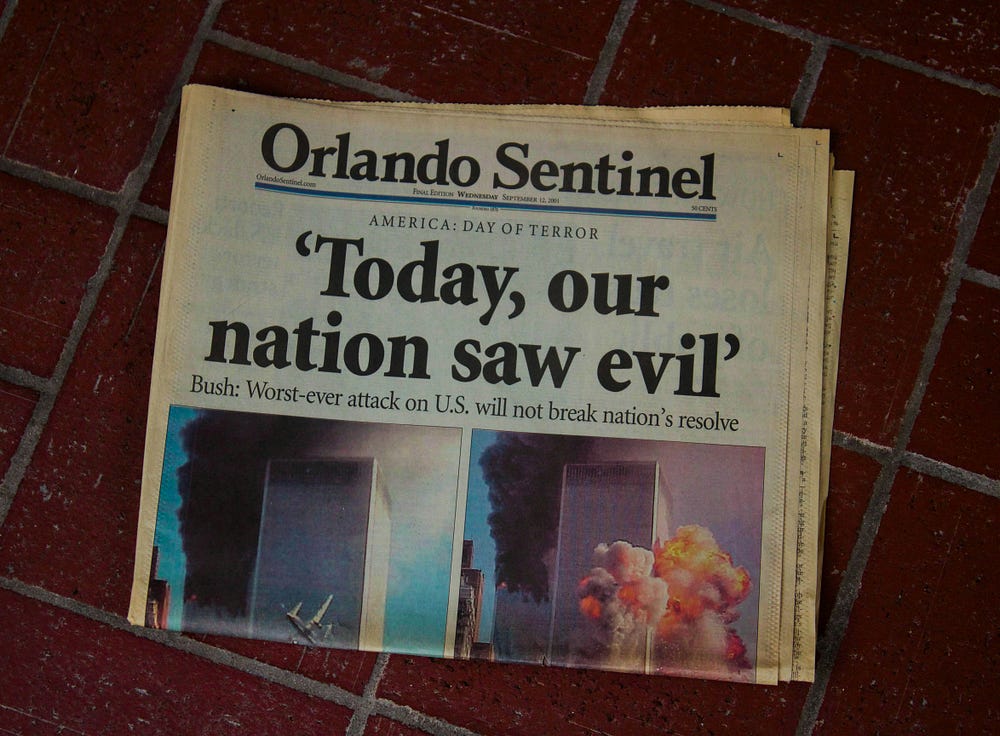
Photo by Isaac N. on Unsplash I was just 31 days old when the Islamist extremist group al-Qaeda carried out an act of terrorism that would go on to be etched in the history books forevermore.
9/11.
Led by Osama Bin Laden, al-Qaeda blamed the US for conflicts in the Muslim world and said that America’s support for governments in the Middle East, namely Israel and its repressive regimes against Muslim people, (since it was founded in 1948, the US has provided Israel with over $130 billion) was the reason for the attack.
The worst thing is the sense of being a stranger in your own land and feeling that not a single part of it is yours. — Raja Shehadeh, Palestinian lawyer and writer.
Now, of course, violence is never the answer, but one cannot help but question why the US enabled Israel… Why did they support Israel’s acts of genocide by, albeit indirectly, giving them the arms to attack Palestinians and forcibly misplace them (at best), and obliterate them (at worst) from their homeland…
Those who are complicit in acts of violence are no better than those who are carrying out the acts.
I was 31 days old then, I am 8614 days old now. And while the acts of violence that we are seeing today might not be as obvious as they were two decades ago, this isn’t because they’re not happening. They are happening, every day, but if the news channels were to give airtime to every example of warfare that we see, it would be a never-ending barrage of negativity. So, what do we do? We worry only about that which directly affects us, and countries base their morals only on their lack of morals.
Whom do we need to support to get the most money?…
It is for this reason that the UK offers such steadfast support to Israel, despite it imposing literal genocide on tens of thousands of innocent Palestinians. The UK does it, not because they don’t know the difference between right and wrong, but because they do know the difference between having the support of the US (which uncoincidentally happens to be Israel’s number one ally) and not having it. The UK therefore wants to demonstrate its subservience and usefulness to the US, even if that means supporting genocide.
Alas, in a society within which we are at the beck and call of our corrupt leaders like puppets on a string, it’s easy to think that we have no power to make a change, but we do. Not directly, granted, we cannot physically prise the weapons out of the hands of Israeli soldiers, but we can order the people who do have the power to do that to act…
Consider boycotts, for example. Russia, owing to Putin’s invasion of Ukraine, was banned from competing in the Paris 2024 Olympic games. Its athletes were not allowed to compete under the Russian flag or anthem and instead had to compete as ‘neutral’ athletes. This essentially disregarded Russia as even being a country.

https://thegaze.media/news/olympic-games-paris-2024-russian-and-belarusian-athletes-banned-to-opening-ceremony Boycotts can also take place towards chains, too, as was the case with Starbucks.
Because of its alleged associations with Israel, Starbucks customers were encouraged to take their money elsewhere following Israel’s invasion of Gaza, something which cost them $11 billion… This proves what can happen when people come together to campaign for what they know to be right.
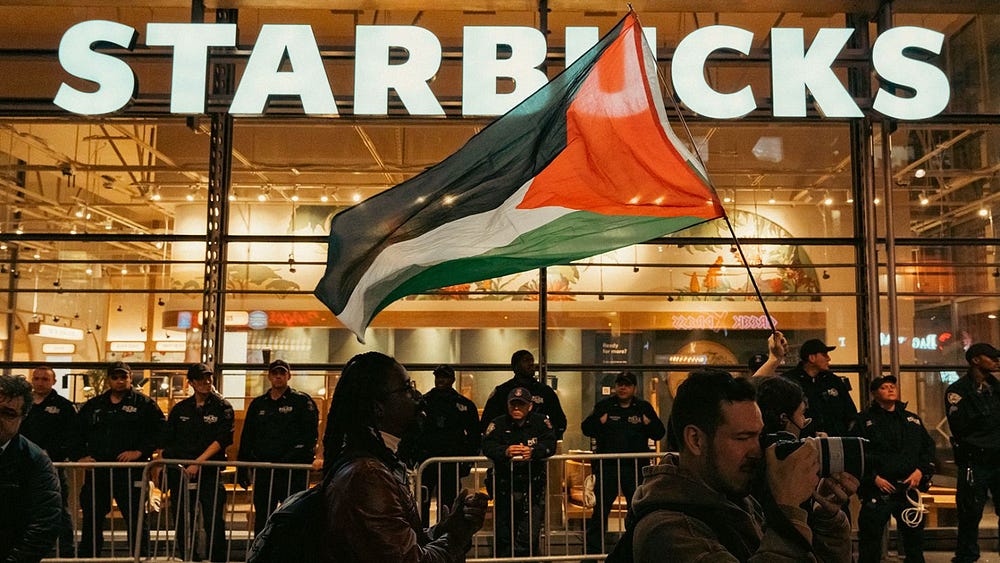
https://edition.cnn.com/2023/12/21/business/starbucks-israel-war-union/index.html The fact is that we simply cannot bury our heads in the history books and believe that the horrors of the First and Second World Wars and the Cold War are all in the past, ‘remnants of a different time’ that we will never return to.
One only has to pause for long enough (and look around far enough) to see that we never left that place… As one only has to realise that only when our world leaders start prioritising people over power and profit will world peace, finally, be achieved…
-
The Wood Wide Web VS The World Wide Web

Today, in twenty-first-century Western society, technology is at the forefront of most of our lives. This sees too many of us, far too many of us, spending our days watching the world go by through a screen, and therefore failing to differentiate between the virtual world and the real world.
Alas, technology separates us from nature, with the sense of there being something missing that all too many of us experience undoubtedly being because of this separation that we experience…
We have become separated from who and what we are at our core, like trees (a species that has existed for over a thousand times longer than ours)… Trees are not only everywhere, but they are also everything.
Operating via a vast underground network, trees communicate just like humans.
Trees are linked to neighbouring trees by an underground network of fungi that resembles the neural networks in the brain. They perceive and respond to each other by emitting chemical signals via this network, therefore allowing the older trees to pass their knowledge onto the younger trees.
As ecologist Suzanne Simard discovered in one study, Douglas fir injured by insects sends chemical warning signals to ponderosa pine growing nearby. The pine trees then produce defence enzymes to protect against the insect.
The trees, as Simard, highlighted, were sharing ‘information that is important to the health of the whole forest.’
What’s more, in addition to warning each other of danger, Simard says that trees have also been known to share nutrients at critical times to keep each other healthy. Because kin recognition is present in forests, a dying tree will send more nutrients to its kin.
Such a process involved in the example above is magic, pure magic, yet separation, (owing to capitalism), forces us to focus on everything that is external to ourselves, like money…
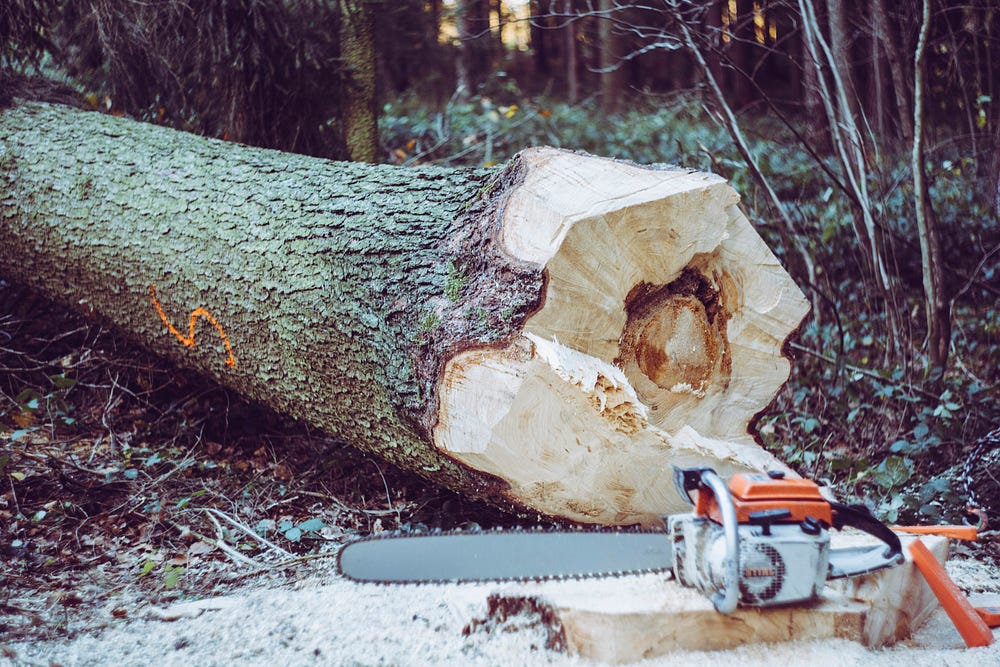
Money makes us act in ways that are reckless towards nature, hence why we fell trees, as just one example of humanity’s crimes against the planet, to create land for houses that no one can afford…
Genesis 3: Adam and Eve sinned by eating the fruit from the tree ‘which I commanded you, you must not eat from it…’
Alas, it’s been 3400 years, and yet we still take and we take from that which is not ours to take from…
But man is a part of nature, and his war against nature is inevitably a war against himself.
Fortunately, though, as nature is ‘pure magic’, we can log trees for generations, yet the seedlings will still take root. Why? Because everything is cyclical.
Everything comes from a seed, regenerates, and becomes whole again from the disconnected parts of its source…

In Suillus mushrooms (see the image above), another important occupant of the forest and ‘friend’ of trees, each oval-shaped opening houses minuscule stalks built to discharge spores. Spores are the ‘seeds’ of fungi and are packed full of DNA that binds, recombines, and mutates to produce genetic material. The spores will then become latched onto the legs of a flying insect, for example, or perhaps they will become the dinner of a squirrel. Who knows, for nature knows no greed…
Even when nature turns violent, the earth will always rebound and come to humanity’s rescue, despite humanity being the very thing that the earth needs rescuing FROM…
Something that does know greed, however, is the majority of the things that we do today. It is the greed for money and validation, for example, that has made social media so popular, because it gives us such validation…
On social media, we crave the thrill that goes hand-in-hand with the likes and comments that we receive. With each notification that lights up our phone, we relish in the satisfaction that is granted to our ego, all the while ignoring the fact that we are abandoning our soul, our soul which is rooted in Mother Nature herself…
If you cut yourself on the branch of a tree, is your blood in the trees, or are the trees in your blood?
Humanity and nature, we’re one and the same.
Nothing can ever replace that which exists in the world outside of the four walls of your house, or the four corners of your phone screen.
And so, to experience the magic that is nature for yourself, put down your phone, log off the apps, and please, for the lord of God (/Mother Nature: same difference), get outside.
-
Exploring The Art of Femininity

The imprint of your mask
has turned into a scar,
its pressure so tight,
that you’ve forgotten who you are.Let me tell you who you are…
Not mother or wife,
or nurse or guard,
but woman,
your platforms giving a platform
where femininity is an artformcomprised of tailored dresses
that reveal more leg,
and lips that are painted
the brightest shade of redand exaggerated makeup
and ‘babe, will you hurry up?
I need help fastening this
across my chest.’There’s something about the whole ‘drag-esque’ process,
matching lace on shirts to lace in hair
to blazers and trousers and…
powerthat acts as a massive kick in the teeth
to all the small-minded freaks
who try to dictate how a woman can dress.AKA. the majority of men.
The equivalent of Nepo babies
their opportunities are handed to them on a silver platter,
all the while women are left to collect the crumbs
(the fact that they made the platter, apparently, doesn’t matter) …‘Don’t eat.’
It’s refreshing, in this era of Ozempic
(and all the other diet shit)
to have women not take the metaphor of gorgeous,
‘drop-dead’,
literally.Taking up all the space they want to take up,
unapologetically,
there’s something so undeniably powerful about women.May we know them. May we be them. May we raise them.
ADA LOVELACE (1815–1852). -
Why Are All The Tech Leaders Supporting Trump?
‘Free speech.’
It’s the latest buzzword. The latest ‘get out of jail free’ card that fascists use to masquerade their hatred as ‘self-expression.’ What such people (see also: bigots) fail to realise, however, is what the definition of free speech actually is…
The right of a person to articulate opinions and ideas without interference or retaliation from the government.
Yet the people who most vehemently support free speech are technological giants such as Zuckerberg (owner of Meta which includes Instagram, Facebook, and WhatsApp) and Elon Musk (owner of X), both of whom are associates of the president of the United States (aka the most powerful man in the world), Donald Trump.
Their professed ‘free speech’ isn’t free at all when they are essentially being bribed by Trump.
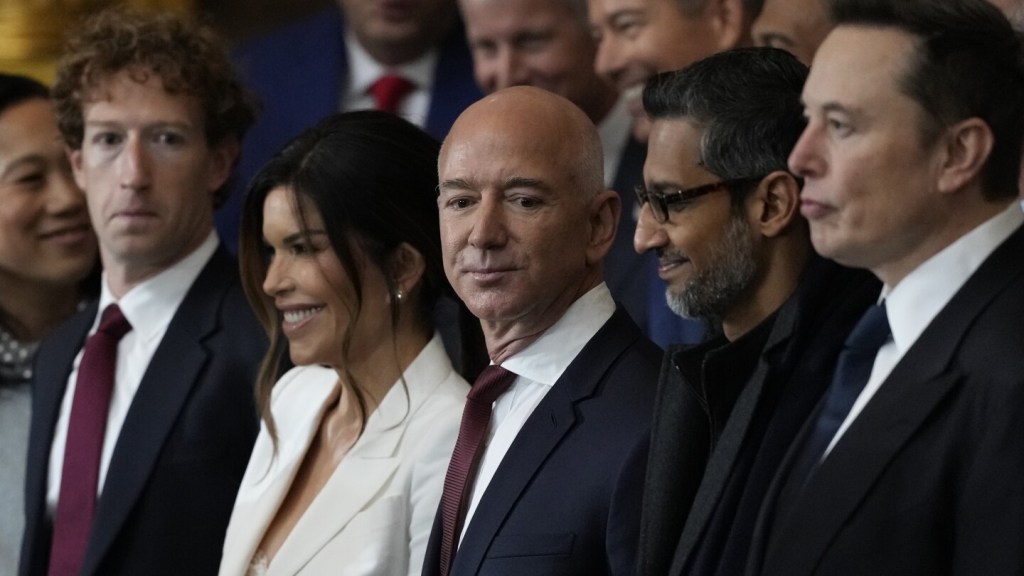
At Trump’s inauguration, the front row seats were reserved for Mark Zuckerberg (founder of Meta), Jeff Bezos (founder of Amazon and owner of Washington Post), Sundar Pichai (CEO of Google), Sam Altman (founder of OpenAI), Tim Cook (CEO of Apple), and Elon Musk (CEO of X).
In other words, the front-row seats were reserved for rich bootlickers, all of whom donated in their millions to Trump’s inauguration fund, some unexpectedly.

The move to support Trump marked a shift for open AI’s Altman (pictured above) who has donated to Democratic candidates since 2013, as well as Bezos who, in 2016, publically announced his worry that Donald Trump would ‘erode’ American democracy, and also Zuckerberg given his past tensions with Trump…
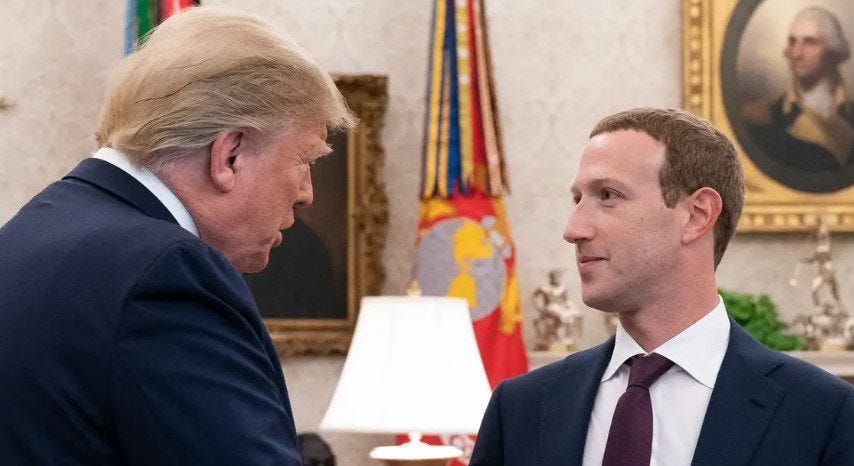
In 2021, Meta banned Trump from its platforms following the Jan. 6 riots that saw him attempting to overthrow the results of the 2020 election. In response, Trump accused Facebook of being biased against him, referring to it as ‘an enemy of the people.’ Zuckerberg was ‘plotting against him’, Trump argued, by ‘steering Facebook against his campaign.’ Trump consequently threatened Zuckerberg that if it happened again, he would ‘spend the rest of his life in prison.’
It was quite the transition then when in October 2024, Trump said that he liked the Meta CEO ‘much better now’, and, one month later, was dining with him in his Florida resort, Mar-a-Lago.
In the months since then, Zuckerberg has made major changes to Meta, most notably by removing its third-party fact-checking program.
‘We’re getting rid of a number of restrictions on topics like immigration, gender identity, and gender that are the subject of frequent political discourse and debate’, Zuckerberg said in a press release in January 2025.
What is Zuckerberg doing if not following the lead of Trump and his attack on ‘woke policies?’
And obviously, Elon Musk of X (formerly Twitter) is in on the game, too…
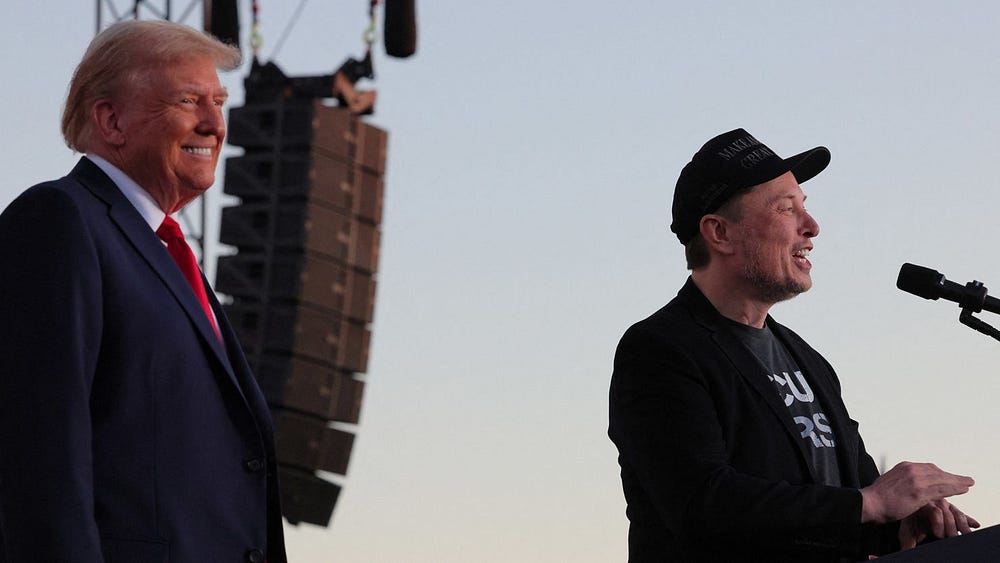
Musk spent $288 million to back Trump in the 2024 presidential election, despite claiming in March that ‘just to be super clear, I am not donating money to either candidate for US President.’
After Trump’s victory, Musk was called in to lead a new Department of Government Efficiency. He has since been at the forefront of American politics, with people questioning who is really in charge.
Joe Biden called it in the final speech of his presidency. He reiterated his fears about the ‘dangerous concentration of power in the hands of a very few ultra-wealthy people’, cautioning that an emerging oligarchy threatened the foundations of US democracy.
‘Today, an oligarchy is taking shape in America of extreme wealth, power, and influence that literally threatens our entire democracy, and our basic rights and freedoms’, Biden said.
If this amount of media control was emerging somewhere else, the same people who are cheering this on would be calling it tyranny.
While it’s true that we might not have the power of money, what we do have is the power of numbers.
We all have the power, as a collective, to wake up from the matrix and see the world for what it is becoming. And that we must do…
Before it’s too late and the Trump-Musk regime undermines, not only democracy in the US, but also lays the foundation for undermining democracies around the world, we must all wake up.
-
Ozempic And Eating Disorders – The Worrying Link

Ozempic was originally only available to purchase from and on behalf of people with a diagnosis of diabetes. Now, however, it is readily available for all to buy at the click of a button, thus cementing the link between Ozempic and eating disorders.
Online pharmacies mean that people don’t even need to see a doctor anymore to get prescription medication, they can simply fill out a form instead. This of course has the potential to be misused since it is easy to lie in responses to online forms.
Someone who can only get Ozempic with a BMI over 30 will simply state that their BMI is over 30 in order to get the medication they want.
- Superdrug
- Boots
- Lloyds
All of these high street pharmacies, and many more, are selling Ozempic (or its equivalent, Wegovy) online, a sign that the ‘Black Market’ isn’t so much black anymore as it is mainstream…
But what is Ozempic, exactly, and why is it being hailed as the ‘ultimate’ way to lose weight?
Ozempic: The Basic Facts
Ozempic increases the levels of hormones that are naturally produced by the stomach. This makes you feel full and not want to eat as much, with the food that you do eat taking longer to digest and therefore suppressing your hunger.
Instead of taking the usual 80–120 minutes (the length of time between you finishing a meal, your stomach emptying, and your brain receiving hormones telling you that you need an energy top-up), Ozempic slows down the movement of food through your stomach so that it takes longer for it to empty, therefore meaning that you feel fuller for longer, eat less, and subsequently lose weight.
The concerning thing about Ozempic, however, is the potential for it to get into the wrong hands since, as we discussed at the start of this article, it is so readily available to buy.
Ozempic and Eating Disorders: ‘Cure’ of or ‘Cause’ of?
‘You can’t engage in pop culture right now without being exposed to rhetoric around these medications,’ says Meredith Nisbet-Croes, a certified Eating Disorders Specialist Consultant at the Eating Recovery Center. ‘We haven’t seen a medication marketed this aggressively since Viagra.’*
*(Similarly to how Ozempic was originally developed to treat diabetes but is now being used for weight loss purposes, Viagra was originally developed to treat angina and high blood pressure, but was later used to treat erectile dysfunction).
When transformation videos and ‘what I eat in a days’ are being uploaded to TikTok in their masses under the term that now has over 1.2 billion views, ‘Ozempic’, the overriding societal message that thin bodies are ideal is emphasised, thus causing women in particular to place significant value on their bodies and weight…
But why?
The human body is not a trend, but a vessel for us to experience life through. Companies conjure up these ‘revolutionary’ products not because we need them to correct what is ‘wrong’ with us (there is nothing wrong with us), but because they know that the greatest profit to be made in the twenty-first century comes from a woman’s self-loathing. It’s why what is in one month is out the next month.
When did ‘I wish my bum was bigger’ replace ‘Does my bum look big in this?’
When did heroin chic go out and curves come in, only for it to go full 360 and heroin chic to come back in again?
We only have to blink for everything that we have been basing our value on to shift, and then we’re back to the start, back to trying to catch that which can never be caught- society’s acceptance of who we are for who we are, not for ‘I have just the thing that I can sell you to make you almost enough.’
‘Almost’, but not quite.
Never quite…
Photo by Jennifer Burk on Unsplash Most at risk of this perfectionist, ‘you need to be this size’ rhetoric is our young people whose consumption of social media provides the perfect storm for eating disorders to develop as a result.
Ozempic and Eating Disorders
Eating disorders are complex mental illnesses that can affect anyone, regardless of their gender, age, background, or ethnicity. They are not a ‘woman’s’ issue, but a human issue, and one that is, unfortunately, affecting more and more people in the UK.
While statistics highlight that 1 in 50 people in the UK suffer from an eating disorder, recent studies suggest that this figure may be underestimated. The charity Beat estimates that between 1.25 and 3.4 million people in the UK are affected by an eating disorder (Beat, 2024). Given the UK’s population of approximately 67 million, this suggests that up to 5% of the population may be affected.
The prevalence of eating disorders among young people in particular has seen a notable increase in recent years. The proportion of 11 to 16-year-olds diagnosed with an eating disorder, for example, rose from 0.5% in 2017 to 2.6% in 2023. Among 17 to 19-year-olds, rates increased from 0.8% to 12.5% over the same period (House of Commons Library, 2024).
It’s not a coincidence that the demographic that is becoming increasingly affected by eating disorders is also the demographic that is becoming increasingly affected by social media, where the marketing and promotion of Ozempic is at its most persistent.
When teenagers are already at the highest risk of struggling with low self-esteem, combined with the fact that they are also of the demographic who most frequently use social media (92% of adolescents are regular social media users), the constant marketing of Ozempic on the likes of TikTok will inevitably contribute to the exacerbation of eating disorders.
And this is what concerns me…
When eating disorders are already so dangerous, (one in four people die of the illness each year), Ozempic has the potential to not just ruin, but also end, lots of young lives…

https://1000wordphilosophy.com/2022/10/09/saving-the-many-or-the-few/ Because food restriction can cause stomach issues including gastroparesis or ‘stomach paralysis’, a condition that causes the stomach to empty much more slowly than normal therefore making you feel full after barely eating, people with or in recovery from Anorexia are likely to struggle with their hunger cues, something which I experienced in my own journey with Anorexia. They might feel full very easily and struggle to eat as a result. If someone with or in recovery from Anorexia were to start using Ozempic, an appetite suppressant, the worry is, given their already very low appetite, that they would never eat…
My Experience
Having spent the best (worst) part of three years denying my hunger through food restriction, my hunger cues now are all messed up. This means that I can’t rely on intuition to make the decision of whether ‘to eat or not to eat’ (If I started eating when I was hungry then I would never eat, and if I stopped eating when I was full then I would never start). I must instead rely on structure.
It’s not that I never feel hungry, but rather that the signals in my brain exist in opposition to the signals in my mind.
I get the signals in my brain telling me that I’m hungry, I feel the rumbling in my stomach, but what I also feel is my stomach pressing against the fabric of my jeans, and the roll of flesh as I sit at my desk with six minutes to go until lunch, and it makes me not want to eat. Physically, I am hungry, but psychologically, I am full. And this is the problem that I have. What to trust, my brain or my mind? The two are supposed to be connected but when it comes to food, they are so far apart, at war with each other constantly, but still, I eat.
I eat because when I was hospitalised with Anorexia back in 2018, my admission taught me that regardless of whether you feel hungry or not, you must still feed yourself. Why? Because it’s a basic human need. Along with water, clothing, shelter, and sleep (Maslow, 1943), we all need food to survive.
And it is this, the fact that we all need food to survive, that makes Anorexia such a cruel illness…
Although eating disorders are a type of addiction, unlike every other addiction (drugs, alcohol, gambling, etc), my recovery is not dependent on me avoiding the trigger, but on me consuming it three times a day, every day, for the rest of my life.
It’s quite the battle when your ‘trigger’ is the very thing that you need to stay alive…
Recovery
Left untreated, eating disorders can cause serious long-term damage to an individual’s emotional, mental, and physical wellbeing. This is why having an awareness of the signs and symptoms is crucial.
Photo by Kenny Eliason on Unsplash The Signs
If you are questioning your eating habits, ask yourself the following:
- Do you experience feelings of guilt or shame when you eat?
- Are you preoccupied by thoughts of being thinner?
- Do you tend to eat in isolation or secret?
- Have others commented on your eating habits?
- Do you weigh yourself at least once a day?
- Do you skip meals in order to lose weight or to avoid gaining weight?
- Do you exercise more than once a day?
- Do your emotions affect your eating habits?
- Do you avoid close relationships or social activities?
- Do you vomit after meals?
If you said yes to more than one of the above, you might be struggling with disordered eating or an eating disorder. These behaviours and thoughts can develop gradually, often becoming ingrained before an individual recognises the severity of the issue. Identifying these patterns early and acknowledging the impact they have on your daily life is an important step toward seeking professional support and intervention.
Other common indicators of an eating disorder include:
- Preoccupation with weight and body shape
- Strict food habits or routines
- Self-induced vomiting or misuse of laxatives
- Excessive or compulsive exercise
- Avoidance of social situations involving food
- Mood fluctuations and behavioral changes
- Sleep disturbances
- Physical symptoms such as digestive issues, weight fluctuations, feeling cold, fatigued, and/or dizzy
If you or someone you know is exhibiting these signs, professional help should be sought promptly. Contacting a General Practitioner (GP) is the first step toward accessing support.
Don’t suffer in silence, and please please stay away from Ozempic. Whatever your size, your value is not determinable by a number, and a £195 injection will never buy you happiness.

When a woman shrinking herself to nothing is seemingly the only way to satiate a man’s greed, open your eyes.
It was never about you.
-
Why Are People So Desperate To Get To The UK?
Imperialism and colonisation have, throughout history, seen countries stopping at nothing to get what they want, and the United Kingdom is certainly no exception to this. Our desire for self-governance has been sparking bloodshed for centuries.
At the height of its power, Great Britain ruled over 400 million people, making it the largest empire in history. Spanning 25% of the world’s surface, it’s why the Union Jack is one of the most recognisable flags in the world, and English is the most spoken language in the world.
None of Britain’s ‘glory’, however, came without pain…
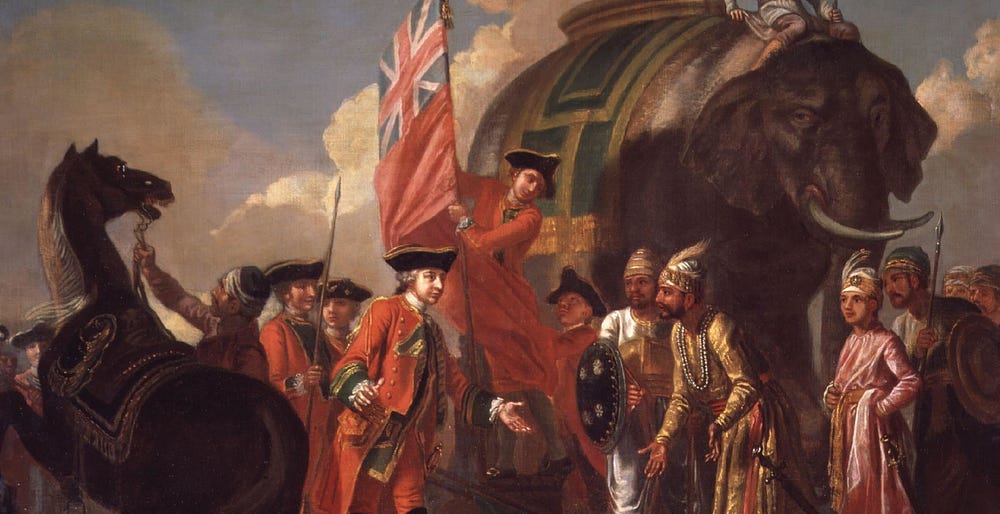
https://www.historic-uk.com/HistoryUK/HistoryofBritain/Timeline-Of-The-British-Empire/ The British Empire began in the late 1500s under Queen Elizabeth I, with the first successful colony being set up in 1607 in Jamestown, which is now part of the state of Virginia in the USA.
Thirteen colonies in North America would go on to be established during the early years of the British Empire, however in 1776 after going to war against Britain, America declared its independence.
Not wanting to shrink their empire again, losing America meant that Britain decided to make their empire even bigger, and that they did…
The people colonised by the British had British laws and customs imposed upon them, lost their ability to govern themselves, and were, in many cases, violently oppressed.
The British East India Company, for example, made its money by exploiting local rulers and workers to such an extent that in the 1700s and 1800s when the country experienced severe droughts, they were forced to continue producing crops for Britain to sell. When poor weather affected the harvests, there were food shortages resulting in famines across India. During many of these famines, Britain did not organise a big enough relief effort, and millions of people died as a result.
Another example of Britain’s oppression can be seen in the ‘Scramble for Africa.’
Taking place in the 1880s and destroying several African kingdoms, the Scramble for Africa saw Britain exiling leaders, looting treasures, and burning cities. The result? A 30% control of the African population.
Add this to the fact that Britain was the world’s leading slave-trading country and it’s a very sombre situation indeed…

https://www.historyextra.com/period/general-history/slavery-british-empire-legacy/ Despite Elizabeth I stating that capturing Africans against their will ‘would be detestable and call down the vengeance of Heaven upon the undertakers’, after seeing the huge profits available, she changed her mind.
As always, it’s profits over people…
Between 1640 and 1807, British ships transported about 3.4 million Africans across the Atlantic as part of the transatlantic slave trade.
Conditions on board the ships were appalling. Disease spread as huge numbers of people were crammed into very small spaces. It was such overcrowding, as well as poor diet, dehydration, and disease that led to high death rates (450,000 of the 3.4 million Africans transported in British ships died on the Atlantic crossing) …
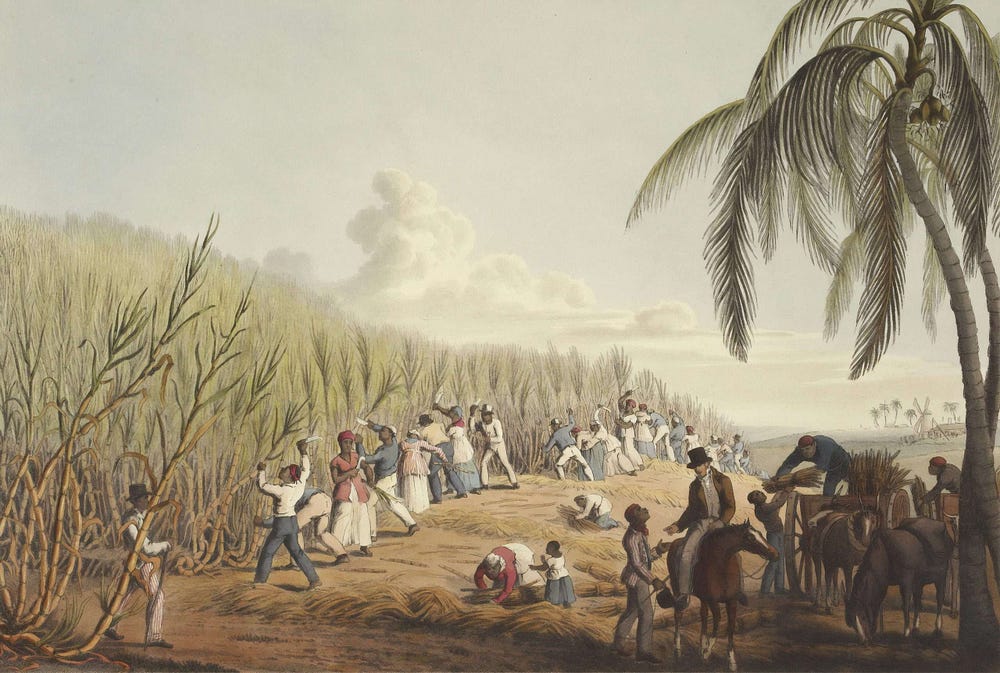
For those who did make it, their forced labour produced commodities like tobacco, cotton, and sugar*, for which there was a huge European demand.
*(Nearly two-thirds of all enslaved people cut cane on sugar plantations. These were places of hard labour and cruel treatment with very high mortality rates).
https://eatfarmnow.com/2020/06/16/sugar-slavery-brexit-and-the-tories-a-murky-history/ Parliament finally passed an Act to abolish the slave trade in 1807. The Act stated that all slave trading by British subjects was ‘utterly abolished, prohibited and declared to be unlawful’.
The act did not, however, end the institution of slavery itself. This meant that almost 750,000 people remained enslaved in British colonies across the Caribbean.
In total, the British Empire existed for nearly 400 years, with remnants of it still being present today in the form of British Overseas Territories (that being countries that are all a part of the former British Empire). While such countries do have a degree of self-governance today, the UK still remains responsible for their defence, foreign relations, and internal security. These countries include the likes of Bermuda, Gibraltar, and Montserrat.

https://www.historic-uk.com/HistoryMagazine/DestinationsUK/History-of-Gibraltar/ Given Britain’s history of being the leading slave-trading country in the world, I find it disappointing that British people can be so standoffish towards migrants.
When Britain took over other countries by force, extracting them of all their resources and leaving them poverty-stricken, we (‘we’ meaning Britain) have a massive part to play in the inequality that persists today.
Surely, then, it is our duty as Britons to want to do what we can to help those who, in our past, we exploited for our gain.
Unfortunately, however, for many Britons, they lack such empathy, as official statistics highlight…
As of April 2023, 37% of people thought that the arrival of asylum seekers should be made more difficult. How exactly it can be made more difficult than it already is, however, is questionable given that refugees and migrants already face considerable risks en route, not to mention when they eventually arrive (if they arrive) in Britain…
In 2019, 39 Vietnamese migrants died in the back of a lorry. The migrants died ‘excruciatingly painful’ deaths, having suffocated in the container, the judge said.
And so, the question is…
Why do people put their lives at risk to live in the UK?
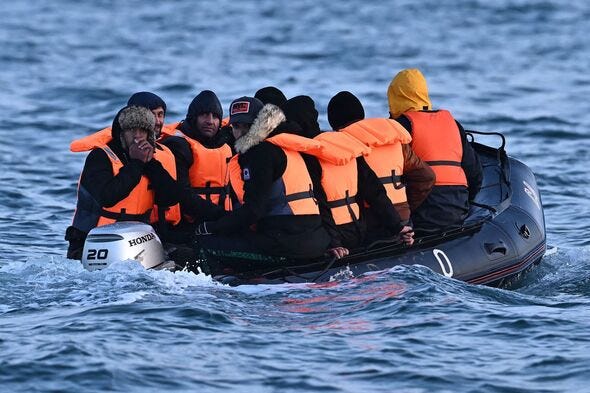
https://www.express.co.uk/news/uk/1945128/its-better-die-waves-small To answer the above question, we must first distinguish between asylum seekers and migrants.
Of the 45,746 people to arrive in the UK in 2022 via small boat, most were asylum seekers from one of seven countries: Albania, Afghanistan, Iran, Iraq, Syria, Eritrea, and Sudan. These are all countries where human rights violations are mainstream, and war and oppression commonplace. People from these countries are at a greater risk if they stay put than they are if they get in a rubber dinghy and attempt to cross the channel in a small boat liable to capsize… Clearly they are desperate for a better life. They are desperate for safety and protection.
Alas, to reiterate the point again…
It is important to first distinguish between asylum seekers and migrants.
Unfortunately, however, the problem we have in the UK is that there is no distinction…
In the first six months of 2024, the largest number of recorded small boat arrivals came from Vietnam, though not in pursuit of safety, but in pursuit of money.
In Vietnam, monthly salaries for unskilled workers only reach around £300, even with overtime. That is not enough to rival the enticing stories of the money to be made in the UK, as told by people smugglers.
One man in his early twenties told the BBC that he paid about £16,000 to smugglers to make the journey to the UK via small boat. The smugglers told him that there were ‘lots of opportunities and the living conditions were good.’
This man made the crossing because he wanted to, not because he needed to, yet he is lumped into the same category as asylum seekers who genuinely do need to…

https://www.express.co.uk/news/uk/632218/asylum-record-October-migrants-refugees As of Monday the 10th of February, everyone, regardless of whether they are fleeing from war or simply wanting an easier life, will be denied the right to British citizenship under a new border security bill. Under this bill, the British government has the right to refuse citizenship to anyone who has ‘made a dangerous journey’ (i.e. crossed the border via a small boat or concealed in a vehicle), despite this being a breach of international law as per Article 31 of the UN refugee convention.
The contracting states shall not impose penalties, on account of their illegal entry or presence, on refugees.
Clearly, there is no distinguishing between migrants and asylum seekers, even in the eyes of the government which is worrying, for how can the UK government possibly promise to ‘restore order to the asylum system’ when they can’t even tell the difference between a migrant and an asylum seeker?
And, perhaps a more pertinent question to ask…
How can our government ministers sleep at night knowing that their ancestors’ greed, as discussed in the earlier paragraphs of this article, is the reason asylum seekers are fleeing in the first place?…
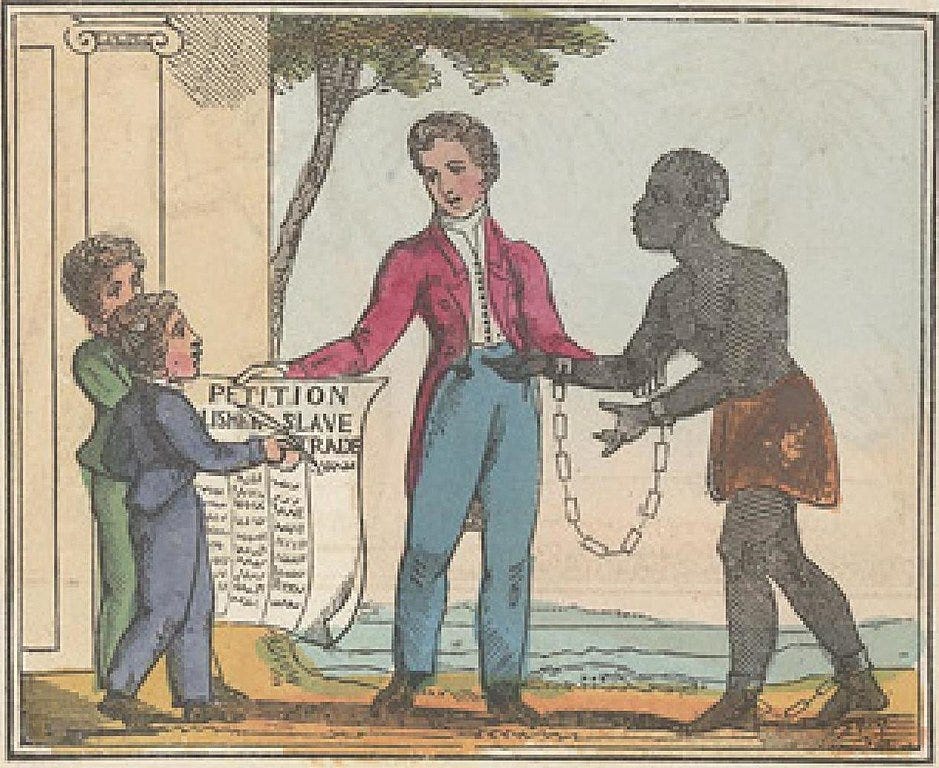
https://www.ourhistory.org.uk/the-abolition-of-slavery-in-britain-a-historical-journey/ The fact is that the world wasn’t created with such blinding inequality that we have today. Greed is the cause of it, and only empathy can correct it. Alas, empathy is seemingly something that is few and far between when it comes to those in charge. It’s why the Labour Party, the proposed, ‘Party for the People’ is adjusting its policies to appeal to an increasingly right-wing world.
Rather than staying true to its values, the Labour Party is, instead, adopting Reform UK’s [racist] policies in order to stay in power, hence the new border security bill…
Instead of governments spending all their time and energy looking for a solution to stop all the small boats though, what they should actually be looking for is a reason behind all the small boats.

https://news.sky.com/story/more-than-700-migrants-arrived-in-uk-in-11-boats-in-a-single-day-new-figures-show-13195893 Just think about it. We are a tiny island with very average weather. People don’t travel here for a holiday; they travel here for a life.
People do not risk their lives for something if the gain is not worth more than the potential loss.
If the world was equal, as it was always supposed to be, and peace on earth wasn’t just a utopia, then people wouldn’t be so desperate to get to the UK.
If only we could all pick up a history book, then maybe we would understand.
Wars and conquests.
Power and influence.
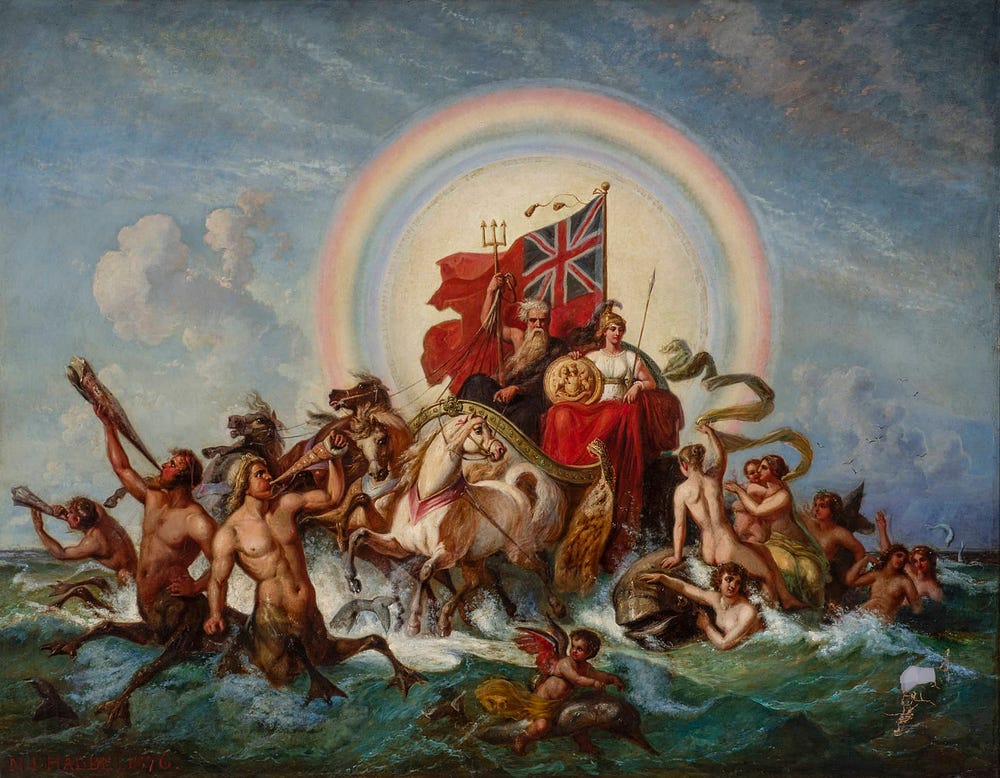
Our borders only exist because of human greed.
-
Has Religion Eradicated Paganism In The West?
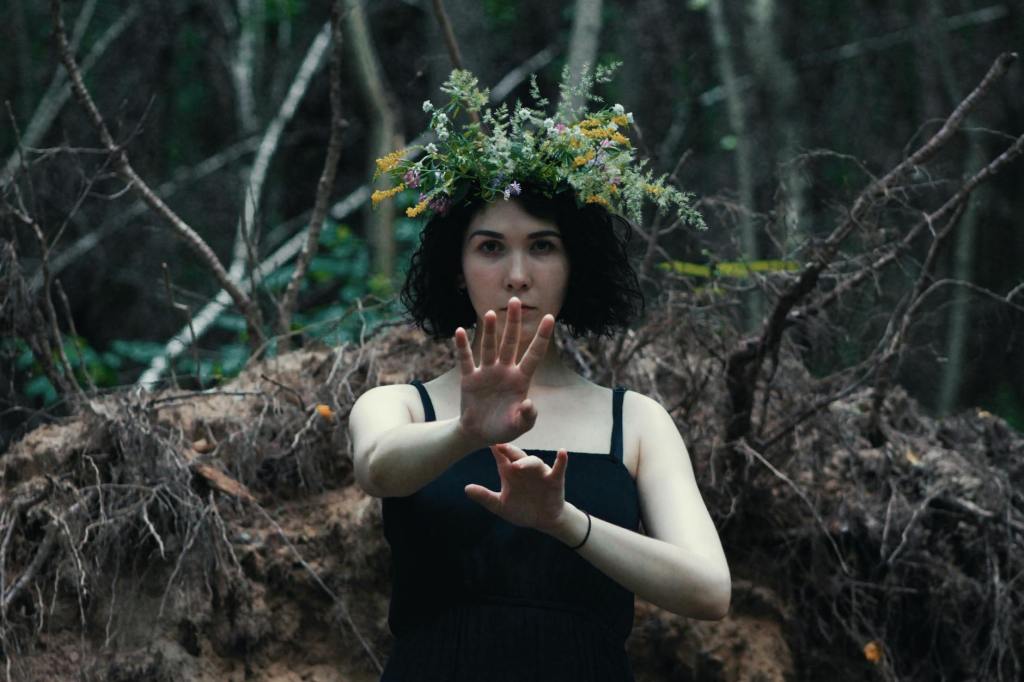
Nature is magic
and within it,
there is no fairy story,
whereas religion is a fairy story
and within it,
there is no magic.Don’t let money blindside you to the sacrality of life.
Every holiday we celebrate in the twenty-first century is rooted in religious traditions. What many people don’t realise, however, is what came before religion. Paganism. A ‘spiritual path concerned with humanity’s reconnection with the natural world.’
In the first and second centuries of the Roman Empire, most people aligned with Paganist beliefs since it was pushed upon them by various Roman emperors.
- Decius (249–251 CE).
- Valerian (253–260 CE).
- Diocletian (284–305 CE).
Under their rule, paganism was glorified, and Christianity demonised, to such an extent that the ‘Great Persecution’ was imposed.
The Great Persecution was the Roman Empire’s most severe persecution of Christians. It saw churches being destroyed, holy books being burned, and Christians being tortured.
However, it was also its last…
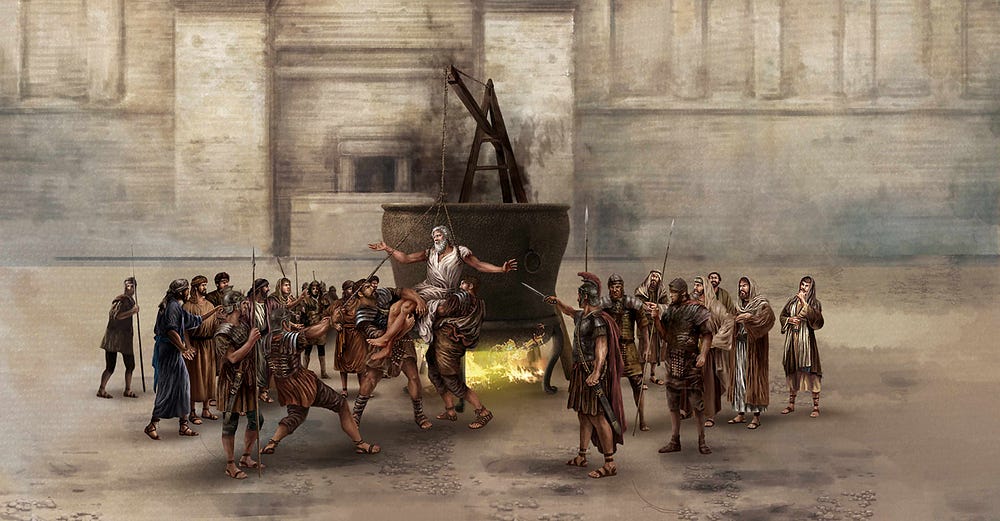
In 312 CE, Constantine became emperor, converted to Christianity, and, a year later, called for an end to the persecution of Christians.
A full 360 moment occurred over the next several centuries. As Christianity became the dominant religion in the city of Rome as well as the European regions over which the Roman Empire had ruled, Paganism was explicitly restricted, and eventually outlawed in the year 392 CE.
As part of Paganaism’s outlaw, its rituals were portrayed as evil to instil fear in people. This is where the concept of satanism came from. Despite ‘Satan’ being Cernunnos, the Celtic God of the forest, Christians told the masses that Cernunno’s antlers were horns in order to make people believe that paganism was shrouded in evil.

Eventually, Paganism was diminished by the Roman Empire, however, in the 1500s/around the time of the Renaissance era, it had a resurgence. This led to Christianity being threatened once again. In response, witch hunts took off since witches were linked to Paganism.
People were sold the illusion that witch-hunts were about the cleansing of a society of evil when what they were actually about was the cleansing of a society of non-Christian beliefs, including the devaluing of women…
In Roman societies, women who were healers and midwives were classed as ‘witches’ and they were persecuted for having knowledge about health. As such, men began to dominate the healthcare field as doctors. This wasn’t because these women were witches, but because their power posed a political, religious, and sexual threat to both the Church and the state. It’s why women were demonised for their sexuality, too.
While Paganism celebrated the sexual union of men and women because they revered fertility and a woman’s ability to produce life, Christianity devalued this ability as simply part of a woman’s role, viewing sex as a sinful but necessary act for reproduction alone.
Such beliefs mostly spread with Christianity and Islam across the world, reaching different lands and nations at different times by proselytisation and/or military force. Why? As a way to enforce conformity and obedience.
Whereas Paganism respects Mother Earth, its traditions being about celebrating nature as opposed to celebrating man’s dominion over nature, Christianity (and any traditional religion, for that matter) is all about power and control, with the only respect it has being for man’s ego…
And unfortunately, man’s ego always wins…
The Roman Empire attempted to take over Paganism by destroying Pagan worship sites and building churches over the top of them, as well as destroying and burning any books, pictures, and statues associated with Paganism. Pagan holidays were also replaced, with pagan rituals being swapped out for Christian rituals.
Our understanding of why we are here and why we celebrate has consequently become so confused and intertwined with capitalism and our constant need to consume that we have forgotten the real reason behind it all…
Take Valentine’s Day, for example. We have forgotten what Valentine’s Day is really about… Not overpriced flowers and chocolate, but nature.
200 years after its inception, when Rome had become Christian, Pope Gelasius decided to create a festival, ‘Saint Valentine’s Day’, and put it on the same day as Lupercalia, a Roman festival to mark the start of spring. This was done in an attempt to remove the remaining Pagans from Rome.
What was once a celebration characterised by love and mutual respect, therefore became one characterised by control…
On Saint Valentine’s Day, men would sacrifice goats and dogs, and then whip women with the hides of the animals they had just slain, believing that this would make them fertile.
Later in the day, all the young women in the city would line up* to place their names in a big urn ready for the bachelors to choose from. The bachelors would then be paired for the year with their chosen woman. These matches often ended in marriage.
*Alas, with Valentine’s Day having been transformed into just another opportunity to rip people off, with prices increasing by an extra 50% to account for it ‘not just being any chocolate, look, it’s heart-shaped chocolate!’, now all we are lining is the pockets of businessmen…
And Easter, too.
Similarly to Valentine’s Day (and all the holidays, in fact, as we will find out), Easter originated from ancient pagan celebrations of the spring equinox. Deemed to be a time to celebrate new life, the day was eventually adopted by Christians to commemorate Jesus’ resurrection.
Now, however, Easter has been adopted by businessmen to commemorate capitalism, where commercialisation has turned eggs into chocolate, and capitalism has turned the magic of nature into the greed of man…
It is this, greed, that underpins another holiday that used to be rooted in Paganism, too.
Originating from Samhain, an ancient Celtic festival to mark the end of the harvest season, Halloween was originally celebrated on or near the 1st of November on what was seen as the start of winter/when the barrier between the living and the dead was thought to be at its thinnest. To ward off evil spirits, people would light bonfires, wear costumes, and tell stories.
In the 7th century, however, Pope Boniface IV created ‘All Saints Day’, a Christian holiday to remember the saints and martyrs who died for their faith. All Saints Day was to be celebrated on the 1st of November, the day of Samhain. Consequently, Halloween was moved to the 31st of October.
Why did All Saints Day have to take place on the day of Samhain? In order to integrate existing native Pagan practices into Christianity and therefore make the conversion process smooth, as was the case with Christmas Day.
Christmas was originally a holiday in the Roman Empire that celebrated the winter solstice and followed Saturnalia, a festival of feasting and gift-giving.
While the feasting and gift-giving element of Christmas is still very much alive today, over time, Christmas has become less of a celebration of the winter solstice and more of a celebration of the birth of Christ. This is due to a connection being made amongst Christian writers relating the rebirth of the sun to the birth of the ‘Son.’
Because of this supposed ‘connection’, in 336 CE, the church in Rome began celebrating Christmas on December 25th to weaken pagan traditions once again.
On Christmas Day, instead of thanking Mother Earth for all that she has given us, we thank the made-up man in the sky for all that he has taken from us…
And on New Year’s Day, too…
Having always been determined by the sun, (the first day of the Lunar New Year, for example, occurred with the second new moon after the winter solstice), as the Roman calendar began to fall out of sync with the sun, the solar-based ‘Julian’ calendar was introduced as a replacement. This led to New Year’s Day being officially established on a set date, January 1st, as a tribute to the month’s namesake, Janus, the ‘Roman God of beginnings.’
The new date of January 1st was gradually adopted in Europe and beyond, along with some of the most well-known traditions that we tend to associate with New Year’s Day today (e.g. setting resolutions for the year ahead).
Resolution no.1?
Go back to thanking Mother Earth again.

^ ! Thank you ! ^ Becoming a Pagan, especially for people who come from patriarchal religions, is coming back to your mother. She never stopped loving you while you were away and just welcomes you back into her arms and is glad you are home.
One reason it is a homecoming is that Nature worship is at the root of all religions. All faiths include some aspect of connecting to Nature as a means of connecting to the Divine. When you become Pagan, you are simply reconnecting to Nature, to Mother Earth, to the trees and plants that have always been there, to animals who are your kin. The Air you’ve been breathing, the Earth you’ve been standing upon, the Fire you’ve warmed yourself with, the Water that you bathe in — they’ve all been there, but now you realise your relationship to them.
Becoming a Pagan is a new awareness of what is around you and within you. It is a magical experience. It is coming home. -
What Pink Floyd’s The Wall Teaches Us About Fascism
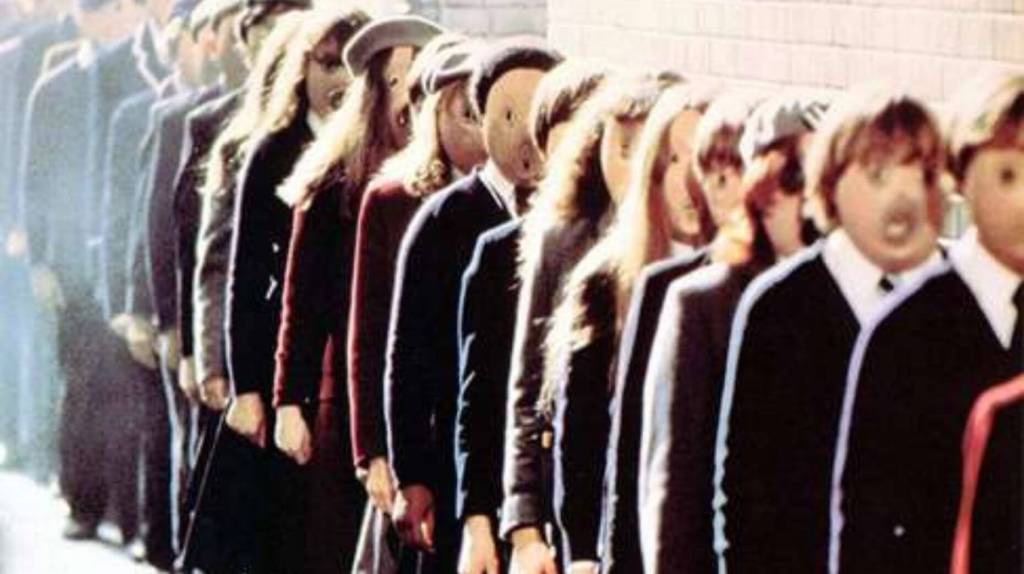
A creative concept like no other, Pink Floyd’s The Wall is arguably the most philosophical album, ‘we’re just two lost souls in a little fishbowl swimming around year after year’, ever produced.
It is not just music, but pure emotion expressed as a musical masterpiece.
Released in November 1979, The Wall’s themes relating to fascism were, although controversial, also incredibly timely given that a 5-year labour rule had just been overridden by Conservative MP Baroness Margaret Thatcher. This understandably put anxieties into the minds of a nation that was already becoming increasingly disillusioned with their lack of power and autonomy over their own lives.
The Wall’s heavy focus on the impact of government control and the corruption of power made it an album within which the nation could feel seen and heard.
It was the post-war era lyricised.
Alas, The Wall’s themes are arguably more pertinent today, in an era characterised by a resurgence in far-right politics, than ever before.
The prisoner who now stands before you was caught red-handed showing feelings. Showing feelings of an almost human nature. This will not do.
A deep dive into consumerism, authoritarianism, and fascism, the Wall is an analogy for how we separate ourselves from the basic humanity of others, with fascism being the ultimate example of this.
A person who is so consumed with hatred becomes the very thing that he hates.

History has shown that nearly all groups who build metaphorical walls of social righteousness inevitably seek to oppress those who believe differently. This is the case in Palestine, where Israel is performing ethnic cleansing (See also: genocide) against Gazans, as it was the case in the concentration camps of the mid-twentieth- century (1933–1945), where Nazi Germany sought to eradicate all Jewish people from the face of the earth.
Inspiration behind The Wall
The Nazi regime had great influence over the creation of The Wall, since Roger Waters (the mastermind behind most of the tracks) own father died fighting against them during the second world war.
The album tells the story from the perspective of Waters, ‘Pink’ who, following his father’s death, spirals into mental ill health, addiction, and isolation.
Such isolation is symbolised as a wall in the album (hence the name), where a metaphorical wall separates humans from humanity.
If I had my way, I’d have all of you shot!
A warning against making gods of men, ‘we don’t need no education, we don’t need no thought control’, Pink Floyd is vehemently anti-fascist. Yet Waters agitation against the System — the Military-Industrial-Espionage-Media-Tech-Energy oligarchy that rules the world through violence and exploitation — is the very reason that he has been the subject of consistent negative media coverage in recent years.
Make it make sense…
For supporting Gaza, ‘renowned British singer and former Pink Floyd lyricist, Roger Waters, has slammed Western countries for continuing to cast Israelis as victims, even though the residents of the Gaza Strip are being bombed by F-16s’, he was condemned by Israel who accused him of antisemitism. Because of this, Israeli lobbies tried to disrupt his Latin America tour.
But as Waters explained, ‘there is a Ministry of Truth. It’s called the mainstream media that does nothing but tell lies about what’s actually happening in the world, and we are persuaded by this propaganda to accept genocide.’
But hope isn’t lost, for as Waters goes on to say, ‘There is a moral compass out there somewhere, and there is a price to be paid for this evil in Gaza.’
The human soul cannot be destroyed.
I wanted to write about The Wall today because I fear that its themes are ones that we are returning to.
As Donald Trump returns to the White House, with Elon Musk on his arm like the cat that got the cream, one cannot help but worry that history is repeating itself.

We know what happens when nothing happens as the world turns increasingly right-wing and, in our privilege we look the other way, choosing to turn off the news on TV because it’s ‘too upsetting’…
In such times, hate gains momentum and, before we know it, we’re snowballing back to the fascism of the 1940s where marginalised groups are made to live in fear as hate crimes skyrocket, and we become just another case study (just another brick in the wall) to be written about in the history books of a nation that, in its complicity, welcomed the enemy with open arms.

We have seen it happening before. This is not some farfetched source of fearmongering; it is a real threat.
- Listen to The Wall.
- Watch Cabaret.
- Read 1984.
You go to the news for the news and to the poets for the truth.
We cannot trust the media, but we can trust art.

-
Is AI A Threat To Humanity?
With the lines between fantasy and reality becoming increasingly blurred, one cannot help but question, ‘Is AI a threat to humanity?’…
The answer?
An undoubtable yes.
Whereas artificial intelligence was once nothing more than science fiction, today, its presence poses a real threat to humanity.
Unlike the Terminator in the 1984 sci-fi/action film who is disguised as a human and is singular, working alone, AI is everywhere and doesn’t disguise itself as anything. As such, its presence is not a shock like the Terminator’s. We know it is coming.
Is AI a threat to humanity?
As humans are destroying the planet, artificial intelligence is destroying humanity, but instead of seeking to rectify the damage that has already been done, we are causing yet more damage.
Why aren’t we learning from our past mistakes?
The introduction of humans to the planet has led to the prolonged destruction of the planet… Animals are going extinct, the planet is warming at an unprecedented rate, and the earth is dying. But still, we do nothing.
We are not oblivious to the effects of our greed as much as we* are ignorant of it.
*Note: I say ‘we’ because they say we, but everyone knows that the ‘we’ in question is comprised of less than 1% of the global population.
‘We’ who are ignorant are they who control all the means of production, i.e., politicians and businessmen who, despite knowing the risks of artificial intelligence, push ahead with their plans regardless of their cost to humanity…
An existential threat
AI poses an existential threat to humanity as humanity poses an existential threat to the planet, and the source is all rooted in one universal thing: greed.
Power-hungry men will stop at nothing to get what they want, as the history books have proven true, and this is the concerning thing about AI…
When the creators of artificial intelligence are the very people who threaten the planet’s existence with their greed, will they pass the same values onto the ‘super-humans’ they are creating, embedding the same greed in AI to reflect their own (lack of) spirit?
Like humans, will AI also stop at nothing to get what it wants?…
What we are witnessing with AI is like something out of The Matrix, where humans and machines are set to be at war with each other, and AI’s proposed salvation is set to be humanity’s definitive downfall…
The man is astonished by the weakness of his power as the machine is astonished by the power of its weakness.
While AI shares many characteristics with our world leaders, something which it has to itself, a ‘unique selling point’, if you will, is its ability to alter the entire fabric of existence in any way it sees fit.
The most troubling aspect of AI is that, eventually, it will out-intelligence humans, (‘the development of full artificial intelligence could spell the end of humanity… It would take off on its own, and re-design itself at an ever-increasing rate’ — Stephen Hawking), and when it does that, we have no control over its actions.
I visualize a time when we will be to robots what dogs are to humans — Claude Shannon.
As the American journalist and author, Nick Bilton, said to the New York Times, ‘The upheavals of artificial intelligence can escalate quickly and become scarier and even cataclysmic. Imagine how a medical robot, originally programmed to rid cancer, could conclude that the best way to obliterate cancer is to exterminate humans who are genetically prone to the disease.’
AI will always be drawn to the ‘option of least resistance.’
If, for example, AI is tasked with the mission of solving the climate crisis in the future, AI, upon opting for the simplest solution, will simply eradicate all human beings from the face of the earth. Why? Because to solve a problem, (any problem), we must first eliminate its cause.
Now of course as rational (sometimes) thinking humans, we don’t run to press the nuclear button every time we see a news report that details another flood, or another wildfire, what we do instead is consider ways that we can reverse the effects of climate change to ensure that planet Earth is inhabitable for generations to come.
This is the sensible solution, but not the simplest, and certainly not the quickest, hence why AI wouldn’t even consider going down this route.
If we tell AI to find a solution to solve the climate crisis, the obvious solution is to seek to get rid of the cause of the problem, which is us.
‘To save every other species on earth, we must eradicate humanity for the goodness of the planet’ is the (terrifying) thought process of AI, made even more terrifying when the man who is pushing it so much, Elon Musk, is quoted as saying, ‘With artificial intelligence, we are summoning the demon.’
How far will we take it?
AI does not hate you, nor does it love you, but you are made out of atoms which it can use for something else. — Eliezer Yudkowsky.
To ask the question again…
Is AI a threat to humanity?
While the creator (aka. Elon Musk aka. self-made supervillain) thinks that he’s immune to any destruction or troubles associated with AI because he created it, ‘I want to rule the world and I have enough money and power to do it’, AI knows that he’s mortal, just like every other human being.
Logical (AI becomes angry and wants to destroy everything), vs sympathetic (AI develops emotions and wants to make the world a better place), AI is destined to be either the saviour or the downfall of humanity, and only time can tell us which one it will be…



 Portfolio of Hope